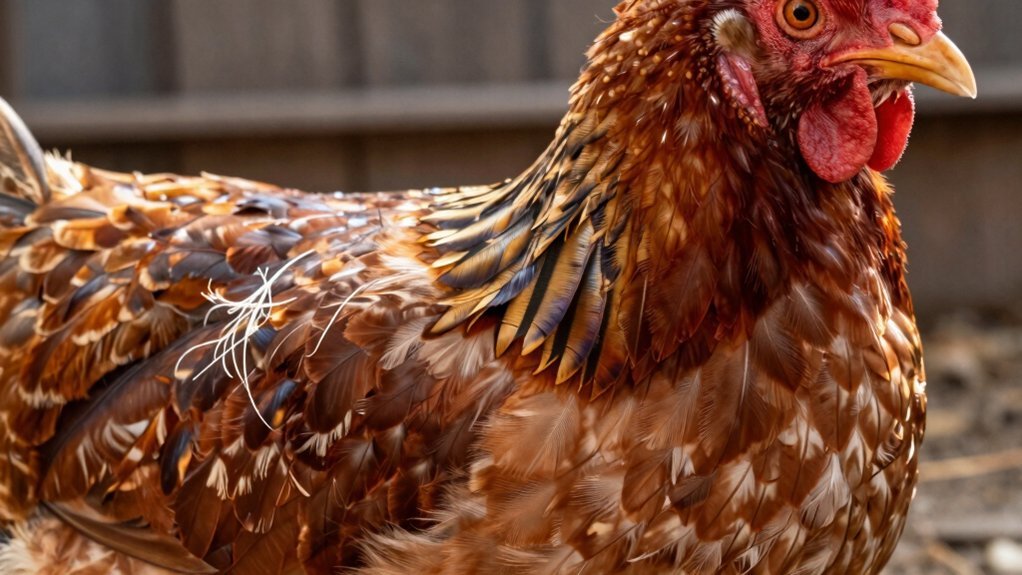
You’re probably wondering why some chickens look fuzzy, but they don’t grow hair at all – they have feather follicles that make down, contour feathers, and tiny filoplumes, all keratin‑based and genetically distinct from mammalian hair. Those filoplumes are hair‑like, especially on wings, and the down feathers trap air for insulation, just like a down jacket. Obviously, the “hair” you see is just a feather variant, and if you keep exploring you’ll uncover how each type protects and insulates the bird.
Do Chickens Really Have Hair? The Straight Answer
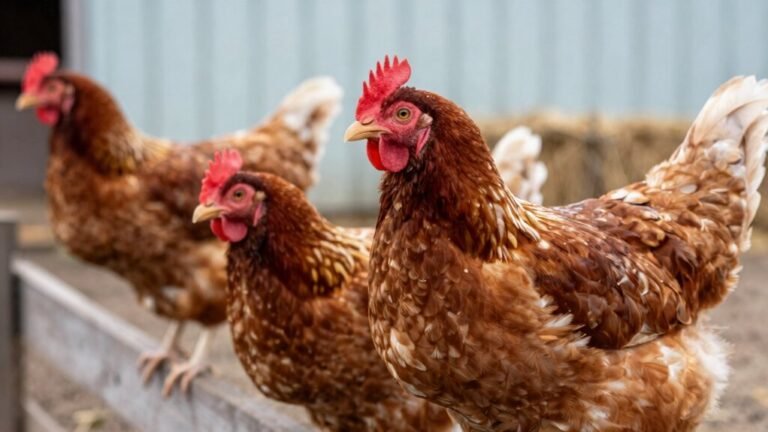
If you’ve ever brushed a chicken and thought you felt hair, you’re not alone—many people mistake fine feathers for fur. Here’s the thing: chickens are birds, so avian genetics give them feather follicles, not hair follicles. Evolutionary adaptations turned those follicles into down, contour feathers, and filoplumes that keep them warm and protected.
Why does it feel like hair? Short feather shafts and pinfeathers act like tiny bristles, and keratin makes them feel similar to mammalian hair. Obviously, the material isn’t hair; it’s a feather remnant or a sensory filament. Specific mutations in the KRT75 keratin gene can even alter feather structure to cause curling, further proving that these textures are purely avian traits. Just as genetic factors determine feather texture, they also influence the adult size of breeds like the compact Silkie chicken. Breeds such as the Houdan display prominent head crests that add to their ornamental appeal while distinguishing them from standard poultry.
Takeaway: Chickens have no true hair—only feathers shaped by genetics and evolution. Next, you might wonder which feather types look most like chicken hair.
Which Feather Types Look Like Chicken Hair?
You’re probably wondering why some chickens look fuzzy while others stay sleek, and that’s a great question. You’ll notice that Silkie feathers lack interlocking barbs, so they form a loose, downy puff that feels like fur. That hair‑identification clue comes from a recessive genetic mutation that softens the plumage, and it shows up in pure Silkies and some crossbreeds.
Now, frizzled feathers curl outward like a tiny mop, giving a wavy, hair‑like silhouette on wings and tails. The frizzle gene triggers this curl, and you can spot it in many breeds, especially Silkie mixes.
All right, crested birds sport a head tuft that resembles an afro. The crest rises and fluffs, an ornamental feather structure, not true hair, but it still confuses hair identification. These fluffy crests often hide unique facial features like the small walnut-shaped comb found on Silkie chickens.
Takeaway: Silkie down, frizzled curls, and crested tufts are the main feather types that mimic hair, all driven by distinct genetic mutations. Next, explore how these traits affect your flock’s look and care.
While these structural mutations create hair-like textures, other genetic basis of pigmentation factors involving genes like SOX5 and MLPH determine the actual color variations seen across different breeds. Beyond texture, the breed is globally celebrated for its distinctive fluffy feathers which appear in standard show colors like black, blue, and white as well as non-standard varieties such as lavender and paint.
Why Those Feathers Matter for Insulation and Protection
Why do feathers matter for insulation and protection? You’re wondering why those fluffy layers keep chickens warm and safe. Obviously, the keratin structure creates hollow fibers that trap air, and that air dramatically lowers thermal conductivity.
How does the air work? The tiny pockets act like a blanket of still air, slowing heat loss just as a double‑pane window does. Down feathers hold the most air, while contour feathers add a wind‑proof barrier, keeping moisture off the skin.
What about protection? The outer plumage shields against wind, rain, and sun, and it even cushions minor abrasions. By fluffing their feathers, chickens increase trapped air, boosting insulation when temperatures drop. Just as chickens rely on a keratinous beak for defense and feeding, their feathers provide a critical external shield made of the same durable protein. However, similar to how pine shavings can release harmful toxins affecting respiratory health, compromised feather barriers leave chickens vulnerable to environmental irritants and illness. Breeds like the Porcelain d’Uccle utilize this feathered legs trait to enhance warmth and protection in cooler climates.
Takeaway: feather micro‑structure and trapped air give chickens a low‑cost, effective thermal shield. Next, you might explore where chicken hair‑like feathers appear most often. Global poultry consumption provides a massive supply of waste feathers for sustainable insulation.
Where Is Chicken Hair‑Like Feather Most Common?
Where do you see those hair‑like feathers most often? You’re probably staring at a chicken wing and wondering why those fine pinfeathers pop up. The wing’s thin skin and wing genetics make the tiny filaments stand out, especially after processing when visibility spikes.
Why do wings win the count? Flight feather remnants cling tighter to wing tissue than to legs or neck, and processing equipment often leaves a few quills behind. Consumer reports repeatedly flag wings as the hotspot for hair‑like feather sightings.
What about other parts? Thighs and legs show filoplumes, but they’re less visible because skin is thicker. Neck and saddle filoplumes appear but usually hide under contour feathers.
Takeaway: Wings are the most common spot for hair‑like feathers because thin skin, wing genetics, and processed visibility all converge there. Next, you might wonder how to handle those remnants safely. While these structural filaments are normal, actual feather loss around the neck can sometimes indicate nutritional deficiencies or stress rather than just natural anatomy. It is important to distinguish these harmless filaments from bare skin caused by parasite infestations which often begin around the vent area. Owners should also inspect coop crevices for visible mites that feed on blood at night and cause anemia, as these pests are a frequent cause of the feather damage and restlessness often mistaken for simple molting.
How to Safely Remove Chicken Hair‑Like Feathers (Food‑Safe Tips)
You’re probably wondering why those fine pin‑feathers keep showing up after you’ve scalded the bird. The water should sit at 145‑150 °F for 30 seconds to three minutes, just enough to loosen follicles without cooking skin. Then pluck while the skin’s still soft, using needle‑nose pliers for stubborn hairs and gloves for protection. Scalding at 150 °F optimally loosens feathers for easier plucking. Crucial to this process is even agitation, which helps the hot water penetrate and loosen feather follicles uniformly. How do you finish the tiny down? Torch selection matters: a small propane or crème brûlée torch gives you a controlled flame. A quick pass‑over using the singe technique vaporizes wisps without cooking the meat. Keep the flame brief—under a second per spot—to avoid skin damage. While removing these surface filoplumes, remember that true saddle feathers are distinct structural features located at the base of the back rather than simple hair-like growths. Unlike these fine filoplumes, the chicken’s tail is supported by a specific bone structure known as the pygostyle vertebrae. What’s the safe‑food checklist? After bleeding and evisceration, chill the bird below 40 °F within two hours, keep tools sanitized, and store feathers for composting. Remember, internal cooking temperature must reach 165 °F. Takeaway: Proper scalding, gentle plucking, and a controlled torch finish keep feathers off the meat and your kitchen safe. Ready to try the singe technique on your next bird?