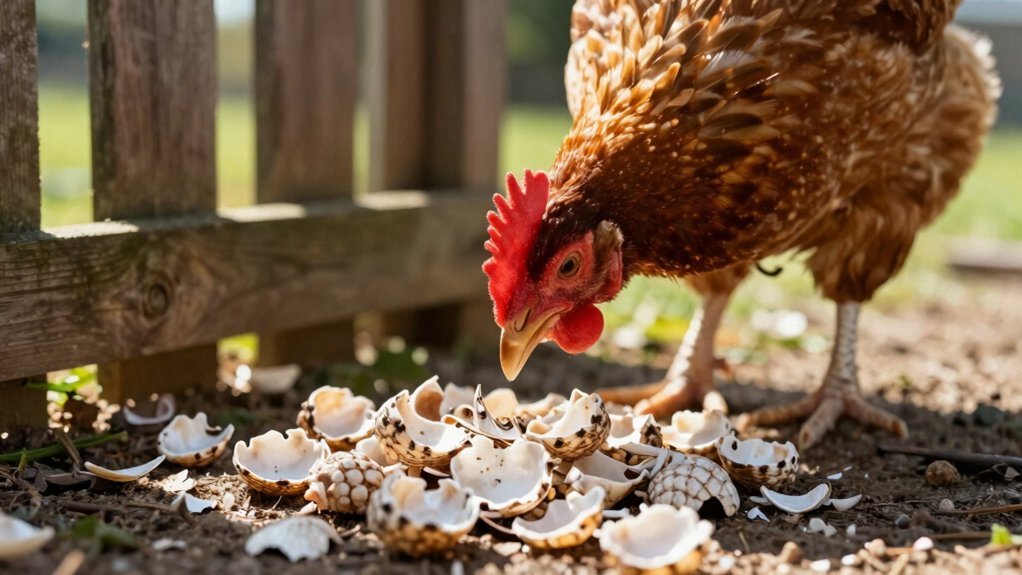
You’re right to wonder if crab shells are safe for hens, and the short answer is yes—if you clean, bake, and crush them into pea‑size pieces before mixing about a tablespoon into their daily feed. The shells give a slow‑release calcium boost (about 4 g per day for a laying hen) without adding protein, so they work like oyster grit but need careful grinding to avoid sharp shards. Now, just rinse, bake 10 min, break into tiny crumbs, and sprinkle them on the feed; you’ll see stronger shells without the risk of crop injuries. If you keep the portion under 1 % of the total ration, you’ll avoid overload and stay balanced. Next, you’ll learn how to store and serve them safely.
Can Chickens Safely Eat Crab Shells?
You’re probably wondering if those crunchy crab shells are a harmless treat or a hidden hazard for your flock. You’ve seen the shiny bits and think they might boost calcium, but the truth is sharper. Cracked edges can scratch the crop or gizzard, and large pieces risk blockage, turning a snack into a choking hazard.
Here’s the thing: chickens can’t digest chitin well, so most shells pass through unchanged, offering little nutrition. Sharp fragments stay intact, and any residual salt or seasoning can irritate guts and invite bacterial contamination.
All right, if you ever toss a few shells, clean them thoroughly, dry them, and grind them to a powder finer than sand. That reduces injury risk and limits bacterial load.
Takeaway: crab shells aren’t a safe, reliable calcium source; treat them as an occasional, carefully prepared treat, not a staple. Next, ask yourself whether a proven calcium supplement would be simpler and safer for your hens. (The shells must be completely smashed before use.) Unlike crab shells, baking eggshells at 300°F for 5 to 10 minutes effectively dries them out and reduces bacterial risks while creating a safe, natural calcium supplement. While homemade options exist, providing large particle calcium separately allows hens to regulate their intake for optimal eggshell quality and bone health. Calcium deficiency causes hens to draw from bones, leading to serious skeletal problems if not addressed with proper supplementation.
What Calcium Do Laying Hens Need Daily?
You’re probably wondering exactly how much calcium each laying hen needs each day after hearing about crab shells. The answer: about 4–5 g per bird, roughly the calcium in two eggs. A 4 % calcium layer feed gives 4–4.8 g when a hen eats 100–120 g of feed, which covers both eggshell formation and skeletal requirements.
Here’s the thing: calcium works best when phosphorus interaction is balanced, and vitamin D3 helps the gut absorb it. Low intake forces the hen to leach calcium from bones, weakening the skeleton and thinning shells. Unlike fast-acting feed calcium, crushed oyster shells provide a slow-release source that the gizzard grinds down overnight to sustain eggshell formation while the hen sleeps. Offering free-choice access to separate calcium sources prevents health issues in non-laying birds while ensuring layers consume what they need. All right, make sure the diet supplies at least 4 g calcium, adequate phosphorus, and constant water. Without sufficient levels, hens may suffer from bone weakness leading to fractures, lameness, or even paralysis during periods of high production. The takeaway: meet the 4‑gram target daily, and your hens will keep laying strong, healthy eggs.
Why Crab Shells Are a Good Calcium Source for Chickens
Why are crab shells a good calcium source for chickens? You’re probably wondering if those hard bits can actually help your hens lay stronger eggs. The answer is yes—crustacean shells pack calcium carbonate, chitin, and protein, giving a natural supplement that releases calcium slowly as the gizzard grinds it.
Here’s the thing: shell calcium variability means each batch can differ, but the coarse particles stay longer in the digestive tract, supplying calcium during overnight shell formation. Compared with mollusk shells, crab shells have more chitin, which can affect absorption, yet they still provide a useful mineral boost when commercial options run low. To maximize this benefit, it is ideal to ensure that a significant portion of your flock’s total calcium intake comes from large particle forms that dissolve slowly to support bone strength and overnight eggshell development.
All right, remember: treat crab shells as a supplemental treat, not a staple. Offer them in moderation, and you’ll fill gaps in your hens’ calcium intake without overreliance. Next, you might ask how to prepare those shells safely. Just as with oyster shells, offering crab shells separately allows hens to self-regulate their calcium and prevents potential kidney damage in non-laying birds from excess consumption.
Clean & Cook Crab Shells Safely for Chickens
You’re probably wondering how to turn those tasty crab shells into a safe calcium treat for your hens. First, strip every piece of meat, butter, garlic, onion, salt, or spice—those residues invite pests. Rinse under running water, then boil for at least ten minutes. That’s a solid sanitization method that tackles bacterial considerations and kills seafood pathogens. Drain well and let the shells air‑dry or bake at low heat until they’re completely brittle; moisture breeds mold.
Now, break the dried shells into bite‑size shards—no sharp edges that could cut a crop. Store them in a sealed bag in the freezer until you have enough for a batch. Offer a small dish each day, watching for any mold or foul smell. Just as feeding cooked eggs prevents chickens from developing bad eating habits, properly preparing crab shells ensures they remain a safe supplement rather than a health risk. While crab shells provide calcium, you should also consider offering oyster shells to ensure your hens have a consistent source of this essential mineral for egg production. This approach mirrors how cooked protein sources provide essential nutrients without encouraging the persistent egg-eating habits that raw foods might trigger.
Takeaway: Clean, boil, dry, and size the shells before feeding, and keep them refrigerated or frozen until use. Ready to crush and grind them for even easier feeding? The entire crab is consumed during the molt, making the shells soft‑shell and ideal for calcium extraction.
Crush & Grind Crab Shells for Chickens
How do I turn crab shells into safe, bite‑size chicken feed? You’re probably wondering which tools will give you the right texture without hurting your flock. First, dry the shells in a low‑heat oven; dry material fractures easier, so you won’t strain your grinder. Then, choose a hammer mill with a 1/4‑inch slotted screen—this size consistently yields dime‑sized pieces that chickens can peck and swallow safely. If you can’t find a mill, a sturdy jaw crusher works, but expect more powder, which is better for a calcium dish than for grit. The hammermill’s replaceable armor liners protect the interior during heavy use. Replaceable armor helps extend the machine’s life when processing tough shells. All right, now think about screening methods. After grinding, run the material through a mesh to separate fine powder from the rough grit you need. A simple kitchen sieve does the job for small batches; larger operations use industrial screens to keep particle size consistent. Obviously, equipment sourcing matters. Look for used farm‑grade mills on local classifieds or agricultural supply stores; they’re cheaper than new units and still reliable. Takeaway: dry, crush with a screened hammer mill, then sift to the desired size. Next, store the cleaned, dried fragments in a sealed container and mix a handful into your hens’ feed. Remember that while this homemade supplement is valuable, it should only constitute a small portion of their diet alongside their staple quality grains or pellets. Since layer feeds are specifically formulated with balanced nutrition and essential minerals, this calcium boost works best when paired with a premium quality layer pellet. Unlike soluble calcium sources, these crushed shells also provide insoluble grit that stays in the gizzard to physically grind food and aid digestion.
Spot Sharp Crab Shell Fragments for Chickens
You’ve just ground the shells, but now you need to make sure none of the pieces are sharp enough to hurt your flock. You’re probably wondering how to spot dangerous shards before they reach the hens. Here’s the thing: visual identification saves you time and prevents injury.
What should you look for?
Spread the powder on a flat tray under bright light. Jagged edges, needle‑like tips, and thin spikes from leg joints flag up immediately. Any fragment that snaps into a sharp arc or feels like it could cut a fingernail is a no‑go.
How do you test sharpness?
Press a piece gently between two fingers; if it scratches, discard it. Compare the texture to commercial oyster grit—rounded granules are safe, sharp shards are not. Unlike oyster shell which provides rounded calcium granules for egg production, crushed crab shells must be processed until equally smooth to avoid internal injury. Since chickens lack teeth, they depend on insoluble flint grit to mechanically grind food in the gizzard, meaning any sharp foreign material like poorly crushed shells can cause severe internal damage rather than aiding digestion.
Takeaway: Only feed pieces that pass visual identification and sharpness testing; otherwise, toss them. Just as chickens rely on flint grit to mechanically break down food without injuring their gizzard, crushed crab shells must be smooth to ensure safe digestion. Next, you’ll learn the best way to serve the safe, crushed shells to your birds.
How to Serve Crushed Crab Shells to Your Flock?
Crushed crab shells can be a great calcium boost, but you’re probably wondering how to get them into the coop without a mess. Here’s the thing: rinse the shells, dry them, then crush them into fine crumbles—think oyster‑shell texture. Use a food processor or rolling pin, aiming for pea‑size pieces that chickens can peck up easily.
All right, serving methods matter. Scatter a shallow tray of the crumble on clean ground, or mix a tablespoon into their scratch grains each day. Keep the portion small—about 1 % of their total feed—to avoid over‑supplementing. Portion control lets you watch intake and prevents waste. Just as with other supplements, maintaining balanced diet principles ensures chickens receive complete nutrition alongside these treats. Since chickens lack teeth and require grit to grind food in their gizzard, offering insoluble grit alongside these shells is essential if your flock consumes whole scraps rather than just commercial pellets. Be mindful that overfeeding can lead to an impacted crop, a condition where food gets stuck in the storage organ causing regurgitation and lethargy.
Obviously, leftovers need proper storage. Seal the remaining crumble in an airtight jar, refrigerate or freeze it, and discard any that smell off.
Takeaway: rinse, dry, crush, then sprinkle or mix a modest amount, and store the rest safely. Ready to try it tomorrow? High protein content from the remaining meat adds extra nutrition.
Balancing Crab Shells With a Complete Layer Ration
You’re probably wondering if those crab shells you just learned to crush can replace the feed you already give your layers. Obviously, they can’t. Crab shells supply calcium, but they don’t provide the protein, vitamins, and energy a balanced ration formulation delivers.
How do I keep the calcium boost without breaking the diet?
Now, treat shells as a targeted correction, not a staple. Add a modest amount of coarser shells to the free‑choice area only when shell quality drops despite a solid base feed. This lets your hens get the extra calcium they need during the final 15–20 hours of shell formation while still eating the complete ration that supplies phosphorus interplay, vitamin D, and other essentials.
What’s the practical rule?
All right, keep the base feed as the foundation, monitor egg‑shell thickness, and supplement with shells only if the feed’s calcium is insufficient. The takeaway: shells complement, never replace, a nutritionally complete layer diet.
Other Nutrients in Crab Shells for Chickens
Now, the trace minerals—magnesium, phosphorus, manganese—show up in tiny amounts. Magnesium fuels metabolic enzymes, phosphorus stores energy and builds bone, and manganese supports skeletal formation and nutrient metabolism. You’ll see 0.2‑0.5 % of each, depending on species and processing.
All right, protein and omega‑3 residues are minimal, but a dash of carotenoids offers antioxidant perks. Takeaway: crab shells deliver a modest mineral boost and gut‑health support, not a protein overhaul. Next, decide how much to sprinkle into the ration.
When to Skip Crab Shells for Chickens (Calcium Overload & Alternatives)
If you’re worried about calcium overload, you’re on the right track—excess shell can tip the mineral balance and even crowd out the complete feed you already give. You might wonder when to skip crab shells altogether.
Who should avoid them?
Young chicks, pullets before they start laying, roosters, and non‑laying chickens don’t need the extra calcium. Their diets already meet mineral needs, so hard shell pieces become unnecessary.
What signs mean stop feeding?
Watch for digestive hazard signs: loose droppings, reduced feed intake, crop fill problems, or any gizzard irritation. Those indicate the shell is a physical hazard, not a benefit.
What’s a better option?
Offer crushed oyster shell or finely baked eggshells in moderation, or simply rely on a balanced layer feed.
Takeaway: Skip crab shells for low‑calcium birds and any flock showing digestive hazard signs, and switch to safe, powdered calcium sources.