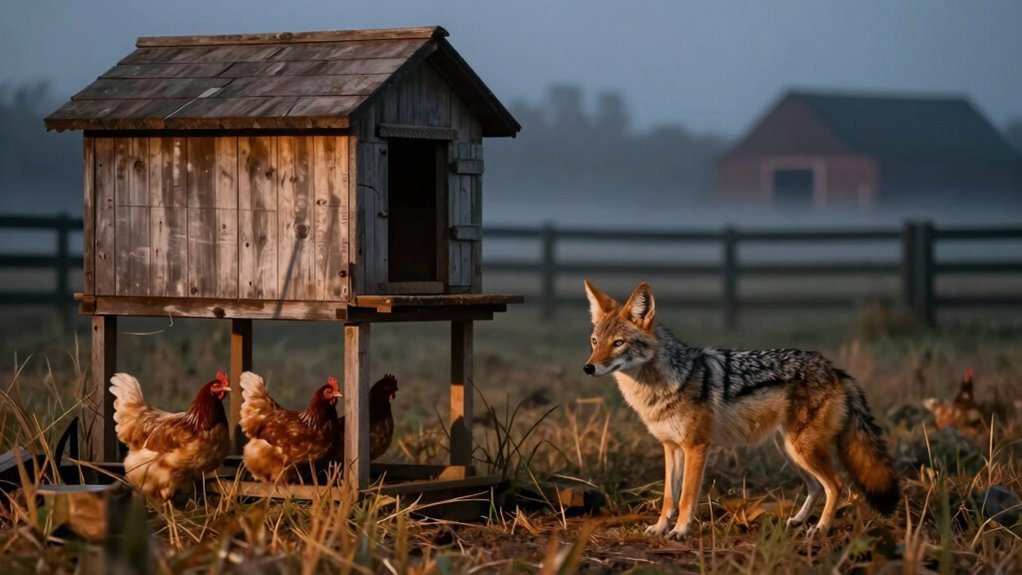
You’re right to wonder if coyotes actually eat chickens—yes, they’re opportunistic hunters that often snatch a lone hen at dusk or night, especially when they can slip through a gap or dig under a fence. Use ½‑inch hardware cloth for all vents, bury it 12‑18 inches, and add a shallow apron to stop digging; seal doors with sliding bolts so no nose‑size opening remains. After an attack, move any survivors to a quiet box, rinse wounds with saline, and give electrolytes; then check the fence for gaps and fix them. Now you have the basics, and the next steps will show you how to build a long‑term, low‑maintenance shield.
Do Coyotes Really Eat Chickens?
Takeaway: Chickens are a common, easy target for urban coyotes because of their accessibility. If you secure your coop, you cut off that temptation. Next, ask yourself how you can spot a coyote attack on your flock. 34 encounters were reported in August across the city. Unlike other predators that may leave remains, coyotes often bury chicken remains or carry them off, leaving little evidence behind. To stop digging predators like coyotes, ensure your fence foundations extend underground. Locking your flock in a secure coop at night is critical since coyotes, like foxes, are primarily nocturnal hunters.
How to Spot a Coyote Attack on Your Flock
You’re probably wondering how to tell if a coyote has already visited your coop, and you’re right to ask.
What signs scream “coyote”
Look for feather dispersal around the coop—tiny plumes scattered like confetti, often with no blood. Missing birds, especially weak or old ones, and deep throat or neck wounds confirm attack timing.
Where to hunt for clues
Check the fence line and nearby trees for slender, oval tracks with claw marks. Fresh digging or tunneling points to entry. Scat near elevated spots adds proof.
How the predator behaves
Coyotes stalk at dawn, dusk, or night, then strike a single bird before grabbing others. They may scale fences or dig under barriers, leaving a trail of feathers rather than a single pile. While coyotes are active at these times, it is crucial to remember that owls begin hunting at dusk and can also pose a significant threat to your flock during the same hours. To fully safeguard your birds during these vulnerable periods, you should consider covering the chicken run with bird netting to create a protective barrier against aerial predators. Unlike raccoons that often kill multiple chickens and leave specific parts behind, coyotes typically carry off entire chickens, resulting in fewer remains left at the scene.
Takeaway
If you spot scattered feathers, throat wounds, and tracks, you’ve likely seen a coyote attack. Next, consider how to reinforce your coop.
Foxes also leave similar feather patterns, but they typically bury some prey for later consumption.
Secure Your Coop With Proven Coyote‑Proof Barriers
If you’re wondering why your coop still feels vulnerable after installing basic wire, you’re asking the right question.
What hardware cloth should I use?
Use 1/4‑inch or 1/2‑inch hardware cloth for every vent, window, and gap larger than a quarter inch. Screw it in with washers; staples won’t stand up to a coyote’s pull.
How do I stop digging?
Bury the cloth vertically 12‑18 inches deep—this burial depth defeats most tunnels. Then lay an apron outward, 12‑18 inches wide, to keep the soil from collapsing near the base.
What makes doors coyote‑proof?
Fit sliding bolts or carabiners that close flush, leaving no nose‑size gaps.
Takeaway: Combine tightly sewn hardware cloth, deep burial, and a wide apron, and you’ll give coyotes no easy entry points. What’s your next upgrade?
While coyotes are a primary threat, remember that secure coops are also essential to defend against other persistent predators like raccoons that can kill an entire flock quickly. To further fortify your structure against these intelligent climbers, reinforce weak points using solid wood or metal to prevent them from prying open vents or tearing through flimsy materials. Just as physical barriers are critical for ground threats, you should also consider physically covering coops to safeguard your flock from aerial predators like hawks.
What to Do Immediately After a Suspected Coyote Incident
You’ve just seen a coyote mess with your coop, and you’re probably wondering what to do before the panic spreads. First, grab gloves and gently pull any surviving birds out of the area; keep them in a dark, quiet box to stop further stress. Now, follow the triage guidelines: check each bird for puncture wounds, limping, or shock signs like a pale comb. Separate the badly hurt from the healthy to avoid pecking and to focus care.
Next, rinse wounds with sterile saline, apply a poultry‑safe antiseptic, and keep the recovery space dry and clean. Offer water, electrolytes, and easy‑to‑eat protein feed, then start recovery monitoring twice daily—watch appetite, breathing, standing ability, and wound appearance. If you suspect a fracture or deep infection, call a vet within 24‑48 hours. Once your flock is stable, you must inspect the structure for gaps and ensure you have secure, multi-step latches to prevent intelligent predators from returning. While coyotes are the immediate threat, remember that ground predators often cause more overall loss than aerial attackers, so your long-term security plan should address both. To further fortify your defenses against future attacks, consider installing motion-activated lights to startle approaching predators before they reach the coop.
Takeaway: act fast, isolate, treat, and monitor. Next, ask yourself what long‑term defenses you’ll need.
Long‑Term Coyote Chicken Protection Strategies
When a coyote has already shown up, you’re probably wondering how to keep it from returning. Here’s the thing: you need a layered, permanent setup that makes your coop a fortress. Use hardware cloth with ½‑inch mesh for walls and roof, and bury it six inches deep around the perimeter. Add an apron fence 12‑24 inches wide and a 5‑6 ft tall electric fencing loop that encloses the entire run, keeping vegetation trimmed to avoid grounding. Strip your property of food smells—store feed in sealed containers, secure garbage indoors, and clean up spilled corn or carcasses right away. This attractant removal cuts the coyote’s incentive to hunt.
All right, now focus on digging deterrents. Lay a trench 12 inches deep, backfill with galvanized hardware cloth, then cover with concrete or rip‑rap where pressure is highest. A solid floor or raised coop also blocks entry from below. Night confinement in a secure pen adds another barrier, and motion‑activated lights give extra pressure without being the sole defense. Beyond physical barriers, ensuring proper ventilation within the structure is critical to preventing respiratory infections and maintaining a healthy flock. To fully resist strong predators, you must secure your mesh using screws and washers instead of staples, which can easily be pulled out by determined animals. Effective designs also prioritize predator protection alongside size and airflow to keep your flock safe and comfortable.
Takeaway: combine electric fencing, buried hardware cloth, and strict attractant removal for a long‑term, low‑maintenance shield. Next step? Inspect your current fence for gaps and start removing any food sources that could lure predators.