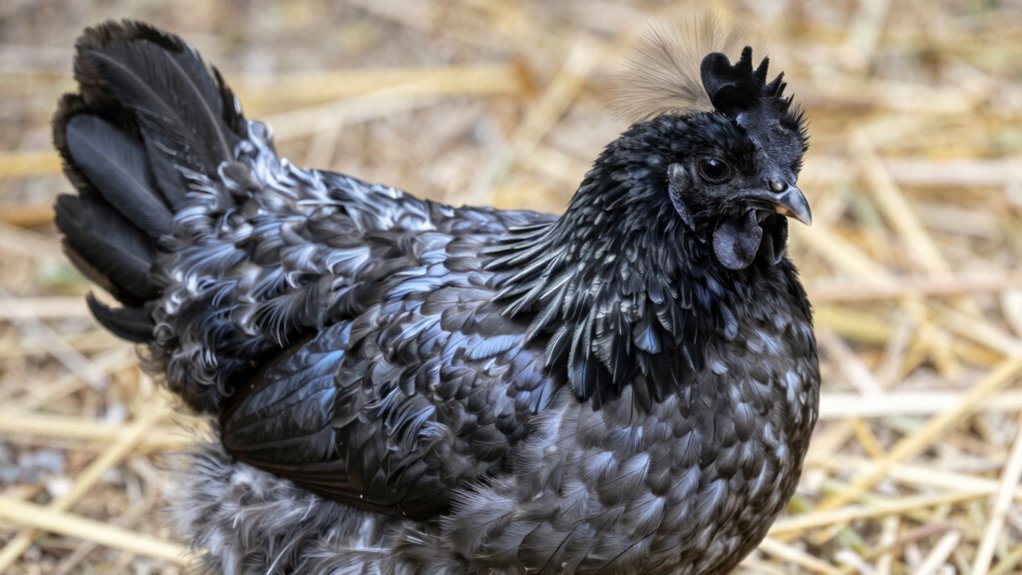
You’re probably wondering why Silkies look so unlike any other chicken. Here’s the thing: they’re covered in loose, non‑locking barbs that give a fluffy, satin‑like texture and a puffed‑up silhouette, while their skin, muscles, and even bones are deep slate‑black thanks to fibromelanosis. Their heads sport a short walnut comb hidden beneath a spherical pom‑pom crest, turquoise‑blue earlobes, and sometimes a fluffy muff over the beak; their legs are feathered “boots” with five toes each, a polydactyl trait. Colors range from black, blue, buff, gray, partridge, splash, white, and hobby shades like lavender or paint, and you’ll notice bearded lines often show more white. If you keep these details in mind, you’ll instantly recognize a Silkie and be ready to explore its care and personality further.
Silkie Chicken Plumage: Fluffy and Silky
What makes a Silkie’s feathers feel like a cloud? You’re probably wondering why they look so fluffy yet can’t fly. Here’s the thing: each feather consists of loose barbs that never lock together, so the plumage stays soft and airy, like a silk‑filled pillow. Those loose barbs also mean the feathers can’t create lift, which explains the breed’s flightless behavior.
Now, think of the feather structure as a hair‑like coat rather than a typical chicken’s smooth wing. The lack of functioning barbicels gives each strand a satin feel, and the whole body ends up covered in a thick, puffed‑up silhouette that resembles fur. This unique fur-like feathers structure differs greatly from typical chicken feathers and contributes to their signature soft appearance.
All right, you’ve got the basics: loose barbs = fluffy texture, and the same loose barbs = flightlessness. The takeaway? Silkie plumage is ornamental, not functional for flight. Beyond their unique texture, these chickens are distinguished by their bearded and non-bearded varieties, which add to the breed’s diverse and charming appearance. Notably, the breed also exhibits rare physical traits such as turquoise earlobes that further distinguish them from other poultry. Next, you might ask how this affects their skin and bones.
Silkie Chicken Skin, Bones, and Dark Pigmentation
You’re probably wondering why a Silkie’s skin and bones look like polished ebony instead of the usual yellow. The secret is a genetic mutation called fibromelanosis, which pushes melanin deep into skin, muscles, and even the skeleton. That’s why you see black or bluish‑black tissue, not the typical yellow.
Why does the dark color matter?
Here’s the thing: the pigmentation isn’t just cosmetic. It gives Silkies culinary significance in Asian cuisine, where the “black‑boned” meat is prized for its unique flavor and reputed health benefits. The dark bones and meat stay intact after cooking, creating a striking visual contrast.
What should you look for?
Obviously, a true Silkie shows consistent dark slate‑toned skin, black bones, and dark connective tissue. Any red or pale areas often signal a cross‑breed. Keep this in mind when you evaluate breed purity.
Takeaway:
The ebony hue stems from a rare mutation and adds real culinary value. If you’re studying Silkies, focus on that deep, uniform pigmentation as the hallmark of a genuine bird. This distinct melanotic gene is also responsible for the breed’s other unusual physical traits beyond their dark internal structure. While their unique appearance is striking, owners must provide clean, dry living conditions to prevent health issues like mites and lice infestations that can thrive in their delicate, fluffy feathers.
Silkie Chicken Head Features – Walnut Comb, Turquoise Earlobes, and Crest
Why does a Silkie’s head look so different? You’re probably wondering why the tiny walnut comb seems hidden. The comb is short, neat, and rounded, often called a “cushion” in standards, but you’ll see it tucked beneath a fluffy pom‑pom crest.
How does the crest affect the look? The crest forms a spherical puff that can appear more pronounced on birds with a vaulted skull, giving the head a rounded, powder‑puff silhouette. In show birds, the crest stays intact, not splitting or obscuring the comb. While the Silkie is widely recognized as the fluffiest breed with fur-like plumage, other chickens like the Faverolle also feature beard-like facial feathers that give a soft, fluffy look. Despite their fluffy appearance, these birds are relatively small, typically considered true bantams in the U.S. and Canada where standard-sized Silkies are rare or not recognized.
What about the earlobes? They shine turquoise‑blue, a striking contrast to the black face and slate‑gray beak. This hue is unique, making the Silkie instantly recognizable.
This distinct fluffy appearance is caused by a lack of barbicels which normally provide rigidity to feathers in other breeds.
Takeaway: The walnut comb, vaulted skull‑enhanced crest, and turquoise earlobes together create the Silkie’s signature head. Next, explore how those feathered legs complement this look.
Silkie Chicken Feathered Legs, Five‑Toe Feet, and Polydactyly
If you’re wondering why a Silkie’s legs look like fluffy boots, you’re on the right track. Their shanks wear dense plumage that drapes over the toes, giving a plush, booted appearance. Other breeds—Cochin, Brahma, Sultan—share feathered legs, but Silkies typically sport richer coverage, especially on high‑quality birds.
Here’s the thing: Silkies also have five toes per foot, a classic case of polydactyly. The extra toe arches above the hind toe and usually never touches the ground. Dorking and Houdan also have five toes, yet the underlying gene differs, so you can’t rely on toe count alone for breed comparisons. While this genetic mutation causes an extra toe to develop, it provides no special advantage and may even result in varying toe counts between feet.
All right, health considerations matter. Feathered legs protect against cold, but they collect mud and moisture, making inspections for injuries or mites trickier. Keep the area dry and check regularly. To further prevent infestations common in these birds, owners should perform regular inspections and cleaning of the leg feathers. Because their unique fluffy plumage requires staying dry and clean to avoid health issues, maintaining a dry environment is essential for their overall well-being and longevity.
Takeaway: Feathered legs and five toes define a Silkie, but they demand extra care. Next, explore how color varieties and bearding affect identification.
Silkie Chicken Color Varieties and Bearded vs. Non‑Bearded Identification
You’re probably wondering why the same fluffy‑booted bird can look so different at a glance.
What are the recognized color varieties?
APA lists black, blue, buff, gray, partridge, splash, and white. Some show standards add a bearded‑vs‑non‑bearded grouping, so you’ll see lavender/self‑blue, cuckoo, paint, even red in hobby circles. Color genetics drive these shades—melanin, dilution, and pattern genes combine to give a true black, a slate‑gray blue, a warm golden buff, or a speckled splash. While Silkie colors are distinct, other breeds like Polish chickens also feature complex genetic variations such as the blue slate grey color that cannot be bred true from two blue parents. Beyond feather hues, the breed displays unique physical traits like turquoise-blue earlobes that contrast sharply with their dark skin and bones. Although their appearance is fancy, raising these birds requires budgeting for standard starter feeds alongside their unique temperament and care needs.
How do you tell a bearded Silkie from a non‑bearded one?
A bearded bird sports a fluffy muff over the beak and earlobes, making the face look fuller. Non‑bearded birds lack that muff, showing a clean outline. Show judges often separate the two types, and certain colors—especially white—appear more often in bearded lines.
Takeaway: Identify the base hue, then check for the beard of to confirm the variety. Next, compare adult plumage to chick down to verify the final color.