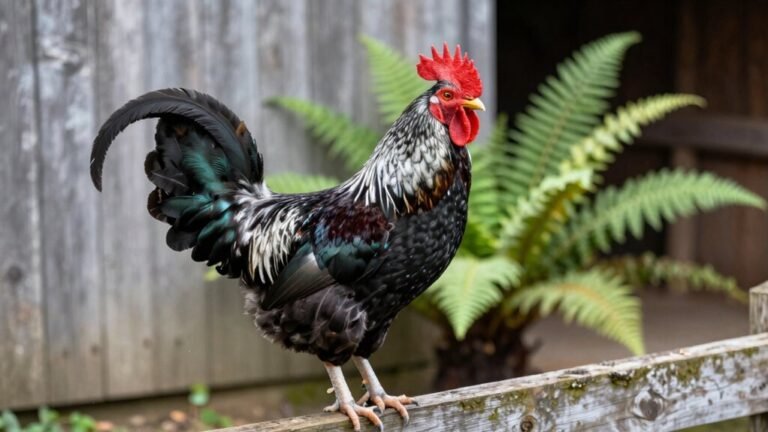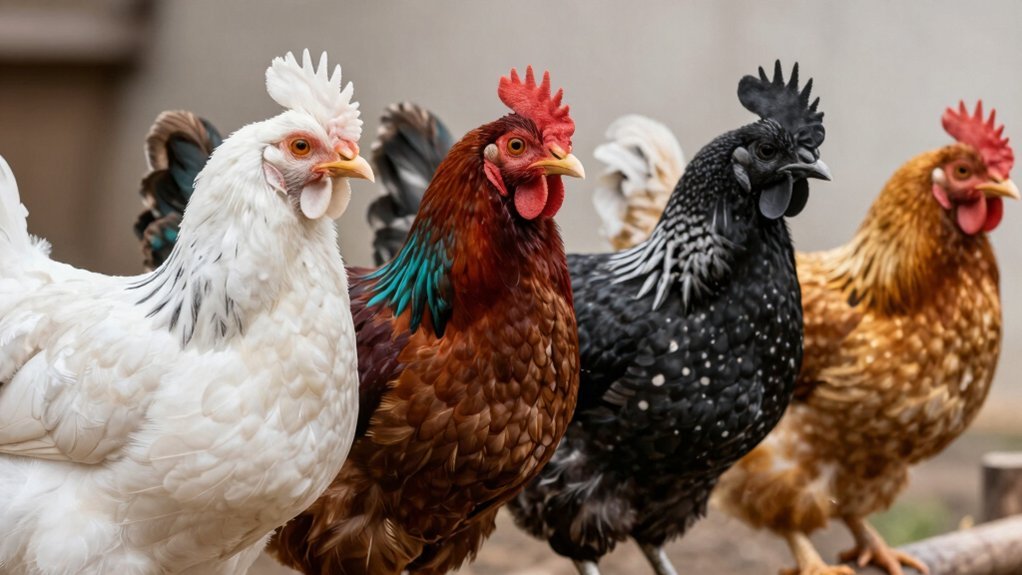
You’re probably wondering why Polish chickens look so wildly different, and the answer lies in their crazy crest, beard, and feather genetics that produce a kaleidoscope of colors and patterns. White‑crested birds come in glossy black, slate‑gray blue, banded cuckoo, pale‑splash, and rare blue variants, while solid (self) colors include uniform black, blue, or white that pop against their bright legs and white earlobes. Laced birds show a base hue—buff, golden straw, or silver—edged with a contrasting lace, and frizzled or bearded types add texture and flair; knowing these groups lets you spot any recognized Polish variety instantly. If you keep exploring, you’ll uncover how each pattern ties to genetics and show standards.
What Makes a Polish Chicken’s Look So Distinctive?
What makes a Polish chicken look so distinctive? You’re probably wondering why its head seems like a walking pom‑pom. The crest silhouette sits on a bony bump, forming a top‑hat shape that can hide most of the face.
How does that affect facial visibility? The large feathered crest drapes over the eyes, often obscuring the tiny V‑shaped comb, red wattles, and even bearded facial feathers. You’ll still see white earlobes and big nostrils, but they’re hard to spot.
What else sets the breed apart? The body stays upright, elegant, and narrow, with clean, feather‑free legs that contrast sharply with the fluffy head. The overall look feels ornamental, like a fancy hat on a sleek little bird. While primarily kept for their ornamental appearance, these birds also contribute usable eggs to a flock. Other notable breeds such as the Faverolles share this charm but feature feathered feet and a beard unlike the clean-legged Polish.
Because their vision is limited by such heavy plumage, owners must provide extra protection from predators to ensure the safety of these docile birds.
Takeaway: The crest silhouette defines the Polish chicken’s visual punch, while facial visibility stays low. Next, explore how color variants play into that striking silhouette.
White‑Crested Polish Chicken Color Variants
If you’re puzzled by why the white‑crested Polish comes in so many shades, you’ve hit the right spot.
What colors exist?
You’ll see the classic Black, a glossy ebony body with a stark white crest—often the non‑bearded standard for shows. Blue offers slate‑gray bodies, sometimes lightening to gray, and adults may sport a tiny blue patch at the crest base. Cuckoo adds pale‑dark banding across the plumage, while Splash gives a pale, irregular splash pattern, both keeping the white pom‑pom bright. Like the related Silkie breed, Polish chickens also feature distinctive fluffy feathers that require specific care to maintain their unique appearance. While Silkies achieve this texture due to a lack of barbicels, Polish crests rely on dense growth rather than this specific structural mutation. Because their large crests limit visibility, owners must provide secure coops to protect them from predators.
How do you keep the crest healthy?
Crest health matters; clean, trimmed feathers prevent vision loss and soiling. Regular checks and gentle misting keep the pom‑pom fluffy and ready for Show preparation.
Takeaway: Choose a shade you love, maintain crest health, and your bird will shine in any exhibition. What will you showcase next?
Solid (Self) Polish Chicken Color Types
Why do solid (self) colors matter for Polish chickens? You’re probably wondering which hue to pick for a show‑ring bird. Here’s the thing: self black, self blue, and self white give you a uniform plumage that makes crest shape and leg color pop, so judges spot them instantly.
How does color inheritance work?
Blue genetics act like a three‑way switch—black, blue, or splash can appear in the same clutch. When you pair two blue birds, you’ll see about 25 % black, 50 % blue, and 25 % splash offspring, so breeding strategies must account for that variability. While complex patterns in other breeds may involve genes like the Barring gene, solid Polish varieties rely on simpler allelic interactions to maintain their uniform appearance.
What should you watch for?
Self white stays white, but it’s not a skin‑pigment issue—just plumage. Self black offers stark contrast against pale legs and white earlobes. Self blue looks slate‑gray, not true blue, and needs careful record‑keeping to avoid unwanted splash. Unlike Silkies, which possess a melanotic gene that turns their skin and bones black, Polish chickens with solid black plumage typically retain standard pigmentation in their underlying tissues. Just as the mutated Crest gene dictates the unusual feathering pattern on the head, specific color genes determine whether the plumage remains uniform or develops complex patterns.
Takeaway
Pick the solid color that fits your show goals, then plan breeding strategies around its inheritance pattern. Next, explore how laced patterns add sparkle to the Polish palette.
Laced Polish Chicken Color Patterns
When you first see a laced Polish, the contrast between the feather’s center and its edge can be puzzling, but it’s actually a simple two‑tone pattern. You’ll notice the base hue—warm buff, golden straw, or pale gold for Buff, rich orange‑gold for Golden, and silver‑gray for Silver—surrounded by a distinct edging. This feather identification trick lets you spot the laced varieties instantly.
Here’s the thing: the pattern history shows breeders have long used black or creamy white trim to create ornamental outlines, turning a solid plumage into a decorative lace. Buff “Chamois” offers pastel contrast, while Golden and Silver deliver bold, high‑contrast black lace. Like the Silkie and Houdan, the Polish is celebrated for its distinctive pom-pom crest which adds to the breed’s ornamental appeal alongside the laced feathering. Unlike Silkies, which possess all-black skin due to a melanotic gene, Polish chickens display standard skin pigmentation that contrasts with their vibrant feather patterns. While some breeds like the Faverolle feature beard-like facial feathers, the Polish relies on its crest and laced body plumage for its unique fluffy appearance.
All right, remember: a clear, consistent edge across most feathers signals a true laced Polish. Your next step is to compare a live bird’s feather edges to these descriptions and decide which pattern fits your flock’s style. The poof on the head must be prominent for a true Polish.
Bearded, Non‑Bearded, and Frizzled Polish Chicken Feather Types
You’re probably wondering why some Polish chickens look like they have a fluffy “mustache” while others don’t, and how that relates to the frizzled look you sometimes see.
What makes the beard visible?
A beard is a tuft of soft feathers under the beak and around the cheeks, often paired with a muff. It hides wattles, adds roundness, and boosts ornamental flair. When you spot the fluffy “mustache,” you’ve got beard visibility.
How do non‑bearded birds differ?
Non‑bearded birds lack that facial fluff, so their throat and facial outline stay smooth. Wattles and earlobes stay exposed, giving a cleaner‑faced look while the crest still dominates.
What about frizzled plumage?
Frizzled chickens sport outward‑curled body feathers, not a beard. The curls change texture, making the bird appear more flamboyant, yet the crest and head shape stay classic. This distinctive curling is caused by a mutation in the KRT75 gene that creates structural defects in the feather rachis. Regardless of these specific varieties, every feather grows from a feather follicle and can be actively raised or lowered by muscle action. Just as nutritional deficiencies can lead to poor feather condition in other breeds, ensuring a balanced diet is crucial for maintaining the unique plumage of Polish chickens.
Quick tip for feather maintenance****
Bearded birds need gentle brushing to keep the beard tidy; non‑bearded and frizzled types require regular checks for matting.
Takeaway
Identify feather types by beard visibility, throat smoothness, and curl pattern, then adjust feather maintenance accordingly. Next, explore how color genetics affect these feather traits.
Rare Polish Chicken Colors and Their Official Recognition
All right, you’re probably wondering why the feather‑type talk suddenly shifts to color, and how those hues fit into show standards. The APA’s color standardization for Polish chickens includes rare shades like self blue, self white, splash, cuckoo, and white‑crested blue, each judged by how sharply the solid body contrasts with the crest. Here’s the thing: genetics history shows self blue is unstable, often producing 25 % black, 50 % blue, and 25 % splash when paired, so you’ll see mixed offspring. Laced varieties—gold, silver, and buff (chamois)—add edging patterns that boost visual impact for show judging, yet they remain scarce because breed preservation relies on a few dedicated exhibitors. While many breeds were originally developed for heightened aggression and stamina in traditional sports, Polish chickens have always been valued primarily for their unique appearance rather than fighting capabilities. Unlike some bantams selected for excellent egg-laying capabilities, Polish chickens prioritize ornamental traits over high production rates.
Which rare colors are truly recognized?
You’ll find white‑crested black is universally accepted, while white‑crested blue and cuckoo appear in some standards but not all. Self black stays classic; self white and self blue appear in APA lists but may be non‑standard elsewhere. Laced colors often gain acceptance in British clubs, highlighting regional differences.
What does this mean for you?
If you aim for competition, prioritize colors with clear show judging criteria and stable genetics. For hobby breeding, appreciate the rarity and support breed preservation by keeping these uncommon lines alive. While Polish varieties dazzle with their crests, other breeds like the Porcelain d’Uccle are equally prized for their ornamental plumage featuring straw-colored bases with pale blue spangles tipped in white.