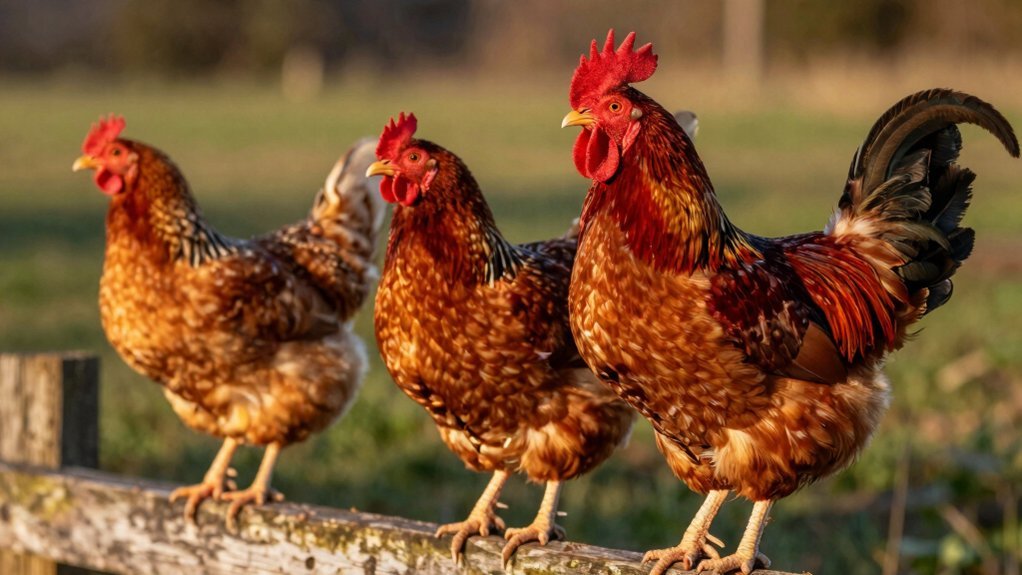
You’re probably wondering what makes “Brown Red Game” different from other gamefowls, and you’re right to ask. It’s not a single breed but a historic color type that began in Southeast Asia, was refined around 1870 through the Wingate Red Line, and now shows up in Old English Game and similar heritage lines. Expect a lean, athletic bird with deep mahogany plumage, a near‑black breast, and a spirited, flighty temperament that thrives in free‑range settings but can be a handful for beginners; if you keep reading you’ll find out how to raise them successfully.
Define Brown Red Game Chickens
What exactly is a Brown Red Game Chicken? You’re probably wondering why the name sounds like a color swatch instead of a breed. It isn’t a single closed breed; it’s a historic gamefowl color type that appears across Old English Game and other heritage lines.
What makes it stand out? The deep red, mahogany, or brown‑red plumage contrasts sharply with black or dark tail feathers, and the males sport a near‑black breast. You’ll see upright, alert carriage, lean bodies, and straight combs—traits honed for agility and flight. These energetic and agile birds are best suited to free-range environments where they can utilize their natural athleticism.
Why does it matter to you? Breeding nuances matter: breeders select for vivid hue, leg color, and vigor, preserving a pattern that dates back to European gamefowl ancestry. Its cultural significance shines in shows and fairs where heritage breeders celebrate tradition. Beyond their appearance, these birds possess an aggressive temperament that reflects their strong-willed nature and may make them unsuitable for beginners. While originally developed for cockfighting, many enthusiasts now keep these breeds for their hardiness, ornamental value, or historical interest.
Takeaway: The Brown Red Game Chicken is a color pattern, not a fixed breed, prized for its striking looks and historic roots. Ready to explore its lineage?
The Southeast Asian origins of the color type trace back to early domesticated chickens that naturally displayed reddish‑brown plumage.
Wingate Red Line: Origin & Evolution of Brown Red Game Chickens
If you’re wondering why the Wingate Red Line matters, you’re on the right track. You’re probably confused about how an Irish emigration story turned into a staple of Alabama farmsteads. Here’s the thing: around 1870, Joe Wingate imported a pure brown‑red strain from Northern Ireland, birds with dark legs, hazel eyes, and a medium frame. He set up a small operation on his Alabama farm, added a dark‑legged mahogany English hen for vigor, then line‑bred the offspring back to the Irish stock, preserving the classic color and fighting style. While this specific line-breeding strategy solidified the strain, broader chicken crossbreeding efforts often require multiple generations to consistently combine desirable traits like egg production or meat quality without introducing variability. Why does that matter today? Obviously, the line’s speed, slashing action, and strong gameness made it a foundation for later Brown Red breeding programs. The mix of Irish heritage and Southern refinement gave you a bird that’s both historic and performance‑oriented. Takeaway: the Wingate Red Line blends Irish emigration roots with Alabama farmstead refinement, creating a fast, game‑ready Brown Red. To maintain such distinct qualities over time, breeders must practice regular culling to remove inferior birds and ensure the flock retains its vigor and specific traits. Modern breeding programs now complement these traditional methods by utilizing advanced genetic tools to screen for health issues and improve welfare alongside performance traits. Next, you might explore how those traits translate into the birds’ physical characteristics.
Core Physical Traits of Brown Red Game Chickens
You’re probably wondering why the plumage, size, and stance matter when you first see a Brown Red Game chicken. You’ll notice rich brown‑red feather pigmentation that can shift from ginger to deep copper, with darker accents on the breast, tail, and wings. Some strains flash black tails with a green sheen, and occasional white tips add contrast. While specific game fowl lines rely on selective breeding, the broader expression of dark or light feathers in chickens is often determined by genes like the “e” gene.
How tall are they? Males stand about five pounds, hens four, both lean and athletic. Their upright, alert carriage—long legs, narrow bodies—makes them look ready to sprint. You’ll see dark legs, sometimes yellow, and hazel eyes that give a sharp, focused look. Like most chickens, they possess four toes arranged with three pointing forward and one backward to aid in gripping.
What about the head? The comb is usually straight, though minor variations appear across lines, distinct from other recognized types like the Single Combs found in many common breeds. Strong, well‑muscled legs support their balanced stance.
Leg colors vary: white/pearl most common, blue from other bloodlines, greenish willow rare, yellow less common. Takeaway: Feather pigmentation, comb variations, and the sleek, upright build define the breed’s visual identity. Next, consider how these traits influence their temperament and performance.
Temperament, Performance & Production Stats for Brown Red Game Chickens
You’re probably wondering how those striking brown‑red feathers translate into behavior and usefulness. You’ll find them spirited, active, and a bit flighty, yet they stay composed, evaluating a threat before striking. Their intelligence and alertness make them quick on their feet, so you’ll need secure housing to keep them from bolting. Given their athletic nature, be aware that while most chickens only reach 8 to 10 feet in height, lighter game breeds can occasionally soar much higher if motivated. What does that mean for performance? Expect rapid, strategic movements and strong legs that give them resilience in a fight. They’re athletic, delivering swift, precise strikes—perfect for heritage breeding where speed and cutting ability matter. How many eggs can you count on? Roughly 120 small‑to‑medium, eggs per year, with cream‑tinted shells. Fertility sits around 40‑55 %, and broody behavior shines—hens become dedicated setters and good mothers. Takeaway: they’re high‑energy, tactical birds that excel in performance, not commercial egg output. Next, consider how to manage their lively nature in your coop. Unlike giant breeds that may stand over 30 inches tall, these agile birds are generally more compact, fitting the profile of standard chickens which typically range from 16 to over 30 inches in height. To ensure they remain contained, installing 5 foot fences is recommended as this height effectively prevents chickens from escaping by jumping or flying.
Practical Raising Tips for Brown Red Game Chickens
How do I set up a brooder that keeps my chicks safe and comfortable? First, warm the heat source 24–48 hours before arrival, then set the temperature to 90–95 °F at bird level. Use a brooder guard so they stay near the heat and avoid piling in corners. Keep the space clean daily, swapping litter and washing feeders. Prioritize safety by choosing radiant heat plates instead of fire-prone heat lamps to prevent overheating and hazards. Position the heat source 18 to 24 inches above the floor so chicks can self-regulate using proper heat lamp positioning to move closer or farther as needed.
Space requirements matter: give game birds extra room to move,— at least 2 sq ft per chick—to curb pecking and stress. Non‑drafty housing prevents chilling, and you’ll want separate age groups until they’re fully grown. To accommodate their rapid growth and reduce stress, consider using adjustable brooders that can expand as the chicks get larger.
Heat management continues after the first week; drop the temperature about 5 °F each week until it matches outdoor conditions. Check the chicks daily for signs of crowding or feather loss.
Takeaway: a well‑heated, spacious brooder and regular cleaning set the stage for healthy growth. Next, consider how you’ll move them to supervised outdoor time. Crossing with Kelso can further enhance strength and bone structure.