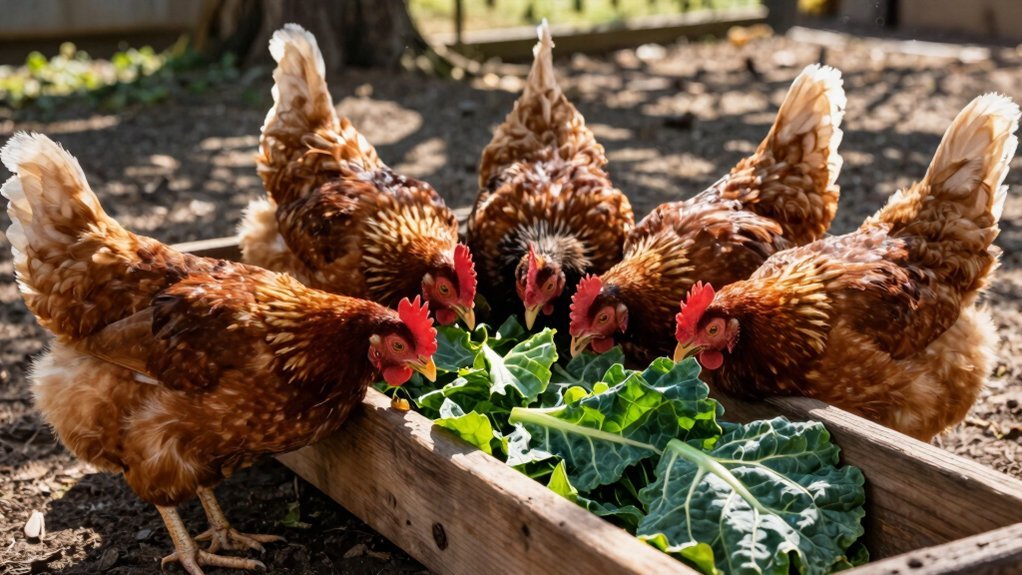
You’re right to wonder if collard greens are safe for chickens—yes, they’re a great supplement when you wash, trim the thick stems, and chop them into bite‑size pieces. A modest two‑tablespoon serving per laying hen (no more than 10% of the daily diet) boosts vitamins A, C, K, calcium, and fiber, improving feather quality, bone strength, and immunity. Just introduce them gradually, mix with regular feed, and remove leftovers after a few hours to avoid spoilage; doing this keeps digestion smooth and the flock healthy.
Do Chickens Safely Eat Collard Greens?
Do you wonder if collard greens are safe for your flock? You’re right to ask. The greens are generally safe when you serve fresh, clean leaves in moderation, and they appear on most poultry‑care lists as a tasty treat.
What should you watch out for?
Toxic look alikes, like certain nightshades, can sneak into a garden, so you must identify collards by their deep‑green, crinkly leaves and thick stems. Use garden pest management to keep weeds and harmful plants out of the feeding area, and always wash the greens to remove dirt or pesticide residue. Leaves should form 20‑25 % of a chicken’s natural diet. Just as with other watery vegetables, ensuring produce is pesticide-free cucumbers helps maintain overall flock health and safety. Like leafy greens such as spinach and kale, collards provide essential vitamins and minerals that support chicken health.
How much is enough?
Offer a handful of chopped leaves per bird each day; that’s roughly 5‑10 % of a chicken’s total diet. Overfeeding leads to loose droppings and can displace the balanced feed they need.
Takeaway
Collards are a safe, nutritious supplement if you keep portions modest, wash them well, and avoid toxic look alikes. Next, consider how to integrate them with other veggies for variety.
How Do Collard Greens Benefit Poultry Health?
If you’re wondering how collard greens actually help your chickens, you’ve hit the right spot. Their nutrient density packs vitamins A, C, K, folate, calcium and fiber into a low‑calorie bite, so a half‑cup serving can supply 150 % of vitamin A’s daily value and 15 % of calcium. This boosts feather quality, bone strength and overall metabolism without overloading calories.
Here’s the thing: the antioxidant benefits of collards—phenols, polyphenols, beta‑carotene and vitamin C—neutralize free radicals, easing oxidative stress. Less stress means healthier cells, stronger immunity and better resilience during temperature swings or egg‑laying peaks.
All right, the fiber keeps digestion smooth, feeding good gut bacteria and preventing constipation. In short, a modest daily offering enriches your flock’s diet, supports immune function and improves egg quality. Ready to add a fresh handful to their feed tomorrow? While collards provide a calcium boost, they should complement a diet centered on quality layer feed to ensure hens receive the precise 16-18% protein and balanced amino acids required for optimal production. Additionally, providing access to grit alongside these greens supports proper digestion and overall chicken health. To maintain consistent production, treats like collards must not exceed 15% of the diet, ensuring the birds primarily consume their complete layer feed for balanced nutrition.
What’s the Best Way to Prepare Collard Greens for Chickens?
Ever wondered how to turn fresh collard greens into a safe, tasty treat for your flock? First, master a solid washing technique: rinse each leaf under running water, rub gently, and inspect for wilt or insect damage. If you tear or chop the greens, rinse again to wash off debris.
Now, trim the thick central stems and fibrous ribs—these parts are hard to chew and digest. Tear large leaves into bite‑size pieces; younger birds love finely chopped bits.
Here’s the thing about cooking methods: a quick blanch or a light steam for two minutes softens the leaves without stripping nutrients. Skip oil, salt, or seasonings—plain is best. Overcooking makes them mushy and reduces nutritional value. Just as cooking neutralizes toxic lectins in green beans, applying heat to collards ensures they are easier to digest for your chickens.
All right, serve the prepared greens as a clean supplemental treat, mixing them with regular feed if you like. Remove leftovers after a few hours to prevent spoilage. Just like other leafy greens such as kale and spinach, collards are a vitamin-rich choice that supports overall flock health when fed in moderation. Remember that while nightshades like white potatoes contain harmful solanine, collard greens remain a completely safe alternative for your birds.
Takeaway: clean, trimmed, lightly blanched greens keep your chickens healthy and happy. Ready to try this simple prep and see how your flock reacts?
How Much Collard Greens Should a Flock Eat?
When you wonder how much collard greens your flock can safely eat, the answer is simple: treat them like a garnish, not a meal. You’ll want portion moderation: a couple of chopped leaves per bird, roughly two tablespoons for laying hens, keeps treats under the 10 % rule.
Now, for flock calculation, start with the total number of birds and multiply by that two‑tablespoon cap. If you have 30 hens, that’s about 60 tablespoons—or just under a cup—of greens per day. Spread it loosely on a tray; don’t pile it high.
All right, remember to adjust if you’re also giving other treats. Reduce the greens so the combined treat amount stays below 10 % of each bird’s daily intake, ensuring their primary nutrition comes from quality grains or pellets. Always remove any uneaten leftovers promptly to prevent spoilage and pests. Just like with mustard greens, introducing these leafy vegetables gradually helps avoid upsetting your chickens’ digestive systems.
Takeaway: Keep greens tiny, tally them per bird, and stay under the 10 % treat ceiling. Next, check how often you should offer them. Brassica plants tolerate frost and grow well in winter.
Common Mistakes When Feeding Collard Greens
You’re probably wondering why a handful of collard greens can sometimes cause chaos in the coop. The first mistake many make is treating greens like a staple instead of a treat. Overfeeding crowds out the balanced feed you already give, so you see looser droppings and reduced egg production.
Here’s the thing: you must introduce greens gradually. Start with a few chopped leaves mixed into the regular feed and watch how the birds react. This eases digestion and prevents flock competition for the limited treat.
Now, storage tips matter. Keep greens in a sealed container in the fridge and use them within two days; wilted leaves become slimy and attract mold.
All right, always wash and trim the stems. Tough stems and oversized pieces waste time and cause the bigger birds to dominate, leaving the smaller ones hungry.
Obviously, you’ll need clean water and grit whenever you serve fibrous greens, especially for chicks.
Just as wing feather shape helps distinguish male from female chicks, observing how different birds handle new foods can reveal underlying health or dominance issues within the flock. While collard greens are a great supplement, remember that other treats like gourd seeds offer protein and healthy fats that can further enhance egg quality. To prevent nutritional gaps, ensure treats do not dilute the essential nutrients found in your flock’s primary balanced feed.
Takeaway: treat collard greens as a small, clean, and well‑stored supplement, introduce them slowly, and watch for competition.
Next step: try chopping a handful, mixing it into today’s feed, and note any changes in droppings or appetite.