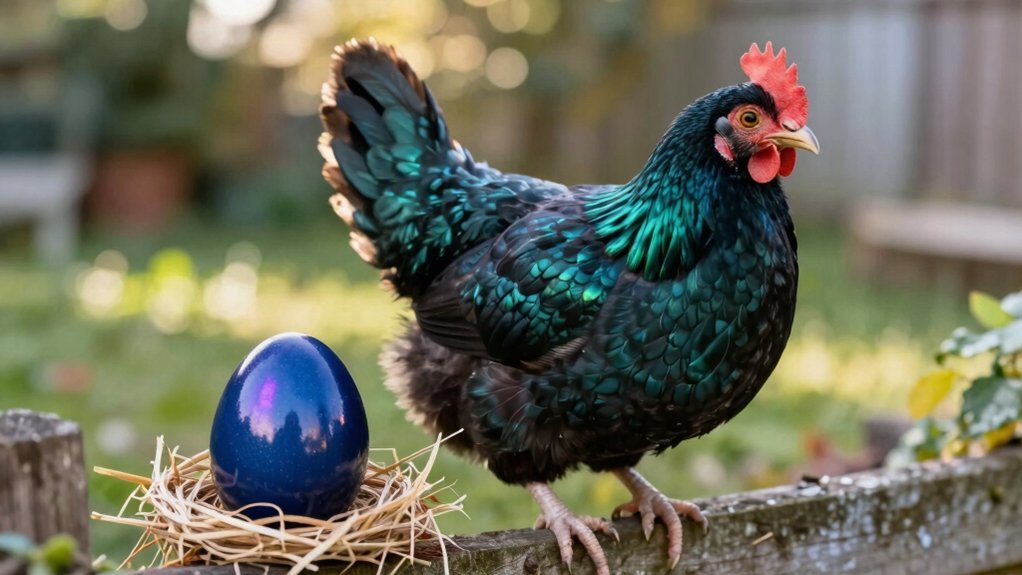
You’re probably wondering why the Sapphire Olive Egger’s slate‑gray “blue” plumage and olive‑green eggs look so unique, and how to keep them laying 240‑290 eggs a year. Here’s the thing: the blue base from oocyanin mixes with brown protoporphyrin, giving olive‑green shells, while the blended slate‑gray and olive‑egg genetics create that striking uniform plumage. Feed them 16‑18 % protein layer feed a week before laying, give oyster shells for calcium, and give each bird 4 sq ft inside plus 10 sq ft run space; a calm, predator‑secure coop with a visual barrier will keep them happy and productive. If you follow these basics, you’ll see why they’re a low‑broody, friendly layer and you’ll be ready to dive deeper into flock management.
What Sets the Sapphire Olive Egger’s Plumage Apart?
What’s confusing you is why the Sapphire Olive Egger looks so different from other backyard birds. You’ll notice its slate‑gray “blue” plumage, which actually means a uniform, light‑grey feather color that stands out in a flock. This hue comes from color genetics that blend slate‑gray with olive‑egg traits, so you may see slight tone shifts, but the overall look stays smooth and neat. Unlike the related Sapphire Gem which lays brown eggs, this breed is distinct for its ability to produce colored shells alongside its stunning blue plumage. While specific genes like *MLPH* drive these shades, broader melanin pigments fundamentally determine whether feathers appear dark or light across various breeds. Why does the crest matter? The feathered tuft on the head is the breed’s signature, setting it apart from Sapphire Gems and Splash varieties that lack a crest. You’ll spot the crest instantly—think of it as a tiny crown that adds silhouette and personality. Crest care is simple: keep the head clean and check for mites weekly. A gentle brush removes debris without damaging delicate feathers. Just as chicken keepers must monitor toxic compounds in treats like chives to prevent health issues, maintaining overall flock health supports the vitality needed for such distinct physical traits. Takeaway: The blue plumage and crested head define the Sapphire Olive Egger’s unique appearance; proper crest care keeps that signature look sharp. Next, explore how its egg‑color genetics work.
Why Do Olive Egggers Lay Olive‑Green Eggs?
You’re probably wondering why those glossy olive‑green shells show up in your coop, especially after admiring the breed’s slate‑gray plumage. The answer lies in breeding genetics: you cross a blue‑egg layer, which deposits oocyanin throughout the shell, with a dark brown‑egg layer that adds protoporphyrin on top.
Here’s the thing: pigment layering happens in two stages. First the blue pigment lays down a uniform base. Then the brown pigment overlays it, partially masking the blue. The more brown you get, the darker the olive tone.
All right, the exact shade depends on how strong each parent’s gene is. A strong blue‑egg gene gives a vivid green base, while an intense brown‑egg gene deepens the olive. This process occurs as pigments are applied within the shell gland during the final hours of egg formation. It is important to remember that variations in egg shell color result solely from genetics rather than diet.
Takeaway: olive‑green eggs result from a precise blend of blue and brown pigments, controlled by the genetics you choose. Next, consider how to select parent breeds for consistent color. While most hens produce this distinctive hue, occasional exceptions exist depending on the specific parentage used in the cross.
Feeding Your Olive Egger for 240‑290 Eggs/Year
How should I feed my Olive Egger to hit 240‑290 eggs a year? You’re wondering why your birds aren’t laying as often as you’d like. The answer lies in steady protein levels and smooth ration shifts.
What protein should I give?
Start with chick starter (18‑20% protein) for the first 4‑6 weeks, then move to grower feed (15‑18% protein) until they’re about five months old. A week before the first egg, switch to a layer diet that holds 16‑18% protein. This keeps growth on track and avoids a sudden nutrient shock.
How do I handle the switch?
Mix a small amount of layer feed into the grower ration for three days, then gradually increase the layer proportion. This gradual changeover lets the digestive system adapt without stress. Layer feeds usually contain about 16-18% protein and increased calcium levels to support eggshell strength and overall hen health. Consistent access to fresh water is also a fundamental part of a healthy feeding regimen that supports high egg production.
Do I need extra calcium?
Yes. Offer oyster shell separately so laying hens can self‑regulate intake. Don’t force calcium on non‑layers; it can upset gut balance. Unlike layer feeds, quality grower formulas avoid excessive calcium to reduce health risks while supporting muscle and bone development during the maturation phase.
Takeaway
Consistent protein and careful ration changes give your Olive Egger the nutrition it needs for a full 240‑290‑egg year. Next, think about the coop layout that lets them move freely while staying safe.
Coop and Free‑Range Set‑Up for Olive Egggers
If you’re wondering why your Olive Egggers seem cramped or stressed, you’ve hit the right spot. You need at least 4 sq ft per bird inside the coop; larger birds or mixed-size flocks benefit from extra room. Give each hen a 12-inch nesting box, one box per three chickens, and place them low-traffic, dim corners for quiet laying.
Now, the run should offer about 10 sq ft per bird, especially when weather forces them inside. Secure fencing, sturdy latches, and covered overhead provide predator protection and security enhancements. Rotate pasture sections to keep ground fresh and reduce parasites. While these minimums work, providing larger spaces than minimums is beneficial to reduce stress and health issues among hens. If your flock lacks outdoor access, you must increase the indoor space by roughly 50% per bird to maintain their well-being. For part-time free rangers, the required outdoor area can be slightly reduced to 5 to 8 square feet per bird while still ensuring their health.
All right, remember: spacious indoor and outdoor areas plus solid predator protection keep your Olive Egggers happy and productive. What will you adjust first?
Temperament, Broodiness & Flock Tips for Beginners
Since Sapphire Olive Egggers are known for being friendly, docile, and active, you’ll find them calm around people and easy to mix with other breeds. You’re probably wondering how they behave in a backyard setting—here’s the thing: they stay curious, wander the yard, and rarely panic unless you swoop in too fast. Calm handling keeps skittish roosters from jumping, and the hens stay quiet enough for neighbors.
Do they brood? Not often. Most hens lay consistently and rarely sit on eggs, so you won’t lose production to mothering instincts. If a hen does go broody, it’s a brief hiccup, not a regular pattern.
How do you fit them into a flock? Aim for about one rooster per twelve hens and introduce them slowly to existing birds. Their mild nature makes mixed flocks work smoothly, and they’ll forage actively without overwhelming newcomers. Keep an eye on rooster interactions, but overall, the flock stays peaceful. Although not officially recognized as a breed, their distinct physical traits like puffy cheeks and pea combs make them easy to identify in a diverse coop. Like their parent Olive Egger lineage, these hybrids are valued for combining a calm temperament with reliable egg production. To minimize stress during this transition, you can use a visual barrier so birds can see and hear each other without physical contact initially.
Takeaway: Sapphire Olive Egggers offer friendly, low‑broody birds that integrate well into mixed flocks with calm handling. Next, consider how to set up a coop that lets their curiosity shine while protecting them from predators.