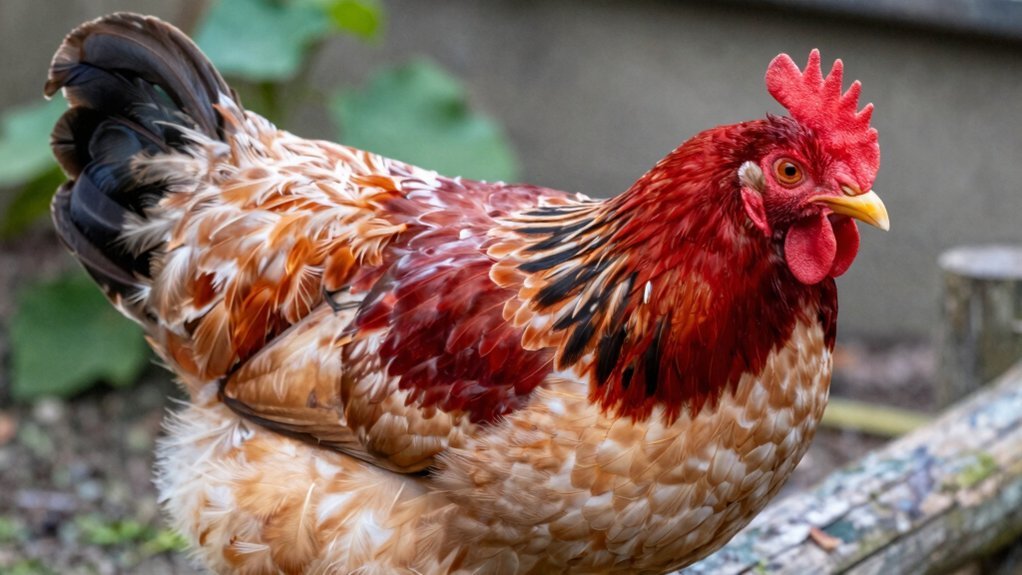
You’re probably wondering why the red‑shouldered Yokohama looks so distinct. It’s a tiny heritage breed—under 1,000 birds worldwide—originating from 1860s Japanese imports that German breeders refined with Malay, Phoenix, and Sumatra outcrosses, giving it a glossy white body, a vivid red shoulder patch, and a walnut‑shaped comb that sits low on the head. Hens weigh about 3.5 lb, roosters 4.5 lb, and they lay small cream‑white eggs with 40–55% fertility, often going broody after a dozen eggs. If you keep reading, you’ll find out how to house, feed, and protect this rare, elegant bird.
Yokohama Chicken History
Why did the Yokohama chicken start in Japan? You’re probably wondering why a bird named after a Japanese port ends up in Europe. The answer lies in the Minohiki, long‑tailed ornamental birds that Japanese breeders kept for centuries. In 1864, traders shipped a few from Yokohama to Paris, and Europeans renamed them “Yokohama” after the departure point, sparking European naming confusion that still lingers today.
What happened after the French import? Germany took the lead. Hugo du Roi and fellow German breeders used outcrosses to Malay, Phoenix, and Sumatra to bolster the fragile imports. Their selective work forged the modern type, cementing German development origins that define the breed’s look and temperament. While some breeds like the Silkie are known for soft crest feathers due to a lack of barbicels, the Yokohama maintains a sleeker head structure suited to its ornamental tail focus. Unlike the Polish or Houdan which display gorgeous head plumage, the Yokohama prioritizes tail length over cranial ornamentation.
Takeaway: The Yokohama’s journey began with Japanese Minohiki, traveled through French ports, and was refined in Germany. Next, you might explore how its distinctive red shoulder and walnut comb set it apart. While the Yokohama is prized for its tail, other breeds like the Silkie are famous for their feather-footed appearance which offers protection from cold climates.
Signature Red Shoulder and Walnut Comb Identification
What makes a Red‑Shouldered Yokohama instantly recognizable? You’re probably wondering why the shoulder flash and comb shape matter. The answer lies in Genetic Dominance and Color Genetics: a dominant white gene blankets the body, while an incomplete‑dominance red gene paints the shoulders and upper back, giving you that clean, concentrated blaze. While specific genes like SOX5 influence patterns in other breeds, the interplay of melanin and carotenoids ultimately dictates the depth and distribution of these vibrant feather colors. Just as mutations in the KRT75 gene can alter feather structure in other varieties, specific genetic factors define the unique physical traits of this breed. How do you spot the walnut comb? Look for a broad, round, bumpy crown that sits low on the head—nothing like a single comb. This texture, combined with red earlobes, signals the Yokohama lineage instantly. Unlike the Strawberry Combs also found in Yokohamas which resemble strawberries, the walnut variety presents a distinct shell-like surface. Takeaway: the red‑shoulder blaze and low, bumpy walnut comb together form the breed’s signature ID. Next, compare these markers to similar long‑tailed breeds to confirm you’ve got the right bird.
Yokohama Chicken Breed Standard: Size, Weight, and Plumage
You’re probably wondering why the size, weight, and plumage matter for a Red‑Shoulder Yokohama, and that’s a great question. Here’s the thing: the breed’s standard keeps the bird compact despite its dramatic tail, so you’ll see mature hens around 3.5 lb and roosters near 4.5 lb. Pullets and cockerels start at roughly 3 lb and 4 lb, respectively, giving you clear weight benchmarks for show preparation.
What makes the plumage description stand out? The base is bright white, while a vivid red shoulder patch pops like a signal flag. Occasionally the red spills down the breast and torso, creating a striking contrast that judges love. The feathers stay lustrous and clean, adding to the bird’s ornamental silhouette.
Overall, you’ll recognize a slender, upright bird with a walnut‑shaped comb and yellow legs. The long saddle and tail feathers may make the bird appear larger than its actual body size, but the weight benchmarks keep it lightweight and agile. Unlike giant breeds that can exceed 30 inches in height, the Yokohama remains a lighter, more agile fowl suited for ornamental purposes rather than meat production. While often mistaken for true bantams due to their manageable size, Red-Shoulder Yokohamas are actually miniature bantams bred down from larger standard fowl. Just as Polish chickens display diverse patterns like silver laced varieties, the Yokohama relies on specific color markings to meet exhibition criteria.
Takeaway: focus on the precise weight ranges and the crisp plumage description to meet the APA standard. Next, you might explore how temperament influences handling.
Yokohama Chicken Temperament: Activity, Quietness, and Handling
You’ve probably wondered how the sleek, white‑and‑red bird you just sized up behaves day‑to‑day. You’ll find it darts around the yard, alert and curious, so activity monitoring shows it loves space. It’s not a nonstop chatterbox, but when you’re nearby it stays calm, making the flock surprisingly quiet. Given their complex communication with over 30 vocalizations, these birds use specific sounds to maintain their strict social hierarchy. If prevented from expressing these instinctual behaviors, chickens may exhibit harmful behaviors due to frustration.
Here’s the thing: handling a Yokohama feels like cradling a long‑tailed cat. You can tame it quickly with gentle, low‑stress movements; temperament training works best when you reward calmness with treats. Roosters may need a break from dominant males, but females mingle easily if you give them room to roam.
All right, the takeaway: give them space, keep handling soft, and you’ll enjoy an active yet peaceful companion. Ready to plan your secure enclosure?
Unlike the docile breeds often recommended for families, Yokohamas require more space and active engagement to thrive.
Yokohama Chicken Egg Production: Numbers, Color, and Hatchability
egg fertility rates hover around 40‑55 %, so roughly half the eggs can hatch if you have a good rooster. Seasonal laying patterns mean production dips in colder months, so you’ll collect fewer eggs for hatching then.
All right, you’re probably wondering if the hens stay broody. They often go broody after 12‑14 eggs, and that natural mothering can boost hatchability, though it’s only “workable,” not exceptional. Since chicken eggs typically require about 21 days to hatch with stable temperature and humidity, a broody hen must maintain these conditions consistently to ensure success. During this time, the hen will remain on the nest almost continuously, leaving only briefly to eat, drink, and relieve herself.
Takeaway: expect modest, seasonal egg output, cream‑white shells, and moderate fertility—perfect for hobby breeding, not commercial egg sales. Next, consider how housing will support their broody instincts.
Ideal Housing: Roost Height & Free‑Range Space
How high should the roosts be for Red Shoulder Yokohama? You’re probably wondering why the advice pushes you past 4 feet. The birds love a perch that’s high enough to keep their long tails off the litter, so aim for 4‑5 feet on the lowest side, using 20‑inch bars as a starter. This height lets you walk underneath, preserving floor space for feeding and nesting.
Now, about draft reduction and ventilation. Place vents at least 18 inches above the roosts; the extra clearance pulls fresh air through without chilling the sleepers. Good airflow keeps the coop healthy and cuts the risk of frostbite. Positioning these elevated perches away from nesting boxes is also crucial to maintain egg cleanliness and prevent soiling during the night.
All right, free‑range needs. Give them a spacious run where they can sprint and forage; the more room they have, the less they crowd the roosts at night. A 10‑square‑foot per bird outdoor area works well.
To ensure stability and comfort, construct the bars using sturdy 2×2 lumber spaced about twelve inches apart to prevent wobbling under the birds’ weight. For optimal grip and foot health, shape these perches to be approximately 2 to 2.5 inches wide rather than leaving them round or too narrow.
Takeaway: high roosts, clear ventilation, and generous outdoor space keep your Red Shoulder Yokohama comfortable and thriving. Next, consider how you’ll schedule their outdoor access.
Feeding for Long Tail Growth: Protein Needs and Seasonal Care
If you’re wondering why your Red Shoulder Yokohama’s tail isn’t elongating as fast as you’d like, the answer lies in protein and seasonal timing.
How much protein does a growing tail need?
You should aim for 20 % protein while chicks develop their tail feathers, then keep it at 16‑18 % for pullets and laying hens. During molting, boost the diet with extra amino acids—think “molting nutrition” as a high‑protein treat or insect supplement. While specific show breeds differ from meat birds, providing continuous access to feed ensures consistent nutrient intake required for sustained feather development. It is also critical to provide fresh water consistently, as it is a fundamental part of a healthy feeding regimen that supports overall growth and feather quality. High-quality protein supplements enriched with beneficial microbiota can further support digestive health and maximize the digestibility needed for optimal feather development.
What changes with the seasons?
Winter lowers appetite, so you’ll need “winter supplementation” of nutrient‑dense feed to meet the extra energy demand. In warm months, free‑range activity may increase intake, but keep the protein level steady.
Takeaway
Match protein to life stage and season, and watch the tail grow. Next, consider how to keep those feathers pristine for show‑time.
How to Groom Your Yokohama for Shows
You’re probably wondering why the timing of each grooming step feels so critical before a show. You’ll find the sweet spot is three to four days out, giving feathers a chance to dry and natural oils to return. Start with a gentle washing technique: pre‑soak, then a mild poultry‑safe shampoo, letting the water soak the skin for 30‑60 seconds. Rinse thoroughly—any soap left will crust the plumage. The bird is slowly incorporated into the water to soak all feathers completely. Now, move to drying methods. Pat the bird with a towel using a wrap‑and‑stroke along feather direction, then set a blow‑dryer on low, warm, about eight inches away. Let the bird rest on a clean, dry surface until completely dry. Finally, condition the comb and legs, trim nails weeks before and keep hard grains on hand. Takeaway: schedule washing three days before, use a careful washing technique, and finish with gentle drying methods for a pristine, show‑ready Yokohama.
Yokohama Chicken Conservation Status & How to Support the Breed
Takeaway: Understanding the breed’s precarious status shows why your involvement matters.
You’re probably wondering why Yokohama chickens are listed as Threatened and what you can actually do. Obviously, fewer than 1,000 birds exist worldwide, with under 500 in the U.S., and only a handful of flocks have 50 + birds. This tiny genetic pool makes disease or loss devastating, so every responsible breeder counts.
How can you help?
Now, start by buying from reputable specialty breeders who keep documented bloodlines and avoid inbreeding. Support the Livestock Conservancy’s conservation fundraising strategies, and look for breed sanctuary partnerships that protect small flocks. Share the breed’s story on social media to spark demand for heritage poultry.
What’s the next step?
All right, join a heritage‑breed network, attend a local exhibition, and ask breeders how they rotate pairs to preserve diversity. Your active participation can keep Yokohama tails wiggling for generations.