You’re right to wonder why some chickens sport outward‑curled feathers and what that means for their care. The frizzle trait, an incomplete‑dominant gene (Ff), shows up in breeds like Cochins, Polish, Brahmas, Porcelain d’Uccle, and Faverolles, giving a soft, ruffled look, but two copies (FF) make frazzled, fragile feathers that need extra protection. Because the curl creates gaps, these birds lose heat faster, so you’ll want a draft‑free coop, extra insulation, and a 20‑25 % boost in winter feed. Pair a frizzle (Ff) with a smooth bird (ff) to avoid frazzles, and keep an eye on moisture and parasites hidden in the curls. If you follow these basics, you’ll keep your frizzles healthy and happy while you explore deeper breeding and housing tips.
What Is a Curly‑Feathered (Frizzled) Chicken and Why It Matters?
What exactly is a frizzled chicken and why should you care? You’re probably wondering what makes those fluffy, outward‑curled birds different from ordinary fowls. The answer lies in a single gene that mutates keratin, giving feathers a springy, puffball look. This genetic identification is an incomplete dominant, so one copy already produces the curl, while two copies can weaken feather structure and raise welfare concerns.
Here’s the thing: the frizzle’s ornamental value skyrockets in shows because the visual impact is dramatic—think of a feathered fireworks display. You’ll see it in both bantams and standard breeds, making it a versatile novelty trait. Unlike Silkie chickens that possess soft, fur-like feathers due to a lack of barbicels, frizzle feathers specifically curl outward rather than lacking rigidity. Just as feather-footed bantams need regular checks for leg mites, frizzled birds require vigilant monitoring because their unique plumage can hide parasites and debris more easily. While some breeds like Brahmas and Cochins rely on feathers growing on their legs for cold protection, frizzled varieties often struggle with insulation due to their open feather structure.
All right, remember that the curl reduces insulation, so you’ll need extra wind protection and careful temperature management. The takeaway? You gain a striking bird for exhibition, but you must balance aesthetics with practical care. Ready to explore which breeds showcase this trait best?
Breeds That Often Produce Curly‑Feathered Chickens
If you’re wondering which breeds actually give you that eye‑catching frizzle, you’re not alone—many hobbyists get tangled up in the names.
Which breeds show the most curly origins?
Cochin tops the list because its dense plumage makes the frizzle genetics pop, whether you pick a bantam or a standard. Polish follows closely; its head crest plus body feathers curl dramatically, perfect for show flocks. Silkie‘s fluffy base turns extra‑soft when frizzled, earning it the nickname “Sizzle.” Brahma adds size and feathered legs, so the curl stands out even more. The Porcelain d’Uccle is another distinct option known for its feathered legs and full beard, adding unique texture to the frizzle variety. The Faverolle also contributes to this aesthetic with its unique beard-like facial feathers that enhance the soft, fluffy look of the frizzle variety.
Can you cross other breeds?
Definitely. Orpingtons, Australorps, Plymouth Rocks, Japanese, and Pekins all accept frizzle genetics, producing about half frizzled chicks when paired with smooth birds. While curly feathers are a visual trait, selecting hardy breeds like the Rhode Island Red ensures your flock remains excellent dual-purpose birds capable of thriving in various climates alongside their ornamental counterparts.
Takeaway: Choose a breed that matches your flock’s purpose, then enjoy the visual flair of curly origins. Next, learn how to spot a frizzled bird in your yard.
How to Spot a Curly‑Feathered Chicken Versus a Smooth‑Feathered One
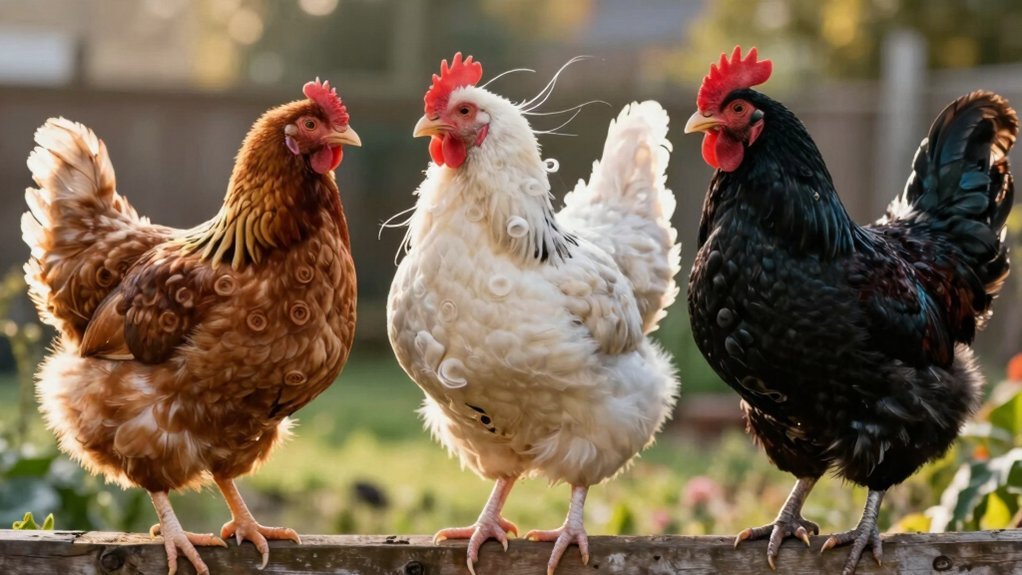
You’re probably wondering how to tell a curly‑feathered chicken from a smooth one at a glance. Here’s the thing: visual identification hinges on the bird’s silhouette. Curly birds sport a ruffled outline; their feathers angle outward, creating a fluffy, wind‑blown look even when they’re still. Smooth birds stay compact, sleek, and their plumage lies flat against the body.
What causes that look? Structural differences in the feather shaft and barbs. Smooth feathers lock together in a tight plane, so they feel sleek and shed water easily. Curly feathers have a growth pattern that makes the shaft bend, causing edges to flare and the texture to feel looser. While structural shape defines curl, specific genes like SOX5 also dictate major variations in feather pigmentation across different breeds.
Now, check the back, wings, and tail coverts. If the feathers stand away from the body, you’ve got curly. If they hug the line, they’re smooth. Take a quick feel: curly feels soft and uneven; smooth feels directional and firm. Obviously, the fluffy‑key is the combination of shape, direction, and texture.
Takeaway: a quick glance at contour plus a gentle stroke tells you which feather type you’re looking at. Next step—inspect the skin for moisture or parasites, since curly feathers trap more debris. It is important to remember that these structures grow from a feather follicle and can be actively raised or lowered by muscle action. Because their unique outward-curled feathers provide less insulation, these birds require special protection from wet and cold conditions to avoid frostbite.
Breeding Curly‑Feathered Chickens Without Frazzled Offspring
How do I keep my curly‑feathered chicks healthy while avoiding frazzles? You’re worried about fragile plumage, and you asked the right question.
What pairing avoids frazzles?
Here’s the thing: genetic counseling tells you to pair one frizzle bird (Ff) with a smooth‑feathered bird (ff). That Ff × ff combo usually yields 50 % curly and 50 % smooth offspring, eliminating the 25 % frazzle risk you’d see in an Ff × Ff match. Frizzle gene is incomplete dominant. Just as crossing distinct breeds can enhance traits through hybrid vigor, selecting the correct parental genotypes ensures optimal feather structure and overall bird health. Modern breeding programs similarly utilize advanced genetic tools to screen for health issues and ensure the welfare of the flock alongside trait selection. However, failing to manage these pairings carefully can lead to inbreeding that increases the expression of harmful recessive traits, causing deformities and reduced fertility similar to the risks seen when mating two frizzles.
How do you pick the right mate?
All right, start by identifying each bird’s feather genotype before you let them mingle. Separate pens prevent accidental frizzle‑by‑frizzle matings, and you can keep a simple record of who’s paired with whom.
What’s the takeaway?
Choose a frizzle‑smooth pairing, track genetics, and keep pens distinct. This strategy protects feather quality and bird welfare. Next, consider how to monitor feather development in the hatchlings.
Why Curly‑Feathered Chickens Get Cold Faster – and How to Keep Them Warm
When your curly‑feathered chickens shiver faster than the rest of the flock, the culprit is the way their feathers curl outward instead of lying flat, leaving gaps that let wind and moisture bite the skin. This structure creates extra heat loss, so the birds rely on metabolic strain to stay warm. You’ll notice them puffing, huddling, or standing on one leg—classic signs they’re fighting the cold.
How does the feather shape affect warmth?
Because the feather “shell” isn’t tight, air rushes in and warm air escapes. Imagine a leaky blanket; the more holes, the faster you chill. The gaps also let dampness reach the skin, which steals heat faster than dry air. While some breeds are naturally resilient, prolonged exposure to cold stress can lead to reduced performance and potentially death if temperatures drop too low without a draft-free shelter.
What can you do right now?
Boost high‑energy feed by 20‑25 % in winter, keep water unfrozen, and shelter them from drafts. A dry, draft‑free area reduces the extra metabolic strain they’d otherwise endure. The birds are more active in cooler weather, which helps them generate heat. Utilizing the deep litter method provides natural insulation through decomposing bedding to further protect vulnerable birds from the cold. This sustainable approach generates natural heat as beneficial microbes break down carbon-based bedding and manure, offering an extra layer of warmth during freezing months. *Takeaway:* Curly feathers mean higher heat loss, so feed and shelter must compensate. Next, check your coop’s bedding and draft control.
Coop and Bedding Setup for Curly‑Feathered Chickens
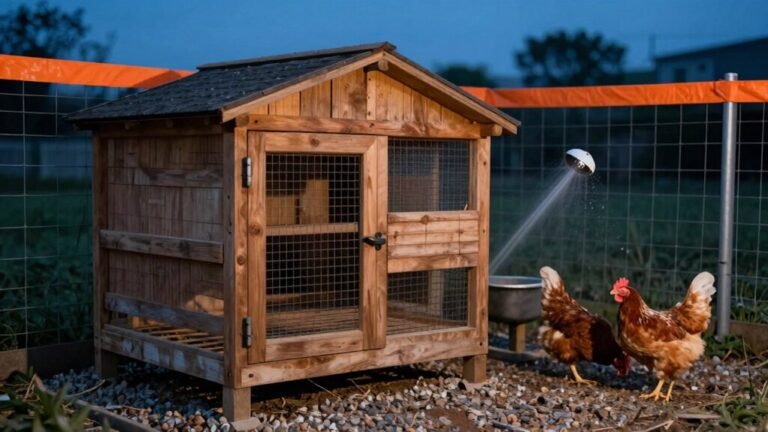
Any coop you set up for curly‑feathered chickens needs extra space and dry bedding to keep those delicate birds comfortable. You’ll want at least 4 sq ft per Frizzle inside, plus a larger run to offset their slower flight. A wide, level floor gives safe flooring and lets them nap on the ground without slipping. Use deep pine shavings; keep them thick enough to cushion floor‑sleepers and replace them before they get damp. While pine is popular, you must ensure it is heat-treated shavings to reduce harmful dust and toxins that can damage respiratory systems. Avoid using cedar shavings entirely because plicatic acid found in cedar is toxic to chickens and can cause serious respiratory illness. Research indicates that cedar dust acts as a carcinogen and can lead to liver damage or death, particularly in vulnerable birds. Here’s the thing: dry ventilation is your best friend. Install adjustable vents high and low, then monitor for drafts—curly feathers trap moisture, so stale, humid air can chill them fast. A simple screen on the door lets breeze flow while keeping predators out. All right, remember to give each bird a low perch or ramp, and a nest box for every three hens. That reduces pecking and lets you check litter health quickly. Takeaway: spacious, dry, well‑ventilated coops with safe flooring keep curly‑feathered chickens happy and healthy. Next, think about how to arrange roosts without forcing jumps.
Safe Roosting Tips for Delicate Curly‑Feathered Chickens
You’re probably wondering why a comfy coop isn’t enough if your frizzled hens need a good roost. You need a flat, wide perch—1×2 or 2×4 lumber works best—so they can sleep flat‑footed without straining. Sand the edges smooth, keep the surface textured yet slip‑free, and give each bird about 8 inches of space to avoid crowding. Pre-drilling holes before fastening the lumber prevents splitting and ensures a sturdy frame that won’t wobble under the birds’ weight.
How do you make the roost safe and easy to clean? Place it 1.5–3 feet off the ground, staggered with 12‑inch steps, and keep at least 18 inches from walls. Ramps or low ladders help delicate birds reach the perch without hard landings, and the design should let you pull droppings away quickly. Positioning roosts away from nesting boxes is essential to maintain egg cleanliness and prevent contamination from night-time droppings.
What’s the key takeaway? A sturdy, low‑to‑mid‑height flat perch with rounded edges, ample spacing, and easy access protects feet, improves nesting box accessibility, and speeds droppings removal ease. Now, test the perch height and adjust until your hens settle comfortably. Adding a ladder for gentle ascent ensures birds can climb without injury.
Essential Daily‑Care Checklist for Curly‑Feathered Chickens
If you’re wondering why a simple “check‑off” list feels overwhelming for frizzled hens, you’ve hit the right spot.
Morning health check
You walk the flock, watching posture, breathing, and balance. Spot matted curls, droppings stuck in feathers, or damp spots. Scan eyes, nostrils, comb, and skin for discharge, swelling, lice, or mites. Note any lethargy or reduced appetite and record changes.
Feed and water routine
Fresh water stays full all day; refill before it runs low. Offer high‑quality feed, bump protein a bit during seasonal molting for feather growth. Keep feed dry, add grit and oyster shell as needed.
Coop and bedding cleanup
Remove droppings and soiled litter daily. Replace wet bedding promptly, especially under roosts. Keep the coop dry, draft‑free, and well‑ventilated.
Feather and body care
Inspect curls each morning; gently clean mud or droppings. Provide dust‑bathing material for natural pest control and parasite prevention.
Weather adjustments
Add shelter in cold weather; guarantee shade and cool water in heat. Improve drainage during rain to keep feathers dry.
Takeaway: Consistent, simple checks keep curly‑feathered chickens healthy and happy. Ready to set up your daily routine?