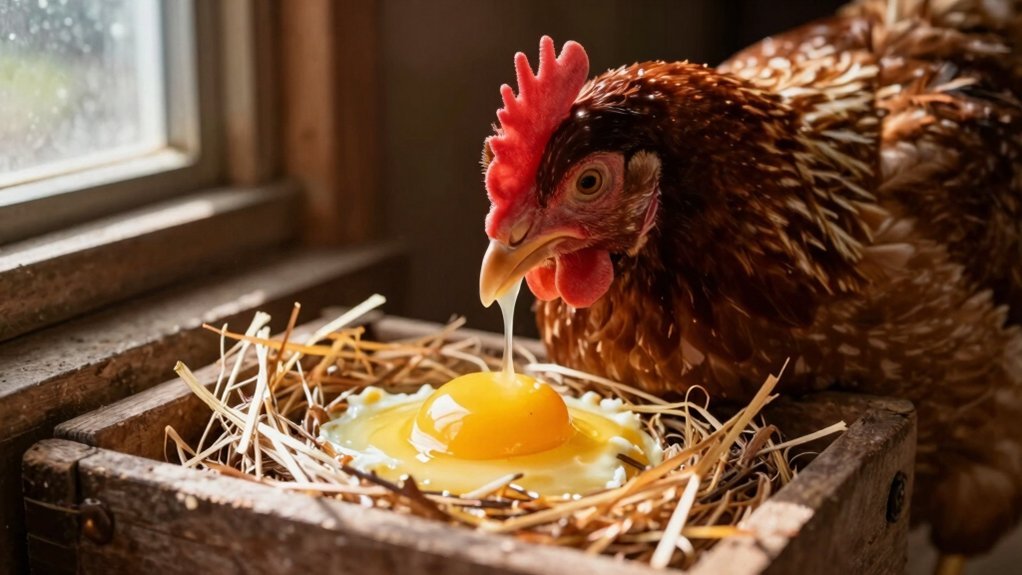
You’re wondering if scrambled eggs are safe and what happens when hens eat their own eggs, so you asked the right question. Scrambled eggs, fully cooked and plain, are fine as an occasional high‑protein treat—think one tablespoon per bird, once a week, especially during molt or recovery. They won’t trigger egg‑eating habits because the birds don’t associate a cooked snack with their own shells, unlike broken fresh eggs. Just cool the eggs, serve in small pieces, and keep the main diet balanced; then you’ll see healthy, satisfied hens.
Are Scrambled Eggs Safe for Chickens? – Quick Answer
If you’re wondering whether scrambled eggs are safe for your chickens, you’ve hit the right question. You’ll find the quick answer is yes—provided you cook them fully and keep them plain. The nutritional breakdown shows egg white delivers most of the protein, while the yolk supplies fat, vitamin D, and other vitamins. Ingredient considerations are simple: no raw eggs, no heavy seasonings, and only small portions so treats don’t replace balanced feed.
Here’s the thing: eggs act as a high‑protein, high‑fat snack, not a staple. Overfeeding can unbalance the diet and may spark egg‑eating habits. Use them sparingly, especially for chicks or sick birds, and keep commercial feed as the main source. Crushing the shells into the mix provides valuable calcium that supports eggshell production and overall health. Just as chickens can safely consume cooked chicken meat without risk from splintering bones, fully cooked eggs offer a secure protein boost when prepared correctly. Feeding cooked eggs is crucial because it prevents hens from developing a taste for cracking open their own fresh eggs in the nesting boxes.
Takeaway: Scrambled eggs are a safe, occasional treat when cooked and plain, but moderation is key. Next, learn how to prepare them for your flock.
How to Cook Scrambled Eggs for Your Flock
You’re probably wondering exactly how to turn plain eggs into a flock‑friendly snack without overcomplicating things. First, crack fresh eggs into a clean bowl, discard any shell bits, and whisk until smooth. Low‑to‑medium heat works best; it gives a soft, moist Egg texture that chickens love. Cooking the eggs thoroughly is essential to prevent the spread of salmonella and other diseases associated with raw poultry products. Just as the Silkie breed is famous for its distinctive pom-pom crest, your cooking method should be distinctively gentle to ensure safety. While feeding cooked eggs is safe, you must avoid giving raw eggs back to the hens as this can trigger egg eating behaviors driven by nutritional gaps or boredom.
Which cooking method is quickest?
All right, heat a non‑stick skillet, add a thin layer of oil, pour the whisked eggs, and stir constantly. Small curds form, making pecking easy. If you’re short on time, a microwave‑safe dish works too—cook 30‑second bursts, stirring between each until fully set.
How do you keep it flock‑safe?
Obviously, skip salt, pepper, or sauces. Cool the scrambled eggs completely before serving in a small bowl or dish. Cut into bite‑size pieces if you baked them.
Takeaway: a plain, gently cooked scramble offers the right texture and nutrition. Next, decide how much to feed each bird during recovery. Adding whole eggs provides extra calcium for future egg‑laying.
Egg Dosage: How Much Scrambled Egg Is Right for Molting & Recovery
Egg dosage can feel like a guessing game, but you’re actually looking for a simple balance. You wonder how much scrambled egg to offer while your hens molt, and that’s a smart question.
How much should you give?
Aim for a tiny portion—about a tablespoon per bird per day—for up to ten days. This fits portion control strategies and keeps the treat from crowding the high‑protein feed that should make up the bulk of their diet.
What about timing?
Give the egg once daily, preferably in the morning, when hens are most likely to eat. Pair it with a protein shift plan that raises the regular feed to 18‑22 % protein during molt. While scrambled eggs provide a temporary boost, remember that meat chicken feed is specifically formulated with around 22% protein and balanced nutrients to support rapid growth and should not be confused with the dietary needs of laying hens. To further aid recovery, you can supplement their diet with black soldier fly larvae which are known to enhance feather production and energy levels. Additionally, incorporating dried mealworms into their routine offers an excellent complement to a balanced diet with approximately 53% protein content.
What’s the key takeaway?
A modest, daily serving supports feather regrowth without displacing balanced nutrition. Next, check if your flock’s overall protein intake meets the recommended range.
Why Cooked Eggs Don’t Spark Egg‑Eating Habits
You’re probably wondering why giving hens scrambled eggs doesn’t turn them into egg‑eaters. The truth is that cooked eggs sit apart from nest eggs in a hen’s mind, so they don’t act as behavioral reinforcement. Nutritional misconceptions arise when people think any egg treat will trigger pecking, but boiled or scrambled eggs are a safe protein boost that doesn’t mimic the texture or smell of a fresh, uncracked egg.
Here’s the thing: hens start egg‑eating after they stumble on a broken egg, not after a cooked snack. Low calcium or protein, overcrowding, and boredom drive the habit, not a tasty scramble. A cooked‑egg treat supplies high‑quality protein, vitamin D, and fats without creating a craving for their own eggs. Eggs provide essential vitamins such as A, D, E, and B12 vitamins that support overall health. Additionally, addressing underlying issues like calcium deficiency by providing baked and crushed eggshells can further prevent the development of destructive pecking behaviors. Severe shortages can lead to bone weakness and fractures, making adequate dietary intake critical for flock stability. Unlike fast-acting limestone, crushed oyster shells provide a slow-release calcium source that hens grind in their gizzards overnight to sustain eggshell formation while they sleep.
All right, keep nesting boxes clean, remove broken shells quickly, and give balanced feed with calcium. The takeaway: cooked eggs support health without teaching hens to crack their own clutch. Next, consider how you’ll manage nest hygiene to prevent accidental breakage.
What to Do If Your Hens Start Eating Eggs?
Identify the cause before you jump into fixes. First, do a predator investigation: check for snakes, skunks, rats or weasels that might be stealing eggs. If you find none, look at nest‑box numbers—one box per four hens, dark boxes, soft bedding, and off‑ground placement reduce cracked shells that attract pecking.
Now, clean up broken eggs and soiled bedding instantly; the smell and visual cue are the reward that keeps the habit alive. Collect real eggs two to three times daily, and remove any soaked nesting material right away. Since rats are attracted to easy food sources like spilled feed, ensuring secure feed storage is also vital to prevent attracting these egg-stealing predators to your coop. Providing adequate run space of 8 to 10 square feet per bird helps reduce stress and overcrowding that can lead to destructive behaviors. While chickens may occasionally catch a mouse, relying on them for rodent control is problematic because mice pose disease risks and can damage coops if not managed through sealing entry points and trapping.
All right, if the behavior persists, consider flock removal of the worst offenders to stop imitation. You could also add pecking distractions like hanging veggies or fake eggs.
Takeaway: Identify the trigger, eliminate the reward, improve nesting, and act fast. Next step—track your cleanup schedule and watch the change. Overcrowding can also drive hens to eat eggs.
Ground Eggshells for Calcium: Prep, Dosage & Risks
Ground‑egg calcium can feel confusing, but you’re on the right track asking how to turn waste into nutrition. First, rinse shells, boil 30 minutes, then dry them completely. Fine‑grind to a powder; you’ll get about 380 mg calcium per gram, roughly half an adult female’s daily need.
How much should you give? Offer a small, free‑choice dish of powder alongside coarse grit. Hens will self‑regulate, but keep total supplemental calcium under 2 g per day to avoid calcium toxicity. It is important not to mix crushed eggshells directly into feed to avoid calcium toxicity; instead, offer them separately so chickens can self-regulate intake. While fine powder provides quick absorption, hens also require large particle calcium that is slowly released overnight to support eggshell formation while they sleep. This separate feeding method prevents excess calcium intake in non-laying birds like young pullets and roosters, which can otherwise suffer kidney damage from the overload.
What are the dangers? If you skip cleaning, pesticide residues or microbial contamination risks linger. Over‑mixing powder into all feed can lead to overconsumption, so treat it as a supplement, not a sole mineral source.
Takeaway: Clean, boiled, dry, and finely ground shells give affordable calcium, but watch dosage and hygiene. Next, ask yourself how to balance this with larger calcium sources for peak egg quality. The inner membrane also contains collagen which can support joint health.
Quick Checklist: Safe Egg Treats & Prevention Tips
You’re probably wondering how to turn those nutritious scrambled eggs into a safe, occasional treat without inviting egg‑eating habits. The quick checklist starts with cooking: scramble, hard‑boil, or bake until fully set, then mix with veggies, herbs, or a pinch of crushed shells for calcium. Serve only one tablespoon per bird once a week, and chill leftovers promptly in warm weather.
How do I keep my flock from becoming egg‑eaters?
Now, apply preventive measures: collect eggs multiple times daily, keep nesting boxes quiet and dim, and remove cracked shells instantly. Provide balanced feed, protein, and calcium to close nutritional gaps, ensuring hens receive complete layer feeds that meet nearly all their nutrient needs without excessive treats. Transitioning pullets to this higher-calcium diet at 16 to 18 weeks supports continuous production and prevents deficiencies that might trigger egg-eating behaviors.
What’s the best way to add extra nutrients?
Here’s the thing: treat eggs as nutritional supplementation, not a feed replacement. Add a small scoop of cooked egg to the regular ration, and sprinkle ground shells for extra calcium.
Takeaway: Cooked eggs, tiny portions, and strict hygiene stop the habit before it starts. Ready to try a weekly scrambled‑egg snack?