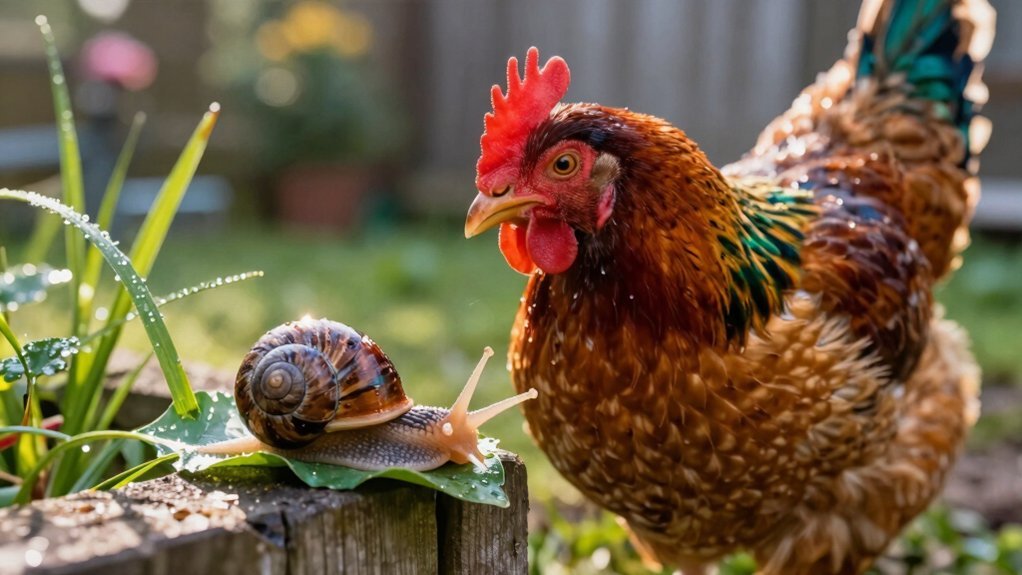
You’re right to wonder if snails are a safe protein boost for your chickens. They’re about 60 % protein on a dry‑matter basis and pack 2 % calcium, so a modest 5‑10 % inclusion can strengthen eggshells and growth, but only if you crush the shells to avoid choking and boil or dry‑heat the snails to kill flukes, roundworms, and rat lungworm. Obviously, wild snails may carry pesticide residues or metaldehyde bait, so collect only from untreated garden beds and keep an eye on any sudden weight loss or reduced lay. If you follow those steps, you’ll reap the benefits without the hidden dangers—next, you’ll want to learn how to size and prepare them for both adults and chicks.
How Free‑Range Chickens Find and Eat Snails
How do free‑range chickens actually locate snails? You’re probably wondering why they seem to sniff them out. Obviously, snails hide in damp, cool, shaded spots—under leaf litter, hedgerows, bushes, and even between rocks. Your flock learns these foraging locations after a few trials, returning to the same humid nooks day after day.
Here’s the thing: chickens use exposing techniques like constant scratching and powerful feet to disturb soil and leaf litter. They peck and probe vegetation, revealing hidden snails. When a bird finds one, it focuses intently on that area, often dropping the snail on a hard surface to crack the shell. This active hunting behavior aligns with their natural omnivorous diet, which relies on essential nutrients like protein and amino acids found in various bugs to support their health and egg production. Just as they target slow-moving caterpillars, chickens are natural foragers that eagerly seek out snails as part of their normal diet. While chickens will eagerly consume these garden pests, owners should be aware that slugs can carry harmful parasites such as gapeworms which may cause health issues.
Takeaway: By recognizing moisture‑rich micro‑habitats and employing vigorous scratching and pecking, chickens reliably locate and eat snails. Next, consider how weather and garden layout affect snail availability.
Protein & Calcium Benefits of Snails for Chickens
You’re probably wondering if the snails you’ve seen your flock pecking actually give them a nutritional boost. You’ll find that snail meal can deliver roughly 60 % protein on a dry‑matter basis, rivaling fish meal. The amino acid balance is strong—lysine hits about 4.35 % and methionine around 1 %—so your chickens get essential building blocks without a big supplement hit.
How does calcium fit in? Whole snails contain about 2 % calcium and 0.8 % phosphorus, boosting mineral density in a single ingredient. When you add 5‑10 % boiled snail meal to a corn‑soy diet, growth improves, and the extra calcium supports stronger shells and bone health. While snails offer these benefits, many poultry owners also rely on USA-made mealworms as a trusted domestic source for high-protein, nutrient-rich treats that support flock health and molting. Just as chickens naturally consume cockroaches for protein, incorporating other foraged insects can similarly enhance their diet with essential nutrients. Wild chickens also actively hunt small animals like frogs to secure the essential protein found in their diverse omnivorous diet.
Takeaway: Snails give you high‑quality protein and calcium in one bite, making them a practical supplement.
Next step: Try a modest 5 % inclusion and watch your flock’s performance.
Assess Parasite and Disease Risks When Chickens Eat Wild Snails
Are wild snails a hidden health hazard for your flock? You’re right to wonder—snails can carry flukes, roundworms, gapeworm, and even rat lungworm. Those parasites hide inside a seemingly healthy snail, then hatch in the chicken’s gut or trachea, causing gasping, weight loss, and reduced egg output. Here’s the thing: gapeworm can trigger avian migraines and ocular infections, while rat lungworm threatens the nervous system, especially in stressed or young birds. Now, free‑range birds can spread eggs across the coop, turning one infected snail into a flock‑wide outbreak. All right, routine deworming, removing damp, shaded snail habitats, and avoiding pond snails cut the risk dramatically. If an outbreak occurs, treatments like Corid dosage mimic thiamine to eliminate specific parasites without requiring an egg withdrawal period. For broader protection against these threats, products like Fluverm coverage effectively control roundworm, gapeworm, and tapeworm simultaneously. Unlike bacterial or viral infections, these internal parasites are harder to control through standard quarantine and disinfection methods alone. Takeaway: Vigilance and habitat control keep your birds safe. What’s your plan for managing snail exposure?
Evaluate Chemical Contamination Risks in Snails
Snails can soak up pesticide residues from the soil, plants, and garden surfaces they crawl on, turning them into tiny chemical carriers for your flock. You’re probably wondering how those chemicals end up in your chickens. Here’s the thing: metaldehyde slug baits and organophosphate sprays cling to snail tissue, and when you let birds peck, they ingest the toxins directly. Bait ingestion can cause secondary poisoning, especially if you’ve used metaldehyde, which is lethal even in tiny amounts. Contaminated runoff from nearby fields can also deposit herbicides on wet vegetation, so snails become walking dose reservoirs. Just as chickens appear immune to toxins from poisonous cane toads, they may still face risks from synthetic chemicals accumulated in snails. This vulnerability is compounded by the fact that free-ranging birds often accidentally consume toxic garden plants containing compounds that cause severe poisoning or death. Additionally, chickens are highly susceptible to natural toxins like nightshade family plants, which contain dangerous compounds such as solanine that can lead to fatal health issues.
How do you keep snails safe?
Collect only from untreated beds, avoid ornamental lawns where baits are applied, and read every label for poultry warnings. Store molluscicides away from feed and water. If you’re unsure, skip the snails entirely.
Takeaway: Chemical risk is real, but you control it by sourcing from clean zones and steering clear of bait‑treated areas. Next, decide which snail sizes fit your adult chickens and chicks.
Choose Safe Snail Sizes for Adult Chickens and Chicks
What size snail is safe for my chickens? You’re probably wondering if a garden snail will fit in a chicken’s beak without trouble. Here’s the thing: pick snails you can swallow in one or two bites. Small to medium terrestrial snails work best for adults, and crushing the shells eliminates choking hazards. For chicks, only tiny, boiled, shelled portions are safe—never a whole raw snail or intact shell.
How do you know which snail to choose? Think of a snail as a bite‑size snack; if it’s larger than a grape, it’s too big for a chick. Adult birds can handle a small garden snail whole, but larger species like Giant African land snails need their shells crushed. Just as wild chickens naturally consume spiders and insects for essential protein, offering appropriately sized snails mimics this balanced diet while minimizing risks.
What about sourcing? Snail cultivation can give you a steady supply of appropriately sized snails, and you can use bait alternatives such as crushed snail shells to provide calcium without the risk of a hard shell. Low‑cost terracotta enclosures help maintain moisture and temperature for the snails. Just as chickens crunch wasp stingers to prevent injury, crushing snail shells ensures safe consumption for your flock. While chickens may opportunistically hunt small pests, relying on them to control rat infestations is insufficient due to the size and agility of adult rodents. Takeaway: match snail size to bird size, crush shells for safety, and use cultivated snails or bait alternatives to keep your flock healthy. Next, consider how often to feed these protein‑rich treats.
Apply Practical Feeding Guidelines for Snails
You’re probably wondering how to turn those safe‑size snails into a practical, on‑farm feed. Start with snail meal preparation: heat‑dry, then grind the snails into a fine powder. Mix the powder at about 10 % of a balanced mash—think 16 % protein chicken feed plus a pinch of limestone for calcium.
All right, set up snail feeding troughs. Cut a PVC pipe lengthwise, lay it flat, and fill it with the mash. Keep the trough in a humid, shaded spot; snails love moisture, and a shallow water dish prevents drowning.
Here’s the thing: feed them half green veg and half grain‑based mash, renewing daily to avoid fouling. Remove adult snails after laying to keep feed for hatchlings.
One dissimilar pond can produce 20 kg of snails monthly. Takeaway: Properly processed snail meal in a simple trough gives you a low‑cost, protein‑rich supplement. Ready to try a batch?