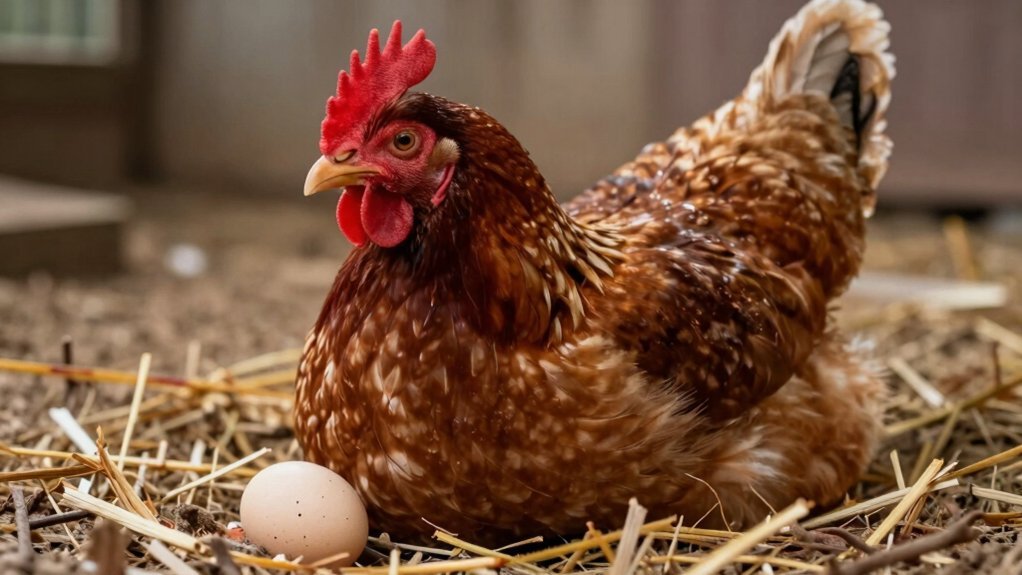
You’re probably wondering why the meat birds on supermarket shelves never turn into egg‑laying hens. Here’s the thing: female broilers can technically lay eggs, but they’re slaughtered at 5‑7 weeks—months before the 18‑26 week sexual‑maturity window—so they never get the chance. Even if they lived longer, genetics prioritize muscle over reproduction, yielding only 150‑200 eggs a year versus a layer’s 300‑plus. Bottom line: commercial broilers don’t produce eggs for you, but the next section explains how breeders differ.
Can Female Broilers Lay Eggs?
Can female broilers lay eggs? You’re probably wondering if those meat‑focused birds ever produce anything beyond a few stray shells. The answer is yes—female broilers are biologically capable of laying once they hit sexual maturity, usually around 20‑26 weeks, depending on the poultry breed and how you manage them.
Here’s the thing: broiler genetics prioritize muscle, not egg output, so a breeder hen typically lays 150‑200 eggs a year, far fewer than a layer’s 300‑plus. Proper dietary management—often feed restriction to keep body weight in check—helps them stay fertile and avoid obesity, which would otherwise shut down production. However, their intense selection for rapid growth often leads to skeletal problems and heart conditions that complicate reaching the age required for consistent egg production. It is important to distinguish these birds from the broiler breeders kept in separate facilities specifically to produce the fertilized eggs needed for the industry.
All right, lighting matters too. Controlled photoperiods trigger reproductive development, and delaying that stimulus lets the bird mature before lay starts. The takeaway? With the right breed selection, diet, and lighting, your broiler can lay, but expect modest numbers and smaller eggs. Next, consider why commercial broilers rarely reach that laying age. Reliable sources like specialty hatcheries offer various meat chicken breeds and provide essential resources on ordering, shipping, and care for those interested in raising these birds.
Why Do Commercial Broilers Never Reach Laying Age?
You’re probably wondering why you never see a commercial broiler sitting on a nest, and that’s a smart question.
Why does slaughter timing stop them from laying?
Now, most broilers go to market at 5‑7 weeks, about 47 days old—far before the 6-month threshold for egg production. The industry’s timeline focuses on rapid weight gain, not reproductive readiness, so birds never hit puberty. While breeds like the Cornish Cross typically reach butcher weight between 6 to 10 weeks, this accelerated schedule ensures they are processed long before reaching sexual maturity.
How does genetic divergence play a role?
Here’s the thing: breeders select for fast growth and massive breast muscle, creating a genetic divergence from layer lines. Those traits push market weight early, while reproductive genes stay dormant.
What’s the practical outcome?
Obviously, the short grow‑out period means birds are harvested long before they could lay, making egg production irrelevant in a broiler operation. Furthermore, their larger, rounded bodies are biologically optimized for converting feed into muscle mass rather than supporting the streamlined physiology required for sustained egg laying. Effective pricing models often reflect this specialization by valuing these birds based on their average weight at harvest rather than any potential for egg production. Retailers like Tractor Supply support this focused approach by selling Cornish Cross broilers specifically for meat production rather than dual-purpose farming.
Takeaway: slaughter timing and genetic divergence keep commercial broilers from ever reaching laying age. Next, you might wonder what breeders actually do to shape these birds.
What Do Broiler Breeders Actually Do?
What exactly do broiler breeders do? You’re probably wondering why those big‑body hens aren’t on your breakfast table. In reality, they exist to supply fertilized eggs for the meat‑bird pipeline, not for egg‑selling. Your flock’s hatchability management hinges on strict feed control, photostimulation, and body‑weight targets. You’ll feed them a measured diet, often 120 g per day, to keep weight uniform and avoid obesity that kills fertility. Then you trigger reproductive hormones with light at about 20 weeks, syncing sexual maturity across the flock. While broiler breeders are managed for reproduction at this stage, chickens generally continue to grow more slowly and reach their full size and weight by about one year of age. Unlike the commercial meat birds raised for optimal weight in just seven to eight weeks, these breeder hens require a much longer lifecycle to maintain fertility. This extended management contrasts sharply with standard meat birds, which are bred for rapid growth and typically live only a few weeks before slaughter.
How do you know which eggs are worth incubating? Egg grading lets you sort out abnormal or non‑fertile shells, ensuring only high‑quality candidates reach the incubator. The result? Each hen produces roughly 160 eggs over her lifespan, feeding a steady stream of chicks for the industry.
Takeaway: By managing nutrition, lighting, and grading, you maximize hatchability and keep the meat‑bird supply chain humming. Next, you might ask whether those eggs are fertile or not.
Are Broiler Eggs Fertile or Unfertilized?
If you’ve ever wondered whether the eggs you see in a broiler breeder hatch can actually hatch, you’re asking the right question.
Do broiler eggs start out fertile?
Only when a rooster mates with a hen does the sperm travel to the infundibulum and fertilize the yolk. The hen’s sperm storage glands can hold half a million sperm for up to three weeks, boosting the odds that each egg carries a blastoderm bullseye.
How can you tell?
Outwardly, fertile and unfertilized eggs look identical. Crack one open and look for the bullseye; a tiny white spot means the egg is unfertilized. That’s why hatch testing is essential before you commit to incubation.
What about egg storage?
Refrigerated eggs stay viable but won’t develop until they warm to about 100 °F for several hours. Even then, only fertile eggs can ever hatch.
Takeaway:
Broiler breeder eggs are meant to be fertile, while grocery‑store eggs are usually unfertilized. Use fertility testing if you need certainty.
It is important to remember that hens do not need roosters to lay eggs, as they will produce them regularly on their own once mature and healthy. Although unfertilized eggs are nutritionally similar to fertile ones, they will never develop into chicks without fertilization. Fertilization occurs internally when cloacal contact allows sperm to reach the ovum before the shell forms around it.
Next, you might wonder how long a hen can keep laying after the typical slaughter age.
Can a Broiler Hen Lay Eggs After Slaughter Age?
Can a Broiler Hen Lay Eggs After Slaughter Age?
You’re probably wondering why any egg shows up after a broiler hits the line. Here’s the thing: modern broilers go to market at five to seven weeks, far before the 18‑26‑week window when chickens hit sexual maturity. Their post‑mortem physiology stops all reproductive activity the moment you process them, so no egg can form after ethical slaughter. While factors like daylight hours and breed specifics influence when hens typically begin laying, modern broilers are harvested long before reaching this developmental stage. Although Cornish Cross chicks are a common breed recommended for fast growth, they are processed well before reaching the age required for reproduction.
What does that mean for you?
Because the birds never reach the laying stage, you’ll never see a market‑age broiler laying an egg. The gap between slaughter and laying is measured in months, not days, making post‑slaughter egg production impossible. Chickens require approximately 18 weeks of development to approach adulthood and begin the egg-laying phase, a milestone meat birds never attain.
Takeaway: If you need eggs, look to broiler breeders or layer flocks, not the meat birds you’re buying. Next, ask how breeder flocks differ from meat‑type birds.
How Does a Broiler‑Type Hen’s Egg Output Stack Up Against a Layer?
Takeaway: If you need steady, high‑volume egg supply for cooking, layers win hands‑down. Broiler‑type hens provide enough fertile eggs for hatchery work, not everyday culinary needs. This limitation exists because the breed is genetically selected for rapid growth rate rather than egg production. In contrast, dedicated breeds like the Leghorn or Rhode Island Red are prized for their reliable production of large eggs, yielding hundreds annually compared to the sparse output of meat birds. While meat birds struggle, top breeds like the Australorp can achieve 364 eggs per year, highlighting the vast gap in genetic potential between meat and layer varieties. Next, you might explore how health issues further limit broiler egg output.
What Health Issues Limit a Broiler’s Egg Production?
You’re probably wondering why a broiler that’s built for meat doesn’t lay many eggs. The quick‑gain genetics strain the heart, lungs, and skeleton, so the bird can’t allocate energy to reproduction. Ascites syndrome, a right‑heart failure, shows up when the circulatory system can’t keep up with rapid growth, and sudden‑death syndrome can end a bird’s life before it ever tries to lay.
What illnesses choke egg output?
Coccidiosis damages the gut, cutting nutrient absorption and weakening the bird. Infectious bronchitis and egg‑drop syndrome‑76 attack the reproductive tract, causing soft or shell‑less eggs. Mycoplasmosis, colibacillosis, and salmonellosis bring systemic inflammation that halts laying entirely. Treating such parasitic infections often requires administering Corid dosage in drinking water to effectively eliminate the coccidia parasites. Heavy infestations of external parasites like chicken lice can also cause anemia and decreased egg production, further limiting a broiler’s output.
How do nutritional gaps matter?
Deficiencies in calcium, phosphorus, vitamin D, methionine, linoleic acid, or magnesium cripple shell formation and reduce lay frequency. Overfeeding leads to obesity, which raises the risk of egg‑binding and prolapse.
Takeaway: Health and nutrition drive a broiler’s poor egg production. Fix the diet, prevent disease, and you’ll see any modest improvement. Next, ask yourself which breed fits your goals better.
When to Pick a Broiler Over a Layer Breed?
You’re probably wondering whether a broiler or a layer fits your plan, and that’s a smart question. When you need rapid returns, a broiler’s 6‑12‑week cycle delivers meat fast, letting you sell to local markets or restaurants within months.
What about space planning? Broilers need simple, dry coops with good airflow, while layers demand nesting boxes, roosts, and lighting schedules for months. If you have limited long‑term housing, a broiler eases the load and cuts upfront infrastructure costs.
Now, consider your cash flow. If you want quick cash and can handle frequent restocking, go broiler. If you prefer steady egg income over a year, a layer fits better.
Takeaway: Choose the breed that matches your timeline, space, and financial goals. Ready to map out your flock’s schedule? Broilers require less time investment overall.