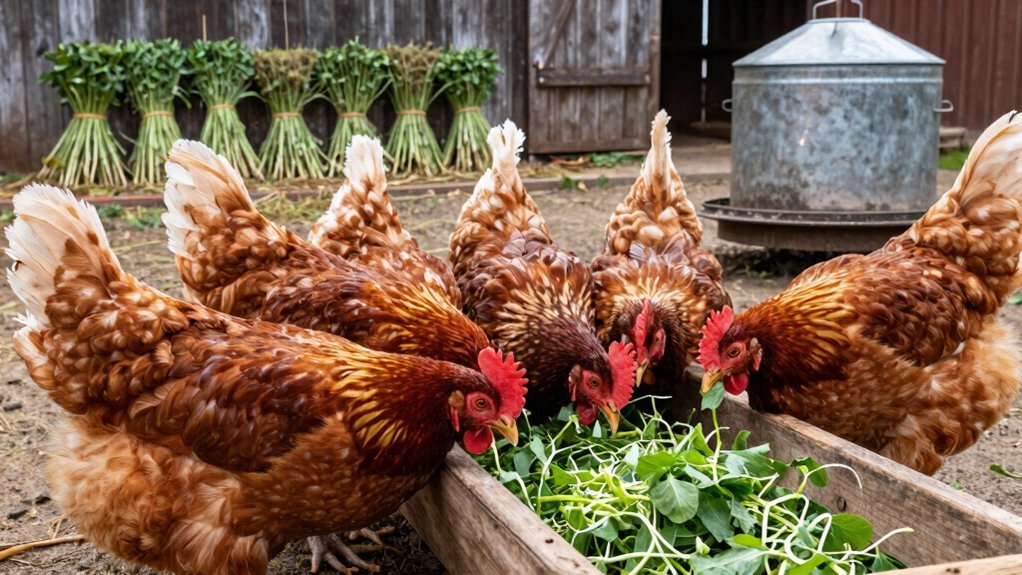
You’re probably wondering if chickens will actually eat alfalfa, and the answer is yes—if you give it in bite‑size pieces or rehydrated pellets they’ll peck it like any treat, but only as a supplement. Alfalfa adds protein, calcium, and carotenoids that deepen yolk color and can boost gut health, yet you should keep it under 10 % of the ration and feed it no more than three times a week. Start with a tablespoon per dozen birds, soak cubes until they crumble, and always provide grit so they can grind the fiber; this way you’ll avoid crop issues and keep egg production steady. If you keep these basics in mind, you’ll see the benefits without the pitfalls, and the next section will show you how to fit alfalfa into a simple feeding schedule.
Alfalfa for Chickens: Do They Eat It?
Do chickens actually eat alfalfa? You’re probably wondering if those green leaves are a myth or a real treat. The answer is yes—chickens peck at loose leaves, chopped stalks, pellets, cubes, and dehydrated alfalfa whenever you offer it. They especially love leafier pieces because the stems are too coarse to digest easily.
What forms work best?
Loose leaves and chopped material pass through the gizzard with grit, while pellets and cubes keep things tidy. Soak cubes if you need a soft snack for cold weather. Remember, high fiber can slow digestion, so keep portions modest. While alfalfa provides some calcium, optimal egg production often requires supplementing with large particle calcium sources like oyster shells to ensure slow release and strong bone health. Just as sprouted grains boost nutritional content and digestibility, integrating fresh greens into their diet can enhance vitamin intake and overall health year-round.
Any safety concerns?
Watch for alfalfa allergies—rare but possible—and avoid toxic adulterants that sometimes hitch a ride in low‑quality batches. Always choose clean, reputable sources.
Takeaway: Chickens will happily eat alfalfa if you give them fresh, clean, and appropriately sized pieces. Next, consider how to blend it into a balanced diet without overloading fiber. This nutrient-dense legume supports stronger bones and better eggshell quality through its rich calcium content.
Alfalfa for Chickens: Health & Egg Benefits
You’re probably wondering how alfalfa actually affects your hens’ health and the eggs they lay.
What does alfalfa do for your birds’ bodies?
Alfalfa packs protein, calcium, magnesium, and vitamins A, C, E, and K, which together boost liver support and skin vitality. The fiber keeps gut motility steady, reducing constipation and encouraging a balanced microbiome. Similar to how sprouted lentils increase nutrient bioavailability for poultry, processing alfalfa can further enhance its digestive benefits for your flock. Just as providing high-energy treats helps chickens maintain body heat in winter, the dense nutrition in alfalfa supports their overall metabolic resilience year-round.
How does it change the eggs?
Carotenoids deepen yolk hue; studies show up to seven‑times more carotene in eggs from hens fed concentrated alfalfa extract. Minerals improve shell strength, while vitamins A and E enhance the egg’s nutrient profile.
What’s the bottom line?
Alfalfa delivers a dense nutrient cocktail that nurtures your hens and upgrades egg quality. Try adding a modest amount to their diet and watch the results. As an omnivore, your flock benefits when this forage complements other organic feed ingredients like peas or sunflower seeds to create a truly balanced diet.
Next, you might ask: how much should you feed?
Step‑by‑Step Guide to Feeding Alfalfa to Chickens
One of the biggest confusions when you first hear about alfalfa is how to actually give it to your chickens without turning their coop into a mess. First, pick a product that fits your flock: pellets or cubes keep things tidy, while chopped hay works if you’re okay with a bit of debris. Remember, alfalfa myths claim it can replace regular feed; it’s a supplement, not a staple.
Now, introduce it slowly. Mix a tablespoon of pellets with their usual mash for a few days, watching droppings for any upset. Soak cubes until they crumble, and break up any compressed pieces for younger birds. The cubes weigh 40 lbs and are densely packed, so they take longer to soak.
All right, control portions. Offer a handful once or twice a week—excess fiber can crowd out essential nutrients. If birds love it, keep the amount modest; if they ignore it, try a different alfalfa alternative like sprouts.
Finally, monitor response. Look for keen pecks, healthy crop fill, and steady egg production. Adjust texture or frequency as needed. The takeaway: start small, stay consistent, and use alfalfa as a tasty boost, not a diet overhaul. Ready to try a measured serving tomorrow?
Best Alfalfa Forms for Backyard Flocks
You’re probably wondering which alfalfa form will actually work for your backyard flock without turning the coop into a litter box.
Which form keeps the coop tidy?
Alfalfa pellets are dense, so they stay in a feeder and create little dust. You can soak them a minute to soften texture and cut dust further. Use about a half‑cup per ten birds; this limits mess while delivering protein and carotenoids.
What gives birds a natural pecking experience?
Chopped hay or cubes let chickens peck like they would in a pasture. Break cubes into bite‑size pieces for smaller birds; a small handful per day satisfies foraging instincts.
How can you add variety without waste?
Mix a pinch of alfalfa flowers into the feed or steep a few in warm water to make alfalfa tea. The tea adds moisture and a mild flavor boost, and a few flowers sprinkle extra nutrients.
Takeaway: Choose pellets for clean feeding, hay or cubes for enrichment, and occasional flowers or tea for flavor. Next, decide which mix fits your coop size and schedule. While alfalfa offers great variety, it should complement a diet based on premium, complete feeds that provide the optimal protein levels and calcium necessary for robust health and egg production. Providing supplemental calcium like oyster shells alongside these feeds enables hens to regulate their own intake for maximum eggshell strength. Remember that consistent access to fresh water is a fundamental part of any healthy feeding regimen involving alfalfa or other supplements.
Comparing Loose Hay, Pellets, and Cubes: Pros & Cons
What’s the real difference between loose hay, pellets, and cubes? You’re probably wondering which form fits your coop best. Loose hay is cheapest and gives chickens natural pecking fun, but the long stems can clog their crops and it spoils fast if you lack proper storage solutions. Pellets pack tightly, cut waste, and most feeding equipment handles them easily; they’re easy to eat but still need moderation. Cubes control portions and stay tidy, so they’re great for limited‑space feeders, yet chickens may need them crumbled to break down.
Which is safest for your flock? Obviously, every form adds protein and calcium, but loose hay carries the highest impaction risk, while pellets and cubes can be too rich if overfed. Mold is a danger for all if damp, so keep everything dry. Since chickens lack teeth, providing insoluble flint grit alongside these forms is essential to help their gizzard grind down tough alfalfa fibers and prevent digestive blockages. While commercial feeds often include necessary additives, any extra treats like alfalfa require you to offer grit appropriate to age to ensure proper digestion and nutrient absorption. Because excessive consumption of long fibers can lead to crop impaction, especially in birds with underlying health issues, it is crucial to introduce alfalfa hay carefully to avoid digestive upset.
Takeaway: Match the form to your storage space, feeder type, and how much you’ll monitor intake. Next, decide how you’ll portion and serve the alfalfa to keep your birds healthy.
Preparing Alfalfa: Chopping, Rehydrating, Portioning
How do I get alfalfa ready for my chickens? You’re wondering how to turn tough stalks into a tasty treat, right? First, chop the hay into bite‑size pieces—think of it like dice for a salad. Smaller bits let hens peck easily, reduce waste, and expose leafy nutrition.
Now, rehydrate. Soak cubes or pellets overnight in water; they’ll swell 2‑3×. Cover them fully, add a splash of apple cider vinegar if you like a mild fermentation. The mash becomes soft, easy to swallow, and perfect for cold days. Just as fermenting feed boosts probiotics and nutrient content in grains, this soaking process enhances the digestibility of the alfalfa for your flock. Proper management of this moisture is essential to prevent mold and ensure the feed remains safe and nutritious for your birds. Unlike raw beans which contain harmful toxins that can be fatal to poultry, properly prepared alfalfa offers a safe nutritional boost without such risks.
All right, portion it out. Measure daily needs, then split the soaked batch into serving‑size containers. Store these in airtight bins—your best storage solutions—to keep moisture in and prevent spoilage.
Takeaway: Chop, soak, then portion; keep it fresh with proper storage. Ready to mix it into your flock’s grain? Adding a handful of kelp powder can boost the mineral content of the mix.
Safe Feeding Practices: Moderation, Gradual Intro, Grit
Why should I limit alfalfa and introduce it slowly? You’re right to wonder—overloading a bird’s gut with high‑fiber alfalfa can cause upset, especially if you skip the gradual step. Start with a pinch, about a tablespoon per dozen birds, and watch for any alfalfa allergy concerns or digestive hiccups.
How do I keep digestion smooth? Give your flock free‑choice grit; it works like a tiny stone mill in the gizzard, breaking down long fibers. Without enough grit, the crop can bloat, and you’ll see more dropped feed. Since chickens lack teeth, this insoluble granite grit stays in the gizzard to physically grind food and prevent fatal digestive blockages. It is best to offer this supplement separately from calcium sources like oyster shell so birds can self-regulate their intake based on their specific dietary needs.
What’s the safe frequency? Treat alfalfa as a supplement, not a staple—no more than three times a week and never exceeding 10 % of the total ration. This protects nutrient balance and keeps the alfalfa composting process from turning into waste. While alfalfa serves as a treat, remember that adult chickens generally require 120 grams daily of quality feed to maintain health and productivity.
Takeaway: moderate, introduce gradually, and provide grit. Next, consider how to store fresh alfalfa to avoid mold and spoilage.
Alfalfa for Chickens in Molting Diets & Salmonella Reduction
If you’re wondering why alfalfa shows up in molt plans, it’s because the high‑fiber, low‑energy feed can trigger a gentle molt without starving the birds. You’ll see that 90 % alfalfa plus 10 % layer ration stops egg production by day 6 for 90 % of hens, and pure alfalfa does it by day 8. This approach gives you welfare advantages over total feed withdrawal, keeping hens calm and their crops active. While commercial operations may use this method to control timing, backyard flocks typically experience a natural annual process triggered by shorter daylight hours in the fall that renews plumage and temporarily halts egg laying. During this time, birds often develop a scruffy, patchy appearance as they shed old feathers from the head down before growing new pin feathers. Here’s the thing: alfalfa’s fiber feeds beneficial gut microbiology, especially Lactobacillus and Bifidobacteria, which churn out lactic acid and short‑chain fatty acids. Those metabolites lower Salmonella excretion in feces, a USDA‑backed finding that translates to safer eggs. All right, the takeaway is simple—use an alfalfa‑based molt diet to induce a stress‑free molt while curbing Salmonella. Next, decide whether you’ll offer meal or pellets, then monitor feed intake and egg quality as the flock progresses.
Top Alfalfa Feeding Mistakes to Avoid
When you’re unsure why alfalfa sometimes causes problems, it’s usually because the feed’s form and amount aren’t right.
What happens if you feed too much?
Alfalfa overconsumption loads chickens with 25‑30 % fiber, slowing digestion and stealing nutrients from their balanced ration. You’ll see softer droppings and slower growth. Keep it to a handful of pellets or a cup of chopped greens per day. Improper ration timing can also lead to nutrient imbalances that affect egg quality.
Why does texture matter?
Long, coarse stems act like rough sandpaper in the crop; chickens struggle to grind them without grit. Offer chopped or soaked alfalfa and always provide free‑choice grit.
What if the alfalfa is damp?
Moldy alfalfa introduces toxins and spores that can sicken your flock. Store hay dry, discard any damp bales, and use fresh, dry material only.
Takeaway: Feed alfalfa as a modest supplement, choose soft, chopped forms, keep grit handy, and never give moldy hay. Next, plan a simple feeding schedule that fits hens, roosters, and chicks.
Simple Alfalfa Feeding Schedule for Hens, Roosters, and Chicks
You’re probably wondering how much alfalfa you can actually give each bird without messing up their main diet.
How many handfuls should a hen get?
Give a laying hen a small handful (about 10 g) of chopped leaves or a few pellets 2–3 times a week, preferably during spring when fresh growth peaks. Keep the layer feed as the primary source. Calcium stays high, and alfalfa stays a treat, not a replacement.
What about roosters in a mixed flock?
Offer the same amount as hens, but you can increase to a daily half‑handful during summer when birds roam more. Use grower or all‑flock feed as the base, and add free‑choice calcium if you’re feeding layers too.
When can chicks try alfalfa?
Wait until they’re steady on starter crumble, then sprinkle a pinch of sprouted alfalfa once a week. Anything more dilutes their high‑protein diet.
Takeaway: Small, seasonal portions keep alfalfa a beneficial supplement. Adjust timing with flock rotation, and never let it replace the complete ration.
Three‑week‑old chicks can be introduced to sprouted alfalfa after they are accustomed to starter feed. Next step: Plan your first seasonal timing chart and map alfalfa servings to each age group.