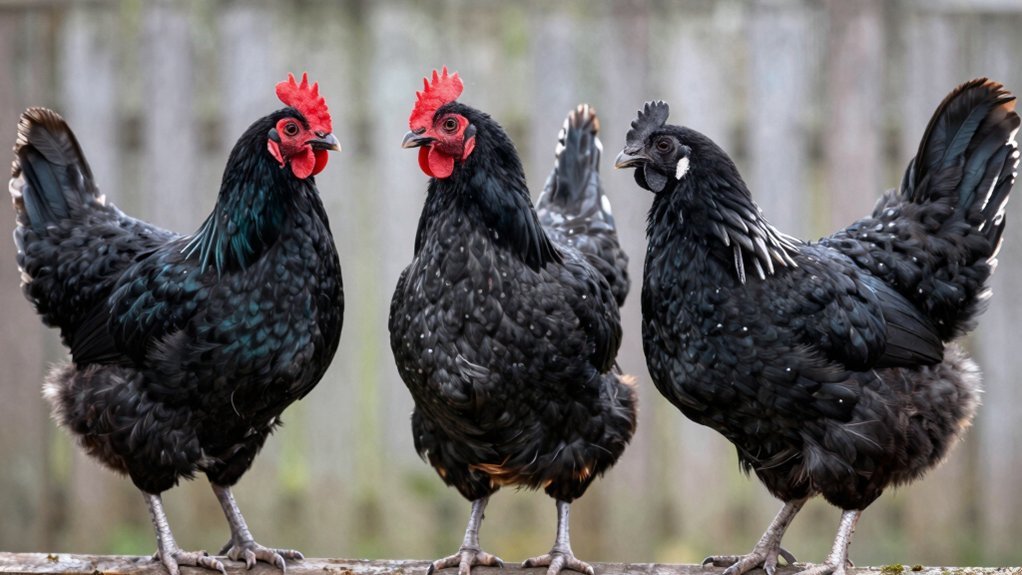
You’re right to wonder why some chickens look pitch‑black inside and out while others just sport dark feathers—it’s all melanin. True‑black breeds like Ayam Cemani, Silkies, Kadaknath, and Black Java have fibromelanosis, giving them black skin, bones, and connective tissue, whereas breeds such as Black Australorp or Jersey Giant only have dark plumage. Knowing the genetic basis helps you match temperament, egg production, and space needs, and the next step is to compare each breed’s size, egg color, and hardiness for your flock.
True Black Chicken Breeds: Understanding Melanism
How does this affect culture? In Asia, true‑black breeds like Ayam Cemani and Silkie carry cultural significance, symbolizing mystery and prestige, and they fetch premium prices at markets.
What does the science tell us? The mutation boosts pigment‑cell migration, creating hyperpigmentation that’s rare among chickens. This rarity makes them valuable for studying gene activation and developmental pathways. Notably, their fluffy, fur-like feathers lack barbicels, which contributes to their unique texture and sensitivity to cold. While often grouped with bantams in North America, Silkies in regions like Europe are sometimes classified as large fowl due to their larger potential size.
Takeaway: True‑black chickens are defined by internal melanin, not just plumage, and they hold both scientific intrigue and cultural cachet. Next, explore how to identify these breeds in the field. Notably, the Silkie exemplifies this unique biology with its bluish-black skin and bones, distinguishing it from breeds that are merely dark-feathered.
How to Pick the Best Black Breed for Your Flock?
You’re probably wondering which black chicken will fit your flock’s goals without turning your backyard into a zoo. First, define your flock’s primary purpose—meat, eggs, or just a friendly presence. If you need a calm, dual‑purpose bird, Black Orpington or Black Australorp work well; they’re friendly and adapt to most climates.
All right, match breed size to your coop space. Large birds like Jersey Giant need roomy pens and extra ventilation, while smaller Ancona or bantam lines thrive in tighter setups. To ensure your larger breeds stay healthy, aim for 10 square feet of run space per bird alongside adequate indoor housing.
Here’s the thing: check flock compatibility. Calm breeds such as Australorp, Orpington, and Jersey Giant integrate easily with existing chickens, whereas active foragers like Ancona may need more free‑range time. Some breeds like Silkies possess a gentle temperament but may require protection from more aggressive birds to thrive in a mixed flock.
Obviously, weigh practicality against rarity. Common breeds are easy to source and affordable; rare ones like Kadaknath demand careful sourcing and higher costs.
Keep in mind that bantams require less space than standard breeds, allowing you to keep a larger number of birds in a limited area if space is a constraint.
Takeaway: pick a breed that aligns with your goal, fits your coop space, and blends peacefully with your current birds. Next, list the top three candidates and compare their size, temperament, and climate hardiness.
Top Egg‑Laying Black Chicken Breeds
You’re probably wondering which black feathered hens actually lay the most eggs, and that’s a smart question.
Which breed tops the egg count?
The Black Australorp dominates, delivering 250‑300 light‑brown eggs a year. Its calm nature and green‑beetle sheen make it a reliable backyard workhorse.
What about other strong layers?
Svart Hona, a rare‑genetics Swedish treasure, lays 200‑250 large off‑white eggs and stays cold‑hardy. Minorca produces 120‑200 huge white eggs, thriving in warm climates thanks to its oversized comb. While black breeds are popular, the exceptional egg-laying capabilities seen in white Leghorns set the global standard for commercial productivity that many farmers aim to match. Additionally, the Austra White hybrid stands out for its early maturity and high output of 250-300 white eggs from as early as 12 weeks old.
How do you keep them productive?
Tailor feeding strategies: high‑protein pellets in winter, fresh greens and insects in spring, and calcium supplements year‑round.
Takeaway: Choose a breed that matches your climate and space, then feed it right. While many black breeds excel, commercial hybrids like the Black Star are also renowned for their prolific laying capabilities and can produce up to 320 eggs annually.
Ready to pick your top egg‑laying black hen?
Heavy Dual‑Purpose Black Chicken Breeds
Heavy dual‑purpose black chickens can feel like a mystery—what breed gives you both solid meat and decent eggs? You’re right to ask; let’s untangle it.
Which breed tops the meat‑to‑egg balance?
The Jersey Giant boasts a massive carcass—8‑9 lb hens, sometimes larger—yet you’ll wait up to nine months for market weight. It still lays about 240 extra‑large brown eggs a year, so you get a turkey‑size bird that lays enough for a small family.
What about a hardier, more prolific layer?
The Australorp, at 6.5‑8.5 lb, delivers 200‑280 brown eggs annually, with a record‑breaking 364‑egg year. Its cold‑hardiness and docile nature make it a backyard workhorse.
Do you need a versatile, classic British option?
Orpingtons and Wyandottes both sit around 6‑9 lb, lay 200‑250 brown eggs, and provide generous meat cuts. Their calm temperaments suit mixed‑purpose flocks. Like other dual-purpose varieties, Orpingtons thrive in various climates while delivering flavorful, sizable carcasses. While standard Orpingtons are well-known, the rare Lavender Buff Orpington offers the same dual-purpose utility with unique heritage coloration developed in 1800s England. The Black Laced Red Wyandotte specifically offers a frostbite-resistant rose comb that enhances its adaptability to cold climates alongside its dense feathering.
Why preserve these colors?
Color genetics keep the deep black plumage stable, while breed preservation safeguards these heritage lines from disappearing.
Takeaway
Pick a breed that fits your space, timeline, and egg goals; each offers a reliable meat yield and respectable egg output.
Next step
Consider which growth rate and egg count align with your backyard plan, then explore local breeders or heritage farms.
Specialty Black Chicken Breeds (Ornamental & Rare)
All right, you’re probably wondering why black chickens can be more than just meat‑and‑egg machines.
Which ornamental blacks stand out?
You’ll love the Ayam Cemani, a true fibromelanistic marvel—black feathers, skin, comb, even bones. It’s tiny, 4.5–7 lb, and costs a fortune because only niche breeders keep it alive. Sumatra offers flowing tail feathers and a beetle‑green sheen, but it’s flighty and egg‑light. Its plumage can show beetle green iridescence in sunlight. Unlike other breeds, Silkies possess fluffy plumage that lacks barbicels, giving them a soft, fur-like appearance alongside their distinctive black skin and bones. Some breeds also feature pronounced crest feathers covering their heads, adding to their unique ornamental appeal. While black is a standard variety, enthusiasts also prize Silkies for their docile temperament which makes them excellent pets alongside their unique look.
What rare heritage breeds need your help?
The White‑faced Black Spanish dazzles with glossy plumage and massive white earlobes, yet it’s a heritage exhibition bird. LaFleche, Kadaknath, Silkie, Croad Langshan, and Black Java all fall under color varieties that demand breed conservation to survive.
How do you choose?
Pick a breed that matches your space, temperament tolerance, and desire to support conservation. Your next step: research local breeders or breed‑preservation groups to see which specialty black fits your backyard.