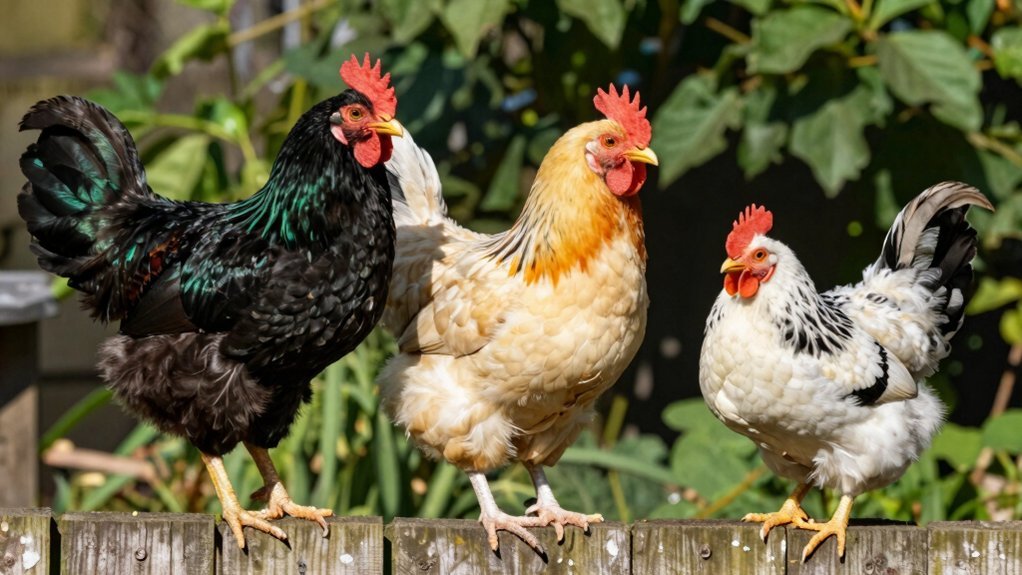
You’re probably wondering which tiny birds will fit your city yard without turning it into a zoo. The top compact breeds are Serama (under 500 g, upright “V” carriage, tiny eggs), Silkie (fluffy, docile, loves laps, needs a covered run), Sebright (alert, show‑ready, 6‑inch tall) and Rosecomb (independent, rose‑shaped comb, 6‑inch). They need about 4 sq ft indoor and 8‑10 sq ft run space, thrive on standard layer feed, and stay calm in small enclosures. Pick one that matches your climate and temperament, then you’ll have a happy, low‑maintenance flock—next, you’ll want to know how to design a coop that keeps them comfy.
Small Chicken Breeds That Thrive in City Backyards
Takeaway: Pick a dwarf breed or a calm, low‑flight compact bird, and you’ll obey city noise rules while enjoying a happy backyard flock. Next, consider how much space your climate gives you. Breeds like the Malaysian Serama offer an upright posture and vertical tails that maximize visual appeal in minimal square footage. These miniature birds typically weigh less than 2 pounds, with some of the smallest breeds standing about 6 inches tall. Unlike standard chickens that live up to 15 years, these compact flocks generally have a shorter lifespan of 4 to 8 years.
Choosing the Right Breed for Space & Climate
You’re probably wondering how to match a breed’s size and temperament to the space you have and the climate you live in. In compact confinement you’ll want a bird with low roaming drive control, so it stays calm in a small run and doesn’t trample your garden.
What breed handles heat? Leghorns, Polish, and Silkies tolerate hot weather, while Rhode Island Reds and Ameraucanas stay productive in warm climates.
What breed handles cold? Buff Orpingtons, Plymouth Rocks, Brahmas, Cochins, and Anconas boast thick feathers and stay healthy when temperatures dip.
How does temperament fit? Silkies and Orpingtons stay docile, making them perfect for close‑quarter yards.
Takeaway: Choose a heat‑ or cold‑tolerant breed with low roaming drive for your yard size, then match temperament to your backyard vibe. Next, compare egg output and space needs to fine‑tune your flock. Since bantams require roughly half the space of standard chickens, they are an excellent choice for maximizing flock size in limited areas while accommodating their unique flying tendencies and broodiness. Keep in mind that these birds typically start laying eggs between 24 to 30 weeks of age, which is slower than larger breeds. While some breeds may take up to eight months to mature, many bantams are seasonal layers that pause production during the winter months.
Top 5 Friendly Bantams for Families
Three friendly bantams stand out for families, and you’re probably wondering which ones truly behave like gentle lap‑dogs.
Which breed feels like a lap‑dog? Silkies win the title. Their soft, fluffy feathers don’t scratch, and they’ll hop onto your lap without protest. Socialization tips: handle them daily for a few minutes, letting them peck gently at your fingers. Child friendly handling is a breeze—just let kids pet their silky backs.
Which breed follows you around? Buff Orpington bantams. Their calm, patient nature makes them perfect for kids who love to chase a feathered friend. Offer treats and gentle scratches; they’ll shadow you across the yard.
Which breed loves cuddles? Cochin bantams. Their fluffy bodies and sweet temperament invite lap time. Start with short sessions, gradually extending as they relax. Takeaway: each breed offers a distinct, gentle personality—pick the one that matches your family’s vibe and begin daily, brief interactions. Next, consider how much space you have for a micro‑flock. Unlike many other breeds, Silkies rarely fly and adapt well to confinement, making them easier to manage in smaller backyard environments. In the U.S. and Canada, these birds are typically considered true bantams and usually weigh around 3 pounds for hens and 4 pounds for roosters. Another excellent option is the Pekin Bantam, a true bantam breed known for its round shape and docile nature that makes it an ideal pet for children.
Best Small Egg‑Laying Breeds for Consistent Harvests
Which breed offers egg color variety? Rhode Island Red and Australorp give you light brown to brown shells, and Golden Comet or ISA Brown add rich brown hues, while Austra White stays white. All three maintain 200‑300 eggs annually and keep feed costs low. Easter Eggers provide another option with uniquely colored eggs ranging from blue to green, olive, and sometimes pink. These hardy birds are a mixed breed known for their hybrid vigor and friendly temperament, making them suitable for beginners. Each hen consistently lays eggs of the same distinctive color throughout her life, ensuring a reliable supply of your chosen hue. All right, pick a breed that matches your egg‑color preference and space constraints. The takeaway: Leghorn wins for pure volume, but hybrids and heritage birds add color and temperament. Next, decide which hue fits your kitchen and budget.
Serama: Ultra‑Compact Breed – Pros, Cons & Care
It can be confusing why a chicken that fits in your hand would ever be worth keeping, but you’re on the right track. Seramas are true bantams, under 500 g, with a proud “V” carriage and tiny eggs—about five makeama eggs equal one large. You’ll love their friendly, low‑volume nature and the fact they need far less feed and space than standard breeds.
Now, the downsides. Their cold vulnerability means you must insulate the coop or bring them indoors when temperatures dip. Genetic issues, like a lethal‑gene problem, can cause poor hatch rates and chick loss, so use reputable hatchery stock. Also, frequent moulting may demand extra care. Like other feather footed varieties, they require dry, well-maintained runs to protect their delicate leg feathers from mud and damage. To further ensure their health, you should perform regular leg inspections to prevent infestations of leg mites which these birds are particularly susceptible to. Unlike some bantams that rarely sit on eggs, Serama hens often display strong broody instincts for natural incubation.
All right, what’s the bottom line? If you can keep them warm and source healthy chicks, Seramas give you a charming, low‑maintenance pet that fits any backyard. Next, consider how you’ll protect them from the cold.
Silkie vs. Sebright vs. Rosecomb: Temperament & Looks
You’re probably wondering which of these pint‑sized breeds will fit your backyard personality and looks best.
Which breed feels like a pet?
Silkie wins the temperament comparison for beginners. You’ll find them calm, docile and sweet‑tempered, almost like a fluffy dog that tolerates confinement and enjoys gentle handling. Kids love their pet‑like appeal, and they stay quiet unless a particular bird gets chatty. This unique texture is due to lack of barbicels, which normally provide rigidity to feathers in other breeds.
Which breed looks like a show bird?
Sebright and Rosecomb excel at colorful showmanship. Sebrights flaunt laced plumage and a polished silhouette, while Rosecombs sport a striking rose‑shaped comb and upright posture. Both are compact bantams built for exhibition rather than cuddling. Other breeds like the Faverolle also feature beard-like facial feathers that give them a soft, fluffy look distinct from the sleeker bantams.
What’s the trade‑off?
If you crave a hands‑on companion, choose Silkie. If you prefer ornamental flair and don’t mind a more alert, independent temperament, go Sebright or Rosecomb.
Takeaway: match the bird’s personality to your backyard goals, then decide whether pet‑like calm or eye‑catching showmanship matters most. Unlike the other breeds, Silkies possess fluffy, fur-like feathers that lack barbicels, making them particularly sensitive to cold weather.
Coop Design Tips for Small Chicken Breeds
You’re probably wondering how the temperament of Silkies, Sebrights or Rosecombs translates into the space they’ll actually need. You’ll need about 4 sq ft per bird indoors and 8–10 sq ft in the run, but a little extra room eases stress when weather limits range time. Because Silkies have non-waterproof plumage and poor flying ability, it is critical to install covered runs to shield them from rain, snow, and aerial predators.
How should the floor be built?
Choose coop flooring materials that drain well and stay dry—concrete with a rubber mat or sealed wood works. A sloped floor lets moisture run toward a drain, keeping bedding fresh and reducing ammonia.
What keeps the coop warm without wasting heat?
Apply coop insulation techniques like rigid foam panels on walls and a double‑layered roof. Seal gaps around doors, but leave high vents for airflow. To further combat the cold, spread a thick layer of winter bedding to provide essential insulation and moisture control for your small flock.
Takeaway: A compact, well‑insulated coop with proper flooring lets your tiny flock thrive. Next, think about roost height and nest‑box placement.
Feeding & Health Hacks for Tiny Chickens
What should I feed my tiny chickens to keep them healthy and productive? You’re right to wonder—tiny breeds still need a full ration, not just seeds. Mix a quality layer feed with about 4 % calcium, add crushed eggshells or oyster shell for grit, and sprinkle vitamin supplements if greens are scarce.
How can you stretch feed without breaking the bank? Ferment scratch grain in a covered bucket for 24 hours, or sprout it into fodder—50 lb of grain can become 300 lb of fresh feed. Toss cooked vegetable scraps and mealworms for protein, and keep a dry, sealed bin for feed storage to prevent spoilage.
What supports digestion and bone health? Offer separate shell grit so birds self‑regulate calcium, and give fresh greens like kale or mulberries for vitamins. Free‑ranging allows chickens to consume insects and weeds, adding natural protein and nutrients.
Takeaway: combine balanced commercial feed, DIY hacks, and proper storage, and you’ll keep your tiny chickens thriving. Ready to try a simple fermentation batch tomorrow?
Mixing Layers & Companion Bantams for a Balanced Flock
If you’re wondering how to blend egg‑laying hens with friendly bantams without crowding the coop, you’re asking the right question.
How many layers should I keep?
Start with two reliable bantam layers like Rhode Island Red or Marans. They drop 150–200 dark or brown eggs a year, yet stay compact. Pair them with a standard layer such as a Golden Comet for extra volume.
Which companion bantams add temperament?
Choose calm, docile breeds—Serama, Silkies, or Cochin—to keep flock harmony. Their small size cuts feed costs and they’re gentle enough for suburban yards.
How do I avoid bullying?
Match birds of similar size and temperament. A few laying hens beside a couple of ornamental bantams reduces aggression and encourages breed diversity.
Takeaway
Mixing a few high‑output layers with low‑space, friendly bantams creates a balanced flock, maximizes egg variety, and preserves peace.
Next step
Plan your coop layout, then decide which layer‑bantam combo fits your space and egg‑color goals.