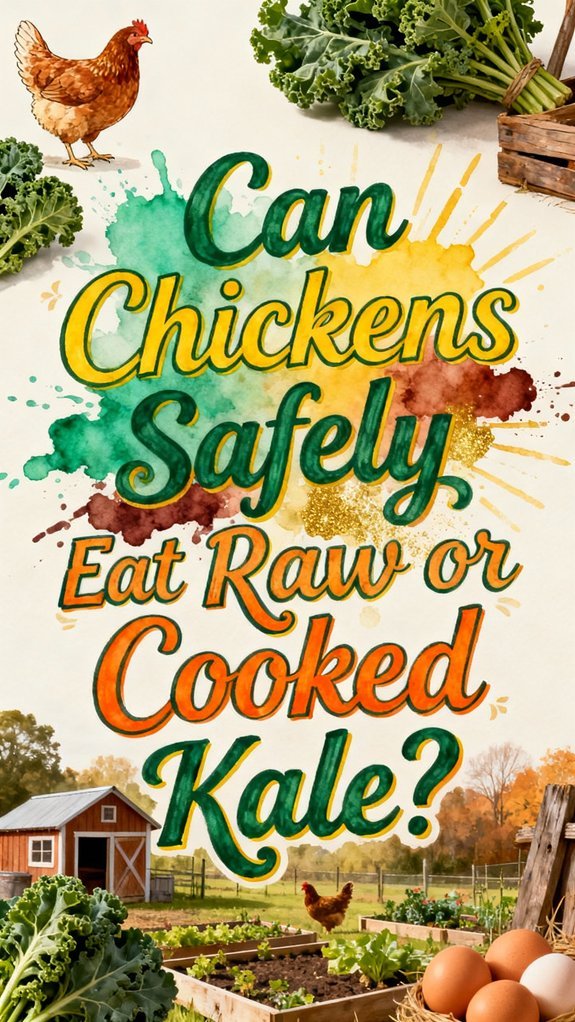
You can safely feed your chickens both raw and cooked kale, though cooked varieties offer superior digestibility and reduced anti-nutrients—crucial for laying hens requiring ideal calcium absorption. Raw kale retains heat-sensitive vitamins but can be tougher for older birds. Cooked kale softens fibers, enhances safety by eliminating pathogens, and improves nutrient accessibility. Limit kale to roughly 10% of their diet, serving 1-2 tablespoons per adult hen. Understanding preparation methods, portion control, and anti-nutrient concerns will help you maximize kale’s nutritional benefits for your flock.
Nutritional Benefits of Kale for Your Flock
Because kale contains an impressive array of vitamins, minerals, and phytochemicals, it’s an excellent supplement to your chickens’ diet. You’ll deliver vitamin A for immunity and vision, vitamin C for wound healing, and vitamin K for bone strength. The mineral profile provides calcium and phosphorus for eggshell quality, iron for oxygen transport, and potassium for cardiovascular health. Kale’s antioxidants—including lutein, zeaxanthin, and carotenoids—protect your flock’s eyes and enhance yolk color, while oregano’s immune-boosting properties can further support overall chicken health. Additionally, incorporating nutritious treats like almonds can provide essential minerals that complement kale’s benefits. Roosters, with their dominant behavior, may influence how hens access nutritious foods like kale within the flock. The high fiber content supports digestive health and regularity, while the 33 calories per cup makes portion control straightforward. Chickens require grit for digestion to properly break down fibrous foods like kale, so ensuring they have sufficient grit available is crucial for their digestive health. Different kale varieties offer similar nutritional profiles, so you can rotate them for variety. Building a cozy hen house with proper ventilation and space for foraging can also enhance your chickens’ well-being. Monitor your chickens for any signs of digestive discomfort when first introducing kale, as individual birds may have unique digestive responses. Incorporate kale 2-3 times weekly as a treat to maximize these benefits without disrupting their primary feed.

ESSENTIAL POULTRY GRIT FOR CHICKENS & GAMEFOWL: Premium grit for chickens made from natural granite grit for chickens, essential for grinding whole grains and improving digestive health for poultry; a must-have to include in your chicken coop accessories

TWO SIZES TO CHOOSE FROM: Starter Grit for ages 0-8 weeks. Layer & Grower for ages 8+ weeks

Necessary For Digestion - Made up of insoluble crushed quartzite or granite, grit remains in the bird’s gizzard to help with digestion. Grit is an essential part of your bird’s diet and should always be provided.
Raw Kale vs. Cooked Kale: Which Is Better?
Now that you’ve understood kale’s nutritional value for your flock, you’ll want to contemplate how preparation method affects both nutrient delivery and your chickens’ ability to consume it.
Raw kale preserves heat-sensitive vitamins like vitamin C and antioxidants better than cooked kale. However, raw kale‘s fibrous stems and mature leaves present mechanical challenges for weaker or older birds, potentially increasing waste.
Cooked kale softens cell walls, improving digestibility and nutrient bioavailability while reducing anti-nutrients that interfere with mineral absorption. A cooked cup delivers more edible mass per volume than raw kale, offsetting per-gram nutrient losses. Additionally, cooking eliminates surface pathogens, enhancing food safety. Cooking may kill plant enzymes, though this does not negatively impact your birds’ digestive processes since chickens rely on their own enzymes for processing food.
For best results, steam or lightly stir-fry cooked kale rather than boil it—this minimizes nutrient leaching. Choose raw kale only for healthy, younger flocks, or opt for tender baby kale varieties that present lower chewing difficulty.

COMPLETE STARTER FEED FOR CHICKS: Specifically formulated for chicks from hatching to 16 weeks, this non-medicated chick starter feed delivers balanced nutrition and essential nutrients to support strong, healthy early growth and development.

MULTI-USE FEEDER: Lixit's Chick Feeders have a reversible base for food or water! Simply unscrew the reservoir and flip the base to use as desired

Protein-Packed Adventure: Serenity Kids baby pouches are your little one's ticket to a protein-rich taste adventure. Packed with free-range chicken and organic veggies, they're perfect for starting strong on the baby puree journey
Safety Considerations for Feeding Kale to Chickens
While kale offers substantial nutritional benefits for your flock, three primary safety concerns warrant careful attention: pesticide residue, microbial and spoilage hazards, and anti-nutritional compounds that can accumulate with excessive consumption.
Commercial kale often contains pesticide residues that bioaccumulate in birds, causing organ damage over time. Washing helps, but certified organic or home-grown kale minimizes this risk most effectively.
Spoilage hazards include soil-borne pathogens and mold that introduce mycotoxins or bacterial contamination. Store cut kale refrigerated and inspect visibly for wilting or slime before feeding. Feeding kale in moderation of 10% of their total diet helps prevent the buildup of harmful compounds in their system.
Anti-nutritional compounds like oxalates and goitrogens can interfere with calcium metabolism and thyroid function when consumed excessively. Additionally, large kale leaves present choking risks for chicks and vulnerable birds.
Maintain kale as a supplement below recommended treat percentages to mitigate these hazards effectively.
How Much Kale Should Chickens Eat?
Determining appropriate kale portions requires balancing the nutritional benefits against anti-nutritional compounds and the risk of dietary imbalance. You should limit kale to roughly 10% of your chickens’ total daily diet. For standard adult hens consuming ~133 g of feed daily, offer 1–2 tablespoons of chopped kale per bird per serving. Bantams require smaller portions—approximately one teaspoon to one tablespoon. Regarding feeding frequency, you’ll want to provide kale a few times weekly rather than daily to maintain dietary diversity and prevent nutrient excess. Homemade treats can also serve as a supplementary source of necessary nutrients. Rotate kale with other greens like lettuce or spinach to minimize overexposure to specific anti-nutrients. Raw kale retains more nutrients than cooked varieties, making it an excellent choice when available fresh. Furthermore, chickens can benefit from a protein-rich snack during specific times, much like how peanut butter can be offered to them occasionally. Additionally, incorporating vegetables like cabbage into their diet can enhance their overall nutrition and health. During winter months when fresh forage is scarce, you can increase frequency briefly while ensuring complete feed remains your flock’s primary nutrient source. In contrast to kale, celery is another great option that provides essential nutritional benefits for chickens. Monitor your birds’ droppings and overall condition, reducing kale portioning if digestive upset appears.

PROBIOTICS FOR POULTRY: HealthyGut Probiotics for Chicken and Poultry is a broad spectrum blend of carefully selected probiotic bacteria for chickens, ducks, and other poultry; Helps promote a healthy digestive system and offers your bird total digestive support

Watch Your Birds Flourish: Our nutritionally complete whole grain grower crumbles with 17% protein promotes strong development and growth in chickens and ducks. Corn-free. Soy-free
Impact on Egg Production and Yolk Color
Because kale contains considerable lutein and β-carotene, introducing it to your flock’s diet produces measurable changes in both egg production metrics and yolk appearance. Controlled trials demonstrate that kale supplementation increases egg mass and individual egg weight without reducing laying frequency, meaning you’ll get larger eggs rather than more eggs per hen. More remarkably, you’ll observe dramatic color intensity improvements in yolks within days to weeks. Eggs from kale-fed hens display deeper red-orange hues and substantially elevated carotenoid concentrations compared to control groups. These nutritional shifts extend beyond pigmentation; your eggs will contain higher antioxidant levels, altered fatty acid profiles, and reduced sulfur aroma. Additionally, maintaining a balanced diet with layer feed nutrition is crucial for overall hen health and optimal egg production. The magnitude of color and nutrient changes depends on kale inclusion rates, breed, and baseline diet composition. Research on organic egg production shows that kale treatment eggs also demonstrate preferable taste characteristics and sweeter flavor profiles compared to control groups. Notably, chickens have a unique way of communicating their nutritional needs through various vocalizations, which can indicate their dietary preferences. Furthermore, the inclusion of kale in their diet can provide a nutritious treat similar to other vegetables like broccoli, supporting the overall health of your chickens.
Potential Health Risks and Oxalate Content
Though kale delivers impressive nutritional benefits, it contains approximately 17 milligrams of calcium oxalate per serving—a compound that binds with calcium and other essential minerals, considerably hindering their absorption in your flock’s digestive system. This oxalate overload disrupts mineral metabolism, particularly affecting laying hens who require adequate calcium for shell formation and bone integrity. Adequate calcium intake is vital for supporting strong eggshells and overall hen health. Additionally, a balanced diet rich in vitamins and minerals is crucial for optimal chicken health.
Prolonged high-oxalate consumption compromises kidney health, potentially causing kidney and bladder stone formation. The oxalic acid functions similarly to rhubarb’s compound, creating calcium deficiencies that weaken bones and trigger lethargy. Your birds face elevated risks from mineral imbalances that impair overall physiological function. Vitamin K in kale, while beneficial for blood clotting, should not overshadow the importance of monitoring oxalate intake levels.
Limit kale to 10% of your flock’s total diet, feeding it no more than 2-4 times weekly. Rotate greens regularly, provide supplemental calcium sources, and monitor your chickens for behavioral changes or appetite shifts indicating distress.
Preparing and Serving Kale to Your Birds
Once you’ve decided kale fits your flock’s dietary rotation, how you prepare and serve it substantially impacts both nutrient availability and palatability. Raw, finely chopped kale minimizes choking risk while preserving heat-sensitive nutrients. Light wilting or brief blanching softens fibrous stems and improves accessibility without significant nutrient loss—avoid prolonged boiling. Additionally, like many vegetables, kale can be safely offered to chickens and may complement their diet well. Chickens can safely eat most types of greens, including kale, as they provide valuable nutrients that support their overall health. Including a variety of nutritious vegetables in their diet can further enhance their well-being. It is recommended to monitor your flock for any changes in behavior, as some birds may experience health shifts when new foods are introduced. Implementing appropriate antimicrobial treatments such as Tylan 50 usage can support your birds’ overall health, especially when introducing new foods like kale. Your feeding guidelines should limit kale to treats: roughly 10% of total diet or 2–4 times weekly. Offer a few leaves per hen to prevent feed displacement. Never add salt, oil, or seasonings during kale preparation. Serve cooked kale separately from dry feed to prevent sogginess. Rotate kale with other vegetables for nutritional variety. Freeze excess portions in measured amounts for convenient winter use, blanching briefly beforehand to preserve quality. Like other leafy greens, kale should be rinsed before feeding to remove pesticides and potential contaminants from store-bought produce.

NO MORE FEED SCATTERED ON THE GROUND: This chicken feeder uses a gravity-fed port design to deliver chicken feed directly to your flock, keeping it inside the feeder, off the ground, and away from pests. The enclosed port design reduces spillage and wasted feed, making it an ideal chicken feeder option for backyard chickens.

🐤1L Chick Feeder and 1 L Chick Waterer: 8 feeding ports and the chick feeder and waterer kit with automatic water outlet can feed 12 chicks or 3 adult chickens at the same time;

Chicken Starter Kit: This chick starter kit includes 1 chick waterer, 1 chick feeder, 2 chick feeder troughs and 1 chick perch, which are designed to meet the feeding, drinking and resting needs of the chicks
Seasonal Feeding and Garden Growing Tips
Growing your own kale guarantees year-round supply for your flock while optimizing nutritional quality through harvest timing. Strategic seasonal planting guarantees continuous availability of this nutrient-dense green. Including kale in their diet provides essential vitamins that contribute to the overall health of your chickens, especially when combined with a balanced diet that includes proper housing and care. Additionally, incorporating fresh ginger root can further support their wellness by enhancing antioxidant properties. During this period, be mindful that chickens may undergo molting, which can temporarily affect their dietary needs. It’s important to ensure that your chickens have access to a varied diet to meet their changing nutritional requirements.
In mid-autumn, plant kale when temperatures stabilize around 21°C for ideal growth. Start seeds indoors during late winter for fall transplants, or sow summer seeds before mid-July for Pacific Northwest harvests. Early spring planting occurs 1-2 weeks before your average last frost.
For garden maintenance, use loamy, well-drained soil with pH 5.5-6.8 and amend with compost plus 5-5-5 organic fertilizer. Provide full sun exposure, though partial shade tolerates direct heat spots. Kale develops a sweeter taste if exposed to frost, making winter harvests particularly beneficial for your chickens.
In zone 8b regions like Western Washington, overwinter exposed plants for continuous winter foraging. Use row covers during Arctic blasts. This cold-hardy strategy provides essential vitamins when other greens fail, ensuring your chickens have access to nutritious food year-round while also contributing to their overall well-being in a backyard flock setting.
Rotating Kale With Other Greens for Optimal Nutrition
While kale delivers exceptional nutritional density—particularly vitamin K for bone development and blood clotting—relying exclusively on this cruciferous green can create dietary imbalances in your flock. Kale rotation with complementary greens guarantees nutrient diversity while mitigating health risks.
Alternating kale with spinach and chard amplifies iron, folate, magnesium, and potassium intake, supporting cardiovascular function. Rotating prevents goitrogen accumulation, which inhibits thyroid activity, and reduces oxalate buildup that compromises calcium absorption and kidney health.
Incorporate softer greens like romaine and celery leaves to balance kale’s high fiber density, optimizing digestive function and preventing constipation. Adding collards, mustard greens, and beet greens diversifies antioxidant profiles and trace minerals. Feed kale two to five times a week to maintain optimal nutrient balance without creating deficiencies in your flock.
Strategic nutrient diversity through kale rotation strengthens immune function, promotes robust growth, and sustains long-term flock health.

Grow a Gourmet Green Feast of fresh greens for your backyard chickens!
NUTRITIOUS CHICKEN TREATS FOR LAYING HENS & FLOCKS: Wholesome mix offers fun & nutrition in one tasty snack; these premium chicken treats for laying hens encourage natural pecking behavior, support strong eggs, & are a perfect choice for backyard flocks

REAL VEGGIES FOR HEALTH: Crafted with real pieces of beets, peas, sweet potatoes, and broccoli, this treat provides wholesome nutrition and natural flavors that your flock will enjoy while supporting their overall health and vitality.