You’ll maximize your flock’s egg production by selecting the ISA Brown, which delivers 470+ eggs annually with exceptional feed efficiency, or the White Leghorn, reaching 360 eggs yearly. The Lohmann Brown, Australorp, Rhode Island Red, Golden Comet, Plymouth Barred Rock, and Ancona offer reliable alternatives, each with distinct production rates and environmental adaptability. Your best choice depends on climate, housing systems, and specific yield goals—factors that deserve deeper exploration.
White Leghorn
When you’re selecting a breed for maximum egg production, the White Leghorn consistently delivers. You’ll see annual yields of 280–320 eggs per hen, with specialized commercial strains reaching 360 eggs yearly. These breed characteristics include medium-to-large white eggs averaging 53–59 grams, maintaining high uniformity across production cycles. The breed originated in rural Tuscany and was named after Leghorn, the anglicised form of Livorno, a Tuscan port where initial exports began.
Notably, the White Leghorn is considered one of the most prolific layers in the poultry industry, making it a favorite for egg production farms.
Your flock’s efficiency hinges on excellent feed conversion—approximately 1.19–1.22 kilograms per dozen eggs. Pullets begin laying at 4½–5 months, and hens sustain production 10–12 weeks longer than many competing layers. Their small body size reduces input costs considerably.
However, you’ll need to accommodate their active, flighty temperament. They’re poorly suited to confined urban settings but excel in free-range systems where foraging reduces feed expenses and their high livability minimizes replacement losses.


Durable All‑Weather Metal Outdoor Chicken Memorial Stake: Made from 16‑gauge powder‑coated steel, this weatherproof, rust-free stake features a laser-cut chicken silhouette with floral accents for charming farmhouse rustic style. Designed as a permanent pet chicken grave marker, it is ideal for placement at a burial site, garden, or near the coop as a lasting remembrance of your feathered friend.

I Just Really Like Chickens, Ok? Leghorn chicken for kids, teens, adults, chicken lover, farmer, poultry rancher, chicken whisperers, poultryman who loves raising domestic chickens, rooster, farm animals, livestock, chicken coop, western lifestyle.
2. ISA Brown
The ISA Brown represents a purpose-bred crossbreed engineered for exceptional egg production across diverse management systems. You’ll achieve 470 hen-housed eggs with 29.6 kg egg mass over 18-100 weeks, demonstrating remarkable consistency. The breed’s feed efficiency stands out: you’ll convert feed at 2.10 kg per kilogram of eggs produced, minimizing operational costs while maximizing profitability.
Egg quality remains superior, with consistent 62-63g weights and strong 4100 g/cm² shell strength. You’ll observe 93-94% livability rates and peak production hitting 96.5%. The ISA Brown reaches 50% production by 145 days, enabling rapid returns on investment. Its high livability ensures minimal losses throughout the production cycle, protecting your investment further. Notably, Rhode Island Reds are known for being prolific layers, contributing to the optimal laying performance in hens. Additionally, keeping a diverse flock including breeds like the Speckled Sussex can enhance overall productivity and flock health. Furthermore, ISA Browns are recognized for their ability to thrive in various housing systems, similar to the prevalent raising conditions of Leghorns. The effective design considerations for housing these chickens ensure they remain safe and comfortable, thereby boosting production.
Despite their low egg production, breeds like the Silkie chicken are appreciated for their strong maternal instincts, making them excellent for those interested in natural incubation.
Whether you’re operating commercial cage systems or backyard operations, this breed adapts reliably. Its 40+ year track record as a global market leader confirms its proven performance across varied climates and housing configurations.

SIMPLE FORMULA: Crafted with Corn, Milo, and Wheat for a nutritious and simple blend.
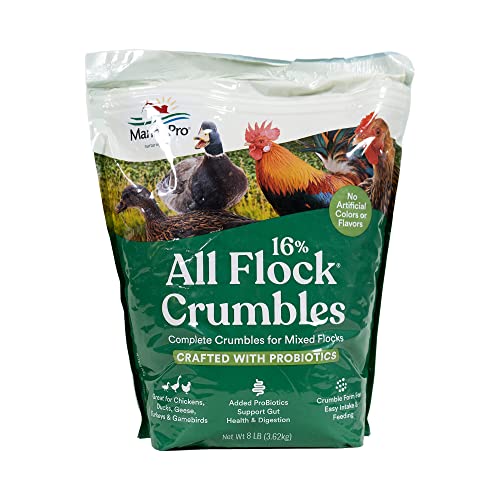
COMPLETE ALL FLOCK FEED FOR MIXED BACKYARD FLOCKS: Versatile poultry feed & all flock feed designed to support chickens, ducks, turkeys, geese, & more; a balanced bird food that simplifies feeding a diverse species in your backyard or homestead

COMPLETE ALL FLOCK FEED FOR MIXED BACKYARD FLOCKS: Versatile poultry feed & all flock feed designed to support chickens, ducks, turkeys, geese, & more; a balanced bird food that simplifies feeding a diverse species in your backyard or homestead
3. Lohmann Brown
Lohmann Brown chickens rival the ISA Brown’s performance with a distinctly competitive profile shaped by rigorous genetic selection. You’ll achieve peak production at 94-96% near 140-145 days, generating 272.2-284.93 eggs annually during your 21-72 week production cycle. Lohmann Characteristics include attractive brown shells exceeding 40 Newton breaking strength, with eggs weighing 63.7g by week 72. You’ll maintain excellent feed conversion at 2.64 between weeks 21-72, producing 20.63kg egg mass per housed hen. Additionally, Lohmann Browns are known for their friendly demeanor that makes them great companions in a backyard setting. Notably, Lohmann Browns are prolific layers, similar to other breeds like the Australorp, which are recognized for their superior egg production. For Lohmann Management, prioritize liveability monitoring—expect 95-96% survival through 72 weeks and 90-91% through 100 weeks. Body weight progresses from 1.42kg at 17 weeks to 2.06kg at production end. Your 10% overall mortality through 83 weeks requires vigilant health protocols ensuring consistent performance throughout the productive cycle. The breed demonstrates successful adaptation to regional conditions, making it suitable for commercial farms and multiplication centers with basic input packages. Rhode Island Red chickens can also thrive in similar environments, providing another excellent option for egg production. With their steady egg-laying habits, Lohmann Browns offer a reliable source of fresh eggs year-round.

Sliding door and ramp allows poultry to enter the raised housing area. There are timber ridges above the ramp to protects your poultry from slipping back. Your poultry can lay their eggs in the nesting box.

【Movable Chicken Coop】 This hen coop is designed for effortless mobility, featuring sturdy built-in wheels and a handy side handle that let you move it around your yard with ease.

Heavy‑Duty Outdoor Memorial Stake & Sign: Crafted from solid 16‑gauge powder‑coated steel, this rust‑proof and weather‑resistant piece works as a memorial stake, garden sign, yard plaque, or coop decor. Laser‑cut chicken silhouettes with floral details create a classic farmhouse look built for long‑term outdoor display.
4. Australorp
While Australorps don’t match the specialized performance metrics of modern hybrids like the Lohmann Brown, they’ve historically demonstrated remarkable laying capacity—pens averaged 309.5 eggs per hen in 1922–23, with individual record-holders reaching 364 eggs in 365 days. Today, you’ll see typical production of 250–300 eggs annually under favorable conditions. Their black feathers require shade in hot climates, though they’re temperature-tolerant overall. You’ll appreciate their friendly behavior and active foraging habits, which prevent overweight birds in confinement. Additionally, using oregano oil can further support their health and productivity. To ensure optimal egg production, it’s important to incorporate feeds that are free of seed oils and pesticides. Many hens produce eggs in cycles influenced by various factors. Australorps produce medium-to-large brown eggs with excellent shell strength and consistent egg quality. Their dual-purpose genetics support moderate broodiness and good maternal instincts. To maximize egg production, it’s crucial to provide hens with balanced layer feed that meets their nutritional needs, ideally transitioning to it around 16 to 18 weeks of age. Production lifespan peaks during years one through three, with notable decline afterward, making them reliable backyard producers. As a recovering breed, Australorps maintain lower population numbers compared to commercial hybrids, which adds conservation value to raising them.
5. Rhode Island Red
A cornerstone of American poultry breeding, Rhode Island Reds deliver consistent egg production that’s made them a staple for both commercial operations and backyard flocks. You’ll harvest 5 to 6 eggs weekly, with production varieties yielding up to 300 annually while heritage varieties average 200. These chickens are particularly valued for their reliable production and adaptability to various climates, making them a great choice for varied farm conditions. Maintaining an ideal hen to rooster ratio is important for their overall health and productivity. Additionally, providing ample space in the coop helps promote well-being and prevents overcrowding. Rhode Island Reds are known to thrive in diverse environments, showcasing their cold-hardiness even in less-than-ideal weather.
Your hens begin laying around 18 to 20 weeks and maintain productivity nearly year-round, including cold months. Egg characteristics feature sturdy shells in light to dark brown, medium to large sizes that exceed typical store-bought weights—ideal for cooking and baking. Their larger and more pronounced comb helps regulate body temperature during peak laying seasons.
Temperament traits showcase calm, sociable birds with exceptional hardiness. Production strains exhibit reduced broodiness, simplifying management. Originating from Rhode Island and Massachusetts crossbreeding in the mid-1800s, this Heritage Variety combines Leghorn and Asian genetics. You’re selecting a dual-purpose breed: reliable layers and viable meat producers.

6+ Rhode Island Red chicken Hatching Eggs by Fox Peak Outdoor Supply LLC.

Spacious Coop for 4-6 Hens: Measuring 82.4"L x 25.8"W x 44.1"H, this large chicken coop with run provides plenty of space for 4-6 chickens, ducks, or rabbits to roam, nest, and rest comfortably. Perfect for backyard flocks that deserve extra room to thrive

6. Golden Comet
Golden Comets represent a deliberate departure from heritage breeds like Rhode Island Reds—engineered through hybrid vigor rather than true-breeding selection. You’ll achieve 280–320 eggs annually during peak years, with consistent laying beginning at 16–20 weeks. Golden Comet advantages include sex-linked chick sexing at hatch and reliable daily production without broodiness interruptions. Notably, they share characteristics with many mainstream white egg layers that are of Mediterranean origin.
Offering fresh vegetables as part of their diet can enhance their overall health and productivity. Golden Comet care requires balanced nutrition timed to sexual maturity and attention to space, parasite control, and lighting programs. You should expect a 5–7 year lifespan under typical conditions, though productivity peaks within the first 2–3 years before declining noticeably. Their 4–5 lb frame and docile temperament suit backyard systems with free-ranging opportunities. These birds were developed in the 1950s through crossing a Rhode Island Red rooster with a White Rock hen to optimize egg-laying abilities. However, intensive selection for productivity reduces genetic diversity, potentially compromising disease resistance compared to heritage breeds.
7. Plymouth Barred Rock
The Plymouth Barred Rock stands as a dual-purpose heritage breed that’s been refined since the 19th century for both meat and egg production, making it fundamentally different from the engineered Golden Comet. You’ll find Barred Rock characteristics include consistent large brown eggs—approximately 200 annually, or 4–5 weekly during peak years. These hens mature at 16–20 weeks and maintain reliable production for 2–3 years before gradual decline. Throughout their productive years, Barred Rocks typically lay between 190 and 280 brown eggs annually, showcasing their impressive capacity and benefiting from adequate nutrition in their diet. Additionally, implementing a custom PVC watering system can ensure they remain hydrated, promoting optimal egg production. It’s important to note that while Barred Rocks are prolific layers, they typically do not lay eggs every day, often laying an egg every 24 to 26 hours on average. Furthermore, their consistent laying patterns make them a suitable choice for those aiming to achieve high egg production in a backyard setup.
Plymouth Rock management requires attention to broodiness, which interrupts laying cycles. However, the breed’s cold and heat hardiness, combined with docile temperament, simplifies handling. Their foraging ability supplements nutrition when free-ranged. With lifespans reaching 6–12 years, you’ll experience productive output concentrated in early years, making them practical for homestead and small-scale operations. The large single red comb that often flops to one side is a distinctive identifier of the breed.
8. Ancona
Originating on Italy’s Adriatic coast near the port city of Ancona, this Mediterranean breed represents a traditional egg-type chicken that’s been refined from local landraces and early Leghorn-type stock. You’ll find Ancona characteristics distinguish it through compact body size (hens ~4.5 lb) and low broodiness, enabling consistent Ancona egg laying of 180–220 eggs annually. Early maturity—around 16–20 weeks—supports rapid production cycles. The breed exhibits excellent foraging efficiency and tolerates winter laying better than most alternatives, though single-comb variants require frost protection in cold climates. Anconas are recognized for their distinctive black feathers with white tips, further setting them apart from other Mediterranean breeds. Notably, their egg production is competitive with high egg-producing breeds like the White Leghorns when proper care and feeding practices are applied. You’ll maximize output by prioritizing utility strains over show lines, providing free-range access, and maintaining adequate photoperiod. Their flighty temperament demands secure housing to minimize predation risk. Additionally, like the Hy-Line Brown, Anconas also demonstrate excellent feed efficiency, contributing to effective egg production even in diverse environments.