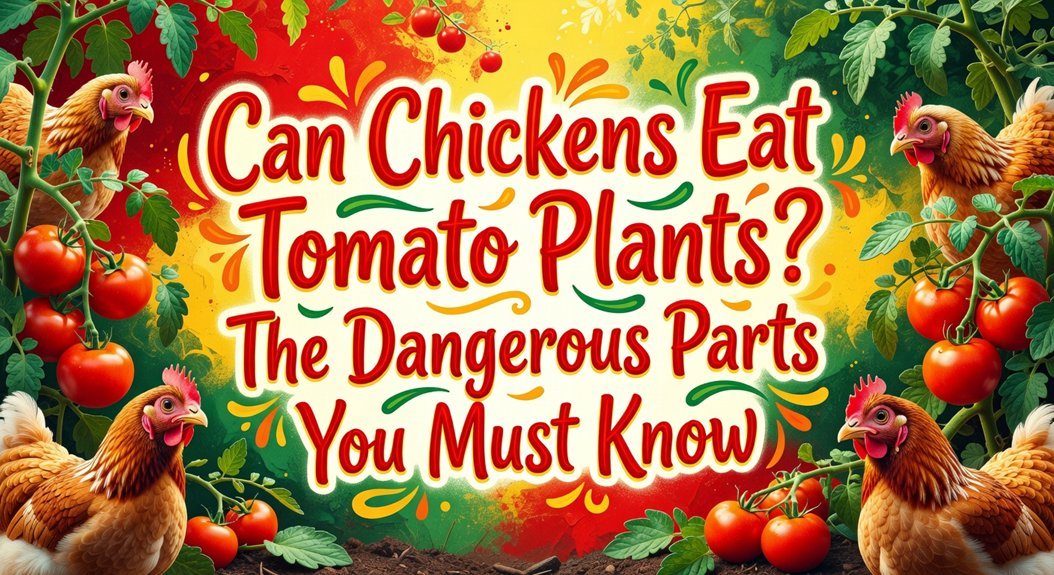
If you’re wondering whether your chickens can munch on tomato plants, here’s the honest answer: it depends entirely on *which part*. The ripe fruit? Totally safe. But the leaves, stems, vines, and unripe fruit contain solanine — a toxin that can trigger seizures or sudden death at just 2 mg per kilogram of body weight. You don’t want to learn that lesson the hard way. Stick around, because the full breakdown might surprise you.
Can Chickens Eat Tomato Plants?
If you’ve got chickens and a tomato garden, you’ve probably already lost sleep wondering whether your flock is about to poison themselves on your prized plants. Here’s the thing — your worry is completely valid, and honestly, it’s complicated. Ripe tomato fruit? Totally safe. The leaves, stems, and green parts your chickens encounter during tomato plant growth? That’s where trouble lives. Solanine toxin hides in those green sections, and it’s genuinely dangerous. Now, most chickens naturally avoid the toxic parts, but “most” isn’t “all,” and that distinction matters. Obviously, during seasonal harvesting, ripe tomatoes become wonderful treats for your adult flock. The smart move is understanding exactly which parts are safe before your chickens make that decision themselves.

Let our professionally formulated plant food help you grow bigger, juicer and plumper tomatoes in your garden

【Upgraded Fine Mesh Netting】This fine mesh garden netting uses 0.7*0.8mm high-density garden insect netting to block, birds, and small animals, offering reliable plant protection netting for vegetables and flowers

Made In United States
Which Parts of the Tomato Plant Are Toxic to Chickens?
Not every part of a tomato plant carries the same risk, and once you know which parts are the actual problem, managing your flock around your garden gets a whole lot easier. Here’s the thing — solanine toxicity lives in the green parts. Leaves, stems, flowers, unripe fruit — all of it is problematic. The tomato plant’s green material contains concentrated solanine that can trigger vomiting, diarrhea, and even neurological issues. Now, ripe red tomatoes? Totally fine in moderation. Obviously, you’d skip the moldy ones. Chick health is especially vulnerable, so keep birds under eight weeks far away from unripe fruit entirely. Fence off your plants if you’re free-ranging. Ripe tomatoes are a treat worth offering — just remove those stems first.

【Complete Plant Protector Kit】Convivium plant protectors from animals include a free-cut metal mesh roll in 2 size options—16.4Ft x 16In (40cm x 5m) or 33Ft x 16In (40cm x 10m), wire diameter 0.8mm—plus 50/100 zip ties, 15/30 U-shaped garden stakes, a pair of cut-resistant gloves, a wire cutting plier and 10m floral wire, so you have everything needed in one kit

COMPLETE PROTECTION KIT - Professional-grade 7ft x 100ft deer netting with 3/4" fine mesh that effectively blocks deer, rabbits, birds, and small pests. Includes 10 metal landscape staples and 50 zip ties for immediate installation - everything you need in one package.

Enough Quantity: you will receive 24 pics of square plant cages for garden, there will be 24 sheets of wire mesh plant protector panels, 24 pieces of ground stakes and 100 pieces of nylon cables and we will provide detailed instructions to help you build plant cages for outdoor plants.
What Is Solanine and Why Is It Dangerous?
Solanine’s the compound behind most of the anxiety gardeners feel when they catch their chickens nosing around tomato plants — and honestly, that anxiety is justified. Here’s the thing: solanine is a natural pesticide the plant produces to protect itself. Smart plant, bad news for your flock. Solanine toxicity works by disrupting cell membranes and inhibiting cholinesterase, fundamentally scrambling normal nerve and cellular function. Symptoms hit fast — sometimes within 30 minutes — causing vomiting, paralysis, and cardiac issues. Now, poultry safety around nightshade plants isn’t something you want to gamble on. Doses as low as 2 mg per kilogram of body weight trigger toxic reactions. You already suspect this is serious. Trust that instinct — it’s correct.
Signs of Tomato Plant Poisoning in Chickens
Catching your chicken slumped in the corner of the run, eyes half-closed, barely moving — that’s the moment you realize something’s wrong, and you need answers fast. Here’s the thing: tomato plant toxicity hits fast and moves through stages. Early on, you’ll spot dilated pupils, lethargy, and lost appetite. Then comes diarrhea, incoordination, and muscle tremors. Now, poultry health monitoring gets critical — watch for purplish comb discoloration, labored breathing, and seizures. Those aren’t dramatic; they’re warnings. A slowed pulse signals moderate poisoning. Rapid pulse? You’re in dangerous territory. Obviously, sudden death is the worst outcome, but it’s preventable. If you’re seeing two or more of these symptoms together, don’t wait. Get your bird to a vet immediately.

PERFECT CHICKEN STARTER KIT - GIFANK Chick Feeder And Waterer Set include a Chick Feeder*2,1.3L Chick Waterer*1 and Chick Perch*2. The red color set makes the Chicks excited to eat more. Chick perch provides more fun for your chicks, GIFANK chick starter kit is the perfect way to provide your chicks with everything they need to grow up healthy.

Complete Starter Kit: This all in one brooder includes heat lamps, thermometer, waterer, feeder, pee pads, moisture resistant pad, cleaning tools and more. The exclusive drawer style manure separation enables quick, sanitary cleanup without disturbing chicks, keeping their habitat fresh and saving you time【Note: Temperature controller not included】

CHICKEN WATERER KIT: 1.5L or 3L, our plastic poultry drinkers ideal for small flocks of chickens, ducks, turkeys, quails, pigeons, birds, parrots and etc. Perfect for backyard coops or brooder setups
Are Ripe Tomatoes Safe for Chickens to Eat?
While the tomato plant itself is a genuine hazard for your flock, the ripe fruit sitting at the end of that vine is a completely different story. Here’s the thing — ripe tomatoes are actually safe, nutritious, and something your chickens genuinely enjoy. All right, so what makes ripe tomatoes different? Fully ripened fruit loses its toxic solanine content completely.
Now, seasonal availability matters here. You’ve got ripe red, yellow, orange, cherry, and purple tomatoes cycling through summer harvests — all safe options. Skip the seasonato seasoning if you’re cooking them, though, since sodium causes real problems.
Wash thoroughly, remove stems and leaves, and feed only adult chickens. Overripe or slightly flawed tomatoes work perfectly. Ripe tomatoes are honestly one of the smartest treats you can offer your flock.
How to Safely Prepare and Serve Tomatoes to Chickens
Preparing tomatoes correctly for your flock isn’t complicated, but getting it wrong means wasted effort at best and a sick bird at worst. Here’s the thing — you want ripe, washed, unseasoned tomatoes only. Skip the stems, leaves, and anything green. Now, season serving matters because winter flocks actually eat more, so slightly larger portions make sense when seasonal availability drops. Cooked tomatoes mixed with soft vegetables work great, especially when you blend them into existing meals without additives or salt. Raw whole tomatoes? Fine for adults — they’ll handle the pecking themselves. Remove leftovers promptly, obviously, because rotting tomatoes attract rodents faster than you’d think. Keep portions small, rotate with other vegetables, and you’ve fundamentally solved this completely. Easy decision, genuinely smart habit.

Tomatoes are ubiquitous in the American diet.

One 24 ounce package of On-The-Vine Tomatoes

WHAT'S INSIDE: One 10.5-ounce can of Chicken Noodle Soup
What Tomato Colors Can Chickens Safely Eat?
Now that you know how to prep tomatoes correctly, the next question that trips most chicken keepers up is color — specifically, which colors are actually safe and which ones you should toss back in the compost bin. Here’s the thing: tomato color variations matter less than ripeness. Red, yellow, orange, purple — all safe when fully mature and soft. Obviously, red signals ripeness instantly. But ripe yellow or purple tomatoes? Equally nutritious, same vitamins, zero drama. Seasonal tomato availability means you’ll likely encounter different varieties throughout the year, so don’t panic when your garden produces something unexpected. Now, green tomatoes? Hard pass. Unripe green fruit contains solanine, which is genuinely toxic to chickens. Color confirms ripeness — ripeness confirms safety. It’s really that straightforward. Ripe red tomatoes also deliver high antioxidant content that actively supports your flock’s overall health.
How Old Should Chicks Be Before Eating Tomatoes?
If you’ve ever stood in the backyard holding a juicy tomato slice and wondered whether your fluffy three-week-old chicks could share in the snack, you’re not alone — and honestly, the confusion makes complete sense. Here’s the thing: your chick growth milestones matter enormously here. Chicks under 8 weeks need specialized starter feed exclusively — their digestive systems simply aren’t ready for treats yet.
Now, your tomato feeding schedule should realistically begin between weeks 8 and 12, once digestive maturity kicks in. Before that window, even safe foods disrupt the balanced nutrition driving rapid bone, organ, and muscle development.
Obviously, waiting feels counterintuitive when you’re excited. But patience here protects your flock’s long-term health. Start at week 8 — you’ll both be glad you did.
Do Free-Range Chickens Avoid Tomato Plants on Their Own?
Once you’ve figured out the right age to introduce tomatoes, the next logical worry is whether your free-range flock will just help themselves — raiding your garden like feathered criminals with zero impulse control. Here’s the thing: they probably won’t. Free range behavior around tomato plants is surprisingly self-regulated. Chickens naturally practice plant avoidance with nightshade family plants, including tomatoes, because solanine in the leaves and stems tastes awful to them. Their instincts do the heavy lifting you’d otherwise spend money on fencing for. Now, obviously they’ll demolish a ripe tomato without hesitation — but the actual plant? Ignored. Owners consistently report zero foliage damage after years of open garden access. Your chickens are smarter about toxins than you’re giving them credit for.
Nutritional Benefits of Ripe Tomatoes for Chickens
Ripe tomatoes pack a surprisingly dense nutritional punch for your flock, and once you see what’s actually inside them, you’ll stop treating them like a casual garden scrap and start thinking of them as a legitimate health tool. Here’s the thing — your hens are probably working harder than their diet supports. Vitamin C boosts immune function, folate improves protein absorption, and potassium keeps muscles firing correctly. Now, the part most people miss: lycopene and beta-carotene from ripe tomatoes directly improve egg yolk pigment, making yolks darker and more nutrient-rich. Studies back this up. You’re not just feeding a treat — you’re upgrading your eggs. Keep portions to 5–10% of total diet, and you’ve got a genuinely smart, simple addition.