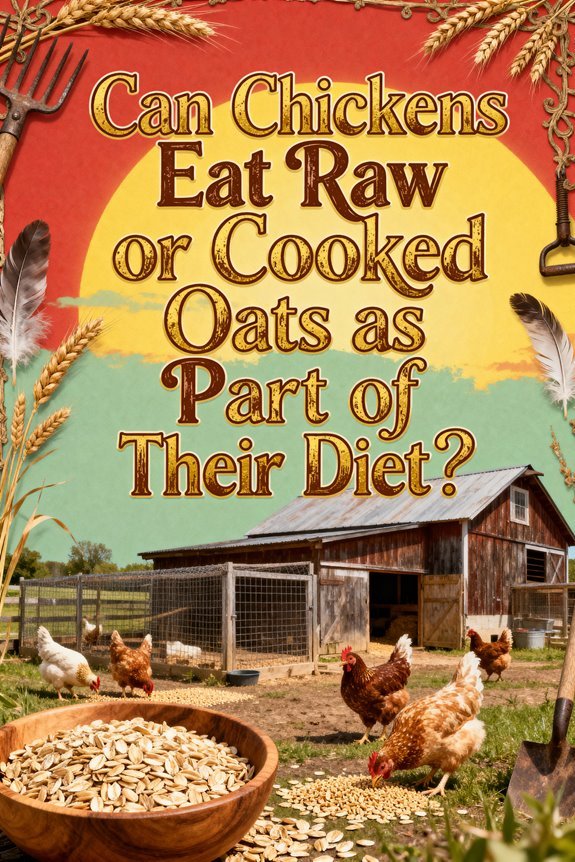
Yes, you can feed your chickens both raw and cooked oats as an occasional treat, but limit portions to one tablespoon per adult hen once or twice monthly. While oats provide essential carbohydrates, proteins, and beneficial beta-glucans for immune health, they shouldn’t exceed 10% of your flock’s total diet. Keep raw oats as part of a balanced feeding plan with complete layer feed for ideal nutrition. Understanding proper serving methods guarantees your chickens get the most benefit from this nutritious grain.
Nutritional Benefits of Oats for Chickens
While chickens can benefit from various food sources, oats stand out as a nutrient-dense grain that provides essential carbohydrates, proteins, and fiber. You’ll find that oats deliver approximately 69.8g of carbohydrates per 100g, with starch making up 54.9g, offering your flock sustained energy throughout the day.
When considering oat varieties and feeding frequency, you’ll want to balance their 12.5g protein content per 100g with other protein sources, as it’s lower than commercial feeds. The grain’s rich fiber content (12g per 100g) supports digestive health, while its B-vitamins aid metabolism. You’ll also find beneficial minerals like calcium, iron, and zinc, though not in quantities sufficient to replace complete feeds. The beta-glucans (3.62g per 100g) can help strengthen your chickens’ immune systems. Providing oats during cold weather seasons helps chickens maintain body warmth through their high carbohydrate content.

USDA Certified Organic Rolled Oats - Old Fashioned

GOOD SOURCE OF FIBER, PROTEIN, AND IRON: Rolled oats are, well, rolled oats! These oat grains have the outer husk removed and are then steamed and rolled to form a flat flake

GOOD MORNINGS START WITH GOOD INGREDIENTS: Our Gluten Free Organic Old Fashioned Rolled Oats make a tasty hot cereal that provides lasting energy to fuel your morning; perfect for classic oatmeal cookies, homemade granola and hearty oatmeal bread
Raw vs. Cooked Oats: What’s Better for Your Flock
When deciding between raw and cooked oats for your chickens, you’ll need to weigh their distinct impacts on digestibility and nutrient absorption. Both raw and cooked oats contain beta-glucans that can cause digestive issues and create sticky litter conditions in your coop. Regular oat consumption can lead to necrotic enteritis damage in severe cases.
While cooking oats slightly improves their digestibility by breaking down some fibers, neither form offers complete nutrition for your flock. Both varieties provide similar energy content and beneficial compounds, including antioxidants and immune-supporting beta-glucans. However, they’re lower in protein compared to complete feeds. A balanced layer feed containing 16-18% protein is essential for optimal health and egg production. Barred Rock hens can lay up to 280 brown eggs annually, making proper nutrition especially important for sustaining their impressive production.
You’ll get the most benefit by offering either raw or cooked oats as occasional treats rather than dietary staples. This approach helps maintain proper nutritional balance while still providing your chickens with the stress-reducing and immune-supporting properties of oats.

7 GRAINS: Our scratch grains for chickens offer a high-protein, high-fiber blend of corn, wheat, milo, barley, oats, sunflower seeds, and millet, delivering essential vitamins and minerals to keep your birds healthy, energized, and thriving every day.

EACH PACK CONTAINS: One 3 oz resealable pouch of freeze-dried chicken breast dog treats, perfect for training or as a healthy reward
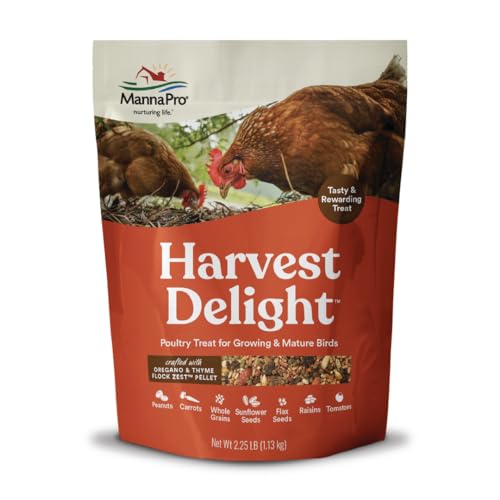
NUTRITIOUS CHICKEN TREATS FOR LAYING HENS & FLOCKS: Wholesome mix offers fun & nutrition in one tasty snack; these premium chicken treats for laying hens encourage natural pecking behavior, support strong eggs, & are a perfect choice for backyard flocks
Safe Feeding Guidelines and Portions
Proper portioning and feeding frequency directly impact your chickens’ health when incorporating oats into their diet. Limit oat treats to once or twice monthly, serving one tablespoon per adult hen. For larger flocks, multiply this portion size by your total hen count.
To maintain ideal nutrition, don’t exceed 10% treats in your chickens’ overall diet. Oats shouldn’t replace formulated feed, as they lack complete nutrition. Feed your flock a quality layer feed for optimal egg production. You’ll need to be especially careful with portion sizes for baby chicks, offering only tiny amounts of ground oats mixed with starter feed. Serving oats as a late afternoon snack helps prevent overfilling at breakfast time.
Monitor your flock for digestive issues like sticky droppings or diarrhea. If problems arise, discontinue oat feeding. While oats can provide enrichment and variety, excessive feeding frequency or portions can disrupt digestion and reduce nutrient absorption.

PREMIUM CHICKEN FOOD FOR LAYING HENS WITH OMEGA-3: High-quality chicken layer feed made for strong egg production; fortified with chicken feed omega 3 & extra chicken feed calcium to support healthy shells & provide complete daily nutrition for your hens
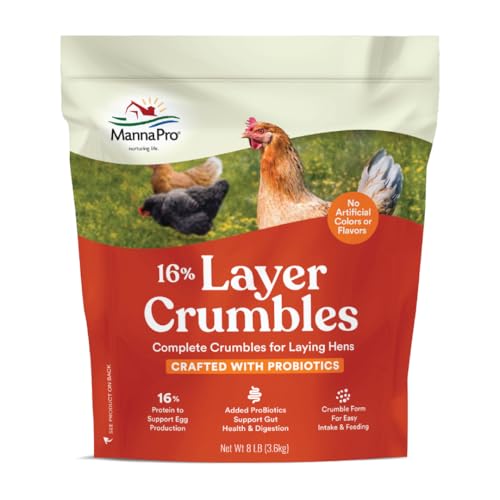
COMPLETE CHICKEN FEED FOR LAYING HENS: Manna Pro Chicken Feed delivers complete nutrition designed for laying hens, supporting strong egg production, healthy feathers, and overall wellness; balanced formula helps maintain optimal health in backyard flocks
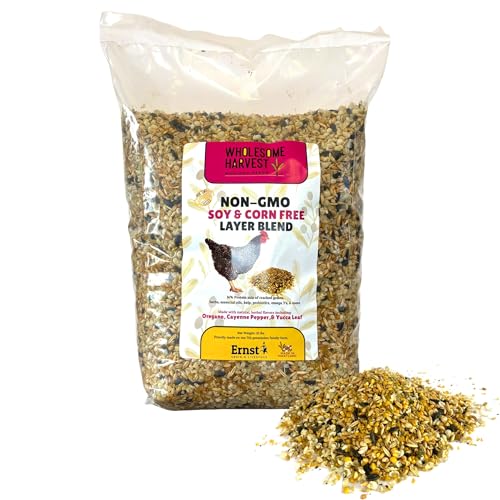
LAYER BLEND: Our Non-GMO layer mash is a complete feed fortified with minerals and additional calcium, ensuring quality eggshells. This blend of grains includes probiotic for digestive health and higher omega 3 levels from linseed (flax) oil. Ideal for supporting your flock's overall health and egg-laying productivity.
Health Impact on Chicken Performance
Including oats in your chickens’ diet creates complex nutritional effects that influence their overall performance. While oats provide quick energy from carbohydrates and quality protein through avenalin, they’re less effective than complete feeds for ideal growth performance. The beta-glucans in oats support digestive health by preventing harmful bacteria, but can slow digestion efficiency if overfed. Feeding 2-3 times weekly maintains optimal nutritional balance without compromising health.
You’ll find that oats contain essential amino acids like lysine and methionine, supporting muscle maintenance and egg production. However, their high fiber content, particularly from hulls, reduces feed efficiency and energy utilization compared to wheat or maize. While moderate oat inclusion (up to 40%) won’t harm broiler carcass quality, you’ll need to supplement with other ingredients to maintain expected growth rates and egg production levels.

PROBIOTICS FOR POULTRY: HealthyGut Probiotics for Chicken and Poultry is a broad spectrum blend of carefully selected probiotic bacteria for chickens, ducks, and other poultry; Helps promote a healthy digestive system and offers your bird total digestive support

Grow fresh greens in days — cheaper than store treats

Eat Anywhere To Supplement Nutrition: You can pour chicken nesting herbs in the chicken house; litter; nest box; feeder; dust bath area, and the chickens can eat it anytime and anywhere. Nesting herbs for chicken coop can be mixed with other chicken feeds to make a perfect snack supplement, supplementing chickens with multiple vitamins; minerals; calcium and trace elements, etc., which is beneficial to the health of chickens and improves the quality of eggs
Potential Risks and Limitations
Despite their nutritional benefits, feeding oats to chickens carries several important risks that require careful consideration. When you provide too many oats, you’ll risk creating nutritional deficiencies as they lack the 38+ essential nutrients found in complete feeds. Excessive oat consumption can disrupt natural feeding behavior and compromise digestive health due to their high beta-glucan content. You’ll notice potential gastrointestinal disturbances, including sticky droppings, bloating, and slower digestion, especially if oats are introduced suddenly. Raw oats are particularly challenging for chickens to digest, while cooked oats, though more digestible, can dilute nutrient density. To maintain proper food balance, you should limit oats to small treats rather than making them a primary feed source, as overreliance can impact egg production and overall chicken health. Like humans on restrictive oatmeal diets, chickens need adequate protein intake to maintain their muscle mass and body functions. Since hardy breeds like Black Sex Links produce around 300 eggs annually, maintaining optimal nutrition is especially crucial for sustaining their impressive laying capabilities.
Best Ways to Serve Oats to Your Chickens
When serving oats to your chickens, you’ll find both raw and cooked preparations offer distinct benefits for your flock’s nutrition and engagement. You can scatter dry oats directly on the ground to promote natural foraging behavior or serve them in separate feeding stations to reduce competition. For enhanced serving methods, cook and cool the oats before offering them, especially during cold weather when warm oatmeal provides extra energy. Preparing warm oatmeal takes just 5 minutes in microwave for a nutritious winter treat.
For optimal health during molting season, consider mixing dried mealworms into your chickens’ oat servings to boost their protein intake. To optimize nutrition, incorporate protein-rich additions like mealworms, berries, and crushed eggshells, but avoid dairy products and sugar. Monitor serving frequency by limiting oats to 2-3 times weekly to prevent nutritional imbalances. Place multiple feeding stations throughout the coop area to guarantee all birds, including shy ones, have access to the oat mixture. Consider setting up feeding stations near roosting bars where chickens naturally gather throughout the day.

Chicken feeder - An automatic chicken feeder is the best choice for chicken farmers, the chicken feeder can hold up to 16 pounds of feed, this is especially useful for those who have busy schedules and can't always be around to feed their chickens, the automatic chicken feeder is a great way to make sure that your chickens are always well fed.

MULTI-USE FEEDER: Lixit's Chick Feeders have a reversible base for food or water! Simply unscrew the reservoir and flip the base to use as desired

SIMPLE EASY 5-MINUTE INSTALLATION: This diy chicken feeder kit is designed for an efficient, straightforward setup with no experience needed. Drill a 3-inch hole into your container, insert the chicken feeder port, and tighten with the included bushing and waterproof seal. This listing includes 1 single feeder port only.