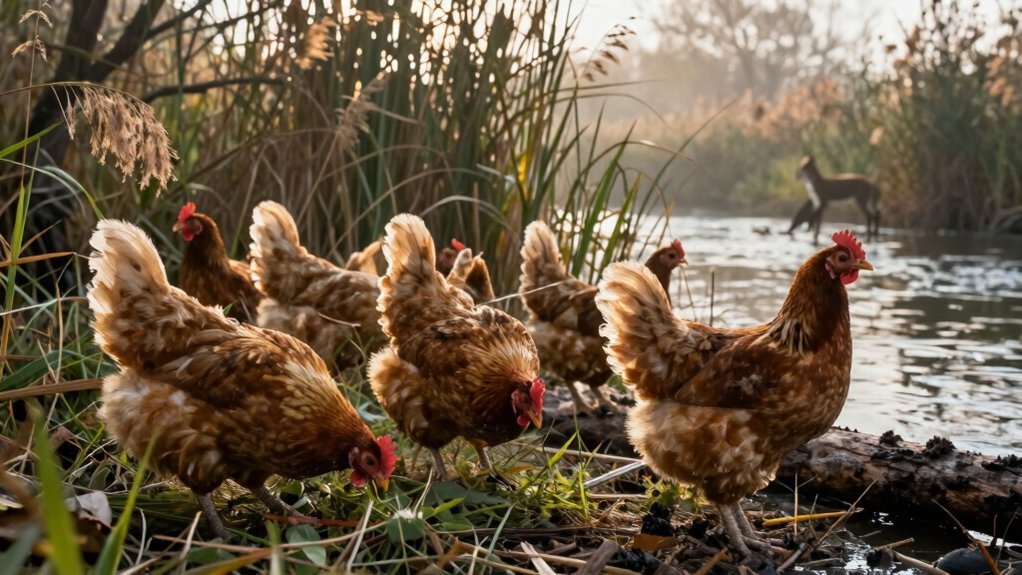
You’re probably wondering why some chickens end up thriving while others die after you let them loose. Here’s the thing: hardy egg‑laying breeds can survive in warm, sheltered spots with plenty of ground cover, water, and few predators—think Hawaii’s beaches or Florida’s suburban parks—where they’ll forage seeds, insects, and even small reptiles, but meat breeds burn through calories far faster than wild food can replace, so they usually need constant human feeding. Obviously, predators like raccoons and dogs will hunt any loose bird, and legal penalties can hit $500 per abandoned chicken, so you’ll need secure fencing or humane capture if you want to protect them; if you keep reading, you’ll uncover the exact steps to give a released flock the best chance.
How Feral Chickens Survive in the Wild
How do feral chickens stay safe at night? You’re probably wondering why they don’t get picked off by foxes or hawks. Here’s the thing: they roost high in bushes, trees, or hollow logs, using dense cover as a shield. A dominant cockerel leads the group, and the pecking order keeps everyone alert; the lower‑ranked birds watch the sky while the leader issues vocal communication signals that warn of danger. By clustering together, they boost vigilance and cut each individual’s risk. Obviously, the higher the perch, the fewer predators can reach them. Takeaway: elevated, communal roosts and a clear hierarchy let feral chickens survive the night. This reliance on group safety mirrors the fear responses inherited from wild ancestors that drive chickens to seek protection from predators. Roosting off the ground also helps them avoid ground-dwelling parasites and feces, contributing to cleaner and healthier resting conditions. Their ability to reach these safe heights is aided by short bursts of flight that can reach 8 to 10 feet. Next, ask yourself how they find food in the morning.
Climate & Habitat Features That Help Feral Chickens
Takeaway: Warm, sheltered, vegetated habitats with reliable roosts and low‑to‑moderate human presence let feral chickens thrive. Next, explore how they find food and water in these settings. Adding a small number of mature orchard trees can enhance natural foraging by providing shade, insects, and diverse seeds. This access to wild seeds and insects allows chickens to naturally regulate their nutritional intake for better health.
Food Sources and Water‑Finding Strategies
You’re wondering how feral chickens actually get the calories and hydration they need once they’ve found a safe spot. You’ll uncover they mix seeds, grains, berries, and weeds with insects, earthworms, and occasional small reptiles. Foraging techniques involve scratching the soil, pecking leaf litter, and probing damp ground where hidden food lies. As omnivorous birds, they actively hunt for grasshoppers and beetles which provide essential nutrients like protein and amino acids necessary for their health.
How do they find water? Chickens rely on surface moisture—puddles, streams, and dew‑covered grass. They learn visual cues and return to reliable spots, especially after rain or irrigation runoff. In dry spells they sip morning dew or shallow depressions.
What’s the key to survival? A balanced diet of plant and animal protein plus consistent water sourcing keeps them active and healthy. While domestic birds often depend on commercial feed, wild populations thrive by consuming essential protein from diverse sources like frogs and mice. These birds can also benefit from safe earthworms that provide high-quality protein comparable to fish meal when sourced from uncontaminated environments. Next, consider which habitats offer the richest foraging grounds.
Top Predators and Avoidance Tactics
Takeaway: Tighten every opening, lock at dusk, and cover runs. Next, ask yourself: what’s the weakest spot in your current coop? Since raccoons can reach through fencing to consume chicken heads, ensuring your wire mesh has small enough gaps is critical to prevent this specific type of attack. These sneaky predators are also known to carry diseases like roundworm and rabies, which pose additional risks to your flock beyond immediate physical harm. Canines such as dogs and foxes often kill multiple birds and may bury remains to hide evidence of their attack.
Real‑World Feral Chicken Populations (Hawaii, Florida, Guam)
You’re probably wondering why feral chickens thrive in places like Hawaii, Florida, and Guam, and what that means for you if you’re dealing with them.
How do they survive on islands?
Hawaii’s Oahu and Kauai host thousands of birds that escaped after Hurricanes Iwa and Iniki. Without mongooses on Kauai, eggs hatch easily, and urban corridors, parks, and beaches give them constant food and shelter. Honolulu alone logged a 51 % jump in complaints and captured over 1,300 birds last year, paying $375 of a $475 weekly trap fee. The Cocoa Crater area alone receives 15‑25 calls per week about feral chickens. While these birds adapt well to urban environments, it is important to note that domestic chickens generally cannot effectively hunt or kill adult rats due to their size and agility. Although chickens are opportunistic feeders, they rely on sealing entry points rather than active hunting to manage rodent threats in their vicinity. Despite their ability to scavenge, they are not reliable predators for controlling snake populations around a farm because they cannot be depended upon to kill small snakes.
Why do they show up in Florida neighborhoods?
Warm suburbs provide waste, ornamental plants, and cover. Chickens forage along sidewalks, in yards, and near streetlights, turning every trash can into a buffet. Communities often tolerate them until noise or droppings become a nuisance, then resort to trapping.
What makes Guam different?
Guam’s mild climate and lack of predators let chickens linger near human settlements. Over decades, they’ve woven into local culture, appearing in festivals and jokes, even as they strain municipal resources.
Takeaway:
Urban adaptation and cultural impacts drive these populations, not wild ancestry. If you’re managing a property, expect noise, droppings, and occasional trap fees.
Next step:
Consider whether you’ll trap, tolerate, or educate neighbors about coexistence.
Release Outcomes for Egg‑Laying vs. Meat Breeds
What happens when you let a layer versus a broiler loose? You’re probably wondering why some chickens thrive while others drop dead. Here’s the thing: layers, especially heritage ones, carry more genetic variation for foraging and broodiness, so they can shift to seasonal adaptation, hunting insects and seeds when food thins. Broilers, bred for rapid weight gain, lack that variation; their heavy bodies and fast growth make them sluggish, heat‑sensitive, and easy prey. This unnatural growth rate often leads to severe skeletal problems and heart conditions that further reduce their chances of survival outside human care.
Do layers form feral flocks?
Normally, a few foraging hens survive, but without broody instincts they won’t replace themselves. Heritage layers can nest, produce clutch‑size clutches, and slowly build a small, self‑sustaining group.
Can meat breeds persist?
Usually not. Their caloric needs outpace what wild foraging supplies, and predators wipe them out fast unless you keep feeding them. Even with secure fencing designed to protect flocks from predators, meat breeds struggle to survive without constant human intervention.
Takeaway: Egg‑laying breeds have a realistic chance of forming feral populations if they possess broodiness and seasonal adaptation; meat breeds need constant human help. Next, consider which breed’s traits match the habitat you’re evaluating. While domesticated birds struggle, free-range farming demonstrates that allowing chickens to roam outdoors promotes better health and access to a varied natural diet.
Legal, Ethical, and Ecological Considerations
Are you wondering how the law, ethics, and ecology intersect when chickens go feral? You’re right to ask; the rules differ by jurisdiction, and the stakes are high. Legal penalties can hit you if you dump birds, with fines ranging from $100 to $500 per abandoned chicken, and you may face animal‑cruelty charges if you neglect them. Humane capture is the preferred response—use nets, traps, or a calm approach to avoid injury, then rehome or transfer them to a sanctuary.
What does “ethical” mean here? You should prioritize the birds’ welfare, providing food, water, and shelter until you arrange a safe transfer. Quarantine prevents disease spread, protecting both feral flocks and backyard chickens.
How does this affect the environment? Chickens scratch gardens, compete with native insects, and can introduce parasites to fragile island ecosystems. Their foraging may reduce native plant seed banks, altering habitat balance. As voracious omnivores, released chickens often consume native wildlife, which can disrupt local ecosystems and harm animal populations. Furthermore, unsecured food sources left for these birds can attract rat infestations that pose a threat to vulnerable poultry at night. Since foxes are most active at night, leaving birds exposed without sturdy coops significantly increases their risk of predation in wild settings. The takeaway: respect legal limits, practice humane capture, and consider ecological impact before you release any chicken. Next, ask yourself whether you can provide a proper home or need to contact local animal control.