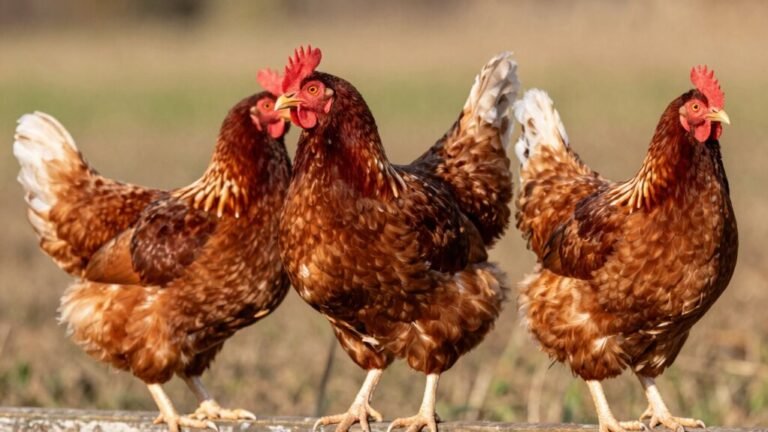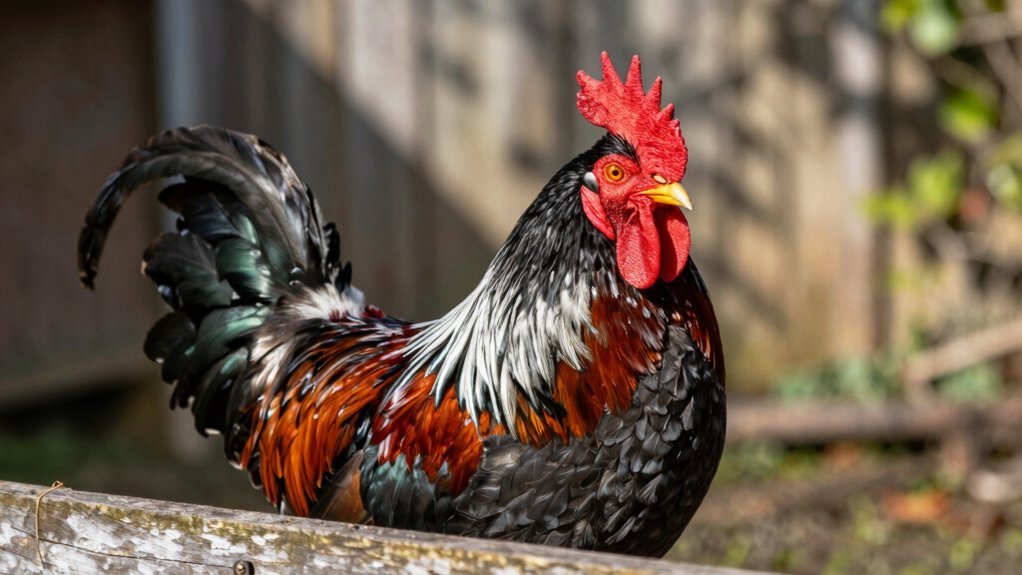
You’re probably wondering why the Columbian Plymouth Rock keeps popping up in dual‑purpose lists. Here’s the thing: it sports a crisp white body with black “hackle‑edge” feathers on the neck, wings, and tail—think a tuxedo for chickens—so you get a striking look and no smudgy color bleed. Hens weigh about 7.5 lb, roosters 9.5 lb, and they lay 200‑250 large brown eggs a year, starting around 18‑20 weeks, while still giving a solid 6‑8 lb carcass after 20‑24 weeks. They’re gentle, cold‑hardy, and get along with other birds, making them perfect for a simple backyard flock; if you keep reading, you’ll see exactly how they fit into small‑farm life.
Origin and Heritage of the Columbian Plymouth Rock
What makes the Columbian Plymouth Rock’s origin so interesting? You’re probably puzzled by the tangled history, so let’s untangle it. The breed first hit early exhibitions in Boston, 1849, but those birds vanished for two decades, leaving a gap that fuels breeding controversies. Here’s the thing: multiple breeders—John C. Bennett, D.A. Upham, and others—claimed credit, each mixing Dominique, Java, Cochin, Brahma, and even White Cochin or Buff Cochin stocks. The barred plumage became the foundation, giving the name its punch, while later color varieties sprouted after the barred strain solidified. Obviously, the 1874 APA recognition cemented its status, and the Columbian variety earned its own spot in 1910. Like other varieties in this breed, the Columbian shares the hardy, dual-purpose nature valued for both meat and egg production. This focus on utility mirrors the development of the New Hampshire Red, which was specifically selected for rapid growth and vigor from Rhode Island Reds. Similar to the robust nature of the Rhode Island Red, these chickens possess a calm, friendly disposition that makes them easy to handle. Takeaway: The Columbian Plymouth Rock emerged from a patchwork of early shows, disputed lineages, and selective barred breeding, shaping a classic American farm chicken. Next, you might wonder what the Columbian plumage pattern actually looks like.
What Does the Columbian Plumage Pattern Look Like?
You’re probably wondering why the Columbian pattern looks so striking, and you’re right to ask. The bird’s body stays almost entirely white, while black concentrates on the neck hackle, wing tips, and tail. This clean contrast makes the plumage seem like a white canvas with bold, defined points, similar to a tuxedo with bright lapels.
Here’s the thing: pattern variations arise from Columbian genetics that dictate where black pigment settles. The hackle feathers show black edging over a white base, the primaries and secondaries sport dark tips, and the tail feathers are solid black. You’ll notice the black never bleeds into the white—each feather edge stays crisp.
Obviously, a well‑bred bird displays a neat, symmetrical distribution, bright white, and rich black. If black spreads or looks smudged, the pattern has slipped. The takeaway? Spotting that sharp, tidy contrast tells you the bird carries true Columbian genetics. While some breeds like the Silkie are famous for their distinctive pom-pom crest, the Columbian Plymouth Rock relies on its crisp color contrast rather than ornamental head feathers for its beauty. Genetic research indicates that specific loci, such as the SOX5 gene, play a critical role in regulating these pigment distributions to create such defined patterns. Next, you might compare this look to other Plymouth Rock varieties. While the Columbian variety features this specific black-and-white contrast, the White Plymouth Rock breed is characterized by its striking, pure white plumage across the entire body.
Typical Weight and Body Size for Meat Production
How big do Columbian Plymouth Rocks get when you raise them for meat? You’re probably wondering if they’ll give you enough meat for a family dinner. Here’s the thing: hens hit about 7½ lb, roosters 9½ lb, and pullets settle around 6 lb after 20‑24 weeks. Their frame stays broad, muscular, and rectangular, with a deep full breast that boosts portion yields.
Now, think of the meat tenderness as comparable to a well‑marbled steak—slower growth means a firmer texture, but the generous back and breast still deliver satisfying, juicy cuts. Obviously, you won’t get broiler‑fast weight, but the steady, balanced build offers reliable meat tenderness and decent portion yields for home‑scale cooking. Unlike the Cornish Cross hybrid, which reaches market weight in just 8 weeks due to accelerated growth, Columbian Plymouth Rocks develop more gradually over 20‑24 weeks. This contrasts sharply with commercial broilers specifically bred for rapid growth that often suffer skeletal problems and heart conditions due to their unnatural development speed. Like other heritage varieties, they possess excellent foraging skills that make them highly suitable for free-range systems while contributing to their well-marbled, juicy meat.
Takeaway: Expect 7‑10 lb birds with a solid, flavorful carcass, perfect for a family‑size roast. Ready to plan your harvest timeline?
Egg Production: Color, Size, and Annual Yield
any backyard farmer wondering about egg color and size will find the answer simple: Columbian Plymouth Rocks lay large, brown eggs. The brown hue comes from egg coloration genetics that consistently produce a deep, uniform shell—no blue or green surprises. You’ll also notice solid shell durability, which helps protect the yolk during handling and transport. This brown pigment, known as protoporphyrin IX, is deposited on the eggshell surface during formation regardless of the chicken’s white plumage.
How many can you expect? Typically you’ll collect 200 – 250 eggs a year, roughly four to five a week, especially during spring and summer peaks. The hens start laying around 18‑20 weeks and keep up large‑size output for several years before a gentle decline. Like their Barred Rock relatives, they are valued for their consistent egg production throughout the year, including during colder winter months. Much like the standard Plymouth Rock, this dual-purpose breed offers a reliable balance of meat and egg capabilities for diverse homestead needs.
Takeaway: You get dependable, large, brown eggs with sturdy shells—perfect for a steady home supply. Ready to plan your coop layout for ideal lighting?
Temperament and Compatibility for Backyard Flocks
How do they fit into a mixed flock? All right, they usually get along with other breeds, showing low aggression and cooperative behavior. Even if a rooster gets a bit bossy, giving each bird enough space and a clear hierarchy prevents dominance fights.
What about space and ranging? They thrive both in a well‑ventilated coop and a free‑range setup, exploring the yard while staying safe. Similar to their Buff cousins, providing plenty of space with 3–4 square feet per bird in the coop helps maintain their gentle nature and prevents stress. Establishing a predator-proof coop is also essential to ensure these curious explorers remain safe from external threats while ranging. Adequate room is crucial to prevent stress and disease, which can occur when large fowl are kept in cramped conditions.
Takeaway: Columbian Plymouth Rocks blend gentle temperament, easy handling, and minimal health worries, making them a solid choice for backyard flocks. Next, consider why small‑farmers favor this dual‑purpose breed.
Why Small‑Farmers Choose This Dual‑Purpose Breed
Why do small‑farmers pick the Columbian Plymouth Rock? You’re probably wondering if a single breed can truly cover both eggs and meat without sacrificing anything. Here’s the thing: the breed delivers 200‑280 large brown eggs a year, sometimes topping 250, while growing to a market‑ready 6‑8 lb. That balance means you keep one flock for two purposes, cutting the hassle of juggling separate breeds.
Now, let’s talk hardiness. Those hens boast cold hardiness thanks to smaller combs, so they thrive in cooler climates without extra heating. They also tolerate heat if you give shade and fresh water. This resilience trims loss risk and saves you money on shelter. Just as raising meat chickens requires secure fencing to ensure predator protection and flock welfare, providing a safe outdoor environment is equally critical for dual-purpose breeds like the Columbian Plymouth Rock.
All right, feed efficiency is another win. Good foragers lower feed costs, and their steady laying pattern lets you plan egg supply and occasional meat harvest with confidence. Obviously, you’ll appreciate the predictable output and low‑maintenance vibe. Like other popular dual-purpose choices, they often retain broodiness, making them suitable for sustainable, self-sufficient flocks. While breeds like the Australorp may lay more eggs annually, the Columbian Plymouth Rock remains a top choice for those prioritizing dual-purpose production over maximum egg counts alone.
Takeaway: The Columbian Plymouth Rock offers reliable dual‑purpose production, climate resilience, and cost‑effective feeding—perfect for a small farm aiming for simplicity and consistency. Ready to compare this breed with other dual‑purpose options?