You’re probably wondering why Modern Game Bantams seem so tiny yet so striking. They’re about one‑fifth the size of standard chickens, with a tall, upright carriage, heart‑shaped silhouette, and bold colors like Black‑Red or Silver Duckwing; they’re lively, talkative, and love daily handling, which builds trust fast. They start laying 50‑80 tiny tinted eggs at 24 weeks, need roughly 2 sq ft indoor space per bird, a draft‑free, predator‑proof coop, and weekly mite and worm checks to stay healthy—keep reading to see how to set up their perfect home.
What Is a Modern Game Bantam?
Now, you’ll notice Modern Game Bantams are separate from their larger cousins, treated as a distinct bantam class. They dominate junior projects and youth exhibitions because they’re tame, trainable, and easy to pose. Their exhibition‑focused nature makes them ideal for show rings. Takeaway: you’re looking at a decorative, competition‑focused chicken, not a utility bird. Unlike their hardy American Game ancestors bred for harsh environments, these bantams have been selectively refined for show standards rather than survival traits. Descendants of jungle fowl, they possess a compact, muscular build with tight feathers that prevent pecking. As miniature versions of standard breeds, they are roughly one-fifth the size of their larger counterparts, requiring significantly less space in urban settings. Next, explore how its temperament and handling make it a favorite for 4‑H and FFA participants.
Modern Game Bantam Physical Traits & Color Varieties
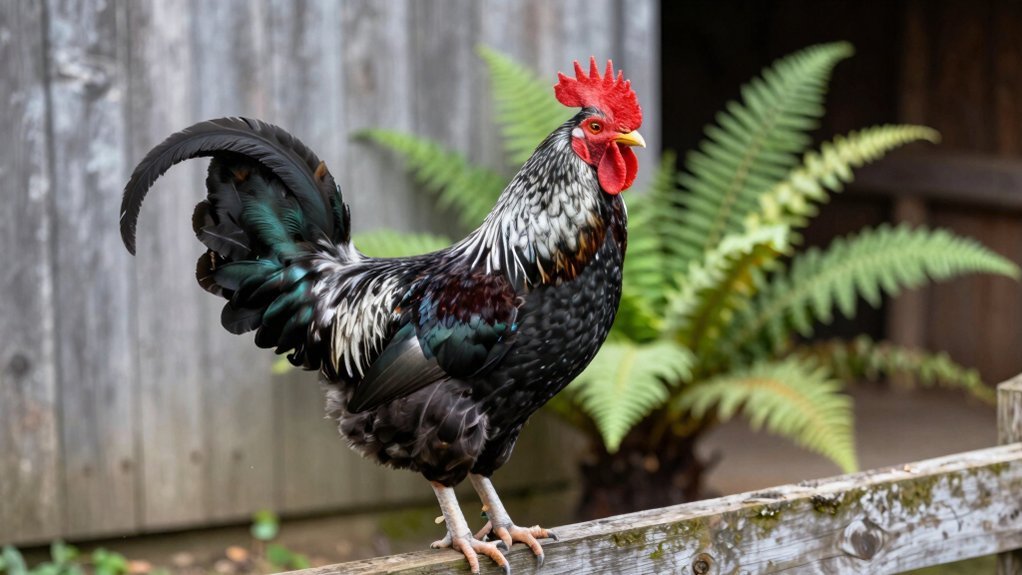
If you’re wondering why Modern Game Bantams look so sleek and why they’re judged on shape rather than size, you’ve hit the right spot. Their exhibition posture demands a tall, upright carriage, a short flat back, and a heart‑shaped silhouette that tapers from wide shoulders to a narrow tail. You’ll notice a long, slightly arched neck and a short, whip‑like tail that sits centered under the body for balance.
Here’s the thing: color genetics drive the striking varieties you see—Black‑Red, Silver Duckwing, Blue‑Red, Lemon Blue, and more. Leg and eye color often split the groups: willow legs with red eyes versus black legs with dark eyes. Comb and wattles shift from red to mulberry, matching the variety’s palette. While specific genes like melanin pigments determine these dark or light feather shades, the visual result is a diverse palette governed by complex inheritance patterns. Just as the blue variety in Polish chickens relies on specific genetic combinations that cannot be bred true, Modern Game Bantams exhibit complex inheritance patterns that dictate their final plumage appearance. Unlike the Frizzle gene which causes structural feather defects, the sleek plumage of Modern Game Bantams relies on standard keratin development to maintain their tight, hard feathering required for the show ring.
All right, you can now spot a correct exhibition posture and understand how color genetics shape each bird’s look. Take a look at the next section to learn how to handle these birds safely.
How to Handle a Modern Game Bantam: Temperament & Social Behavior
Why does a Modern Game Bantam seem so lively and alert? You’re probably wondering why they bounce off the walls yet still listen. Obviously, they’re curious, talkative, and love a good stare‑down. Here’s the thing: short, daily handling sessions teach them to trust you, turning that energy into calm responsiveness.
How do you keep aggression control in check? Start with gentle, consistent handling; a few minutes each morning builds a bond. When you introduce a new bird, watch flock dynamics closely—these bantams can become assertive, so isolate any bully for a day to prevent fights. Research shows chickens possess social learning abilities comparable to many mammals, meaning your bantams observe and mimic both your actions and the behaviors of their flock mates.
What does a happy flock look like? They’ll perch together, chirp, and follow you on command. If you keep space ample and give them toys, they stay busy and less likely to act selfish. Incorporating DIY treat dispensers made from upcycled materials can further reduce boredom and prevent bullying by encouraging natural foraging behaviors.
Takeaway: regular, gentle interaction plus keen observation of flock dynamics give you a well‑behaved, friendly Modern Game Bantam. Next, ask yourself how you’ll set up a safe, spacious coop for them.
Understanding that chickens possess highly motivated instincts helps explain why providing outlets for natural behaviors like foraging and dust bathing is essential for preventing frustration in this active breed.
Modern Game Bantam Egg Production & Breeding Basics
You’re probably wondering when a Modern Game Bantam starts laying and how many eggs you can expect. You’ll see the first clutch around 24 weeks, then about 50‑80 tiny, tinted eggs each year—roughly one a week. Obviously, you won’t replace a grocery‑store dozen, but you’ll enjoy the ornamental charm.
Here’s the thing about breeding: select a healthy hen and a rooster that match the breed’s type, carriage, and color. Bantam hens love to go broody, so they’ll sit on their own or even surrogate eggs. Keep an eye on hatch rates; with careful incubation you can expect a decent percentage of fertile eggs to hatch. Unlike some miniature bantams that are better layers, true bantams like the Modern Game are often seasonal layers with production pauses in winter. Physical signs like enlarged combs and wattles indicate when hens reach sexual maturity and are ready to begin laying.
All right, manage your flock rotation wisely. Rotate breeding pairs every few months to avoid inbreeding and to keep egg production steady. The takeaway: expect low output, focus on quality, and plan a simple rotation schedule to maintain healthy hatch rates. Ready to set up a small incubator and watch those tiny chicks emerge? While general backyard chickens typically begin laying between 18 to 22 weeks, the Modern Game Bantam’s later start at 24 weeks reflects its specific heritage characteristics.
Modern Game Bantam Housing & Climate Guide
You’re probably wondering how to keep your Modern Game bantams comfortable when the weather turns. Obviously, they need a draft‑free shelter that meets space requirements. Provide about 2 sq ft per bird inside the coop, and aim for 8 in² per bird in the run. Use low, broad‑based coops with 2‑in wide rounded perches, giving each bird 6 in of perch space and an 8‑in square nest box for every four hens. Since larger spaces are beneficial to reduce stress, consider providing 40 to 48 square feet of outdoor run area if your specific setup allows for adequate movement beyond the minimums.
Now, think about climate. In cold zones, heated coops become essential—temperatures below 35 °F hurt them. A simple heat lamp or insulated enclosure can keep the interior warm without drafts. If you can’t heat, keep them indoors in a dry shed during winter. While adult birds are hardy, they remain most comfortable and active within the 65 to 75 degrees range, so providing shelter from extreme cold below 20 degrees is vital to prevent stress.
All right, what about outdoor access? Free‑range time improves health and feather luster, but secure fencing is a must. Nighttime, lock them in a predator‑proof coop; during the day, let them roam on clean grass. Implementing predator-proof features in your design is crucial to safeguarding the flock while they utilize their outdoor run.
Takeaway: give your bantams enough indoor space, a warm, draft‑free coop, and safe outdoor runs. Next, check how to protect them from predators while you enjoy their lively personality.
Modern Game Bantam Health & Preventive Care
Got a lot of questions about keeping your Modern Game bantams healthy? Here’s the thing: they’re sturdy, but parasites and disease still creep in if you skip routine checks. For parasite management, scout for mites, lice, and worms each week, clean litter, and dust‑bathe them daily; a simple 5‑minute inspection can catch an infestation before it spreads. Look specifically for pale combs or restlessness at night, as these are clear indicators that blood-feeding mites are causing anemia and deteriorating your flock’s health. While poultry mites primarily target birds, they can temporarily bite humans causing skin irritation, so wearing protective clothing during coop cleaning is advised.
All right, disease monitoring means watching appetite, droppings, and posture. If a bird limps, droops, or shows “limberneck,” isolate it instantly and call a vet—early action saves the flock.
Obviously, balanced feed, fresh water, and a tidy coop keep immunity high. Take a quick 2‑minute health scan each morning; the habit will spot problems before they become emergencies.
Since minks can enter through small gaps to kill chickens for sport, you must reinforce housing against mink predation to prevent devastating losses alongside disease issues.
Takeaway: regular parasite management and vigilant disease monitoring protect your bantams. Next step—set a daily health‑check alarm and keep a log of any changes.