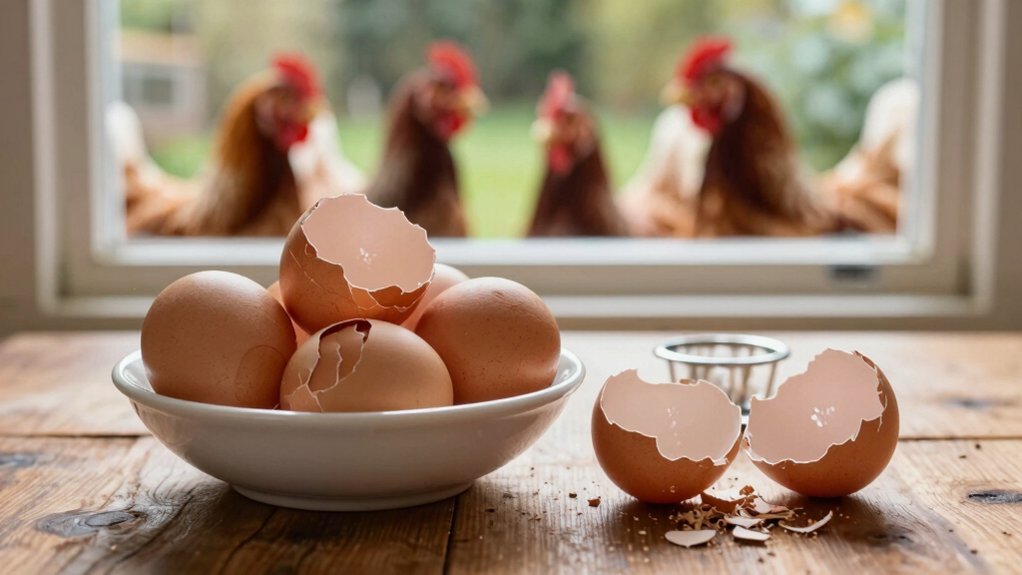
You’re right to wonder why you should bake eggshells before feeding them to your hens. Baking at 350 °F for 5‑10 minutes kills salmonella, makes the shells brittle, and creates a slow‑release calcium source that keeps laying birds laying strong shells without draining their bones; now, rinse, dry, and bake the shells, then crush them into half‑inch pieces and store them airtight in a cool, dry spot. Offer a ladleful of the crumbs daily, and you’ll see healthier shells and steady production—next, learn how to adjust the amount for your flock’s size.
Understand Why Eggshell Calcium Strengthens Eggshells
You’re probably wondering if the calcium in a crushed shell really helps a hen lay tougher eggs. The answer is yes—eggshells are 95 % calcium carbonate, so each gram you add supplies the same mineral hens get from commercial supplements. When you feed ground shell, the hen’s gut extracts calcium, boosts calcium absorption, and sends it straight to the shell gland. That extra supply lets her build thicker, harder shells without dipping into her bone reserves, protecting bone health.
How does timing matter? Hens lay at night, so a slow‑release source like crushed shell keeps blood calcium steady while they’re not eating. This prevents the hen from leaching calcium from her bones, which would weaken her skeleton over time. While small particles are absorbed quickly, providing large particle calcium ensures a slow release of minerals overnight to maintain consistent blood levels during shell formation. Research indicates that crushed oyster shells are often considered superior because their aragonite structure stays longer in the digestive tract, optimizing absorption compared to other sources. It is important not to mix crushed eggshells directly into feed to avoid calcium toxicity, so offering them separately allows chickens to self-regulate their intake.
Takeaway: Adding bioavailable eggshell calcium improves shell strength and preserves the hen’s bones. Next, consider how to prepare the shells safely before feeding them.
Clean and Dry Eggshells Safely Before Baking
Takeaway: Rinse, brush, and air‑dry thoroughly before baking. While raw shells offer calcium, using cooked eggs prevents chickens from developing the habit of eating their own eggs. Feeding raw eggs can also spread salmonella disease and encourage hens to start consuming their own production. Cooking the shells helps avoid creating an acquired taste for whole eggs in your flock. Next up: what oven temperature and time will sterilize them?
What Oven Temp and Time Should You Use to Sterilize Eggshells?
If you’re wondering exactly how hot and how long to bake eggshells, you’re not alone—many hobbyists wrestle with that detail.
What temperature works best?
Most people find 350 °F for 5‑10 minutes hits the sweet spot. The shells turn brittle, the membrane dries, and you avoid any browning. If you have a cooler oven, 300 °F for 5‑10 minutes works too. For low‑heat fans, 250 °F for 20 minutes or 225 °F for 20‑25 minutes also does the job, just take a bit longer.
How do you know they’re ready?
When you press a shell and it snaps easily, it’s dry and sterile. Cool them completely before crushing; this prevents clumping.
Quick alternatives
Microwave sterilization can work, but it’s uneven; steam cleaning eggs is a gentler method that still kills microbes.
Takeaway
Pick a temperature you trust, watch the time, and test brittleness. Next, you’ll want to crush the dried crumbs for feeding. While homemade shells offer a quick fix, providing crushed oyster shells ensures a slow-release calcium source that supports egg formation overnight when hens aren’t eating. Balancing this added calcium with proper protein levels is essential to meet the nutritional needs of laying hens and maximize egg output. It is crucial to offer calcium sources separately so non-laying birds can avoid kidney damage from excess intake.
The shells become brittle after baking and can be crushed into bite‑sized pieces.
Crush and Store Baked Eggshell Crumbs for Chickens
When you wonder why you should crush baked shells before storing them, think of it like turning a brittle cookie into fine crumbs that melt into a batter—smaller pieces blend smoothly with feed and are safer for the flock.
How do you crush them?
You can stomp shells in a zip‑lock bag for a quick, coarse texture, or use a food processor for uniform crumbs. A coffee grinder works too, giving you a powder‑like finish. Repeating the process a few times yields consistent size, which helps the flock eat without choking.
Where do you keep the crumbs?
Choose airtight storage containers—plastic jars, a metal bucket with a lid, or a sealed pail. Keep them dry and cool; this prevents clumping and odor absorption. A dedicated container also keeps shells separate from kitchen waste. While homemade crumbs are useful, oyster shells provide a more reliable calcium source than crushed eggshells for overall hen health. Proper storage is especially critical because poor overall nutrition and contaminated supplements can compromise eggshell strength and flock health. Without adequate calcium intake, hens may suffer from bone weakness leading to fractures or paralysis.
Takeaway
Crush baked shells using any method you prefer, then stash the fine crumbs in a sealed, dry container. This simple routine gives you a ready‑to‑use calcium source whenever your chickens need it. Baking the shells at high temperature ensures any bacteria are eliminated. Next, you’ll want to know how much to feed them and how often.
Eggshell Crumb Feeding to Chickens: Amounts & Frequency
How much should you give your chickens and how often? You’re probably wondering because flock composition and supply variability make it tricky. Offer a ladleful of crushed shells in a separate dish each day if you have a steady egg flow. If your household eggs are occasional, top the dish two or three times weekly instead of daily. High‑producing layers will visit the dish often, while roosters, pullets, and non‑layers barely touch it.
All right, now match the offering to your flock’s needs. A small bowl kept continuously works for mixed‑age flocks; refill when empty. When supply is limited, supplement with oyster shell to keep calcium steady. Providing grit and oyster shell separately ensures chickens can self-regulate their intake for optimal digestion and bone health alongside their eggshell consumption. Since chickens lack teeth, offering insoluble grit alongside calcium sources is essential for grinding food in the gizzard when they consume treats beyond their regular feed. This mechanical process prevents digestive blockages by allowing the gizzard to grind food effectively, which is critical when birds consume anything beyond commercially prepared pellets.
Obviously, the goal is continuous access for layers without over‑feeding younger birds. Your takeaway: keep a free‑choice dish, adjust frequency with egg production, and watch flock composition. Ready to set up that dish?
Avoid Common Mistakes When Feeding Eggshells to Chickens
You’re probably wondering why so many guides stress keeping eggshells separate from the regular feed, and you’re right to ask—that’s the biggest mistake most people make.
How do I store the shells safely?
Dry the shells in a low‑heat oven, then crush them to ½‑inch pieces. Store them in an airtight container in a cool pantry; this preserves trace minerals and prevents mold.
Which birds should I give them to?
Only laying hens need extra calcium. Roosters, meat birds, and pullets that haven’t started laying should be excluded, otherwise they risk calcium toxicity. While layer feeds typically contain 2.75-4.1% calcium, supplementing with baked shells ensures hens have enough for strong eggshell formation without over-supplementing other flock members. This targeted approach is vital because even during non-laying periods, hens require balanced nutrition to maintain consistent egg laying without harm from excess calcium. Providing supplemental calcium sources like oyster shells or baked eggshells enables hens to self-regulate their intake specifically for eggshell strength.
What setup avoids egg‑pecking?
Place the crushed shells in a separate dish or hopper, not mixed into feed. Free‑choice access lets each bird take what it needs and leaves the rest.
Takeaway: Keep shells dry, crushed, and separate, and offer them only to laying hens. Next, decide on the best container for your storage tips.