You’re right to wonder if steel‑cut oats are safe, and the short answer is yes—plain, additive‑free oats work as a treat, but cooked oats are safer for most birds because they’re softer on the crop and gizzard. Raw oats are hard and can cause younger or delicate hens to skip them, while a quick boil or soak makes them easier to eat and digest. Feed about a quarter‑cup per bird daily, keep it under 10 % of the total diet, and you’ll avoid over‑feeding issues; if you keep going, you’ll uncover the best seasonal tricks and how to spot over‑feeding signs.
Are Steel‑Cut Oats Safe for Chickens?
If you’re wondering whether steel‑cut oats are safe for your chickens, you’ve hit the right spot. You’re probably confused about raw versus cooked, and whether you need a special grain. Here’s the thing: plain, unsweetened steel‑cut oats pose no toxin risk. Chickens digest them just fine, and the higher fiber helps gizzard function. Obviously, you should avoid flavored or sugary versions, because additives can upset their gut. While plain grains are beneficial, indiscriminate feeding of sugary human foods is not recommended as it can cause digestive upset and obesity. What about oat alternatives and storage methods? You can swap in rolled oats or barley if you run low, but keep the grain plain. Store dry oats in a cool, airtight container; a sealed bucket works well and prevents mold. Just as with wheat, using feed enzymes can help chickens digest grain starches better for improved nutrition. Cooking or fermenting the oats can also reduce beta-glucan gels that might otherwise impede nutrient absorption in some birds. Takeaway: steel‑cut oats are safe, simple, and cheap—just keep them plain and stored right. Next, decide how much to feed each bird.
How Much Steel‑Cut Oats Should You Feed Chickens?
How much steel‑cut oats should you actually give your chickens? You’re probably wondering how to balance a tasty treat with a healthy diet, and that’s a smart question. The rule of thumb is about ¼ cup of dry oats per bird each day, which translates to a few tablespoons for a small flock. For a larger flock, scale the batch so you finish it within a short feeding window and remove any leftovers. This prevents carbohydrate displacement of the balanced layer feed and keeps flock dynamics stable.
Now, how often should you offer them? Daily, but in tiny portions, works best; you can also feed every few days if you prefer a more conservative schedule. Mixing oats with other grains helps control intake and guarantees protein, calcium, and vitamins stay dominant in the ration. Obviously, never add sugar, salt, or flavorings. Since oats lack the high calcium levels found in layer feed, relying on them too heavily can compromise eggshell strength and overall nutrient balance. Remember that an adult chicken typically consumes about 120 grams of total feed daily, so treats like oats must be accounted for within this limit to avoid nutritional deficiencies. To further reduce costs while maintaining nutrition, consider fermenting feed to boost probiotics and nutrient content before offering it to your flock.
Takeaway: Keep oats a small, measured treat—¼ cup per chicken per day, measured before feeding, and removed when finished. Next, decide whether you’ll mix them into the regular feed or serve them plain as a daily snack. Oatmeal serves as a delivery method for herbs and minerals.
Raw vs. Cooked Steel‑Cut Oats: Which Is Safer for Sensitive Birds?
After figuring out how much oats to give each bird, you’re probably wondering whether to serve them raw or cooked, especially if some of your chickens have sensitive tummies.
Is raw oats safe for upset birds?
Raw steel‑cut oats are generally safe in moderation, but they stay hard and can stress a delicate crop. If you introduce oats early (oat introduction timing) and watch droppings, you’ll see if the birds tolerate the texture. The grain’s beta‑glucans may make litter sticky, so keep portions tiny.
Why cooked oats are usually better?
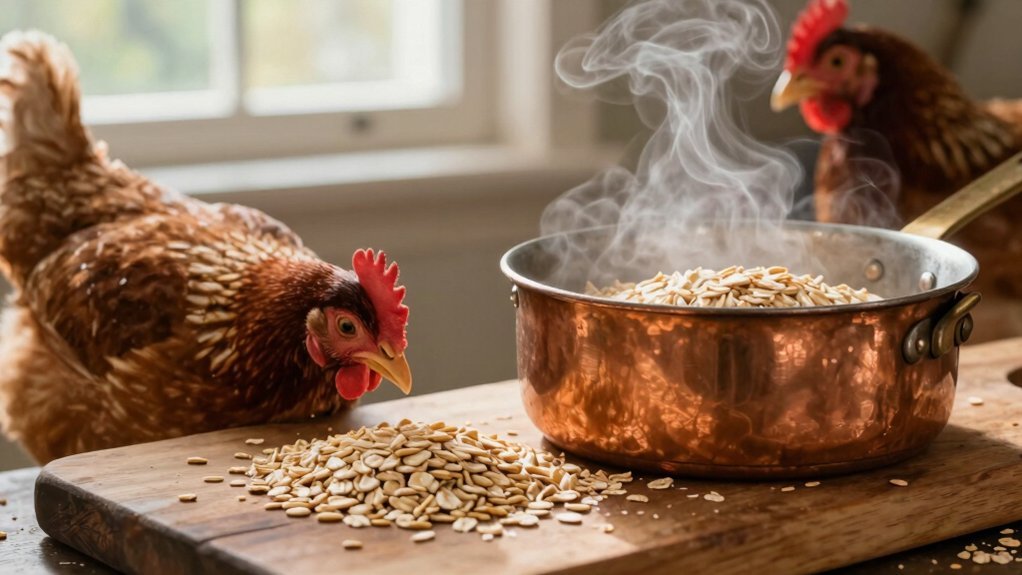
Cooking softens the groats, reducing mechanical work for the gizzard. Use oat hydration methods like simmering for 10–15 minutes, then cool to a warm temperature. Warm, plain oats mix easily with soothing add‑ins and stay gentle on sensitive digestive tracts. Just as with other safe grains like rice and corn, ensure the oats are offered without harmful additives such as salt or spices to maintain their nutritional benefit.
Takeaway
For birds with upset tummies, start with a small batch of cooked oats, monitor appetite, and only trial raw oats if they handle the cooked version well. Next, decide how often to offer this treat.
Raw Steel‑Cut Oats for Chickens: Benefits & Feeding Guide
You’re probably wondering whether raw steel‑cut oats are worth the extra effort for your flock. You’ll find they’re a low‑cost, dry treat that adds energy‑rich carbs, protein, fiber, and minerals like magnesium and zinc. The denser grain structure slows eating, which cuts gorging and gives you natural “oats as enrichment” when you scatter them for scratching.
Here’s the thing: raw steel‑cut oats boost gut health. The higher fiber offers digestive benefits, helping stool consistency and satiety. They’re safe in small portions—think a handful a day—so they won’t replace balanced layer feed. However, because oats lack the high calcium levels required for egg production, they should never displace balanced layer feed which provides the 3.5-4.5% calcium necessary for strong shells. To ensure complete nutrition beyond what oats provide, consider supplementing with whole grains like corn, wheat, or barley alongside protein sources such as sunflower seeds and peas. Incorporating these treats supports overall health but requires maintaining clean fresh water to aid digestion and prevent dehydration.
All right, start with a few grams, keep them dry, and watch your chickens peck happily. Takeaway: raw steel‑cut oats are a simple, nutritious supplement that enriches foraging and supports digestion. Ready to try scattering a few in the coop?
Cooked Steel‑Cut Oats for Chickens: When to Warm Them Up & Why
One cup of cooked steel‑cut oats can feel like a cozy blanket for a chilly flock, and you’re probably wondering when warming them actually matters.
When does warm oatmeal help?
Now, cold mornings make birds less enthusiastic to eat dry feed, so a lukewarm bowl boosts palatability and gives a quick body‑heat boost. Warm oats also keep the crop hydrated because the moisture stays longer, preventing the dry grind that can irritate the crop. Additionally, serving these warm, carbohydrate-rich treats aids digestion and helps generate the internal heat necessary for chickens to stay warm in colder months. While hydration is vital year-round, remember that in hot conditions chickens can become vulnerable to dehydration in as little as 12 to 16 hours. Since young chicks are significantly more vulnerable and may survive only a few hours without water, ensuring their warm mash is accessible immediately is critical during cold snaps.
Why does timing matter?
Here’s the thing: if you serve oats right after cooking, they stay soft and warm for about 20‑30 minutes before the flock cools them down. During that window, flock competition spikes, and the softer texture lets weaker hens or chicks eat before the dominant birds claim the bowl.
Takeaway
Serve warm oats within half an hour of cooking, keep them just warm, not hot, and you’ll support crop hydration while easing competition. Next, decide how often to treat your flock with this gentle supplement.
Preparing Plain, Additive‑Free Steel‑Cut Oats for Chickens
What makes plain, additive‑free steel‑cut oats the right choice for your chickens? You’re probably wondering if the extra texture matters. Obviously, the minimal processing keeps the grain’s natural fiber and nutrients intact, and skipping sugar, salt, or flavorings protects your flock from unnecessary calories and sodium. Unlike human breakfast cereals that often contain excess sugars and vitamins which can cause health problems in birds, plain oats avoid these specific risks when offered as an occasional treat.
Here’s the thing: steel cut oat safety hinges on keeping the oats simple. Use only oats with a single ingredient, check the label for hidden additives, and store them dry in a sealed container. When you’re ready to serve, scatter a handful on clean ground or in a shallow feeder to encourage natural pecking. If you prefer a softer bite, you can steam or boil the oats for 5‑7 minutes—this is an oat cooking method that softens the texture without adding anything.
Rich in B vitamins support feather growth and energy. All right, remember to start with a small portion, watch the birds for any change in droppings, and discard any damp leftovers. You can also combine these oats with binders like coconut oil or lard to create sturdy treats that promote digestion and warmth during colder months. It is crucial to remember that treats should only supplement a balanced diet rather than replace the complete layer feed your chickens need for optimal health. The takeaway: plain, additive‑free steel‑cut oats are safe, easy to prepare, and give you control over quality and portion size. Ready to try a batch and see how your chickens respond?
Signs of Oat Over‑Feeding & How to Prevent Digestive Issues
Often you wonder why a few extra oats can throw off your flock’s health. The first sign shows up in dropping consistency—thick, sticky droppings that cling to the coop floor. Those droppings raise litter moisture, creating a damp environment that invites respiratory stress and foot‑pad sores.
Here’s the thing: too much fiber slows digestion, so birds absorb fewer proteins, vitamins, and minerals. You’ll notice dull feathers, lethargy, and a drop in egg production. Over‑feeding also adds weight, leading to obesity‑related leg problems and even fatty‑liver syndrome. Ensuring hens receive balanced layer feed once they begin laying supports the specific protein and calcium levels needed to counteract these nutritional deficits.
Chickens consistently prefer oats over corn‑soy feed, even when the oat pile is harder to access. All right, keep oats as a sparing treat. Monitor droppings daily, limit treats to under 10 % of total feed, and always provide a balanced layer diet. The takeaway: watch dropping consistency and litter moisture, and trim oat portions to protect digestive health. Ready to adjust your feeding routine?
While managing treat portions is vital, the foundation of flock health remains offering unlimited access to a complete feed to ensure birds meet their specific nutritional needs without conflict. Selecting a premium feed with optimal protein levels helps maintain robust health and efficient egg production even when occasional treats are introduced.
Seasonal Steel‑Cut Oats Feeding Tips: Winter Warm‑Ups & Summer Scratch
Winter‑time steel‑cut oats feel like a cozy blanket for your flock, but you might wonder how to turn that warmth into safe, nutritious feeding. Here’s the thing: soak the oats, heat them just enough to be warm, then let them cool to a tepid temperature before serving. Offer the mash at evening roosting so the birds digest while they settle, generating gentle heat that helps with temperature management. Feathers help chickens regulate body temperature effectively. Since proper ventilation remains critical to prevent moisture buildup even when birds generate extra heat from digestion, ensure your coop airflow is adequate before locking up for the night. All right, summer calls for a lighter touch. Mix a small scoop of raw or lightly soaked oats into their regular scratch, keeping the portion under 10 % of the daily diet. Serve it mid‑day when the coop is cool, avoiding excess heat that could stress the birds.
Takeaway: Warm, evening oats boost winter comfort; cool, modest summer scratches keep nutrition balanced without overheating. Next, decide which season you’re feeding and prep the oats accordingly.
Top Mistakes When Feeding Steel‑Cut Oats to Chickens
What’s the biggest mistake you can make with steel‑cut oats?
You might think any oat is fine, but oat sourcing matters—wild foraging can bring mold or toxins.
Treat, don’t replace
You treat oats as a snack, not a complete feed. Overfeeding dilutes calcium, vitamin D, and protein, hurting egg shells and bone strength. Keep oats under 10 % of daily ration.
Raw vs. cooked texture
Raw oats are hard; younger birds may skip them, leading to uneven intake. Soak or cook lightly, then offer in moderation.
Temperature and spoilage
Never serve piping‑hot oats—burns beaks. Remove leftovers within an hour; otherwise, pests and spoilage follow.
Avoid additives
Instant or flavored oatmeal adds sugar, salt, and preservatives that stress digestion. Stick to plain, unsweetened steel‑cut oats.
Takeaway: Choose safe, plain oats, feed sparingly, and keep them fresh. Next, check your flock’s overall diet balance before adding any new treat.