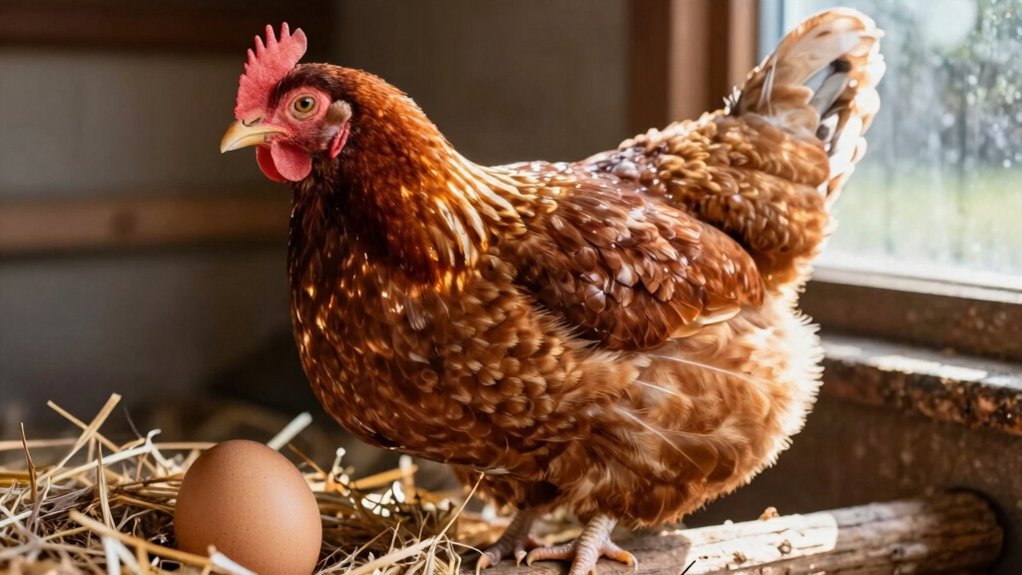
You’re probably wondering why Brown Leghorn egg counts seem all over the place. On a good diet with 14 hours of light, a healthy hen usually lays 250‑300 eggs a year—roughly 5‑6 a week, with a few days hitting a single egg during peak weeks. Expect a dip after the first molt around 18‑24 months, then a gradual decline to about 60 % of peak by age 4. Now you’ve got a clear baseline, and the next section shows how feed and lighting keep those numbers steady.
How Many Eggs Does a Brown Leghorn Lay Each Year?
How many eggs does a Brown Leghorn lay each year? You’re probably wondering why the numbers swing between 220 and 320. Here’s the thing: under good feed and low stress a typical hen hits 280 eggs, and the best performers can push past 300. You’ll see 4‑6 eggs weekly, sometimes an egg a day during peak weeks. Eggshell coloration stays white, which helps you track breed consistency, and that steady output supports flock longevity because you replace layers less often. These hens typically begin laying at 4 to 5 months old, which is earlier than many other breeds. Their active and social nature contributes to their robustness and adaptability across various climates when paired with proper nutrition. While White Leghorns dominate commercial egg production, Brown Leghorns share similar traits that make them valuable for diverse farming settings.
What does that mean for you? Expect roughly 1,200 eggs from a four‑hen flock annually, giving you a reliable breakfast source.
Takeaway: Good management lets Brown Leghorns deliver high, consistent numbers, extending your flock’s productive life. Next, ask when production actually starts.
When Does Brown Leghorn Egg Production Start and Why Does It Dip?
Now, why does production dip after the first burst? The first annual molt, usually at 1.5‑2 years, triggers a pause; heat stress and parasite effects also suppress output. Unlike many layers, Brown Leghorns rarely show broody behavior, so broodiness isn’t the culprit. While commercial hens are often replaced after 18 months, backyard flocks can continue laying for up to 10 years despite gradually declining rates. Their reduced frostbite risk makes them particularly resilient during cold snaps that might otherwise halt production in other breeds. This breed is also noted for its high feed-to-egg conversion efficiency, allowing it to maintain strong output even when resources are managed tightly.
All right, remember: peak lay lasts the first 2‑3 years, then declines to ~60 % by age 4. Keeping stress low and health high will smooth those dips.
Takeaway: Expect early start, watch for molt and health issues, and you’ll keep your flock productive. Next, ask yourself what lighting and feed will sustain that peak.
Which Feed and Lighting Setups Sustain High Brown Leghorn Egg Production?
You’re probably wondering why the right feed and light schedule matter after the first lay surge.
What feed composition strategies keep my hens laying?
You need a complete layer ration with about 16 % crude protein and balanced amino acids. Start chicks on 18‑21 % protein starter, switch to grower at 6‑8 weeks, then shift gradually to the layer diet before the first lay. Add free‑choice oyster shell or crushed eggshell for calcium; limestone in pre‑lay diets primes shells. A steady diet avoids nutrient shortfalls and keeps egg mass near 300 per year. Unlike fast-acting limestone, crushed oyster shells provide a slow-release calcium source that hens grind overnight to form strong eggshells while sleeping. Baking shells at 300°F creates safe natural calcium by drying them out and reducing bacterial risks before crushing.
How does light duration optimization affect production?
Hens thrive on a stable long‑day photoperiod—14–16 hours of light daily. Consistent light cues ovulation and regular egg formation, especially when paired with pre‑lay feeding. Avoid fluctuating schedules; keep the lights on at the same time each day.
Takeaway
Match a balanced layer feed with 14‑16 hours of steady light, and you’ll sustain high egg output. Next, consider how activity level shapes daily feed needs. To further support digestion and overall health alongside your feeding routine, providing access to appropriate supplements like calcium is essential for laying hens.
How Does the Brown Leghorn’s Activity Level Affect Its Daily Feed Needs?
Why does activity level matter for a Brown Leghorn’s feed? You’re wondering if a bird that darts around the yard needs more than a hen that stays in a coop. Here’s the thing: active Leghorns burn extra calories while they roam, scratch, and chase flock mates, so they push toward the upper end of the 100‑120 g daily intake range.
How does foraging behavior change that? When you let them free‑range, they pick insects and greens, which can shave a few grams off the commercial ration, especially in warm months. Still, you must keep a solid layer feed as the base because pasture quality fluctuates. Using multiple feeders can help ensure all birds eat adequately despite their high movement and pecking order dynamics.
What about weather adjustments? Cold or windy days force the birds to generate body heat, raising energy demand; you’ll notice them eating closer to 120 g or even a bit more. To support this increased energy expenditure without compromising health, it is essential to provide a diet with balanced protein levels tailored to their developmental stage and activity. Once hens begin laying around 16 to 20 weeks, transitioning them to a complete layer feed ensures they receive the consistent 16-18% protein and elevated calcium necessary for strong eggshells.
Takeaway: Match feed to movement, pasture, and temperature, then fine‑tune by watching leftovers and body condition. Next, ask yourself how your flock’s egg output will guide those adjustments.
How Does Brown Leghorn Egg Production Compare to Other Top Backyard Breeds?
You’re probably wondering how a Brown Leghorn stacks up against other backyard champions, and that’s a smart question. You’ll find the Brown Leghorn lays 220‑300 white‑shelled eggs yearly, just a notch below White Leghorns that hit 300‑320. Compared with Rhode Island Reds, which produce 250‑300 eggs and weigh more, the Leghorn stays lean, feed‑efficient, and focused on egg output.
All right, here’s the thing: Australorps match the Leghorn’s 250‑300 egg range but give you darker brown shells and a calmer temperament. Plymouth Rocks lag at 200‑250 eggs but offer a friendlier, dual‑purpose nature. Hybrid breeds such as the Golden Comet and Black Star offer consistent production of 250-300 brown eggs annually with adaptability to various climates. Notably, Minorca hens are also renowned for laying some of the largest white eggs while typically producing over 200 eggs annually. Additionally, the Ancona breed provides an excellent option for those seeking superior feed efficiency and heat tolerance alongside reliable egg production.
Obviously, commercial hybrids like ISA Browns can top 300‑350 eggs, yet the Brown Leghorn wins on consistent white shells and energetic breed temperament. Takeaway: if you prioritize high‑volume white eggs and don’t mind a lively flock, the Brown Leghorn remains a top backyard layer. Next, ask yourself whether you’ll need a calmer bird or can handle the Leghorn’s active nature. Selective breeding has refined these traits over generations.
How to Boost Brown Leghorn Egg Production in Your Flock?
If you’re puzzled why your Brown Leghorns sometimes lay fewer eggs, you’ve asked the right question.
How does feed affect production?
You should give each hen about 125 g of high‑protein layer feed daily. Consistent, clean water is just as essential—hot days demand more. Adding a shallow dish of fresh water near the feeder keeps hydration steady for shell strength. Transitioning pullets to a complete layer feed at around 16 to 18 weeks ensures they receive the balanced nutrition required to support continuous egg production.
What lighting and coop tricks help?
Keep a stable 14‑hour light schedule, using low‑intensity bulbs in winter. Gradual changes avoid stress. For broodiness prevention, provide nest boxes but also plenty of perches and dust‑bathing spots; hens stay busy and less likely to go broody. Since light exposure directly influences the hen’s reproductive cycle, utilizing supplemental artificial lighting during short winter days helps maintain consistent egg production. It is crucial to ensure hens receive 6-8 hours of darkness daily to rest properly and maintain their immune health.
How can you enrich the coop?
Add hanging mirrors, treat dispensers, and perches at different heights. This coop enrichment reduces boredom, lowers stress, and keeps laying rhythms on track.
Takeaway: Optimize feed, water, light, and enrichment, and you’ll see those 250‑300 eggs per year become a reliable reality.
Next step: Audit your coop today and note any missing enrichment items.