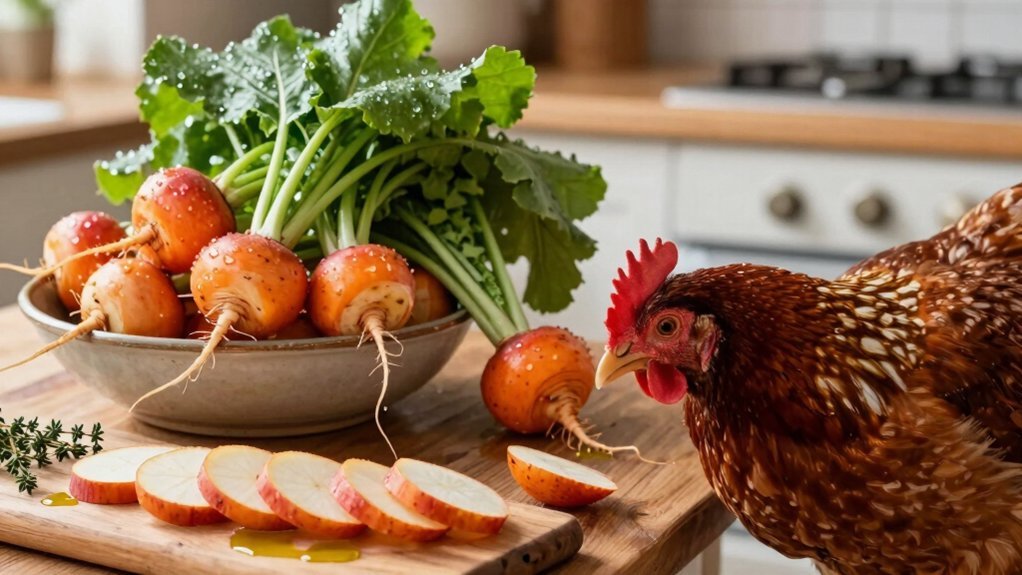
You’re right to wonder if turnips are safe for chickens, and the short answer is yes—both the roots and the leafy tops are non‑toxic when you keep portions modest. Offer raw or lightly steamed pieces about the size of a thumbnail, roughly a tablespoon per hen, and limit treats to 10 % of the diet, feeding once or twice a week. Mix greens in for extra vitamins, then hang or bury small chunks for enrichment, and you’ll see happy pecking without harming egg production. Keep the complete layer feed unlimited, and you’ll have a balanced, enjoyable snack routine.
Can Chickens Safely Eat Turnips?
Can Chickens Safely Eat Turnips? You’re probably wondering if those crunchy roots could harm your flock, and that’s a smart question. Turns out turnips are non‑toxic, so a modest portion won’t poison your birds. Just wash them, cut into bite‑size pieces, and keep treats to about 10 % of their diet—think a handful a day for a dozen hens. Remember that scraps should only supplement a balanced complete layer feed rather than replace it to ensure your hens receive all necessary nutrients.
Turnip storage matters; keep roots in a cool, dry place, like a root cellar, for up to two weeks. Fresh greens should stay refrigerated and used within five days. Proper storage preserves nutrients that aid crop digestion, adding fiber without upsetting their stomachs. Like other vegetables, serving turnips chopped into small pieces helps avoid choking hazards and ensures safe consumption for your flock. Unlike parsnip tops which contain phototoxic chemicals, turnip greens are safe for chickens to eat in moderation.
The takeaway: turnips are safe, tasty, and easy to store, as long as you feed them sparingly and cleanly. Next, you might ask which turnip parts give the most benefit.
Which Turnip Parts Are Best for Your Chickens?
You’re probably wondering which part of the turnip will give your hens the most benefit without turning meal snack into a chore.
Which part gives the most nutritional benefits?
Turnip greens and tops top the list. They pack vitamins A, C, K and minerals like calcium and iron, supporting immune health, vision, and blood clotting. Feed them chopped or whole a few times a week; they’re easy for chickens to peck and digest. Similar to how collard greens provide beneficial vitamins, these leafy parts offer a nutritious source of healthy roughage when fed in moderation.
What about the root?
Root flesh is safe but less nutrient‑dense. Grated, cooked, or mashed roots work best; raw chunks can be too tough. Offer a small handful as an occasional treat alongside a balanced feed.
Do stems or peelings matter?
Stems and peelings add fiber and some vitamins, yet their fibrous texture makes them less appealing. Cut them tiny if you include them, but keep them secondary to greens and roots.
Takeaway: Prioritize greens and tops for peak nutrition, sprinkle in modest root portions, and use stems or peelings sparingly. Next, think about how you’ll harvest these parts seasonally for ideal freshness. Just as with grass, offering fresh plant matter supports natural foraging behavior while providing essential micronutrients to your flock. This engagement mimics the instinctive drive chickens feel when they create dust baths to maintain healthy feathers and eliminate parasites.
How to Prepare Turnips for Chickens
Probably’re probably wondering how to turn a raw turnip into a safe, tasty snack for your hens. First, wash the roots and greens thoroughly; scrub the soil off the roots and rinse the tops until water runs clear. Decontamination cuts contamination risk, and clean produce stays fresh longer.
Now, cut the turnip into bite‑size pieces that match your flock’s age and turnip growth stages. Small chunks reduce choking, while grating or mashing makes it even easier to eat.
All right, cook the pieces—steam, boil, or roast—just until soft, then cool to room temperature. Skip seasonings; plain turnips keep your chickens healthy. While cooking neutralizes toxins in some vegetables like toxic glycoalkaloids found in raw white potatoes, turnips are naturally safe to feed raw or cooked once cleaned.
Here’s the thing: store any leftovers in a cool, dry place using proper turnip storage methods, like a sealed container in the fridge.
Takeaway: clean, chop, cook, and serve plain turnips for a nutritious treat. Ready to try a batch? Like sweet potatoes which are 100% safe for chickens whether raw or cooked, turnips can also be a beneficial supplement when prepared correctly. Just as you must avoid feeding chickens white potatoes due to harmful toxins, ensuring your turnips are free from spoilage is equally vital for flock safety.
How Much Turnip to Feed Chickens?
If you’re wondering exactly how much turnip you can safely give your hens, you’ve hit the right spot. Turnips belong in the treat category, so keep them to about 10 % of daily intake. An average laying hen eats roughly ½ cup of feed a day, so a few bite‑size pieces—about a tablespoon total—fits the feeding quantity limit.
Now, treatment frequency matters more than a big once‑off. Offer turnips once or twice a week, or a few times spread across the week, but avoid daily servings. Small, occasional portions keep the diet balanced and prevent the treats from crowding out essential layer feed. Overfeeding scraps can harm egg production, so maintaining a balanced diet is crucial for bird wellbeing.
All right, the takeaway: a tablespoon of chopped turnip, two times weekly, stays within safe limits. Next, think about how to make those turnips appealing for your flock.
While treats should be limited, remember that the foundation of a healthy diet is providing unlimited access to a complete feed to allow chickens to eat according to their needs. Adhering to this ratio ensures hens receive quality grains or pellets as the staple of their nutrition while enjoying turnips as a supplementary snack.
How to Encourage Chickens to Peck Turnips for Enrichment
You’re wondering how to turn a simple turnip into a fun, peck‑worthy enrichment for your hens. Obviously you need variety, so try different turnip enrichment methods to keep curiosity high. Hang a whole turnip on a sturdy string about a foot off the ground; birds must jump and peck, which mimics natural foraging.
Here’s the thing: slice a turnip and skewer pieces at beak height for easy access, then rotate to a dig box where you lightly bury chunks. This combines turnip pecking strategies with scratching, extending activity time.
All right, mix turnip greens with the root, tie a bundle, and tuck it into straw for leaf‑pecking interest. Rotate between hanging, scattering, and hiding each week to prevent boredom. Complementary additions like hanging veggie balls can further challenge your flock to work for their food while reducing boredom. Incorporating mirrored balls provides additional auditory and visual stimulation that encourages even more physical activity within the coop. Just like constructing a stable base for a jungle gym ensures safety, securing your enrichment items prevents accidents during vigorous pecking.
Takeaway: Use multiple turnip enrichment methods, change the presentation weekly, and watch your flock stay engaged. Next step: set up a simple hanging turnip today and observe the pecking response.