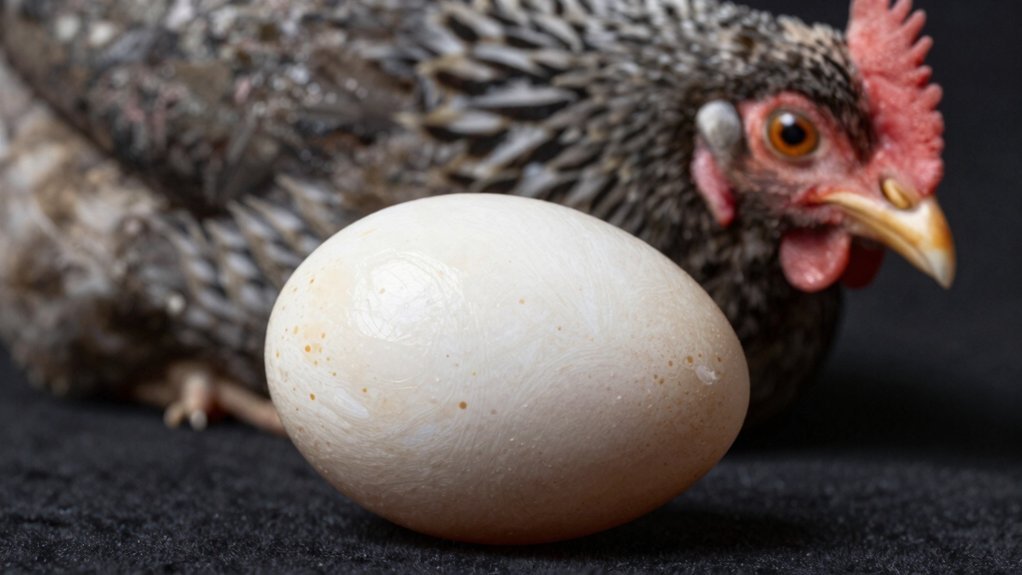
You’re probably wondering why Olive Eggers lay those striking green‑brown eggs, and the answer is simple: a blue oocyanin pigment from a blue‑egg layer mixes with a brown protoporphyrin overlay from a brown layer, giving shades from teal to deep olive depending on each gene’s strength. These medium‑sized birds, weighing 6–7 lb, lay 180–200 eggs a year, starting at 24–28 weeks, and their shells are thick and sturdy when you give them balanced calcium and grit. If you keep a varied flock and track weekly counts, you’ll see consistent yields and can learn how to fine‑tune color and production.
What Is an Olive Eggger and Why Do Its Eggs Look Green‑Brown?
If you’re wondering why an Olive Egger lays those striking green‑brown eggs, you’ve hit the right spot. You’re looking at a hybrid creation that mixes a blue‑egg layer with a brown‑egg layer, often an F1 cross of Cream Legbar, Ameraucana, Welsummer, or Marans. The pigment explanation is simple: the shell starts blue because of oocyanin, then a brown pigment coats the exterior, producing olive, sage, or moss tones depending on overlay strength. Here’s the thing: the blue base stays throughout the shell, while the brown overlay varies, so darker brown yields deeper olive. Obviously, the first generation gives the most consistent color, while later generations can shift dramatically. Takeaway: your Olive Egger’s green‑brown eggs result from two pigment systems layered together. Next, you might wonder how the bird’s temperament and physical traits play out. It is also important to remember that pigment deposition can fluctuate throughout the year or during molting, causing the specific shade of the eggs to vary even within the same flock. These birds typically feature distinct physical traits like puffy cheeks and pea combs while maintaining a docile to moderately active temperament suitable for backyard flocks. While all eggs begin as white calcium carbonate structures, the protoporphyrin IX pigment responsible for the brown overlay is applied in the shell gland primarily on the outer layers to create the final olive hue.
What Physical Traits and Temperament Do Olive Eggger Chickens Have?
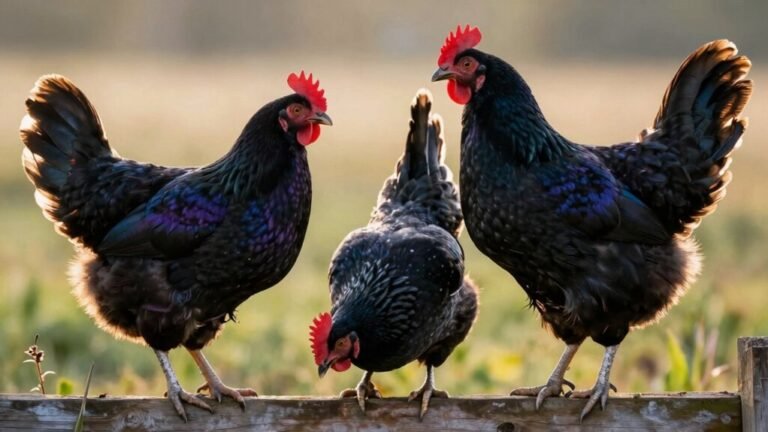
You’re probably wondering why an Olive Egger looks the way it does and how it behaves. You’ll see a medium‑sized bird, hens 6–7 lb, roosters 7–8 lb, with dark, often black‑gray plumage and puffed cheeks. Some sport pea combs, feathered feet, or a slight muffle, depending on the parent mix. Their calm, docile temperament makes them easy to handle, and they’re curious without being noisy.
Here’s the thing: their barn yard behavior is adaptable and cooperative, so they mingle well with other chickens. You’ll notice moderate broodiness in some lines, especially those with pea combs, but most stay focused on foraging. Unlike true breeds, these hybrids are valued for their unique egg colors ranging from blue to green and olive.
Now, feed nutrition requirements are straightforward—balanced layer feed plus occasional greens keeps them healthy and productive.
Like their Easter Egger relatives, these birds often display distinctive beards and muffs alongside their varied feather patterns.
These dual-purpose birds serve well for both meat and egg production while maintaining a hardy constitution.
Takeaway: Olive Eggers are manageable, friendly birds that fit well in backyard flocks. Next, explore how genetics create their signature olive‑green eggs.
How Do Genetics Create the Olive‑Green Egg Shade?
How does genetics give Olive Eggers their olive‑green shells? You’re probably wondering why a blue base and a brown overlay turn teal into olive. Here’s the thing: the oocyan trait pumps blue pigment through the whole shell, while protoporphyrin from brown‑egg genes paints a surface coat. When the brown layer is light, you see teal; when it’s heavy, you get mossy olive. F1 crosses lock one blue allele and one brown influence together, so you get a fairly predictable hue. Later generations remix those genes, causing egg price variation across markets. International breeding programs track these combos to keep shade consistency and meet demand. Takeaway: olive‑green results from two independent pigment systems, and careful cross‑breeding stabilizes the color. Unlike breeds where diet affects health, the color of blue eggs results from genetics, not diet, and all breeds require balanced nutrition to stay healthy and productive. While hybrid breeds like the Olive Egger are popular, newer options such as the Arkansas Blue also produce blue eggs with traits suited to various climates. This genetic link mirrors how chicken earlobe color often predicts whether a hen lays white or brown eggs due to shared pigment pathways. Next, ask how many eggs you can expect per year. The inheritance pattern of the oocyan allele is autosomal dominant.
What Are the Typical Egg Production Numbers and Laying Age?
Olive Eggers typically lay 180‑200 eggs a year, but with good care you’ll see 240‑260 eggs, and elite lines push toward 290‑300. You’re probably wondering why the numbers swing so much. Here’s the thing: production consistency hinges on genetics, diet, and light, so a well‑managed flock hits the higher end, while backyard birds often fall short. What age do they start? Most hens hit the laying age range of 24‑28 weeks, but you can see first eggs as early as 20 weeks or as late as 32 weeks, especially if daylight or nutrition lags. A steady 4‑6‑egg weekly rhythm usually translates to those annual totals. Takeaway: give your Olive Eggers proper protein, consistent light, and stable housing, and you’ll enjoy reliable output within that laying age range. Similar to how hybrid breeds like Red Star offer up to 300 eggs yearly, optimized care can push Olive Eggers toward their maximum potential. In contrast, some specialized sex-link hybrids reach egg-laying maturity as early as 16 to 18 weeks, highlighting how genetic selection influences onset timing. While Olive Eggers are valued for their unique shell color, other breeds like the Golden Comet are specifically renowned for laying huge red-brown eggs with exceptional annual yields. Next, you might ask how egg size and shell quality compare to other layers.
How Do Egg Size & Shell Quality Compare to Other Layers?
Egg size and shell quality often leave you wondering how Olive Eggers stack up against other layers. You’ll notice that their eggs start small at the point‑of‑lay and grow into medium‑large as the hens hit later developmental stages. Nutritional influences like calcium and protein keep the shells thick and strong, while younger birds lay thinner shells that improve with age.
How do they compare? Olive Eggers usually outsize Silkies and bantams, match standard brown layers such as Welsummers, and can even rival White Leghorns in well‑fed flocks. Their shells stay smooth, olive‑green, and resilient—thanks to balanced diet and proper grit. Older or stressed hens may produce weaker shells, so management matters. To ensure optimal shell formation, offering large particle calcium separately allows hens to regulate intake according to their individual needs. While a balanced layer feed covers daily requirements, providing this supplement prevents issues like weak shells or osteoporosis that arise when hens consume treats diluting their diet. Severe deficiencies can lead to bone weakness and fractures, particularly during periods of high egg production or heat stress.
Takeaway: Olive Eggers give you medium‑large, sturdy eggs that hold their own against most breeds, especially when you meet their nutritional needs. Ready to fine‑tune feed for peak size and shell quality?
Why Egg Color Varies Within a Flock?
You’re probably wondering why the eggs in your Olive Egger flock don’t all look the same.
What genetics drive the mix?
Your hens inherit a blend of blue‑pigment and brown‑overlay genes from their parents. Some carry stronger brown alleles, so their shells turn darker olive; others express the blue trait more, giving lighter green or blue‑leaning eggs. Because Olive Eggers are hybrids, each bird’s genetic cocktail differs, so the flock never breeds true. Just as specific genes like the Barring gene on the Z chromosome create distinct barred feather patterns in chickens, complex genetic interactions determine the unique egg color spectrum in your flock.
How does the shell form?
Eggs start with a white calcium carbonate base. Brown pigment coats the shell near the end of formation, while blue pigment penetrates the whole shell. Pigment deposition timing varies among hens, creating subtle shade shifts even within a single laying cycle. This process relies on specific biological agents, where protoporphyrin IX creates brown shades and oocyanin produces the blue coloration found in the shell. Variations in egg shell color result solely from genetics rather than diet.
Why do you see weathered looks?
Shell weathering differences—like exposure to light or humidity—can accentuate or mute colors, making fresh eggs appear brighter than older ones.
Takeaway
Color variation is normal, driven by genetics, pigment deposition timing, and shell weathering. Embrace the spectrum; it signals a healthy, diverse flock.
Next, consider how to manage this mixed‑color flock for maximum egg yield.
Managing a Mixed‑Color Flock for Maximum Egg Yield
All right, you’re probably wondering why the color mix in your Olive Egger flock feels like a random rainbow instead of a predictable pattern. You’ve got hens of different ages, breeds, and personalities all sharing space, so the eggs you collect vary just as much as the feathers you see.
How do you keep feed spacing even?
Place feeders wide enough that dominant roosters can’t push quieter hens aside. Use multiple troughs or a long line of feed stations so each bird gets a fair bite. When you see a hen consistently missing meals, adjust the layout or add another feeder.
What’s the role of flock rotation?
Rotate groups every few weeks to balance stress and keep everyone comfortable around nest boxes. Moving a younger cohort away from aggressive older hens lets them settle and lay consistently. Keep a simple chart of which birds you moved and when; you’ll spot patterns in egg output quickly. Implementing a visual barrier during initial introductions allows birds to see and hear each other without physical contact, reducing the stress that can negatively impact egg production. These hardy birds are well-suited to this management style as they tolerate both cold and heat well, ensuring consistent performance across varying seasonal conditions.
Takeaway: Even spacing and regular rotation give every color‑variant hen a chance to shine, boosting overall yield. Next, track each hen’s weekly egg count to pinpoint your top layers.