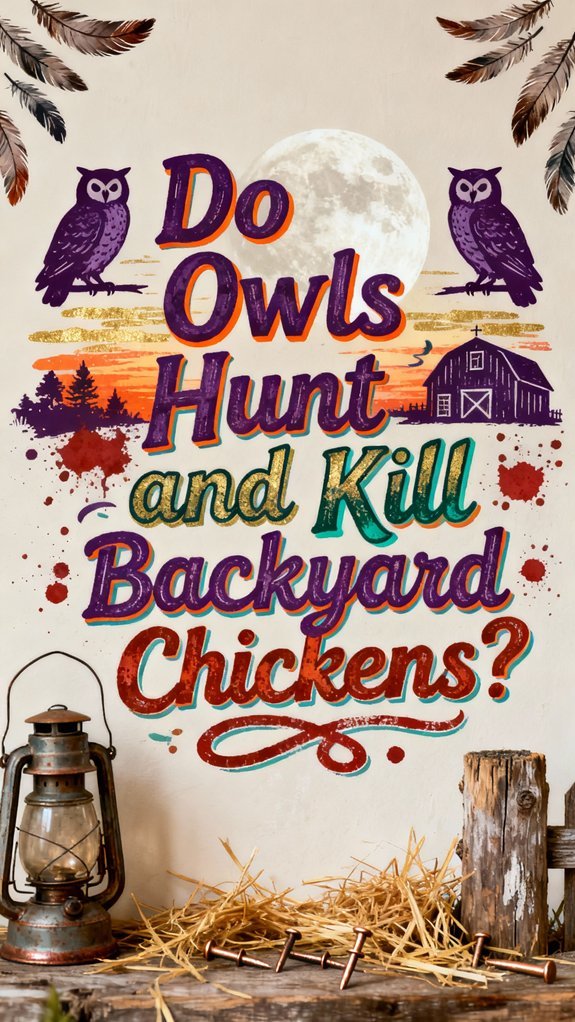
Yes, owls actively hunt your backyard chickens, with Great Horned Owls presenting the primary threat. They’re capable of killing full-grown hens and typically target the head and neck, often taking one to two birds per night. Barn Owls also pose risks through silent flight and stealth predation. You’ll recognize attacks by feather piles, blood smears, deep puncture wounds, and regurgitated pellets containing bones. Understanding species-specific predation patterns and implementing layered defense strategies proves essential for protecting your flock.
Which Owl Species Attack Chickens
What owl species threaten your backyard chickens? Great Horned Owls pose the primary threat to your flock. They’re the largest owl species capable of killing full-grown hens with their sharp talons and beaks. You’ll often find them entering chicken runs and coops to hunt one to two birds per night, targeting the head and neck. To ensure a protective environment for chickens, it’s important to monitor species interactions and implement good biosecurity practices. Additionally, reinforcing chicken coops with protective barriers can help deter these formidable hunters. Many backyard chicken keepers opt for livestock guardian dogs to further enhance their flock’s safety. Chickens can even consume spicy foods like chili peppers without any adverse effects, potentially adding a layer of health benefits to their diet. It’s crucial to remember that most losses occur at night due to natural predators like owls hunting under the cover of darkness. Barn Owls, belonging to a distinct owl family, also attack your chickens. Their serrated wing feathers enable silent flight, allowing them to swoop undetected on backyard flocks. They snap chicken necks like scissors before swallowing prey whole. Barn Owls easily carry away chicks using their talons, hunting from elevated perches during evening and night hours. These owls can swivel their heads over 270 degrees, giving them exceptional visual awareness of their surroundings and prey locations.

Durable Aluminum: The Sign Are Made Using Thick Aluminum And Do Not Bend Easily. They Have Been Proven To Outlast The Toughest Of Storms.


Understanding Prey Size and Selection Patterns
While Great Horned Owls and Barn Owls pose the most visible threat to your flock, understanding owl predation patterns requires examining how different species select prey based on size. Your owl’s body mass directly correlates with the range of prey sizes it’ll pursue—larger owls tackle substantially bigger prey than smaller species. Research shows owls consistently favor smaller individuals within rodent populations, yet they’ll shift toward larger prey when preferred sizes become scarce or when energetic rewards justify increased hunting effort. Additionally, Kikiriki chickens, known for their vibrant appearance, can attract attention, making understanding predation patterns even more critical for their safety. Providing engaging toys can keep your chickens active and help reduce their perceived vulnerability to predators. Peak capture success plateaus then declines as prey size increases, reflecting declining foraging efficiency. These prey selection and hunting strategies reflect optimization between caloric intake and injury risk, meaning your chickens’ vulnerability depends partly on available alternative food sources and owl species composition in your area. Additionally, implementing effective physical barriers can help protect your chickens from predation while managing their free-range behavior. For instance, utilizing bird netting over coops can enhance safety against aerial attacks. Providing a nutritionally balanced diet can also support your hens’ well-being, making them less susceptible to stress which can attract predators.
Identifying Attack Signs and Forensic Evidence
Once you’ve identified which owl species inhabit your area and understand their prey preferences, you’ll need to recognize the physical evidence they leave behind—the forensic markers that distinguish owl predation from other threats to your flock.
Start by identifying feather piles concentrated beneath perches or kill sites. Owls methodically pluck feathers before consumption, leaving characteristic debris patterns that mammalian predators don’t produce. Analyze blood smears on ground surfaces rather than pooled blood, indicating talons piercing body cavities with minimal external hemorrhaging. Examine recovered carcasses for deep puncture wounds to the skull, neck, or back—signatures of powerful talon grips. However, remember that owls may scavenge carcasses, so their presence at a kill site doesn’t definitively prove they were the original predator.
Check for regurgitated pellets containing bone fragments near roosts. Nocturnal timing, elevated perch proximity, and whole carcass removal complete the forensic profile distinguishing owl attacks from diurnal raptors or ground predators.

Solar & Wired Charging - The owl can automatically absorb solar energy with the solar panel at back of the head. During rainy or cloudy days, you can use the USB cable (in the package) to charge the owl.

Gradient colored eyes - Ugold new generation of owl adopts gradient LED light on its eyes. The owl eyes can emit light in gradient color (from red to green), and decorate your home and garden.

Solar & Wired Charging - The new member launched by the Ugold family of owls. The owl can automatically absorb solar energy with the solar panel at back of the head. During rainy or cloudy days, you can use the USB cable (in the package) to charge the owl.
Risk Factors That Increase Owl Predation
Understanding the conditions that elevate your flock’s vulnerability to owl predation requires examining four interconnected categories: habitat structure, prey availability, management practices, and predator biology. Perching sites within 100 yards—tall trees, poles, or structures—enable owl hunting behavior and facilitate attacks. Dense vegetation and landscape clutter reduce your chickens’ escape cover. High rodent populations sustain owls nearby, increasing incidental poultry predation when natural prey becomes scarce. Additionally, implementing snake-proof fencing when raising chickens alongside other livestock can also help mitigate environmental risks. To mitigate the risk, consider creating protective netting over chicken runs to deter both owls and other aerial predators. Small or bantam chickens face greater risk than large adults. Free-ranging birds during dawn, dusk, or overnight periods align with nocturnal hunting peaks, amplifying poultry vulnerability. Eagles can also pose a threat to chicken flocks due to their opportunistic hunting behavior. Predictable routines condition raptors to visit at specific times. Young, inexperienced birds lack effective predator responses. Great horned owls, capable of killing adult chickens, pose the greatest threat to backyard flocks. Most owl predation occurs unnoticed due to their stealthy and effective hunting methods, making early detection of attacks particularly challenging for flock owners.
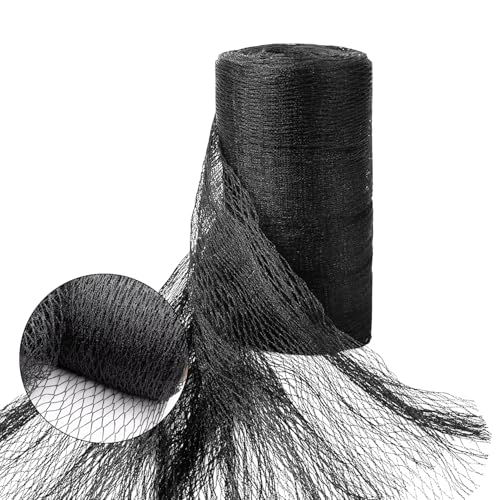
Bird Netting for Chicken Coop: Cover your chicken run, chicken pen, or poultry fence with our large mesh netting to keep predators like hawks, owls, foxes, and raccoons out. Our aviary netting with 1 inch mesh size effectively prevents small animals, such as rabbits and mice from entering, unlike bird nets with larger 2.4 inch holes. This poultry netting also prevents your chickens from escaping and wandering into your garden or neighbor's yard, protecting your plants and vegetables.

BIRD NETTING FOR CHICKEN COOP: Are you worried that hawks might eat your chicken? With this chicken netting, you can keep Keep predator like hawks or owls out by simply draping your chicken run with this mesh netting. Your chicken will be safe to keep in an area. Meantime, they will not jump into your neighbour yard or into your own garden.

【Heavy Duty Nylon Bird Netting】 Made of nylon multifilament net which is UV-proof, our lightweight but heavy duty bird net won't tangle and tear easily, highly durable and reusable, stronger than plastic, so you can use over and over again, season after season.
Proven Prevention and Deterrence Strategies
Effective owl predation management relies on a multi-layered approach combining physical barriers, habitat modification, behavioral adjustments, and active deterrents. You’ll strengthen your defenses by installing fully covered runs with hardware cloth skirting buried 12 inches deep and maintaining secure nighttime coops locked at dusk. Habitat alteration—removing perching sites within 100 yards and eliminating brush piles—reduces hunting vantage points while disrupting predator behavior patterns. You should train your flock to roost indoors at dusk and delay morning release until full daylight, avoiding crepuscular hunting windows. Great horned owls typically hunt during late afternoon and evening hours, so timing your flock’s outdoor access away from these peak hunting periods significantly decreases predation incidents. Additionally, employing natural methods such as proper insulation in chicken coops supports their health, making them less vulnerable to stress-induced predation. Incorporating predator-proof materials to reinforce the coop’s construction serves as an added layer of protection, just as securing the coop with strong materials ensures that predators like raccoons are less likely to breach the enclosure. Furthermore, providing your chickens with a balanced diet rich in vitamins and minerals is crucial for their overall health and preventing additional stress, as stressed chickens may be more susceptible to owl predation. Visual deterrents including reflective objects and motion-activated sprinklers provide temporary disruption. Strategic predator decoys, regularly repositioned, discourage owl settlement. Combined implementation greatly reduces owl predation risk.
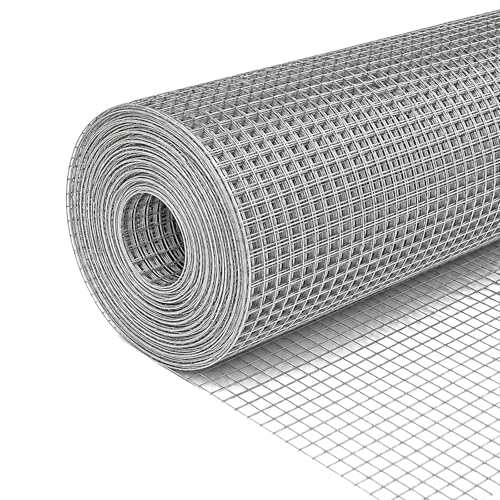
Hardware Cloth 1/2inch for Chicken Coop – 16 inch x 50 ft welded wire mesh made from 23-gauge galvanized steel hardware cloth. Provides reliable strength and flexibility for chicken wire fencing, garden protection, and general outdoor use

Galvanized hardware cloth roll 16 "x50 ' foot with 1/2 inch mesh 19 gauge.In order to provide a better experience, the actual length of Gardeal's hot-dip galvanized iron mesh is 16inx(600+19)in, which is 619in.

Industrial-Grade Hot-Dip Galvanized Protection: Unlike flimsy cold-galvanized wire, our hardware cloth is double-dipped in molten zinc, creating a 3x thicker coating that resists rust, scratches, and UV damage. Ideal for chicken wire fencing and duck run or rabbit/cat/dog enclosures.
Legal Protections and Ethical Considerations
Before you consider lethal control of owls threatening your flock, you’ll need to understand that all native hawks and owls in the United States receive federal protection under the Migratory Bird Treaty Act (16 U.S.C. §§703–712), which prohibits intentionally killing, injuring, possessing, or selling birds of prey without a permit. Violations carry civil and criminal penalties, including fines and potential imprisonment.
The legal implications demand you pursue official channels through USFWS or state wildlife agencies to obtain depredation permits, which require documented damage and proof of nonlethal-measure attempts. Unauthorized lethal action exposes you to prosecution regardless of intent. Permit applications must include detailed information such as the species involved, specific location of damage, extent of loss, and proposed control methods.
Beyond legal constraints, ethical dilemmas arise: raptors serve significant ecological functions as native predators. Nonlethal exclusion—double-layer netting and overhead cover—addresses your protection needs while respecting wildlife conservation principles and animal welfare concerns.
Monitoring and Documentation for Effective Management
Because you’ll need concrete evidence to support any wildlife management decisions—whether for implementing targeted mitigations, consulting with wildlife agencies, or pursuing depredation permits—systematic monitoring and thorough documentation form the foundation of effective owl predation management.
Deploy night-vision trail cameras at coop entrances to record nocturnal visits and attack timestamps. Conduct scheduled physical inspections for disturbance signs like feathers and entry breaches. Maintain standardized incident logs capturing date, time, birds affected, and observed evidence correlated with camera footage. Owls may take birds without leaving signs, making nighttime documentation particularly critical for confirming predation attribution. Raccoons, common predators of chickens, highlight the need for comprehensive management to protect your flock. Additionally, consider the best chicken breeds that are resilient against predation when selecting your flock’s composition. Protecting your chickens from weasel attacks is equally vital, as these predators can use similar tactics in securing food. A well-designed coop should also ensure ample space for chickens, providing them a secure environment that minimizes stress and exposure to predators. Providing your hens with adequate indoor space can improve their overall well-being and defense against threats.
Your documentation protocols should include photographic evidence of carcasses and entry points before cleanup. Implement chain-of-evidence procedures for suspected wildlife take. Map incident records geographically to identify attack hotspots and correlate patterns with habitat features, enabling you to evaluate mitigation effectiveness systematically over time.