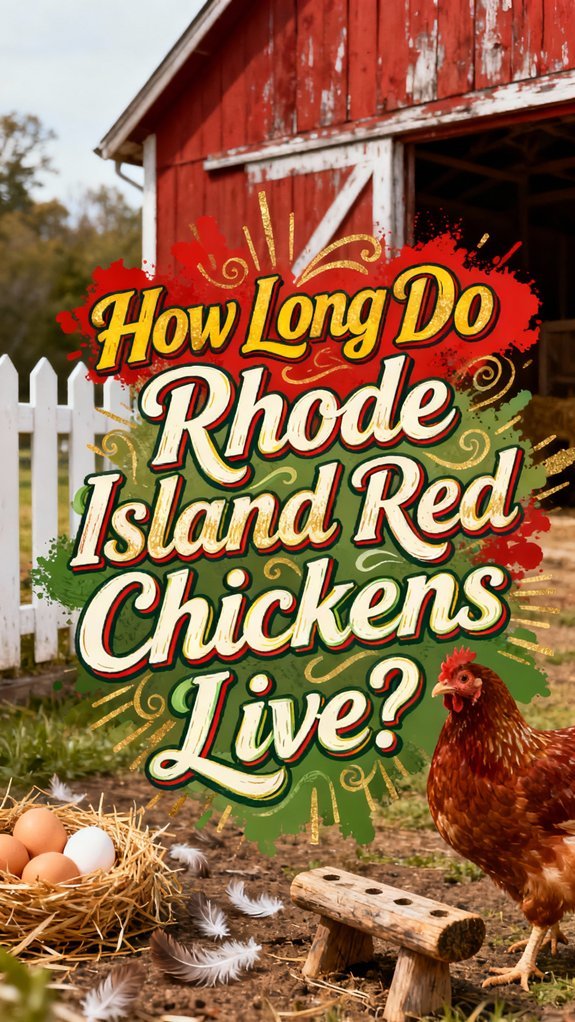
You’ll find that Rhode Island Reds typically live 5 to 8 years with proper care, though heritage strains can reach 9 to 10 years. Some documented cases exceed 15 years under exceptional conditions. Their longevity depends heavily on genetics, nutrition, environmental stability, and disease management. Production strains often don’t outlive heritage varieties. Key factors like high-protein starter feed, biosecurity protocols, and consistent health monitoring greatly impact their lifespan outcomes. Understanding the specific care requirements reveals why some flocks thrive while others face premature decline.
Average Lifespan of Rhode Island Reds
Rhode Island Red chickens typically live 5 to 8 years when they’re protected from predators and properly cared for, though this varies considerably between production and heritage strains. Production strains average 5 to 8 years, matching most backyard flocks you’ll encounter. Heritage strains extend that timeline to 9 to 10 years, demonstrating how genetic variations influence longevity markedly. Additionally, their steady egg-laying habits allow for consistent egg production throughout their lifespan, positively impacting overall flock management. Providing homemade chicken treats can also enhance their diet and health, supporting a longer lifespan. Automatic feeders, such as Grandpa’s Feeder, can simplify feeding routines and ensure consistent access to food, contributing to a healthier environment that supports their longevity.
Environmental impact plays an essential role in determining your birds’ lifespan. You’ll find that well-cared-for individuals consistently reach the upper end of these ranges. With exceptional conditions—optimal nutrition, shelter, and predator protection—some Rhode Island Reds surpass 8 years, with documented cases reaching 15 years. The consistency of the 5 to 8-year range across multiple sources reflects reliable baseline expectations for production birds you’ll raise in typical backyard settings. Rhode Island Reds are social animals and benefit from being kept in small flocks, which can positively influence their overall health and longevity.
Factors That Influence Longevity
While the 5- to 8-year baseline gives you a general expectation, the actual lifespan of your Rhode Island Reds depends heavily on multiple interacting factors you can directly influence. Genetic diversity matters greatly—birds from diverse breeding lines show improved disease resistance and longevity compared to highly inbred stock. Nutritional balance, including adequate protein, calcium, and vitamins, prevents metabolic disorders and reproductive senescence that shorten productive years. Additionally, providing your chickens with a high-protein starter feed during their early growth stages is crucial for their long-term health. Incorporating diatomaceous earth into their living environment can also help in managing external parasites, further supporting their overall health. Placing realistic dummy eggs in their nesting boxes may also encourage Rhode Island Reds to lay in designated spots, promoting better egg management. A balanced diet rich in quality grains or pellets further contributes to their overall well-being and longevity. Proper living environments are equally important; keeping quail and chickens together can lead to increased stress and health issues for your flock if not managed correctly. Environmental stability—proper ventilation, dry bedding, secure housing, and temperature management—reduces respiratory disease and parasitic burdens considerably. Finally, proactive disease management through vaccination, biosecurity protocols, and parasite control limits exposure to infectious agents that decimate flock longevity. These factors work synergistically; optimizing all four domains maximizes your Rhode Island Reds’ lifespan potential. Rhode Island Reds are hearty and adaptable to both cold and warm climates, which contributes significantly to their ability to reach the upper end of their lifespan range when provided with adequate care.

Large chicken cone works with poultry between 6-16 lb. Such as Cornish Cross,Rhode Island Red,Turkey,Broiler/Fryer/Brahma/Cochin
Egg Production Throughout Their Lives
Because your Rhode Island Reds’ reproductive capacity shifts dramatically across their lifespan, understanding these production trends helps you optimize flock management and economic returns. Your hens begin egg laying at 5-6 months of age, reaching peak production of 5-6 eggs weekly during their first 2-3 years. Production strains yield 250-300 large brown eggs annually, while heritage varieties average 200 eggs yearly. After this prime period, production trends decline considerably. By age 6 and beyond, your hens produce substantially fewer eggs, though continued laying remains possible with proper care. Notably, Rhode Island Reds are well-regarded for their reliable production, and heritage strains maintain longer laying careers than production strains, sustaining egg production across an extended timeframe. Rhode Island Reds can live for 8+ years, providing you with a long-term investment in your flock despite reduced productivity in their later years. Understanding these production trends allows you to make informed culling and breeding decisions.


REUSABLE AND DURABLE CONSTRUCTION: Pinless Peepers are constructed of virgin polypropylene plastic material to insure long life and durability; Stiff construction also insures that these Pinless Peepers will not break or come loose

Comparison With Other Chicken Breeds
Your flock’s longevity extends beyond production cycles, and understanding how Rhode Island Reds compare to other breeds illuminates their value as a long-term investment. Rhode Island Reds considerably outlast hybrid breeds, which average 3-5 years due to accelerated growth rates and susceptibility to cancer and organ failure. Isa Browns, for example, rarely exceed 3 years. Against heritage strains like Plymouth Rocks and Orpingtons, Rhode Island Reds perform comparably at 5-10 years, though heritage strain Rhode Island Reds reach 9-10 years. Calm and sociable, these chickens have proven to be engaging companions within backyard flocks. They thrive especially well when supplemented with high-protein treats, such as mealworms, which support their overall health and egg production. Dual-purpose breeds such as Wyandottes and Australorps align similarly at 6-12 and 6-10 years respectively. This positioning establishes Rhode Island Reds as reliable middle-ground performers, balancing productivity with longevity beyond typical hybrid limitations. Heritage strains particularly benefit from robust genetics, allowing them to maintain vitality and egg production throughout their extended lifespan.

Premium Quality Chicken Treats: Specially formulated, high quality chicken snacks for laying hens, only the best for your pet chickens

HIGH PROTEIN POULTRY TREAT: Mealworms provide 50% source of all-natural protein, delivering a nutritious, high-energy treat for poultry that supports healthy growth, vitality, and overall well-being while encouraging natural foraging behavior.

Premium Quality Chicken Treats: Specially formulated, high-quality chicken snacks for laying hens, ensuring only the best for your pet chickens
Health Considerations and Common Issues
Rhode Island Reds’ reputation for hardiness doesn’t exempt them from the disease pressures and health challenges that affect most production-focused chicken breeds. You’ll encounter susceptibility to Marek’s disease, coccidiosis, and Newcastle disease, which can cause sudden mortality or chronic production losses. External parasites like lice and mites reduce feather condition and egg production if you neglect treatment. Implementing natural deterrents can also help protect them from potential threats like snakes.
Your disease management strategy should include robust biosecurity protocols and prompt isolation of sick birds. Egg-related infections—particularly egg yolk peritonitis—pose serious risks in high-producing strains. Reproductive disorders, including egg binding and prolapse, increase with age and production intensity. Regular veterinary check-ups and prompt response to illnesses are crucial for maximizing their 5-8 year lifespan potential. Additionally, providing hens with crushed eggshells as a calcium supplement can help prevent ailments related to calcium deficiency.
Maintaining nutritional balance proves equally critical. Calcium deficiency leads to thin-shelled eggs and egg binding, while protein and energy shortfalls compromise immunity and laying performance. You’ll maximize longevity by addressing these interconnected health factors proactively.
Optimal Care Practices for Longer Life
Five critical pillars—housing, nutrition, biosecurity, behavioral management, and environmental control—form the foundation for extending Rhode Island Red longevity beyond their typical 5–8 year productive lifespan. You’ll maximize their lifespan by providing adequate space: 4 sq ft indoors and 10 sq ft in outdoor runs minimize stress-related aggression, while ensuring adequate movement promotes overall health. Proper housing recommendations suggest 200 square feet of run area for optimal well-being. Address their nutritional needs through life-stage-appropriate feeds, starting at 21% protein for chicks and evolving to 16% layer feed at point-of-lay. Guarantee constant access to fresh water and clean feed via automatic systems. You must maintain robust biosecurity through quarantine protocols, regular parasite inspections, and monthly flock monitoring. Implementing dust baths and diatomaceous earth provides effective parasite control that prevents the health complications which can shorten their productive years. Finally, foster a stable social environment by managing flock density, controlling aggressive roosters, and providing enrichment opportunities that reduce behavioral pathologies and chronic stress.


Dimensions: Our standard size 11 oz mug measures 3.75" tall x 3" in diameter

A proud farmer's adult male chicken stands surrounded by bright purple violets, celebrating the beauty of rural gardens, bright blooms, and the timeless charm of farm life with bold colors and cheerful elegance.
Real-World Lifespan Reports From Owners
While ideal care practices establish the theoretical foundation for Rhode Island Red longevity, real-world owner experiences reveal the actual lifespan trajectories that backyard flocks achieve. Owner anecdotes consistently document lifespan variations ranging from 5–8 years for production strains to 9–10+ years for heritage lines. You’ll find that production-focused birds experience accelerated decline after peak egg-laying years (2–3 years), when chronic conditions emerge and mortality increases substantially. The average lifespan of chickens can be influenced by their monthly feeding costs, highlighting the impact of proper management on overall health and longevity.
Non-production birds kept as pets frequently outlive their production counterparts, demonstrating how breeding selection pressures directly impact longevity. Community reports identify predation, parasitic infestations, egg-related reproductive problems, and management deficiencies as primary factors shortening lifespans. Your birds’ actual lifespan depends heavily on strain type, purpose, and environmental conditions rather than theoretical maximums. Additionally, New Hampshire Reds are also known to exhibit similar lifespan trends among different strains, highlighting the significance of breeding selection on longevity.