
You’ll use dummy eggs to train pullets before they’re 16-20 weeks old, signaling where to lay and triggering natural nesting instincts. They prevent destructive egg-eating behavior by satisfying incubation drives without fertile eggs, reducing broodiness-related stress. Dummy eggs also optimize your nesting box efficiency by creating perceived occupied spaces that encourage even distribution across boxes rather than overcrowding. They’re cost-effective tools—golf balls, ceramic, or plastic options work well depending on your setup. Understanding how to implement them strategically transforms your flock’s laying patterns and long-term health outcomes.
Encouraging Nesting Box Usage
Because wooden nest boxes consistently outperform plastic alternatives, they’re your best choice for maximizing occupancy rates—reaching 70-80% compared to plastic non-ventilated boxes at 52-74%. You’ll notice hens increase box exploration and nest preferences develop quickly after installation, with usage patterns rising measurably at weeks 41, 47, and 53. Offering them a source of calcium through crushed eggshells can also contribute to improved egg production, incentivizing hens to utilize the nesting boxes more effectively. Additionally, providing a balanced nutritional formulation that meets the specific dietary needs of your hens can further enhance their egg-laying performance. Feeding hens with oyster shells will ensure they have the necessary calcium for strong eggshells, supporting overall hen health.
You can further optimize performance through ventilation improvements. Ventilated plastic boxes achieve 64% occupancy, surpassing non-ventilated designs at 29%. Wood-crete boxes offer additional advantages: they maintain 1.5°C higher internal temperatures, supporting earlier clutches and shorter incubation periods.
Your facility should follow legal standards, providing a maximum of 7 chickens per box with a minimum of two boxes per group. Video monitoring during daily observation windows captures visiting patterns and sitting events, revealing which design features drive actual usage and identifying underutilized boxes requiring adjustment. Implementing RFID tracking systems can provide detailed egg production data for larger operational flocks seeking to optimize laying patterns and identify high-performing individual birds.
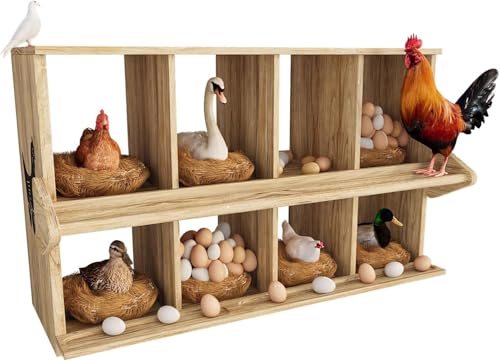
For Small & Medium Poultry: This chicken nesting box is designed for small to medium-sized poultry. Please check whether the product dimensions are suitable for your poultry before purchase to ensure the ideal experience.

Nesting Boxes for Chickens: our chicken nesting box is made of solid wood, providing a natural and safe environment for chickens to lay eggs; This chicken laying boxes measures about 35 X 26 x 12 inch, and each compartment is about 12.5 x 12 inch
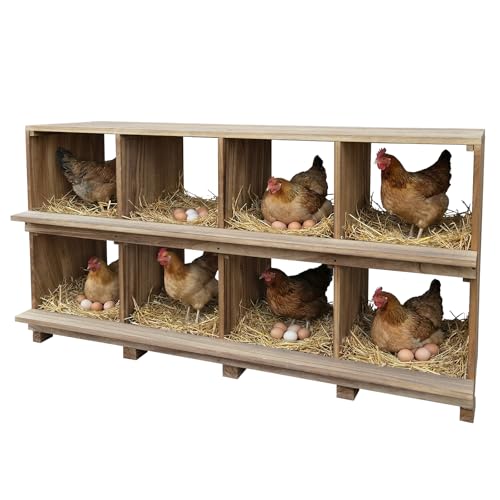
【Wood Nesting Box for Chickens】--Crafted from durable wood, this nesting boxes mimic the hen's natural habitat, providing a safe and natural environment for laying eggs, reducing stress on the hens, and improving laying efficiency.
Training Young Hens for Laying
Once you’ve optimized your nesting boxes for maximum occupancy, you’ll want to prepare them for the young hens that’ll soon use them. Place dummy eggs in your boxes before your pullets reach 16-20 weeks of age. These ceramic or wooden replicas signal to young hens that the nesting box is the appropriate laying location, establishing proper laying behaviors before their first eggs arrive. Additionally, make sure the nesting boxes are designed with appropriate dimensions tailored to the breed to ensure comfort.
As your pullets approach their laying phase around 18-22 weeks, watch for submissive squatting—the most reliable indicator of readiness. You’ll notice enlarged, reddening combs and wattles alongside increased nesting box exploration. It’s important to note that chickens are legally classified as poultry animals, distinguishing them from other livestock. Once laying begins, egg development takes approximately 26 hours, causing your hens to shift their laying time daily. Understanding this cycle helps you anticipate production patterns and optimize your management practices accordingly. It’s also essential to recognize that backyard chickens typically start laying their first eggs between 18 to 22 weeks of age. Providing your hens with essential herbs can also support their overall health and well-being, further enhancing egg production. During the mature hen stage, hens can lay consistently for 3-4 years, making the early training investment worthwhile for long-term flock productivity.
Preventing Egg Eating Behavior
Egg eating’s one of the most frustrating behaviors you’ll encounter in your flock, but it’s entirely preventable with early intervention and proper management. Understanding behavioral triggers—boredom, inadequate space, and nutritional deficiencies—helps you address root causes directly.
You’ll stop egg consumption by implementing dummy eggs alongside dietary improvements. Place one or two golf balls or ceramic fakes per nesting box; repeated failed pecking attempts condition your hens to abandon the behavior. Simultaneously, guarantee your layer feed contains 16-18% protein and supplement with crushed oyster shells to prevent calcium deficiencies that cause thin-shelled eggs prone to cracking. Additionally, maintaining a clean coop environment is crucial, as dirty conditions can lead to stress, which may exacerbate egg-eating behavior. Supplementing your flock’s diet with oregano oil can also help enhance their *overall health*, boosting their immune systems and improving resilience against stressors. Offering your hens healthy treats like *dark leafy vegetables* can further support their nutritional needs. For additional enrichment, consider providing your chickens with homemade treats that promote foraging behavior and positive interaction.
Collect eggs frequently—two to three times daily—removing temptation. Use dark nesting boxes with curtains to limit visibility. Quick cleanup of any broken eggs eliminates immediate triggers. Providing cushioned nesting materials like straw or hay reduces cracking during laying and further discourages egg-eating behavior. Combined strategies yield success faster than any single approach.


Encourage your hens to lay their eggs in their nest boxes with these decoy / training eggs
Reducing Broodiness and Stress
While broodiness is a natural reproductive drive, it often manifests as stress-inducing pacing, vocalization, and obsessive nest-switching that disrupts your flock’s overall welfare. Dummy eggs effectively satisfy your hen’s incubation instinct without requiring fertile eggs, markedly reducing these behavioral disturbances. Additionally, providing a stable environment is crucial; therefore, offering meat chicken breeds like the Cornish Cross can help create a more diverse and engaging atmosphere in your flock.
When you strategically place dummy eggs in alternate nesting boxes, you redirect broody behavior away from high-traffic or unsafe areas, lowering relocation stress. Using solid, non-edible ceramic or wood dummies prevents breakage-triggered frustration and repeated nest-checking cycles that escalate anxiety. Artificial eggs also provide a non-edible alternative that deters hens from developing destructive pecking habits.
Your hens’ nesting preferences stabilize when dummy eggs create a “filled” appearance, shortening broody episodes by satisfying their perceived incubation requirements. This approach eliminates human intervention stress from egg removal, allowing broody behavior to resolve naturally while maintaining flock calm and predictability.

Package Included – Comes with 7 wooden eggs for crafts in 3 realistic colors (2 brown, 2 white, 3 green). Each egg measures approx. 2.3 × 1.5 inches, designed to closely resemble real eggs

Egg Pecking Deterrent, Nest Box Training, Broody Hen Test

Encourage your hens to lay their eggs in their nest boxes with these decoy / training eggs
Optimizing Nesting Space Efficiency
Because hens naturally congregate in corner and end nesting boxes, you’ll need intentional spatial design to distribute your flock evenly across all available nests. Install false walls between nests to prevent overcrowding in preferred locations. Your nest design should feature smaller dimensions—0.72 m width by 0.6 m depth—rather than larger alternatives, as they encourage balanced space utilization across your system. Properly sized nests can also enhance consistent laying behavior among hens. Additionally, providing high-protein diets during the pullet stage supports overall hen health and productivity in the nesting area.
For space utilization, maintain a nest-to-hen ratio below 1:5.5 to minimize double occupations and floor eggs. Allocate 83.3–100 cm per hen in automatic systems. Use grid floor platforms instead of wooden slats for improved access and comfort. Nest floors should slope 12% to 18% to ensure efficient egg roll-out and prevent hens from avoiding nests due to discomfort.
Partition your flock into smaller groups when underutilization occurs. These strategic interventions guarantee consistent nest occupation and maximize your egg collection efficiency.
How Dummy Eggs Mimic Natural Clutch Behavior
To leverage your flock’s innate clustering instinct, you’ll want to understand how dummy eggs trigger the same nest-selection behavior that hens’d naturally exhibit with a genuine clutch. When you place fakes in a box, subsequent layers perceive an occupied nest—signaling safety and community. This social learning mechanism mirrors wild behavior where hens trust flock mates’ judgment, clustering eggs for faster incubation and predator protection.
Your dummies replicate clutch dynamics by satisfying the urge to lay communally. Hens inspect boxes, detect the fakes’ weight and presence, then add their own eggs to the perceived clutch. This mimicry reduces box competition and encourages even distribution across your nesting setup. Golf balls or weighted fakes work particularly well, creating natural selection conditions that reinforce preferred laying locations throughout your operation. Hens can be trained to use nesting boxes with these dummy eggs, as they carefully evaluate each box before deciding where to lay their own eggs.
Types of Dummy Eggs Farmers Use
Now that you understand how dummy eggs work behaviorally, you’ll find the market offers several practical options, each with distinct advantages for your operation’s needs.
Ceramic dummy eggs remain industry standard—kiln-fired and durable enough to withstand significant impact. You’ll appreciate their realistic weight and texture, though they’re slightly lighter than actual eggs for easy identification during collection. Non-toxic and lead-free, ceramic eggs are safe for all poultry breeds and pose no chemical concerns in your coop environment. Additionally, similar to how cornbread can be given occasionally as a treat for chickens, ceramic eggs can be safely used without adverse effects on poultry behavior.
Rubber and wooden alternatives provide flexibility and breakage resistance, ideal for training reluctant layers without material concerns. Plastic dummy eggs integrate seamlessly into roll-away nesting box designs, preventing egg-eating while supporting large-scale operations up to 50 hens.
Golf balls offer budget-friendly solutions, particularly suitable for bantam breeds in tight nests. Your choice depends on operation scale, dummy egg materials available, and nesting box designs you’ve implemented. Each option effectively signals preferred laying locations while deterring floor-laying behavior.
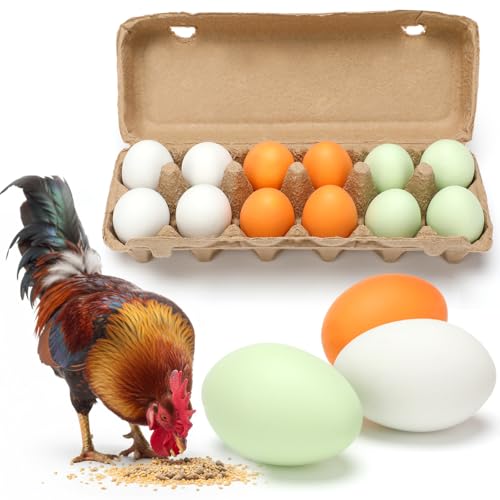
Ceramic Anti-pecking Nest Eggs: package includes 12 pcs ceramic nest eggs sized about 1.7 x 2.3 inches/ 4.2 x 5.8 cm each; Made of quality ceramic, they closely resemble real eggs in shape, size, and weight, effectively guiding hens to lay eggs in designated areas and helping breeders collect eggs more efficiently

Ceramic Anti-pecking Nest Eggs: package includes 12 pcs ceramic nest eggs sized about 1.7 x 2.3 inches/ 4.2 x 5.8 cm each; Made of quality ceramic, they closely resemble real eggs in shape, size, and weight, effectively guiding hens to lay eggs in designated areas and helping breeders collect eggs more efficiently

Practical Tips for Implementation
Successfully implementing dummy eggs requires attention to nesting box placement, positioning of the training eggs themselves, and consistent maintenance of the setup. You’ll want to secure fake eggs with wire through plastic eggs to metal mesh bottoms, positioning one per box to encourage consistent use. Before your pullets start laying, introduce these training eggs so they’re familiar with the location.
You should select quality nesting box materials like carpet-lined pans and 99% dust-free hemp bedding to promote hen comfort and egg protection. Additionally, providing grit for digestion will help your hens break down their food efficiently, complementing the nesting setup. Secure your dummy eggs firmly to prevent rolling in sloped designs. Monitor your flock’s usage patterns and adjust your box configuration as needed. One nesting box recommended for every 3-4 hens ensures adequate laying spaces throughout your coop. Regular bedding refreshes prevent moisture and mold while maintaining ideal laying conditions throughout the season.

Large Amount - 15PCS Wooden Fake Eggs (2.4 x 1.6 inches), with 3 different colors, each color 5 eggs,making them an ideal fit for kids to play or paint, catering to your diverse needs.

Montessori-Inspired Sensory Play - Step away from overstimulating electronics and return to pure, open-ended play. This set of 8 wooden eggs offers a grounding, tactile experience with a "just right" weight and smooth, sanded finish. These fake chicken eggs are perfect Montessori tools for practicing grasping skills, teaching object permanence, or serving as durable play food in a play kitchen. Let the warmth of natural wood nurture your child’s focus and sensory development

Long-Term Benefits for Flock Health
Beyond the immediate setup phase, dummy eggs deliver substantial long-term advantages that compound across your flock’s productive lifespan. You’ll notice reduced feather pecking incidents as nest-site consistency eliminates competition-driven stress around laying areas. Stable nesting behavior strengthens positive flock dynamics, minimizing aggression and injury that typically require veterinary health intervention. By preventing egg-eating from establishing as learned behavior, you sidestep cascading problems that spread through your flock. Seeing eggs in nesting boxes prompts chickens to imitate laying, encouraging consistent egg production across your entire flock. Furthermore, providing free-choice calcium supplements alongside a balanced diet supports overall hen health and optimal egg quality.
Behavior monitoring becomes straightforward when hens maintain predictable laying patterns. You’ll catch health issues earlier through consistent egg output, enabling prompt responses before conditions worsen. The cumulative effect—reduced stress, lower injury rates, and prevented behavioral disorders—translates to steadier production, improved feed conversion, and fewer disease pressures. Your flock’s overall resilience improves markedly.