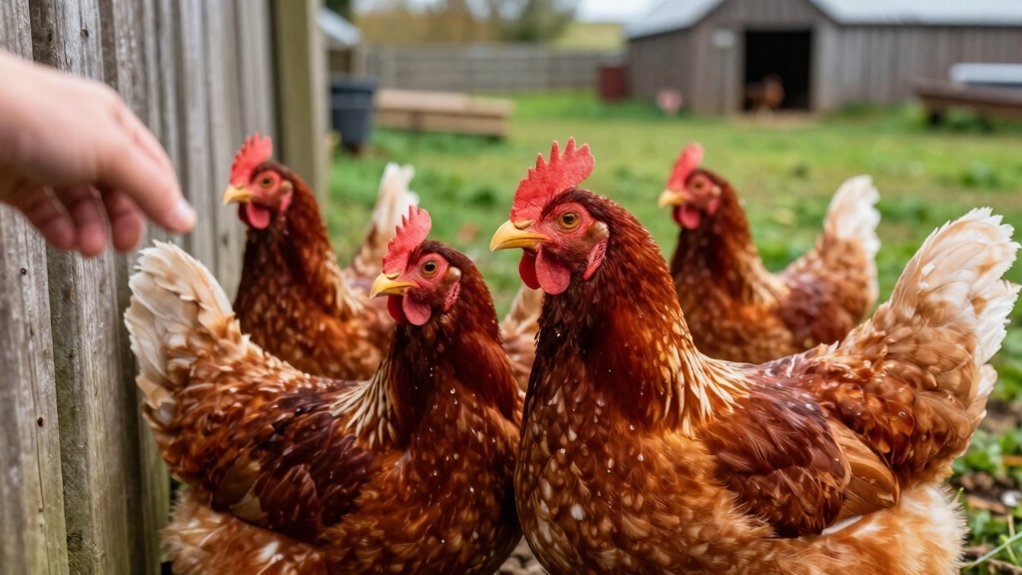
You’re probably wondering if Rhode Island Reds are friendly, and yes—they’re confident, social birds that bond quickly when you handle them early and consistently. Early gentle handling and daily calm contact turn their natural curiosity into head‑bob greetings, soft pecks for treats, and relaxed coop visits; they’ll hop onto perches near you and even nuzzle your hand. Just watch for occasional bossiness as they establish pecking order, especially with roosters, and give each bird at least four square feet to keep stress low. If you keep up with routine handling, you’ll see a calm, approachable flock that greets you like a familiar friend.
Why Are Rhode Island Reds Confident and Social?
Why are Rhode Island Reds so confident and social? You’re probably wondering why these birds strut around the yard like they own it. The answer lies in breed genetics that favor boldness and quick reactions, plus a natural foraging instinct that keeps them moving and exploring.
How do those traits shape flock dynamics? Because they’re wired for active foraging, they constantly scan for food, which makes them curious and chatty. Their confidence pushes them up the pecking order, yet their dominance stays moderate, so they mingle without overwhelming gentler breeds. This balanced temperament stems from their calm, friendly disposition, making them easy to handle despite their assertiveness. While generally sociable, owners must still monitor pecking order behavior to ensure harmony within the flock. However, this same assertive nature can become disruptive in small spaces or around very docile flockmates if adequate space is not provided.
What should you expect in everyday life? You’ll hear frequent clucks as they investigate new spots, and you’ll see them follow you around, keen for scraps. Their social confidence translates into a lively, engaged flock that thrives on interaction.
Takeaway: Their genetics and foraging drive create a bold, sociable bird that enriches any coop. Next, consider how early handling further shapes this friendly nature.
How Early Handling Shapes a Friendly Rhode Island Red Hen or Rooster
If you’re wondering why some Rhode Island Reds greet you with a calm cluck while others bolt at the sight of a hand, the answer starts with how you treat them as chicks. Early socialization is your secret sauce. You’ll notice calmer birds when you gently hold, hand‑feed treats, and spend time near them without forcing contact, especially during the first four weeks.
Here’s the thing: the developmental timeline matters. Around week 4 you can lower supplemental heat, add low roosts, and let them explore. By weeks 8‑12 you move outdoors once feathering is full and temperatures stay above 55 °F. Consistent, calm movement around them builds trust that lasts into adulthood.
All right, roosters need the same gentle exposure; otherwise they may turn assertive or aggressive. Frequent handling reduces fear and encourages a relaxed hen or rooster that will happily perch, be picked up, and accept hand‑feeding later. Since chicks purchased are often one to two days old and cannot regulate their own body temperature, starting this gentle handling routine while they rely on heat lamps is critical for establishing early trust. Many reputable hatcheries provide detailed care resources to help owners manage these fragile newly hatched chicks with confidence during this vital period. While building this bond, remember that these hardy birds typically begin laying eggs around 18 to 20 weeks of age, marking the transition from dependent chick to productive flock member.
Takeaway: start early, stay consistent, and follow the timeline, and you’ll raise a truly friendly Rhode Island Red. Next, ask yourself how those early habits will shape daily coop dynamics.
What Friendly Behaviors to Expect in Your Rhode Island Red Coop
You’re probably wondering what friendly habits you’ll actually see when your Rhode Island Reds roam the coop.
How do they greet you?
They’ll step forward, bob their heads, and perch near your feet as you enter. When you toss a few mealworms, expect rapid approach and soft pecking—hand feeding tips like offering a treat at eye level boost this trust. Hardy birds often approach without hesitation.
What happens during chores?
During coop cleaning interactions they stay calm, watching you refill waterers without fleeing. They’ll linger by the door, clucking softly, and may even hop onto a stool while you collect eggs.
How do they show affection?
Some birds crouch, let you pet their backs, or nuzzle your hand. Soft nuzzling and gentle pecking signal comfort.
Takeaway: Expect curious, steady presence, quick treat‑driven visits, and relaxed behavior during routine tasks. Next, consider how to keep the pecking order balanced.
When Friendly Becomes Bossy: Managing Pecking Order Issues
When you notice a once‑friendly Rhode Island Red suddenly blocking the feeder or chasing a coop‑mate, you’re witnessing the shift from curiosity to dominance. Here’s the thing: crowding triggers the change. If you have less than four square feet per bird indoors or eight outdoors, tension spikes and the pecking order tightens.
Why does it happen? New birds disrupt the hierarchy, and flock introductions need a visual‑only phase before mixing. A sudden addition or loss reshuffles ranks, so the former “nice” hen may start enforcing status with pecks and chases. While this behavior is usually meant to determine rank rather than cause harm, environmental stress can escalate these interactions into genuine attacks. Larger breeds require up to four square feet of indoor space to prevent the stress that fuels such aggression.
What can you do? Spread feed, water, and roosts across the run, give each bird ample space, and introduce newcomers gradually. Additionally, you should promptly isolate any injured or aggressive birds to stop the cycle of cannibalism outbreaks.
Takeaway: Give space, stage introductions, and watch the hierarchy settle. Next, ask yourself how to spot deeper health or nutrition issues when aggression persists.
How Hens and Roosters Differ in Rhode Island Red Temperament
One thing you’re probably wondering is why a hen feels like a gentle companion while a rooster can seem like a tiny guard dog. Here’s the thing: hens are usually calm, curious, and keen to explore, so they greet you with pecks that feel like friendly nudges. Roosters, on the other hand, show hormonal variability that can swing them from sweet to territorial, especially when you introduce strangers. This protectiveness issue means a rooster may flare up, puff his feathers, and guard his space, while a hen stays steady and sociable.
All right, you’ll notice the rooster’s dominance in the pecking order—he’ll perch higher, challenge intruders, and sometimes bully smaller birds. Hens, though confident, tend to be more steady companions, rarely overstepping the line. The key takeaway: expect a rooster to need extra caution and a hen to be easier to handle. Next, think about how you’ll introduce new birds to keep the flock harmonious. While Rhode Island Reds have their own social dynamics, observing breeds like the calm and gentle Orpington can provide a useful baseline for understanding how temperament varies across different chicken types. It is also helpful to remember that unlike dual-purpose breeds such as the Wyandotte known for consistent and quality brown eggs, Rhode Island Reds are primarily valued for their distinct personality traits alongside their production capabilities. Their reputation as dependable layers is bolstered by the fact that each hen is capable of producing 200–300 eggs annually, making them a favored choice for those seeking reliable egg production.
Pro Tips for Raising Calm, Approachable Rhode Island Reds
You’re probably wondering why a calm, approachable Rhode Island Red feels different from a rooster that’s always on guard. You’ll find that early handling, gentle daily contact, and short play‑time sessions teach birds to trust you, just like a puppy learns to enjoy petting. Their hardy traits make them resilient to harsher conditions and less stressed by environmental changes, which supports a more relaxed demeanor. Unlike some strains, the New Hampshire Red was specifically selected for rapid growth and vigor, contributing to a robust bird that adapts well to different management styles. Like other top choices for beginners, selecting breeds known for being friendly and hardy ensures a manageable and rewarding experience for new flock owners.
How much space do they need?
Give each bird at least four square feet of floor space; proper space allocation cuts tension and prevents pecking. Add perches, dust‑bathing pits, and foraging zones—coop enrichment that mimics natural activities keeps boredom at bay.
What routine builds trust?
Feed on a schedule, speak softly, and move slowly around the flock. Treat‑based training rewards calm behavior, and consistent health checks reinforce confidence.
Takeaway:
Combine generous space, varied enrichment, and predictable, gentle routines, and you’ll raise Rhode Island Reds that enthusiastically greet you. Ready to start a daily handling plan?