At eight weeks, your chickens have reached 60–80% adult size with thickened leg bones and upright posture. You’ll notice distinct personalities emerging and a pecking order developing as vocalizations shift from peeping to deeper clucks. They’re ready for outdoor living with proper predator-proofing and larger food/water stations. You’ll convert them from starter to grower feed at 16–18% protein while monitoring health through daily activity and droppings assessment. Understanding their specific needs during this conversion phase sets you up for success ahead.
Physical Development and Appearance
By eight weeks, your chickens have undergone dramatic physical changes that’ll help you assess their overall health and development. Your birds’ body size typically reaches 60–80% of adult proportions, with noticeably thicker leg bones and increasingly upright posture. Plumage changes progress markedly during this period, as primary down gives way to juvenile feathers with visible flight feathers on wings and tail. You’ll observe patchy feathering as contour feathers emerge, though back and breast achieve near-complete coverage before neck and wing tips finish. Feather color and pattern become more defined, though juvenile coloration may differ slightly from adult plumage. Weight variance between individuals remains common—faster growers appear noticeably larger within the same hatch. At this stage, your pullets are nearing adulthood and will begin the transition to their adult coop environment within the next few weeks. The keel bone becomes less prominent as muscle and breast tissue fill out, creating more adult-like proportions overall.
Moving to Your Outdoor Coop
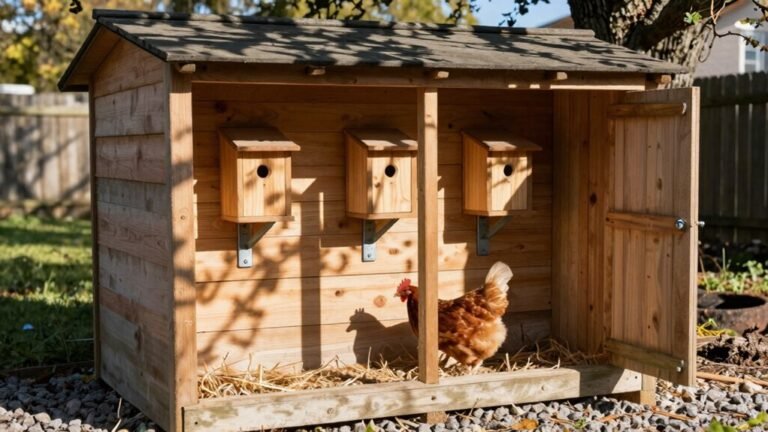
Once your chickens reach eight weeks with full feathering and actively exploring their brooder, you’re ready to move them outdoors. Your coop changeover succeeds when you’ve completed predator-proofing with hardware cloth and established proper bedding with premium shavings.
For outdoor readiness, install an automatic door and ladder for safe access. Position larger food and water stations in the run beneath the coop. Transport your chicks directly into the prepared space, introducing them via the ladder to their new home.
Provide immediate access to food and water inside the coop. Include familiar objects from their brooder to reduce anxiety during exploration. Blocking nest boxes with cardboard to prevent premature roosting habits is essential to developing healthy habits. It’s important to ensure that the coop meets the recommended 12 to 16 square feet of indoor space per hen guidelines to promote comfort and health. Monitoring and maintaining a balanced diet for your chickens during this transition will also support their wellbeing and growth. Monitor temperatures—at eight weeks in mild conditions above 65°F, supplemental heat isn’t necessary. Allow chicks time to acclimate to the new environment before providing full access to the outdoor run.
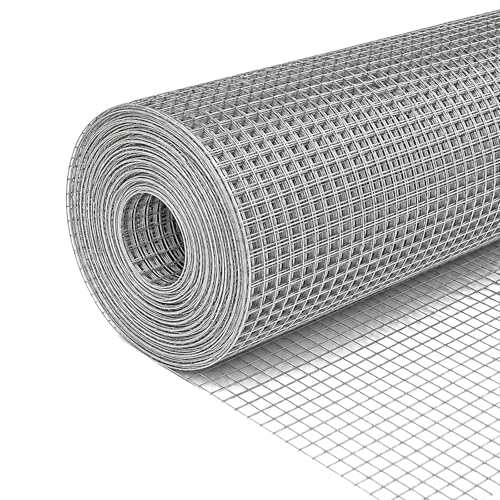
Hardware Cloth 1/2inch for Chicken Coop – 16 inch x 50 ft welded wire mesh made from 23-gauge galvanized steel hardware cloth. Provides reliable strength and flexibility for chicken wire fencing, garden protection, and general outdoor use

Prevent Predators:2 roll chicken coop predator proof apron total about 11-5/8in W x 65 ft L, expertly designed to effectively block predators.Extending the wire mesh to the bottom of the coop prevents predators from digging their way in

[Package Includes] - You will get 1 Roll of Hardware Cloth (available in 25FT/50FT) and a set of heavy-duty Zip Ties (Chicken Coop Not Included). A premium security part designed for Quictent and all standard poultry runs.
Adjusting Their Diet and Nutrition
As your eight-week-old chickens settle into their outdoor coop, you’ll need to modify their diet from starter feed to grower feed to support their changing nutritional needs. Begin your diet alteration at week seven by mixing 75% starter with 25% grower feed, gradually reaching 100% grower by week nine. This gradual change prevents digestive upset and verifies proper nutrient absorption. Grower feed contains 16-18% protein and 0.8-1% calcium—lower than starter but adequate for steady muscle and bone development. Properly balanced nutrition is crucial to supporting eggshell strength in future layers when they transition to layer feed. Additionally, selecting high-quality feed that is formulated for growth ensures your chickens receive the necessary nutrients for optimal health. It is important to note that chickens also require essential vitamins like A, D, E, and K, which are vital for their overall well-being. To further enhance their future egg production, consider offering oyster shells as a calcium source when they reach laying age. Avoid layer feed entirely; its high calcium content damages kidneys and bones in young birds. Your chickens consume approximately 0.25-0.5 lbs daily during this stage. Maintaining nutritional balance prevents both deficiencies and excess strain on their developing systems. Monitor leftover feed to adjust portions according to your flock size and ensure optimal consumption rates.

MEDICATED CHICK STARTER FEED: This complete chicken feed is made with added Amprolium to aid in the prevention of coccidiosis, and contains 18% protein for weight gain, our chicken food is essential for your young birds.

COMPLETE STARTER FEED FOR CHICKS: Specifically formulated for chicks from hatching to 16 weeks, this non-medicated chick starter feed delivers balanced nutrition and essential nutrients to support strong, healthy early growth and development.
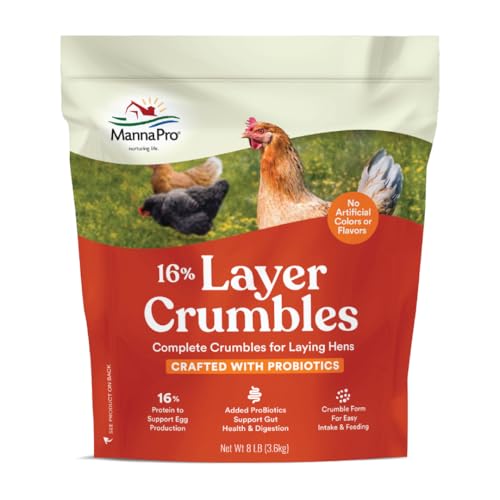
COMPLETE CHICKEN FEED FOR LAYING HENS: Manna Pro Chicken Feed delivers complete nutrition designed for laying hens, supporting strong egg production, healthy feathers, and overall wellness; balanced formula helps maintain optimal health in backyard flocks
Managing Temperature and Ventilation
Your eight-week-old chickens have developed their full feather coat and can now thermoregulate independently, which fundamentally changes how you’ll manage their environment. You’ll no longer need supplemental heat if your space maintains 60-70°F, or if they’re in steady 75°F conditions. Additionally, keeping their diet balanced with species-appropriate amounts of nutrients will further support their growth during this period. To maintain a consistent egg supply in the future, ensure that they are exposed to 14-16 hours of light daily, which supports their reproductive cycle.
For accurate temperature monitoring, place your thermometer at chick back level, approximately 50 mm above the litter. This gives you precise readings that match their experience. During this stage, ensuring that your chickens receive adequate calcium sources is essential for their strong bone development.
Ventilation importance can’t be overstated at this stage. Proper airflow keeps litter dry, preventing disease while promoting ideal growth and feed intake. Remove wet bedding promptly and guarantee adequate circulation to control ammonia and moisture buildup. Transition to 18% chicken grower feed at this point to support their continued development without overfeeding protein.
When your brooder temperature matches outdoor ambient conditions, you’re ready for coop shift. Maintain ventilation standards throughout to avoid developmental delays.

【8" Exhaust Fan】- Our shutter exhaust fan rapidly removes heat, humidity, odors, and dust from enclosed workspaces. Equipped with a high-speed motor, it ensures efficient ventilation while maintaining durability. ETL-listed with grounding protection to help reduce electrical risks and ensure safe operation

POWERFUL AIR VENTILATOR - 960 CFM, 115V, 0.6A, 1/20 Horse Power, 1650 RPM, Coverage up to 1400 square feet. Industrial ventilation fan with shutter. 12 Inch Variable Speed Shutter Exhaust Fan with automatic shutters

- Built-in 2500mAh Battery for Night & Cloudy Days: 25W Solar Panel + 2500mAh Battery – All-Day Power: Upgraded 25W high-efficiency solar panel charges 30% faster than standard 15–20W models—fully charged in about 4 hours of sunlight. Built-in 2500mAh battery supports 5–8 hours of night use and slow-charges even on cloudy days to prevent downtime. In extremely low temperatures, install the controller inside a shelter to prevent battery performance issues.
Understanding Behavioral Changes
By eight weeks, your chickens’ personalities become increasingly distinct as they develop social structures and independence from brooder life. You’ll notice the pecking order solidifies as dominant birds establish their status within the flock. Vocalization changes become apparent—deeper clucks replace early peeping sounds, and you’ll hear quiet cheeping indicating comfort or loud vocalizations signaling distress.
As part of supporting overall well-being, consider the impact of Vitamin E and selenium supplementation on their health and growth performance as they mature. It’s essential to ensure that they have access to a well-designed chicken coop that provides both protection and comfort, especially since a proper coop includes features like predator protection. In addition, incorporating nutritious treats like cooked edamame can contribute positively to their health when offered in moderation. Watch for behavioral shifts during changes. Content birds maintain consistent routines without disruption, while stressed individuals may show personality changes or altered feed consumption. Providing herbs like oregano can further enhance their immunity and overall health. Provide toys and objects to reduce boredom and prevent mutual pecking that stems from overcrowding or insufficient enrichment. Light and dark cycles will significantly influence their behavior, so maintaining consistent lighting schedules supports their adjustment to natural day-night rhythms and promotes sleep pattern stability.
Your flock’s roosting behavior becomes routine nightly practice, with birds hopping onto perches and preening before sleep. These behavioral developments reflect their rapid maturation and readiness for increased independence and supervised outdoor time.
Health Checks and Daily Care
Eight-week-old chickens require consistent monitoring to catch health issues before they become serious problems. You’ll perform routine health checks by inspecting combs, wattles, eyes, and nostrils for signs of illness or infection. Part their feathers to examine skin for mites, lice, or scabs, and palpate the crop and abdomen for abnormalities.
Daily monitoring involves observing activity levels, feed intake, and water consumption. Track their droppings for color and consistency changes—watery or bloody feces warrant immediate isolation and testing. Confirm clean, dry bedding and sanitize feeders and waterers daily to prevent disease transmission. Early detection of abnormalities through consistent stool assessment helps identify parasites, infections, and digestive issues before they spread throughout the flock. At this stage, you’re also evaluating their change readiness to outdoor housing once ambient temperatures match brooder conditions.