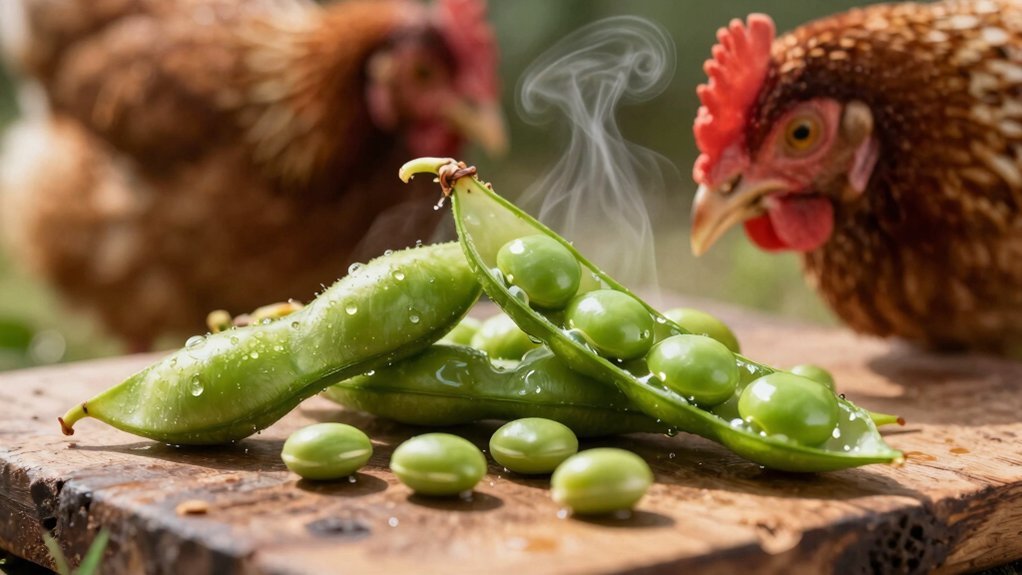
You’re right to wonder—raw edamame can’t toxins lectins and phytates that irritate a chicken’s gut, so you must cook it first. Boil plain, unsalted beans for 5‑7 minutes, cool, and offer a handful (10‑15 beans) once a week; that’s under 10 % of daily intake and won’t dilute calcium. Chickens will eat both pods and beans, but keep treats occasional and watch for soft droppings. Now you know the safe way to treat your flock, and the next step is learning the best mixing ratios.
Is Edamame Safe for Chickens? The Quick Verdict
So, you’re wondering if a bowl of edamame can join your flock’s snack list? Here’s the thing: plain, cooked edamame is generally safe for chickens when you keep portions modest. A handful (about 10‑15 beans) once a week won’t upset their diet, and the protein boost can aid gut health. Obviously, you should avoid salt, sauces, or oil, because additives can irritate the digestive tract and mask any allergy potential. Just as quinoa requires rinsing to remove bitter coatings before feeding, proper preparation of legumes ensures they are palatable and safe for your birds. All right, what about raw edamame? Raw soybeans often contain antinutritional compounds, so most poultry guides warn against feeding them uncooked. Even though edamame is young, the safest route is to steam or boil it first, which neutralizes those factors and reduces any hidden allergy risk. This aligns with the fact that natural toxins found in raw beans can be harmful or even fatal to poultry if not destroyed by heat. Specifically, beans contain phytohaemagglutinin lectins that are strictly dangerous to poultry unless eliminated through thorough boiling. Takeaway: Offer plain, cooked edamame in small amounts, watch for any signs of upset stomach or allergic reaction, and keep it a treat, not a staple. Ready to try a quick steam and see how your chickens respond?
Processing eliminates enzyme issues.
Raw vs. Cooked Edamame for Chickens: Nutrient Changes
If you’re puzzled why the same beans can look so different on a nutrition label, you’ve asked the right question.
How does water concentration change what you see?
Fresh or boiled edamame holds 70‑80 % water, so its protein reads about 11 g per 100 g. When you roast it, water drops below 5 %, and the same beans show 40‑46 g protein per 100 g. The protein isn’t created; it’s simply concentrated because the mass shifts from water to solids.
What do cooking effects do to fiber and fat?
Boiling keeps fiber around 5‑9 g per half‑cup and fat near 2‑3 g, while roasting squeezes those numbers up proportionally as moisture leaves. Fat isn’t added, but its percentage climbs with the lower water concentration. Just as lactose digestion issues in chickens require careful treat management to avoid bloating, understanding how processing alters bean composition helps prevent dietary imbalances. It is also vital to ensure any treats are offered without harmful additives like salt or spices to maintain safe feeding practices.
Takeaway
If you feed chickens, remember that raw or boiled beans give a moderate nutrient profile, whereas roasted beans look dramatically richer due to dehydration. Choose the form that matches the protein density you need, but ensure treats do not dilute the essential nutrients found in their balanced daily feed.
Next, you’ll want to learn which anti‑nutritional compounds might hide in raw edamame.
Anti‑Nutritional Compounds in Raw Edamame You Should Know
What makes raw edamame tricky for chickens?
You’re probably wondering why the same green pod that’s a tasty snack for you can cause trouble for your flock. Here’s the thing: raw soybeans pack trypsin disruption, which blocks the enzyme that breaks down protein, so your birds may bloat, gasp, or feel uncomfortable after a handful. Also, phytic acid creates mineral binding, latching onto iron, calcium, and zinc and keeping them out of the bloodstream. Just as pokeweed contains toxic oxalates that cause severe health issues in poultry, raw edamame relies on heat to deactivate its own harmful compounds. Like green potatoes which contain solanine causing digestive and neurological symptoms, raw edamame presents specific risks that require careful management before feeding.
How does that affect digestion?
Think of trypsin as a pair of scissors for protein; the inhibitor dulls the blades, leaving large pieces undigested. Lectins add another layer, causing red‑cell clumping and gut irritation.
What’s the practical takeaway?
If you feed raw edamame, limit the amount and watch for signs of digestive upset or mineral deficiency. Next, consider a simple cooking step to neutralize these antinutrients before offering it to your chickens. Just as raw or dried beans contain hemagglutinin that can be fatal to chickens, raw edamame requires similar caution due to its own toxic compounds.
How Much Edamame for Chickens Is Safe Without Unbalancing Their Diet
You’re probably wondering how many edamame kernels you can toss to your chickens without throwing off their diet. The thing is, treats should stay under 10 % of daily intake, so a few kernels per bird—maybe a handful for a large layer, a couple for a bantam—are enough.
Here’s the thing: limit portion limits to keep the dietary impact low. Offer edamame 1–2 times a week, not daily, and watch for reduced feed consumption or loose droppings.
Now, match the amount to bird size and stage. Young chicks need almost none; adult layers can handle a tiny snack. Since layer feeds typically contain 16-18% protein to support production, exceeding treat limits can dilute these essential nutrients.
Remember that scraps must only supplement a balanced layer feed rather than replace it to ensure proper nutrition. Overfeeding treats can lead to nutrient dilution which prevents hens from receiving the full benefits of their primary diet.
Takeaway: small, occasional servings keep edamame a fun treat without unbalancing nutrition. Next, learn how to prepare plain, unsalted edamame for your flock.
Preparing Plain, Unsalted Edamame for Your Flock
You’re probably wondering if you need to cook edamame before tossing it to your chickens, and why salt matters.
How do I make it safe for them?
First, grab frozen or fresh pods with no added seasoning. Boil them in plain water—unsalted boiling works best—until the beans soften, about 5‑7 minutes. Drain, cool, and you can serve the pods whole or shell the beans; both give a fun foraging treat. While this snack is enjoyable, remember that their primary nutrition must come from a quality layer feed to ensure they receive adequate protein and calcium for egg production. Since edamame lacks the specific 3-4.5% calcium levels required for strong eggshells, it should never replace a complete commercial diet. Additionally, always ensure your flock has consistent access to fresh water, which is a fundamental part of a healthy feeding regimen alongside any treats.
What amount should I give?
Start with a small serving portion, roughly a handful per bird, and watch how they eat. If they ignore the pods, just offer the shelled beans.
Takeaway
Plain, unsalted boiled edamame is a simple, nutritious snack. Offer modest portions, keep it salt‑free, and you’ll have a happy, healthy flock.
Best Ratios & Timing for Adding Edamame to Complete Feed
If you’re wondering how much edamame you can safely mix into a complete feed, you’ve asked the right question. You should keep edamame within the protein portion, not displace grains or minerals. A solid starting point is a 24 % edamame inclusion, similar to a backyard ration that also uses peas, brown rice, and wheat in equal parts. This hits roughly 20 % protein, which fits starter and grower targets when you add a calcium source like oyster shell. Now, for the feed changeover, start with 75 % existing feed and 25 % edamame mix for 2–3 days, then move to 50/50, then 75/25, each step lasting a few days. This gradual shift lets birds adjust without digestive upset. While edamame provides protein, remember that commercial broiler diets typically require around 22% protein with specific calcium-to-phosphorus ratios to support rapid growth efficiently. Unlike heritage breeds, modern commercial broiler chickens are genetically selected for such fast growth that their skeletal systems often struggle to keep pace with their muscle development. Maintaining cleanliness in the feeding area is also essential to prevent disease and support the overall welfare of your flock. Takeaway: Use about a quarter of the mix for edamame and phase it in slowly. Next, watch for any signs of digestive trouble after the changeover.
Spotting Digestive Trouble After Edamame Treats
Spotting digestive trouble after edamame treats can feel confusing, especially when you notice subtle changes in your flock’s behavior.
How do I know if the crop is blocked?
Now, watch the crop each morning. If it stays full past sunset, that’s abnormal and may signal crop impaction. A soft, squishy crop that smells sour or yeasty means fermentation and possible blockage. This condition often stems from a yeast infection known as sour crop caused by Candida albicans, which thickens the crop wall and prevents normal emptying. Other signs include decreased appetite, lethargy, weight loss, ruffled feathers, and decreased egg production.
What droppings should raise alarm?
All right, loose, watery droppings or anything that sticks to the vent are early red flags. Abnormal droppings that contain blood, undigested bits, or a coffee‑ground texture point to intestinal irritation or disease.
When should I act?
Obviously, if the crop stays swollen for a day, appetite drops, or droppings stay abnormal, call a vet. Quick action prevents weight loss, dehydration, and severe illness.
Takeaway: monitor crop emptiness and droppings daily; intervene fast if anything looks off.
The crop serves as a temporary holding tank where food can be sorted before it reaches the stomach.
Avoid These Common Mistakes With Edamame (Salt, Seasonings, Mold)
All right, you’re probably wondering why a few extra grams of salt or a sprinkle of seasoning could turn a tasty edamame treat into a health hazard for your chickens. Salted shell feeding quickly raises sodium levels, which can thin egg shells and stress kidneys. Even a pinch of garlic or chili can upset their delicate digestive tract, and oily sauces add unnecessary calories.
What happens if mold shows up? Moldy pod ingestion introduces toxins that can cause respiratory distress or organ damage. Damp storage invites spores, so keep edamame dry, refrigerate promptly, and discard any soft or fuzzy pieces.
Takeaway: Feed only plain, unsalted, fully cooked edamame, and toss anything that looks or smells off. Next, decide whether you’ll serve it fresh or frozen—both work, just stay simple.
Do Chickens Eat Edamame Pods, Beans, or Both?
Do chickens eat the pod, the beans, or both? You’re probably wondering which part gives the most benefit without causing pod digestion issues. Here’s the thing: chickens love to peck the soft green beans because they pack protein, healthy fats, and easy‑to‑digest nutrients. They’ll also peck the fuzzy pod, which adds fiber and crunch, helping pod waste reduction in the coop.
What’s the best way to serve it? Offer whole edamame so they can pull out beans while crunching the pod. Light steam or boil for 3‑5 minutes; cooking softens both parts, lowers phytic acid, and kills bacteria.
Takeaway: Give a modest handful of whole, lightly cooked edamame a few times a week. This lets your flock enjoy beans and pods, boosts nutrition, and keeps waste low. Ready to try a small batch and watch their reaction?