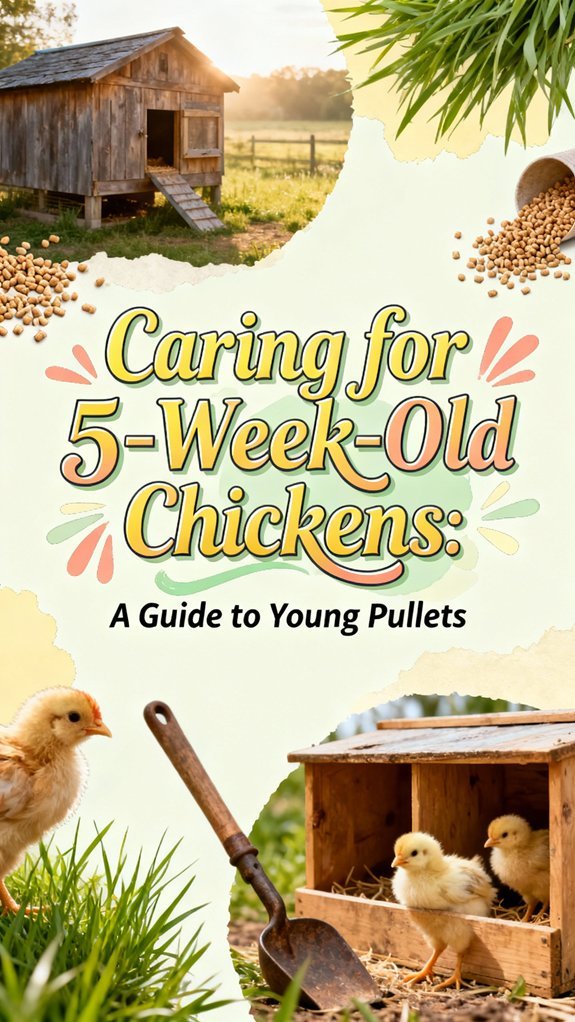
At five weeks, you’re managing critical shifts in temperature, nutrition, and housing. Maintain 75°F baseline temperatures while observing flock behavior for readiness to reduce heat. Switch gradually to 16-18% protein grower feed and guarantee predator-proof housing with hardware cloth and buried perimeters. Monitor daily health through comb color, droppings, and activity levels. Introduce roosting surfaces and enrichment to support behavioral development. Understanding these interconnected factors—temperature, nutrition, biosecurity, and social dynamics—determines whether your pullets thrive during this pivotal growth stage.
Temperature Management and Heat Lamp Transition
As your 5-week-old chickens approach full feathering, you’ll need to carefully manage their move away from supplemental heat by monitoring both temperature schedules and behavioral cues. At this stage, target approximately 75°F (24°C) as your baseline temperature indicator. Observe your flock’s distribution: huddling signals cold, while edge-clustering indicates overheating. Evenly dispersed birds confirm comfort.
Implement gradual heat adjustment rather than abrupt removal to minimize stress and mortality. Raise heat lamps incrementally or lower radiant plate temperatures over several days. Watch for consistent normal activity away from heat sources during both day and night—this signals adequate thermoregulation readiness. During colder months, be aware that chicks may need up to 12 weeks in the brooder before they’re ready for outdoor conditions. Additionally, ensuring that they have sufficient artificial light exposure can help maintain their health and encourage egg production later on.
Verify nighttime temperatures remain above 70–75°F before complete heat removal. Place your thermometer at chick-back height for accurate ambient readings. Full wing and body feathering, combined with absence of chronic huddling or lethargy across your flock for 24–48 hours, confirms successful move readiness.

THERMOMETER FOR GREENHOUSE AND GARDENING ENTHUSIASTS: Max min greenhouse thermometers are often used by gardeners as greenhouse accessories, and for the allotment or garden to monitor minimum temperatures during the colder months when frost can be a huge problem and also to keep an eye on the maximum temperature during the warmer months

Universal Compatibility – Designed to work seamlessly with all GQF box brooders for easy integration

Housing and Space Requirements for Growing Pullets
By week 5, your pullets’ rapid growth demands a reassessment of their living quarters—both regarding physical space and environmental design. Allocate at least 1.0 square foot per bird inside your brooder design, with access to larger run areas for exercise. Guarantee your coop layout incorporates secure hardware cloth fencing and buried perimeter barriers against predators. Additionally, ensuring predator-proof environments is essential for the safety of your growing flock. Chickens, such as Dorking and Silkie breeds, are known to have five toes, illustrating the genetic diversity within poultry species. It’s also crucial to provide adequate coop space for your pullets as they grow, as more space supports their health and happiness. Install ventilation near eaves to manage ammonia without creating low-level drafts. To support their growth and egg production, ensure they have access to balanced layer feed rich in essential nutrients. For flooring options, use 2–3 inches of pine or hemp bedding—avoid cedar’s respiratory toxins. To support healthy digestion, consider providing grit which helps chickens grind their food effectively. Maintain sanitation practices through daily spot-cleaning and regular full bedding replacement to prevent coccidia and ammonia buildup. As chicks continue growing, reduce brooding temperatures by 5°F each week until they reach room temperature, allowing them to acclimate gradually to cooler conditions. Proper chick integration into grow-out space reduces crowding stress and promotes healthy feather development.
Nutrition and Feed Transition at Five Weeks
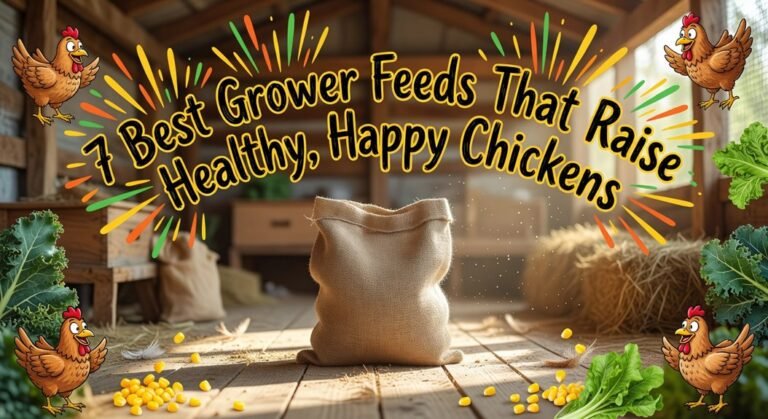
At five weeks, your pullets’ nutritional needs remain demanding, though you’re approaching a critical alteration period. You should continue providing starter feed with 20% protein to support rapid growth and bone development. However, you’re entering the transition window where you’ll begin shifting toward grower feed types containing 16-18% protein. This gradual alteration prevents nutritional shock while accommodating your pullets’ slowing growth rate. Grower feed maintains essential amino acids for muscle development without excessive calcium that damages kidneys in young birds. It’s essential to keep chickens safe from predators and ensure their environment is secure, as snakes often enter coops attracted by rodents or accessible food. Quality grower feeds often include balanced protein levels from a mixture of grains and protein sources, enhancing their overall nutrition. Furthermore, selecting a grower feed that meets your chickens’ specific needs can ensure they receive nutritional formulations tailored for their age and breed.
It’s important to note that the diet of chickens must balance their proteins while ensuring they receive adequate calcium to support overall health. Introduce the new feed types gradually over several days, mixing increasing proportions with starter feed. Consider supplementing with Backyard Boost during this transition to prevent feeding issues and support continued healthy development.
Ensure your feed contains balanced minerals—calcium, phosphorus, and magnesium—plus vitamins A, D3, and E for ideal skeletal development. Provide fresh water constantly, as hydration supports nutrient absorption and metabolic functions during this critical growth phase.

TAILORED FOR BROILERS: Our organic chicken feed is specifically designed for growing chicks beyond 4 weeks of age. Our chicken grower feed is enriched with probiotics, and contains a carefully balanced blend of protein, vitamins, and minerals to promote the development of healthy bones and feathers from chick to hen.


A Complete Feed Specifically Balanced for Pastured Poultry
Daily Health Monitoring and Common Issues
Because five-week-old pullets can deteriorate rapidly without intervention, you’ll need to conduct thorough health assessments daily. Inspect posture, feather condition, and comb coloration for signs of illness. Pale or bluish combs indicate anemia or respiratory distress respectively. Additionally, ensuring that coops are securely maintained protects young chickens from predator threats, which can cause stress and harm. At this age, starting to prepare them for outdoor transition is also essential for their development and well-being. Keeping their environment free of lice and mites is crucial for their overall health.
Monitor feed and water consumption closely—decreased intake signals early illness or stress. Observe for lethargy, isolation, or abnormal gait, as these precede visible clinical signs. Watch breathing patterns; open-mouthed breathing or tail bobbing indicates respiratory disease. Early detection through regular health checks significantly improves survival rates in developing flocks.
Examine droppings daily for watery, green, or bloody consistency, which suggest coccidiosis or enteritis. Check vents for pasting and assess hydration using the skin-tent test.
Verify brooder temperature, ventilation, and bedding moisture twice daily. Clean contaminated feeders and waterers promptly. These illness prevention practices protect your developing flock from preventable disease.

Advanced Predator-Eye Deterrent Technology: Stop nighttime invaders before they breach your perimeter. This coyote deterrent uses powerful, flashing red LEDs to simulate the glowing eyes of a larger predator, instantly triggering a flight response in coyotes, raccoons, foxes, and skunks. It provides 24/7, non-lethal protection for chicken coops, gardens, and yards—no traps, chemicals, or harm required.
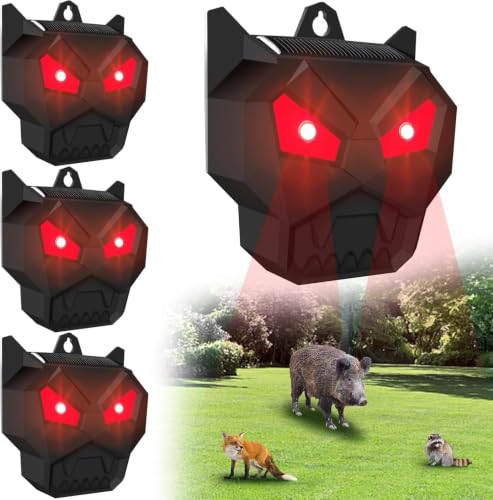
[Unique Design] solar predator deterrent Flashing Lights adopts a unique design and is equipped with dual red LED lights. The dual strobe lights imitate the fire and eyes of large predators to warn intruders to stay away from the protected areas by flashing red lights. It will flash all night to protect your property.
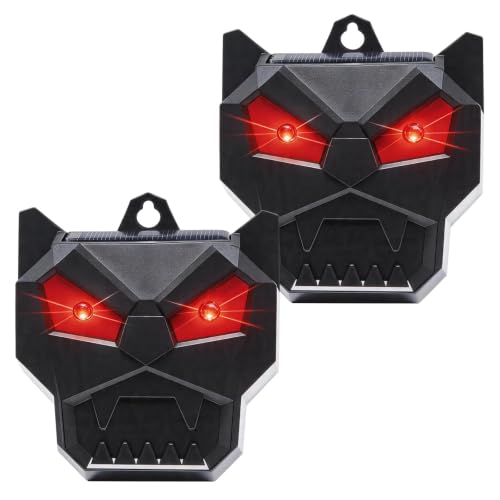
[Unique Design] solar predator deterrent Flashing Lights adopts a unique design and is equipped with dual red LED lights. The dual strobe lights imitate the fire and eyes of large predators to warn intruders to stay away from the protected areas by flashing red lights. It will flash all night to protect your property.
Behavioral Development and Enrichment Activities
As your five-week-old pullets develop stronger bodies and increased thermoregulatory independence, you’ll notice marked behavioral shifts that reflect their progression toward juvenile social structures. During this critical phase, dominance hierarchies solidify through subtle behavioral cues—approach-retreat patterns, brief pecks, and resource displacement—that can escalate if space or enrichment prove inadequate. To enhance their engagement, consider incorporating DIY toys that provide both mental and physical stimulation for your flock. Ameraucana chickens, known for their unique blue eggs, can also serve as an appealing addition to your backyard setup.
You’ll observe sex-based differences emerging, with males displaying larger combs and earlier assertive behaviors. To support healthy development, provide foraging enrichment through scattered feeding and hanging treats, physical enrichment via low perches and ramps, and object enrichment such as pecking balls and safe wood blocks. Rotating enrichment items and creating retreat zones mitigates stress-driven pecking while promoting natural exploration and social learning within your flock’s developing social hierarchies. Individual personality differences will become increasingly apparent, with some pullets displaying independent tendencies like Popsicle Sunshine’s loner nature, while others remain more socially integrated within the group.

Comfortable Perch Haven --- Built from high-quality wood and exceptional sturdiness, Wooden Perch for Small Animals and Parrots by SunGrow provides a secure spot to rest...
Roosting and Social Development
By five weeks of age, your pullets’ full feathering and improved thermoregulation create ideal conditions for shifting from brooder litter to elevated roosting surfaces. You’ll notice they naturally seek low perches for settling behavior at dusk. Additionally, maintaining a clean environment around the coop can help prevent attracting rodents and snakes, which could pose a risk to your flock.
Provide multiple narrow, textured perches spaced 6–8 inches apart to accommodate hierarchy-driven preferences and prevent crowding injuries. Position roosts away from nest boxes to discourage soiling and nesting confusion. Regular inspection and maintenance of these roosting surfaces are essential to prevent splinters and bumblefoot injuries that can compromise flock health.
Pecking dynamics shape roost selection; dominant birds claim higher positions while subordinates occupy peripheral or floor spaces. Insufficient roosting options intensify displacement stress and injuries. Train roosting through consistent dusk placement in darkened areas for several consecutive nights, using intermediate steps or ramps rather than forcing high jumps.
Predator Protection and Biosecurity Measures
While establishing roosting behaviors prepares your pullets for independent shelter-seeking, their growing autonomy demands rigorous predator defenses and biosecurity protocols. You’ll need hardware cloth (1/4″ to 1″) for all openings—chicken wire won’t stop raccoons, weasels, or snakes. Bury cloth 12″ around perimeters or install aprons to prevent tunneling. Incorporating strong materials such as this is crucial for effective protection. Secure doors with raccoon-proof latches, not simple hooks.
Your deterrent strategies should include overhead coverage to block aerial predators. Electric fencing provides effective perimeter protection against canines and foxes. Add low cover like shrubs for immediate shelter opportunities, improving predator visibility avoidance during foraging. Consider utilizing flock guardian animals such as roosters or geese to provide additional vigilance and alert your pullets to potential threats.
Lock pullets in predator-proof housing at night until fully feathered. Inspect closures daily for gaps, damaged wire, or entry evidence. Implement consistent coop-training routines to establish safe nighttime habits.

Industrial-Grade Hot-Dip Galvanized Protection: Unlike flimsy cold-galvanized wire, our hardware cloth is double-dipped in molten zinc, creating a 3x thicker coating that resists rust, scratches, and UV damage. Perfect for coastal areas, snowy climates, and humid gardens

DUAL LAYER PROTECTION – GALVANIZED + PVC COATED HARDWARE CLOTH: This black hardware cloth / black chicken wire fencing is built with hot-dip galvanized steel wire and PVC coating, providing dual protection against rust and corrosion. Stronger than standard chicken wire, chicken wire mesh, and coated chicken wire, making it ideal for long-term outdoor use.

Material and Size Specifications: Precision-engineered for versatility, this black vinyl-coated hardware cloth delivers robust performance. Each roll measures 48 inches wide by 100 feet long, featuring 1/2-inch x 1/2-inch mesh openings and a sturdy 19-gauge wire. The durable black vinyl coating adds an extra layer of protection against rust, UV rays, and wear, ensuring long-lasting service in any outdoor setting.
Planning the Move to Adult Housing
Your 5-week-old pullets won’t be ready for the adult flock yet, but you’ll need to begin planning their movement to larger housing within the next few weeks. Timing considerations are critical: wait until pullets reach 12-14 weeks before full flock integration. At their current age, shift them to a grow-out pen for at least 30 days of isolation from your main flock. Position this transitional housing adjacent to your established run to facilitate visual contact.
Your integration strategies should include gradual exposure through fencing, allowing both groups to acclimate. After the isolation period, tend your main flock first, then newcomers, followed by a clothing change and handwashing to prevent disease transmission. Always introduce at least two new birds simultaneously to ensure better integration and reduce stress on individual pullets. This methodical approach guarantees successful, stress-free integration when pullets reach appropriate maturity.