You won’t develop a chicken lice infestation because these parasites can’t survive on humans. They’ve evolved specialized mouthparts for gnawing feathers and skin scales, not piercing human skin like human lice do. Chicken lice depend on a diet of feathers and dead skin, which your body doesn’t provide. Their digestive enzymes target avian keratin specifically. While you might experience temporary itching from brief contact, they’ll die within hours off a bird host. Understanding why this species-specificity exists reveals fascinating details about parasite-host relationships.
Understanding Chicken Lice Species-Specificity
Because poultry lice have evolved alongside their avian hosts, they’ve become exquisitely specialized parasites that can’t readily infest mammals, including humans. This host specificity stems from coevolutionary relationships that have finely tuned louse mouthparts, claws, and life cycles to avian feather structure and behavior. You’ll find that most poultry lice species—such as *Menacanthus stramineus* from the Menoponidae family—feed exclusively on one or a few closely related bird species rather than crossing to humans. Louse evolution has produced anatomical and behavioral adaptations incompatible with mammalian skin. Accurate species delimitation within Menoponidae requires microscopic or genetic analysis due to morphological similarity among bird-associated species, reflecting their specialized ecological niches. Chicken lice do not infest humans or pets due to these fundamental biological and physiological differences between avian and mammalian parasites. Furthermore, effective mite control methods are essential for the overall health of poultry flocks and the management of their living environments.
The Physiological Differences Between Chicken and Human Lice
While chicken and human lice share the taxonomic classification of Phthiraptera, they’ve evolved fundamentally different physiological structures that reflect their distinct hosts and feeding strategies. You’ll observe that chicken lice possess chewing mouthparts adapted for gnawing feathers and skin scales, whereas human lice feature piercing stylets designed exclusively for blood extraction. Chicken lice measure 3-3.5 mm with dorso-ventrally flattened bodies displaying yellowish or brown coloration, contrasting human lice’s narrower 2-3 mm frames and grayish-white appearance. Additionally, effective treatments for chicken lice can prevent infestations and promote healthy feathering. These morphological adaptations directly support their host-specific ecological niches. Chicken lice maintain uniform coloration independent of feeding status, while human lice darken when engorged. These physiological distinctions represent critical host specific traits preventing cross-species parasitism and ensuring each louse species survives exclusively on its evolutionary host. Additionally, regular treatments with poultry-safe products can help maintain chicken health and mitigate lice infestations. Understanding how to treat chicken lice infestations is crucial for effective prevention and management. Early detection of chicken lice through regular physical examinations helps prevent larger outbreaks before infestations become severe enough to impact flock health.
Dietary Requirements: Feathers Versus Blood
The morphological distinctions you’ve learned about directly shape what chicken lice can and cannot consume. Chicken lice exhibit pronounced feather dependency, relying primarily on feathers, dead skin tissue, and emerging pinfeathers as their nutritional foundation. Their chewing mouthparts aren’t designed for piercing skin like blood-sucking parasites; instead, they’re adapted for gnawing dry scales and scab tissue. In comparison to other pests, diatomaceous earth can be an effective method to control infestations in chickens. Additionally, using DE can help manage these external pests while providing beneficial trace minerals that may support the overall health of your chickens.
While blood feeding does occur, it remains secondary to their feather-based diet. Chicken lice access blood only through damaged skin or actively bleeding pinfeathers—not through direct skin puncture. This fundamental dietary distinction separates them from true blood-feeding parasites. In contrast, mites feed on blood, causing anemia in their avian hosts through direct skin penetration. Notably, heavy infestations of mites can lead to significant health issues for chickens, but without feathers or accessible blood sources, chicken lice cannot sustain themselves effectively on human hosts. Additionally, understanding the legalities of backyard chickens feeding practices can help inform chicken keepers about their management strategies.
Why Chickens Lice Cannot Infest Humans
Despite their occasional presence on human skin, chicken lice cannot establish sustainable infestations on people because they’re fundamentally adapted to avian hosts. Through lice evolution, these parasites developed specialized morphologies incompatible with human biology. Their mandibles, structured for chewing feathers and poultry skin debris, cannot penetrate your epidermis effectively. Poultry adaptations include digestive enzymes tailored exclusively to avian keratin, rendering human tissue nutritionally inaccessible. Your smooth integument lacks the feather structure necessary for lice to grip and deposit eggs. Additionally, these pests thrive in specific environmental conditions that are not present on human bodies. Effective treatments for chicken lice include natural methods like diatomaceous earth, which chickens utilize in their dust bathing behavior to help control infestations. The mating behavior of chickens is also crucial for maintaining a healthy flock, as it ensures the production of fertilized eggs. Meat birds require optimal environments for development, while temperature differences and unsuitable hair architecture further prevent nit adhesion. Without continuous avian host contact, nymphal development halts completely. Your body simply doesn’t provide the environmental triggers required for their reproductive cycle completion, ensuring immediate infestation cycle termination. Regular inspections of chicken coops help identify early signs of lice before they spread to other birds in your flock, including feather damage which is a common clinical sign of infestation.

100% Food-Grade & Safe – Free from additives and chemicals, ensuring a pure and natural product.

Supports Healthy Feathers & Skin: This 20-pound bag is made with food-grade diatomaceous earth and calcium montmorillonite clay, this dust bath absorbs excess oils, keeping your flock’s plumage clean.

Natural Product - Composed of 4lbs of 100% ground freshwater diatomaceous earth with absolutely no additives or fillers.
Off-Host Survival: How Long Can Chicken Lice Last?
Since chicken lice can’t establish infections on your skin, understanding their survival capacity away from avian hosts becomes vital for effective pest management. Off-host survival varies greatly—you’ll find estimates ranging from 24 hours to 7 days, depending on species and life stage. Adult lice typically persist longer than nymphs, while eggs attached to feathers remain viable until reattached to a bird. In contrast, the use of ivermectin pour-on is recommended for effectively treating lice infestations in chickens. To ensure a thorough eradication, consider implementing natural desiccant dusts during your cleaning process.
Environmental factors greatly influence persistence. Moderate temperatures and higher humidity extend survival by reducing desiccation risk, whereas dry conditions and extreme temperatures accelerate mortality. Porous materials like bedding and cloth provide shelter longer than smooth surfaces. Direct sunlight expedites death. This survival window matters importantly for your disinfection strategy: plan your laundering and housing treatments within seven days to prevent fomite-mediated re-infestation. Regular follow-up treatments may be required for comprehensive control of lice populations across your flock.
The Life Cycle of Poultry Lice
Understanding poultry lice reproduction requires examining their complete developmental sequence, which unfolds entirely on a single host bird over approximately three weeks. You’ll observe the life cycle progressing through three distinct phases: egg, nymph, and adult stages.
Females deposit 1-4 eggs daily, cementing them to feather shafts as nits. These hatch within 4-7 days into nymphs prepared to feed immediately. You’ll notice three nymph stages occur consecutively, each lasting 3-4 days with molts between them, totaling 9-12 days for maturation.
Adults emerge ready to reproduce, living 12-14 days while consuming feathers, dead skin, or blood. Each female produces 50-300 eggs throughout her lifespan. Warmer, humid conditions accelerate this developmental timeline, enabling rapid infestation spread across your flock. This host specific nature of chicken lice means they cannot survive on humans or other animal species, making cross-species transmission impossible.
Comparing Human Head Lice to Chicken Lice
Though you might worry about contracting lice from your flock, chicken lice and human head lice remain strictly host-specific parasites incapable of cross-species transmission. The human lice comparison reveals fundamental physiological differences. Chicken lice measure 3-3.5 mm and possess mouthparts adapted for chewing feathers, while human head lice feature structures suited for scalp attachment and blood feeding. Research on chicken lice also indicates that these creatures are highly specialized for their avian hosts. These chicken lice differences extend to dietary requirements: chicken lice consume feathers and minimal blood, whereas human lice depend entirely on human blood for survival. Habitat preferences diverge similarly—chicken lice inhabit feather structures across the body, while human lice exclusively colonize scalp hair shafts. Additionally, chicken lice are species-specific parasites that cannot adapt to human hosts regardless of prolonged exposure. You’ll find that chicken lice die rapidly without avian hosts, unable to feed or reproduce on human tissue, ensuring your safety remains uncompromised.
Bird Mites: The Real Concern for Poultry Workers
While chicken lice pose no threat to you as a poultry worker, bird mites represent a genuine occupational hazard demanding your attention. Poultry mite prevalence reaches up to 500,000 mites per bird in severe infestations, creating significant dermatological risks. You’re exposed to gamasoidosis through rapid bites occurring in less than one second during handling and egg collection. A 19% incidence of contact dermatitis among European poultry workers confirms these occupational hazards’ severity. Mites survive up to eight months without feeding, persisting in complex housing systems despite host removal. With an estimated average infestation rate of 83% to 94% in European layer houses, the widespread prevalence of these parasites amplifies your exposure risk across facilities. You’ll develop tolerance over time, though this masks ongoing risk. Implement proper PPE, frequent facility cleaning, and medical surveillance to mitigate exposure.
Signs of Chicken Lice Infestation in Your Flock
How can you identify chicken lice before they devastate your flock? You’ll observe infestation symptoms across multiple indicators. Inspect feathers for nits clustered at bases, particularly around vents and wings. You’ll notice dull, ragged plumage and visible crawling lice moving rapidly through feather shafts. Examine skin for redness, scabs, and bald spots from excessive feather pulling.
Behaviorally, you’ll detect increased scratching and preening, accompanied by lethargy and restlessness. Your birds may show decreased activity and withdrawn demeanor. Unlike human head lice, chicken lice are not transmissible to humans, so you can handle infected birds without risk of personal infestation. During molting, natural feather loss can exacerbate the visibility of lice infestations. Regular monitoring of your flock can help in early detection, allowing you to control lice infestations effectively.
Health impacts signal advanced infestation: pale combs and wattles, weight loss, reduced egg production, and weakened reproductive capability in roosters.
For effective flock management, conduct thorough inspections during daylight hours, prioritizing vent and thigh regions. Early detection prevents severe performance decline and mortality rates.
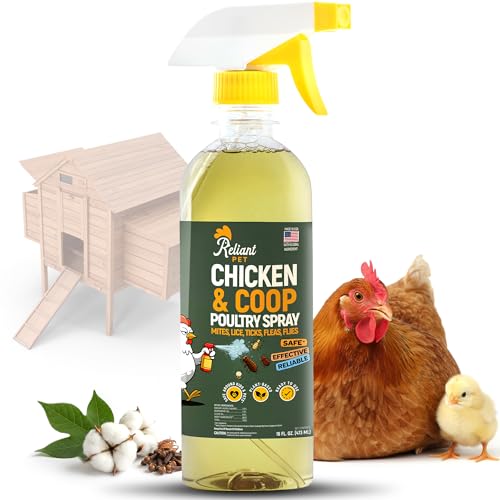
SAFE & EFFECTIVE: Our plant-based chicken mite spray delivers powerful punch without the harsh chemicals found in traditional poultry sprays. Safe to use around your entire flock when used as directed, this gentle formula is tough on mites, lice, fleas, and flies - making it the smarter, safer choice for backyard chicken keepers, small farms, and homesteaders who want real results without the risks

NATURAL AND NON-TOXIC FORMULA: Made from natural essential oils, Premo Poultry Spray is a safe alternative to harsh chemicals like permethrin and mite dusts. Veterinarian and farm approved. Apply directly on all poultry. Treat your entire flock, pens, roosts, coops, nest boxes, and yards. Enjoy peace of mind knowing that your chickens and other poultry is protected naturally and safely

NATURAL AND NON-TOXIC FORMULA: Made from natural essential oils, Premo Poultry Spray is a safe alternative to harsh chemicals like permethrin and mite dusts. Veterinarian and farm approved. Apply directly on all poultry. Treat your entire flock, pens, roosts, coops, nest boxes, and yards. Enjoy peace of mind knowing that your chickens and other poultry is protected naturally and safely
Protecting Your Health When Handling Infested Poultry
Because chicken lice can’t establish infestation on humans, many poultry keepers assume handling infested birds poses no health risk—a misconception that underestimates the parasites’ defensive behavior. While lice won’t colonize your skin, they’ll bite exposed areas, causing itchy red marks and potential secondary infections through scratching. Additionally, chickens may show signs of mite infestations, such as excessive scratching and preening, indicating a possible co-infestation risk. Ensuring that your poultry bedding, such as straw bedding, is kept clean and dry can further minimize the risk of lice and mites. Moldy feed, which can attract pests, should also be avoided to maintain overall poultry health. Regularly checking for ear mite symptoms is also important for early detection and treatment. Furthermore, keeping poultry in good health helps reduce stressors that may increase the likelihood of immune system reactions.
Implement protective clothing measures by wearing nitrile gloves, long-sleeve shirts, boots, and trousers during bird handling. This barrier prevents parasites from accessing your skin. Establish hygiene practices immediately post-handling: shower thoroughly to remove any lice from your body, and wash contaminated clothing separately. These practices eliminate parasites before they die naturally on your skin, reducing discomfort and infection risk. Since adult lice live around 12 days, they cannot survive prolonged periods away from their avian hosts. Proper protective equipment and decontamination protocols are essential for safe poultry management.

Premium Food Nitrile Gloves: Designed for sensitive skin, these disposable gloves are latex-free, making them ideal for anyone with latex allergies. Powder-free and food safe, they are suitable for food prep. At 2.5 mil thick, these gloves are thin for dexterity yet durability to handle everyday light-duty tasks

These Inspire gloves are designed for BOTH medical and industrial use. Both exam-grade and durable 6-mil thickness, they are ideal for medical and industrial applications. These gloves are suitable for healthcare settings, laboratories, industrial environments, and household tasks.

HEAVY-DUTY: Our 6-mil thick nitrile gloves are more chemical-resistant & puncture-resistant than latex gloves and vinyl gloves, providing enhanced hand protection against chemicals, liquids, greases, & sharp objects.