You’ll find that free-range chickens do eat slugs opportunistically while foraging, making them effective natural predators. However, you shouldn’t rely solely on this behavior for pest control. Slugs provide moderate protein but carry parasitic risks like gapeworms and tapeworms that can compromise your flock’s health. Additionally, they accumulate pesticide residues that pose toxicity concerns. You’ll need to implement thorough management strategies combining chicken foraging with habitat modification and monitoring to safely leverage this natural control method.
Do Chickens Actually Eat Slugs?
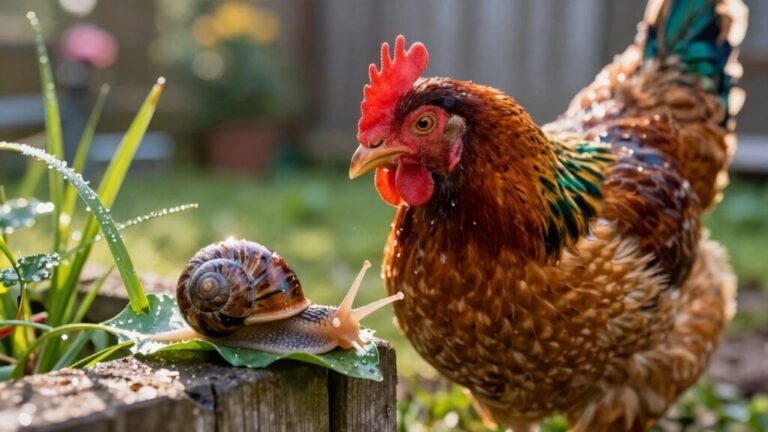
Yes—most free-range flocks will opportunistically consume slugs while foraging, though individual preference and breed tendencies vary considerably. Your chickens’ slug-eating behavior depends on several factors: exposure level, age, and available alternatives.
Free-range birds encounter slugs far more frequently than confined birds, increasing consumption rates substantially. Young chicks typically display intense interest in moving slugs as a novel protein source, while some adult hens ignore them entirely. Wet weather and mulched garden areas spike slug populations, directly correlating with higher foraging success. Slugs provide high protein and fat content, making them a nutritious occasional treat for your flock. Clean and healthy environments also play a crucial role as stress from dirty coops can impact overall foraging behavior. Additionally, maintaining a natural, chemical-free environment can enhance the foraging experience for your chickens, as they thrive when they can engage in natural behaviors like hunting insects.
Your chicken behavior patterns reveal selective feeding—birds prioritize slugs among invertebrates due to their size and capture ease. Social dynamics intensify this: juveniles often chase the same slug collectively, demonstrating learned foraging habits. Ultimately, whether your flock actively hunts slugs reflects their lifestyle, environmental conditions, and individual temperament.
Nutritional Benefits and Health Risks
Now that you’ve confirmed your flock will eat slugs, understanding their nutritional value and associated risks becomes important for managing your birds’ health and productivity. Slugs provide moderate protein but fall short of layer requirements at approximately 16%. Their high water content and low metabolizable energy mean they can’t replace formulated feed. A balanced diet is essential for ensuring optimal health and egg production. Furthermore, without appropriate grit to aid in digestion, chickens may struggle to properly process any additional scavenged foods like slugs. Additionally, building nesting boxes can be a great way to ensure that your hens remain comfortable and produce quality eggs since slug nutrition cannot adequately support egg quality or production alone. You’ll encounter calcium imbalances that risk thin shells unless you supplement with oyster shell. Furthermore, slugs bioaccumulate pesticides and heavy metals, potentially exposing your birds to toxins. As natural predators, chickens control slug populations in gardens while foraging for supplemental nutrition. Black Sex Link chickens are known for their consistent egg production, making them a reliable choice for farmers focused on maintaining quality output. Seasonal availability creates unpredictable nutritional contributions. Abrupt dietary shifts toward slugs may trigger digestive disturbances. Treat slug foraging as supplemental activity, not primary nutrition, to maintain flock health and consistent egg production.

Optimal Health and Egg Production - Enriched with 16% protein from organic grains, this feed provides a balanced and complete diet for laying chickens and ducks, promoting growth and nutritious, supports strong eggshells

Superior calcium from Oolitic Aragonite: Provides high-quality calcium sourced from naturally occurring Oolitic Aragonite for optimal poultry nutrition

STRONGER EGGSHELLS, FEWER BREAKS – Eggshells are 94–97% calcium carbonate; this crushed oyster shell replenishes what laying hens lose daily, reducing cracked and thin-shelled eggs.
Parasites and Diseases Associated With Slug Consumption
The parasitic threat that slugs pose to your flock extends beyond simple nutritional concerns—these mollusks serve as intermediate hosts for multiple pathogenic organisms that can establish infections in your birds’ bodies. When your chickens ingest infected slugs, they contract gapeworms, capillaria, and tapeworms that mature within their digestive and respiratory systems. Rhode Island Reds are hardy birds known to produce eggs consistently, but parasite transmission through slug consumption triggers severe health consequences: gapeworms obstruct airways causing suffocation in young birds, while helminths create nutrient deficiencies and immunosuppression. This weakened immunity increases susceptibility to secondary infections like coccidiosis. Additionally, nutritional deficiencies caused by parasitic infections can lead to poor feather condition and loss in your flock. Proper management of growth and nutrition, including monitoring Feed Conversion Ratio (FCR), helps bolster overall flock health and resilience against parasites. Your flock’s vulnerability intensifies under stress or high parasite loads. Levamisole treatment is recommended for addressing gapeworm infections once diagnosed by a veterinarian. Preventive deworming becomes essential for free-range birds in slug-heavy environments, protecting against cumulative pathogenic effects that prove fatal without intervention.
Chemical Contamination and Pesticide Dangers
While parasites represent an immediate threat to your flock’s health, chemical contamination from slug consumption poses an equally serious but often overlooked danger. Slugs accumulate pesticide exposure from metaldehyde, ferric phosphate, and systemic pesticides applied to your garden or surrounding areas. When your chickens consume contaminated slugs, they ingest chemical residues that can cause acute toxicosis—including seizures, tremors, and hyperthermia—or trigger chronic accumulation in tissues and eggs. Additionally, it is important to remember that chicken lice cannot infest humans, which means that while humans may worry about other pests, they need not be concerned about chicken lice being a threat to themselves.
Heavy metals like lead and cadmium bioaccumulate through repeated slug consumption, damaging liver and kidney function. Environmental factors including recent applications and wet conditions increase residue levels considerably. Natural products and safer alternatives to chemical pesticides should be prioritized in areas where your flock forages. You should avoid pesticide use in areas where your flock forages, test soil regularly, and monitor your birds for signs of poisoning. Early veterinary intervention dramatically improves survival rates.

IMPROVED FORMULATION - Kills slugs and snails, as well as earwigs, cutworms, sowbugs, pillbugs

SNAIL AND SLUG CONTROL - Slug Magic's all-weather formula helps to rid your garden of slugs and snails. It is a bait and killer for snails and slugs, so it is proven to make them disappear.

Made in United States
Effective Management Strategies to Minimize Risk
Since chemical-free slug management requires a multi-layered approach, you’ll find that combining habitat modification, physical removal, and biological controls yields the most reliable results for protecting your flock and garden. Habitat improvement directly reduces slug populations by eliminating daytime refuges—clear weeds, dense mulch, and debris that shelter slugs. Switch to drip irrigation and water early morning to minimize leaf wetness. Additionally, young male chickens like cockerels can be opportunistic eaters, which means they may help control slug populations in your garden. Chickens can also enjoy cooked pinto beans, which provide a nutritious high-protein option for their diet, and they can safely consume cabbage as a healthy treat while foraging in the garden. Deploy trap techniques like beer traps, cardboard refugia, and grapefruit shells in identified hot spots; check daily for slug collection. Bury copper edging around high-value beds to restrict migration. Integrate predator-friendly features such as rock piles and shallow ponds to encourage ground beetles and toads. For enhanced organic control, microscopic nematodes like Phasmarhabditis hermaphrodita can be applied to soil to target slug populations at their source. These systematic strategies work synergistically to suppress slug pressure without chemicals, safeguarding both your chickens and seedlings.

Fit All Holes: Our copper mesh is easy to cut and shape. With extra wood stick, you can stuff all sizes of holes of your house with facility

1. Great Value: Congratulations! You've found the best value for money copper mesh rodent control kit on the market! Kit includes 3 rolls of copper mesh and 1 pair of scissors. The copper mesh size is 4in x 16ft per roll, for a total of 48ft

Ample & Ultimate Copper Mesh Roll:Ryxrhswzp copper mesh kit includes a 4 in x 50 in of pure copper mesh roll , a scissor and packing tool. Unlike inferior materials, our pure copper mesh for rodent control is naturally rustproof and corrosion-resistant.
Using Chickens for Natural Slug Control
Chickens can serve as opportunistic slug predators in your garden or orchard, though their effectiveness depends on individual bird preference, slug availability, and foraging conditions. Free-ranging birds encounter more slugs than confined flocks, increasing predation potential. However, chicken foraging targets mainly surface-active juveniles and small adults, leaving subsurface populations and eggs largely unaffected. It’s interesting to note that just as chickens effectively hunt and eat common garden pests, they also engage with slugs when they are available. Chickens possess sophisticated mental abilities that allow them to adapt their foraging strategies based on their environment, which can enhance their effectiveness against pests like slugs. Additionally, supplementing chickens with oregano oil in their diet can further support their health and immune system, contributing to a more effective foraging strategy. You’ll see the strongest slug reduction after rainfall when moisture drives activity and chickens forage most actively. Predation rates vary within flocks—not all birds accept slimy prey. The slime coating of slugs can deter some chickens from consuming them entirely. Additionally, chickens share a gentle temperament that makes them suitable for family backyards, helping create an environment where they can safely forage. This adaptability in foraging can be further supported by providing them a well-designed chicken coop that encourages roaming and exploration. Relying solely on chickens proves inconsistent; combine them with habitat modification, barriers, and traps for sustained suppression. Rotate chicken access to vulnerable zones, remove slug refugia like dense mulch, and improve drainage to maximize natural control effectiveness.

Chicken toys for coop accessories: Set include 1* wooden chicken swing toys, 1* Chicken bird toy ladder, 1* Mirror with bell, 1* Xylophone Toys, 1* pecking toy, 1* Fruit string bags, 1* vegetable skewer. Hook design, Easy installation, This kit is a good helper to relieve chicken’s boredom and pressure.

【Natural Mint Grass Fiber & Digestive Health】Made from 100% natural mint grass compressed into a durable 3.9 inch/10cm ball. The plant-rich fiber helps accelerate intestinal motility and supports healthy digestion – a functional chicken enrichment toy that’s both fun and beneficial.

Keeps Hens Happy and Healthy: this peck toy encourages natural foraging behavior, giving your flock hours of engaging activity; By satisfying their instinct to peck, this chicken treat dispenser helps prevent boredom-related issues like feather picking and aggression, ideal for backyard chickens that spend long days in the coop
Best Practices for Safe Slug Management
How do you know if your slug problem warrants intervention? Monitor your property using refuge traps—flat materials like shingles or plywood placed on soil—and pitfall traps filled with water and dish detergent. Check weekly and treat when you find one to two slugs per trap.
Once you’ve confirmed a problem, reduce slug habitat by eliminating hiding spots near crops. Keep beds, paths, and fencelines tidy within five to ten feet of sensitive plants. Remove debris, cloddy soil, and excess mulch that create moist environments slugs prefer. Natural predators like ground beetles, toads, and birds can significantly help regulate slug populations in your yard.
If populations remain high despite habitat reduction, apply molluscicides in the evening when slugs are active. Spot-treat problem areas rather than entire fields. Combine these targeted chemical approaches with cultural practices for thorough long-term control.