
You’ll need approximately 200 square feet of interior coop space and 500 square feet of outdoor run for 50 laying hens. Install 1/4″ hardware cloth for predator protection, provide 400-500 inches of roosting space, and plan 10-16 nesting boxes. Guarantee proper drainage on level, high ground. Set up GFCI-protected outlets, programmable LED lighting for 14-16 hours daily, and mains-fed water systems. Establish distinct zones for roosting, nesting, and feeding. The specifics of each component determine your flock’s long-term health and productivity.
Selecting the Right Location and Assessing Your Site
Where you place your coop will determine much of your success in raising healthy, productive laying hens. You’ll want to select level, high ground that minimizes flood and standing-water risks. Assess your property’s watershed patterns and position the coop outside primary runoff flow paths. A solid, level foundation ensures the coop’s structural integrity and longevity over time.
Prioritize mixed sunlight exposure—morning sun energizes hens and supports egg production, while afternoon shade reduces heat stress. Orient your coop to capture these benefits while identifying prevailing winds for strategic windbreak placement.
Evaluate drainage solutions appropriate to your site’s natural slope. If drainage proves insufficient, implement raised foundations, gravel beds, or pier systems. Check local FEMA floodplain maps and historical rainfall data to anticipate seasonal extremes and protect your investment from water damage.

Raised Chicken Coop Perfect for Up to 4 Hens
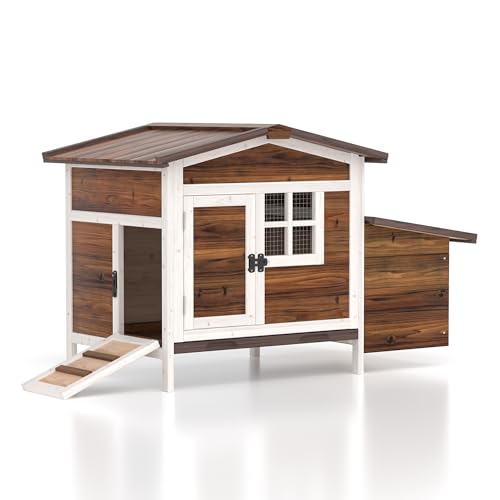
【Secure Housing】Solid rain-resistant fir wood with Environmental painted keep the chicken coop waterproof and not afraid of sun anymore. The design of Carbonized wood against white make the pets' invironment much more vibrant.
Planning Space and Layout for 50 Hens
Once you’ve secured an ideal location with proper drainage and sunlight exposure, you’ll need to determine how much space your 50-hen flock actually requires. For laying hens, plan 200 square feet of coop floor space—that’s 4 square feet per standard hen for optimal welfare and reduced stress. You’ll also need 500 square feet of outdoor run space, calculating 10 square feet per bird as your baseline. Interestingly, larger coops can offer even better welfare for your flock.
Within your coop dimensions, establish distinct functional zones: roosting areas, nesting boxes, feeding stations, and droppings zones. These separate spaces minimize disease transmission and simplify maintenance. Include 40–50 linear inches of roost space and 10–16 nesting boxes arranged accessibly. Chickens require adequate space to facilitate natural behaviors and promote overall well-being. Overcrowding can lead to health problems, so it’s crucial to maintain 2–3 foot aisles for human movement and cleaning. Distribute multiple feeders and drinkers throughout to prevent competition. Enrichment items such as perches, ramps, and logs can maximize the use of vertical space in your coop design. Proper space requirements directly impact flock health, laying performance, and behavioral stability.

【CHICKEN-APPROVED COMFORT】 Natural solid wood perches satisfy roosting instincts, no more hot feet in summer, cozy warmth in winter. Not only does it provide chickens with a natural resting environment, but it also helps trim their beaks and claws, strengthens their leg and foot muscles, provides them with a place to play, and encourages them to learn to fly.Happy hens lay better!

Chicken Perch for Coop Set: Crafted with a stable triangular frame design, this set includes 6 smoothly pine wooden sticks, each pre-slotted for hassle-free installation. The complete kit comes with a matching screwdriver and screws, providing everything you need for quick, tool-free setup

Small Chicken Perch with Swing Sets: The chicken swing is designed for 8-10 Chick and measures 38.9"L X 39.3 W" X 27.4 H. It features 4 perches and 2 swings, providing ample space for hens to rest, exercise, and enjoy a fun. This spacious design promotes healthier behavior and physical well-being, leading to higher-quality eggs. Compatible with any metal chicken coop, it offers a harmonious.
Building the Coop Structure: Flooring, Roosting, and Nesting
Your coop’s foundation—both literally and functionally—depends on three critical structural elements: flooring, roosting bars, and nesting boxes.
For flooring options, concrete provides predator-proof durability and easy maintenance, though you’ll need bedding for winter comfort. Alternatively, plywood with moisture-resistant treatments or linoleum over wood offers cost-effective solutions that support deep litter systems and clean quickly. Wire flooring can also assist with cleanliness by allowing droppings to fall through, though it lacks insulation against cold weather.
Install roosting bars using flat 2×4 boards elevated 18-24 inches high—they prevent foot damage better than round poles. For 50 hens, you’ll need approximately 400-500 inches of roosting space (8-10 inches per bird).
Design nesting boxes at 12x12x12 inches, allowing one box per 4-5 hens. Position them lower than roosts in dark, private areas. Line nesting materials with vinyl or straw for effortless egg collection and cleaning.

Designed for Chicken Coops: These floor pads create a 1.5" gap between the ground and the coop, providing your feathered friends with a clean and dry resting area that is free from droppings and dirty water.

Heavy Duty Stainless Steel: The thick metal blade effectively tackles stubborn dried messes making this bird poop cleaner a reliable choice for daily pigeon coop maintenance

Chicken Coop Ground Pad: Designed for chicken coops, with special risers, our chicken coop pads create a space above from the ground of 1.5" height, keeping chickens away from droppings. Make your furry friends more comfortable to live with!
Securing Your Flock: Predation Protection and Biosecurity
Because predators pose the greatest threat to laying hens outside of disease, you’ll need to implement multiple layers of physical barriers and security measures to protect your investment. Start by installing 1/4″ hardware cloth on all walls, windows, and vents, burying it 12″ around your coop’s perimeter to deter digging predators. Raccoons are known to be sneaky and persistent in their attempts to access chickens, so these barriers are crucial. Additionally, it’s important to remember that strong materials like hardware cloth significantly improve your coop’s defenses against predators. Maintaining a secure coop helps mitigate risks from both nocturnal and diurnal threats, including hawks and owls. It’s also important to consider that hens will require specific nutrients, such as higher calcium for strong eggshells, particularly as they begin laying. Add an overhead cover to prevent raptor attacks and climbing predators, as possums may also take advantage of easy access to coops to prey on vulnerable chicks. Secure all access points with raccoon-proof dual latches and use screws instead of staples for hardware cloth attachment. Install motion-activated lighting around the perimeter and maintain clear sightlines by trimming vegetation. Implement predator prevention through scheduled dawn and dusk checks, and consider guardian animals like livestock guardian dogs. For additional protection, store feed in airtight containers to avoid attracting rodents and predators to your coop area. Combine these biosecurity measures to create a thorough defense against predation.

Strong & Solid Craft: The hardware cloth 1/2 inch 48 x 100 ft choose high-quality wires, strong and firm welded, uniformly vinyl coated; Smooth mesh surface, each hole of the same size; Beautiful appearance, with a certain decorative function; Strong structure, high corrosion resistance; Easy to install, not easy to fade or deform
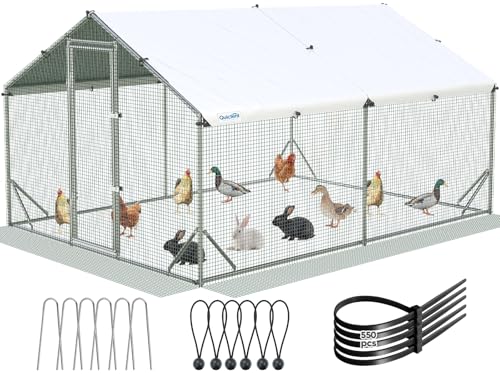
Durable Welded Hardware Cloth & Ground Skirt: Features 1" x 1"(20 gauge) square welded hardware cloth on side walls with thickened PVC coating for superior durability and predator resistance. Combined with the extended ground skirt, it provides a professional safeguard for various poultry like dog kennels, rabbit cages, or sheep pens.

Durable Welded Hardware Cloth & Ground Skirt: Features 1" x 1"(20 gauge) square welded hardware cloth on side walls with thickened PVC coating for superior durability and predator resistance. Combined with the extended ground skirt, it provides a professional safeguard for various poultry like dog kennels, rabbit cages, or sheep pens.
Installing Utilities and Essential Systems
While predator protection secures your flock from external threats, you’ll need to establish reliable utilities and environmental systems to keep your hens healthy and productive year-round. Start with electrical safety by installing GFCI-protected outlets on dedicated circuits, sized for 20–30 amps to support lighting efficiency, heaters, and pumps. Implement programmable LED systems maintaining 14–16 hours of light to optimize egg production. Additionally, ensuring your hens receive high-quality care will promote their overall well-being and productivity. For water management, install mains-fed nipple systems with float valves, heating for winter months, and filtration for quality assurance. Additionally, consider adding insulation around waterers to further prevent freezing during cold months. It’s also essential to maintain a balanced diet, including high-protein layer feed, to support optimal production. Design ventilation with adjustable inlets and mechanical exhaust fans to control humidity and ammonia levels. Integrate climate control through thermostat-managed heaters maintaining target temperatures. Regular cleaning of waterers and feeders helps maintain hygiene and prevents mold growth. Consult a licensed electrician to guarantee code compliance and proper load calculations throughout your installation.

Ultimate Outdoor Electrical Combo: Enhance your outdoor spaces with this high-performance GFCI outlet and weatherproof in-use cover set. providing a complete and secure electrical setup for outdoor use.
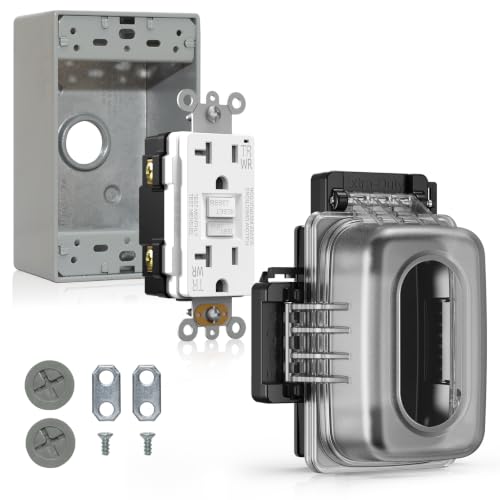
✅【All-in-One Outdoor Safety Solution】 This comprehensive set includes a durable metal junction box, a self-testing GFCI outlet, and a weatherproof in-use cover, providing a complete and secure electrical setup for outdoor use; UL and CUL certified for guaranteed reliability.
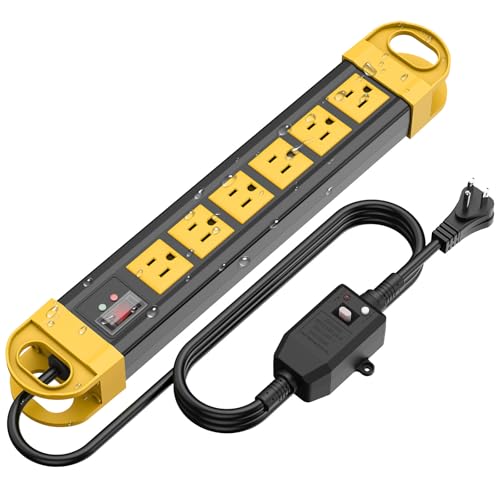
IPX6 WATERPROOF POWER STRIP - IPX6 Waterproof Power Strip with GFCI protection for dual safety. Waterproof Power Strip ideal for safe operation in gardens, on patios, at job sites, and in damp indoor areas like bathrooms or kitchens.
Daily Operations and Long-Term Flock Management
Once your coop’s infrastructure is in place, maintaining your flock’s health and productivity hinges on consistent daily routines and vigilant long-term management.
You’ll establish routine care by providing 120–150 g layer feed daily, refilling sanitized waterers, and collecting eggs at least once daily. Spot-clean soiled bedding daily and refresh nesting boxes weekly. Keep oyster shell and grit available free-choice. Additionally, you can safely introduce spicy foods into their diet, as chickens are not affected by capsaicin found in hot peppers. Maintaining a 1 nesting box per 3 hens ratio ensures all birds have adequate access to comfortable laying areas throughout the day. It’s also crucial to select premium, complete feeds that meet the nutritional needs of your hens, which should contain adequate calcium and protein to support egg production.
For flock health, perform visual checks daily for lethargy, respiratory issues, or abnormal droppings. Conduct weekly parasite inspections and quarantine new birds for 30 days before integration. Deep-clean coop surfaces monthly using diluted bleach, then fully dry before reintroduction.
Maintain consistent photoperiod—14–16 hours daily—and track egg production to detect declining trends. Adjust feed formulation based on shell quality changes, ensuring adequate protein and calcium for sustained laying performance.