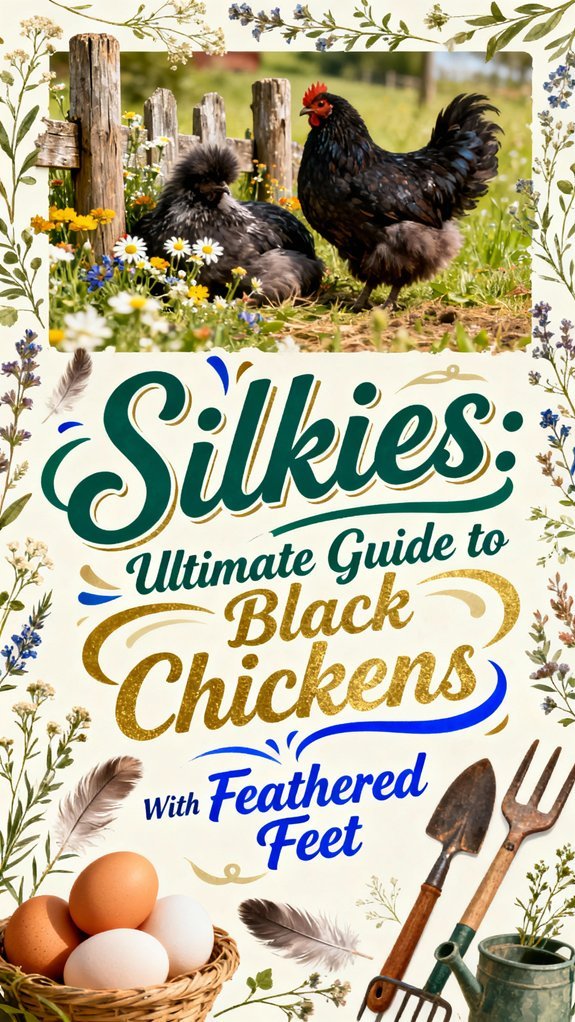
You’ll uncover that Silkies are exceptionally distinctive chickens featuring jet-black skin, fluffy down-like plumage lacking barbicels, and characteristic five-toed polydactyl feet. Their gentle temperament and strong maternal instincts make them ideal broody hens and backyard companions. They require sturdy predator-proof housing, low roosts accommodating poor flight ability, and protection from moisture due to their non-waterproof feathers. Their unique genetic traits produce color varieties through selective breeding. Understanding their specific nutritional, environmental, and health management needs—including parasite control and Marek’s disease vaccination—ensures ideal care. Investigating their exhibition standards and breeding genetics reveals considerably more about maximizing their potential.
Physical Characteristics and Distinctive Features
Whether you’re encountering Silkies for the first time or you’re a seasoned poultry enthusiast, you’ll immediately notice their striking appearance—a result of unique genetic traits that fundamentally distinguish them from standard chicken breeds. Their distinctive feather structure lacks barbicels, producing a downy, fur-like texture that reduces waterproofing and flight capability. You’ll observe their characteristic pom-pom crest and profuse leg feathering, alongside polydactyl feet featuring five toes instead of four. To ensure their safety from predators such as owls, it’s beneficial to implement protection strategies like covering the run with bird netting. Additionally, providing them with ample space in the run, approximately 10 square feet per chicken, supports their health and happiness. Many chicken keepers enhance the well-being of their Silkies by supplementing their diet with essential herbs known for boosting chicken health.
The melanotic gene creates their most defining trait: skin pigmentation. You’ll see bluish-black coloring throughout their skin, bones, and meat across all feather varieties. Their dark beaks, shanks, and earlobes accompany mulberry combs and distinctive turquoise earlobes. This fibromelanosis gene is responsible for the unique dark pigmentation that makes Silkies instantly recognizable among chicken breeds. In addition to their striking looks, their calm personalities make them an affectionate choice for families. Despite this extensive internal pigmentation, you’ll find that Silkies lay small, cream-colored eggs—modest egg output that is surprising given their dark appearance.
Temperament and Personality Traits
Silkies’ gentle temperament sets them apart as one of the most docile chicken breeds available today. You’ll find their calm demeanor remarkable—they display minimal aggression even among roosters and tolerate close proximity without flightiness. Their gentle nature makes human interaction effortless; they readily seek your attention, follow you around, and accept lap-sitting and cuddling. Children bond instantly with these birds, responding positively to treats and affection through proximity-seeking behaviors. You’ll appreciate their quiet disposition, producing minimal vocalizations except during egg-laying or alerts. Their strong maternal instincts drive frequent broodiness, making them excellent surrogate mothers. Despite their docile nature, Silkies maintain impressive color perception through their unique UV cone vision, which may contribute to their attentive and aware behavior in their environments. These traits combine to establish Silkies as premier family pets, integrating seamlessly into mixed flocks while thriving in backyard environments centered on human companionship and interaction.
Color Varieties and Genetic Inheritance
Because Silkies display remarkable phenotypic diversity, understanding the genetic mechanisms behind their coloration proves essential for breeders seeking predictable outcomes. You’ll encounter several dilution genes affecting color expression: the autosomal blue gene, the sex-linked chocolate gene on the Z chromosome, and the recessive lavender gene. These genes interact through genetic linkage, creating complex inheritance patterns. The blue-black-splash trilogy produces predictable ratios—blue crossed with blue yields 25% black, 50% blue, and 25% splash offspring. Chocolate’s sex-linked nature means females display the trait with a single copy, while males require two. Silkies are also known for their unique fluffy plumage, which plays a key role in attracting breeders and enthusiasts alike. Additionally, offering appropriate treats like safe fruits can contribute to their overall health and well-being. Silkie chickens are recognized for their small size and fluffy appearance, making them ideal for those looking for miniature poultry. Backyard flocks benefit greatly from their friendly disposition, making them suitable for families. Lavender requires both parents homozygous recessive for appearance. Paint silkies, derived from dominant white crossed with true black, don’t breed true, yielding mixed colors across generations. Non-standard colors such as cuckoo, lavender, red, and paint occur due to cross-breeding and are popular among backyard chicken enthusiasts, though they lack show status in competitive settings.
Housing and Environmental Requirements
Proper housing directly determines your Silkies’ health, productivity, and overall well-being. You’ll need sturdy timber coop construction with galvanised wire mesh for predator protection and secure locks. A 5-by-2.5-foot coop accommodates seven birds comfortably, while a 6-by-5-foot run provides adequate space for exploration and leg-stretching. Chickens can thrive when their diet includes appropriate amounts of animal fats, which can be incorporated into their feeding routine when necessary.
Young chicks, including Silkies, may exhibit coprophagy behaviors, which assist in quickly establishing their cecal microbiome, crucial for effective digestion and nutrient absorption. Additionally, providing a balanced diet rich in vitamins and minerals enhances overall health and supports their reproductive health. Your coop construction must include draft-free nesting boxes and low roosts suited to their poor flying ability. Silkie chickens are known for their calm temperament, which is essential for their well-being. It is essential to ensure that the coop is also predator-proof to protect them from various threats in the environment. Install quality run enrichment features like dust bathing areas, low perches, and fully enclosed doors.
Silkies’ fur-like feathers lack waterproofing, demanding substantial shelter in tropical climates. They thrive in cold regions through huddling but require dry conditions to prevent chilling. Guarantee adequate ventilation, protection from elements, and accessible nesting spaces for their broody tendencies. Consider installing ramps for easy access between indoor and outdoor areas to accommodate their natural desire to explore while supporting their unique mobility needs.
Feeding, Nutrition, and Egg Production
Once you’ve established a secure coop with proper ventilation and nesting spaces, you’ll shift your focus to nutrition—the foundation that’ll determine whether your flock thrives or merely survives. Your feeding schedule requires precision: weeks 1-8 demand 20-24% protein starter feed, while 8 weeks to first lay calls for 18% grower feed. Post-laying birds need 16% layer feed as their primary nutrition source.
Chick nutrition fundamentals include balanced carbohydrates from grains, 5-8% fats for essential fatty acids, and critical vitamins like thiamine for nervous system development. Calcium and phosphorus support skeletal integrity, with optimal eggshell quality depending on proper calcium sources. Additionally, feeding hens oyster shells helps provide a reliable calcium supplement essential for strong, consistent eggshells. Offering hens crushed eggshells as a natural calcium supplement can further enhance their overall health. A complete layer feed with the right balance of protein is also crucial for year-round egg production. It’s important to monitor the growth traits of your chicks, as feather growth patterns can help determine their gender as they mature. Fresh, clean water must be available at all times to support nutrient absorption and overall health.
Adult Silkies consume 1/8 to ¼ lb daily. Your birds’ll produce 110-155 eggs yearly—small to medium, white or cream-colored—consistently even during winter. Adding oyster shell supports best eggshell formation.
Health Concerns and Disease Management
While Silkies’ distinctive appearance makes them prized ornamental birds, their unique feathering and genetic traits create specific vulnerabilities you’ll need to manage proactively. Their fluffy, non-waterproof plumage and feathered feet make disease prevention and parasite control essential priorities. Additionally, regular therapeutic Epsom salt baths can help promote their overall health and alleviate minor ailments.
You must implement rigorous parasite control strategies since Silkies’ crests, beards, and foot feathers attract lice, mites, and scaly leg mites readily. Regular dust baths and coop inspections greatly reduce infestations. Additionally, trim muddy foot feathers frequently to prevent bacterial infections and follicle damage. Silkies are particularly susceptible to Marek’s disease, making vaccination a critical preventive measure during the hatchery stage.
Marek’s disease poses considerable risk, with flock mortality rates reaching 50%. Vaccinate birds at hatcheries or breeder facilities. Monitor for paralysis, tumors, and disorientation between weeks 6-30, culling infected birds immediately. Isolate sick birds, providing warmth, electrolytes, and probiotics to manage secondary respiratory infections effectively.
Breeding Standards and Show Exhibition
How can you guarantee your Silkies meet the rigorous requirements set forth by major poultry organizations? Your breeding strategies must prioritize genetics from reputable breeders conforming to APA or British standards. Exhibition judges evaluate type, fluff, and conformation above color—allocating ten points specifically to leg quality. It’s also important to consider the hen to rooster ratio in your breeding program to ensure a healthy and manageable flock. You’ll need to understand disqualifying defects: single combs, incorrect toe counts, green legs, and vulture hocks eliminate birds immediately. Research the APA Standard of Perfection thoroughly and attend shows for firsthand education. Select breeding stock exhibiting dark skin, five toes per foot, rounded crests, and feathered shanks. The breed standard emphasizes round body shape and fluffy tails as essential characteristics for show-quality birds. Additionally, incorporating nutritious treats such as bell peppers in your flock’s diet can enhance overall health and wellbeing. Practice showmanship through confident presentation and knowledgeable responses. Your dedication to show-quality genetics directly correlates with exhibition success and breed standard compliance.
Brooding and Chick-Rearing Abilities
Silkies exhibit a particularly high propensity for broodiness, frequently entering broody cycles multiple times annually—a trait that distinguishes them sharply from modern laying breeds that rarely or never go broody. Their broody behavior typically intensifies during spring, though environmental factors and genetics greatly influence onset timing.
You’ll find that Silkies excel as maternal caregivers despite their bantam size limitations. They can comfortably incubate 4–10 eggs depending on clutch composition. Their abundant down and feathered feet provide exceptional heat retention, yet you must maintain rigorous nest hygiene to prevent moisture accumulation around chicks. Purebred Silkies are often used for hatching while maintaining breed quality. Additionally, successful incubation relies on proper chicken reproduction to ensure egg fertilization before laying. Silkies benefit from a high-protein diet that supports their rapid growth needs; this ensures they have the energy to raise healthy chicks. Ensuring they receive proper nutrition is essential for optimal health and successful chick development. Furthermore, new chicks are susceptible to conditions like pasty butt, highlighting the importance of thorough brooding care.
Silkies demonstrate remarkable chick imprinting abilities, fostering strong bonds through gentle handling and close brooding. They actively teach foraging behaviors, considerably reducing early-life mortality in cooler climates. Their calm temperament guarantees minimal stress during socialization, making them invaluable for natural chick-rearing programs.
Choosing and Integrating Silkies Into Your Flock
When you’re ready to add Silkies to your existing flock, you’ll need to evaluate several compatibility factors before introducing these docile birds to your current setup. Your integration strategies should prioritize matching temperament by selecting calm, similarly-sized breeds that won’t bully your Silkies, who naturally occupy low positions in flock dynamics. Implement gradual introductions through quarantine and visual contact before full integration. Time additions during low-territorial periods to minimize aggression. Monitor pecking order closely, watching for chronic bullying that requires separation. Combine Silkies with other docile or bantam breeds to reduce stress. Because Silkies are more vulnerable to predators due to their inability to fly and limited vision, ensure your integration setup includes secure, predator-proof spaces where they can retreat safely. Deploy multiple feeders, separate dust-bathing areas, and visual barriers to relieve competition and tension. These thoughtful integration strategies guarantee smoother social changes and better overall flock welfare.