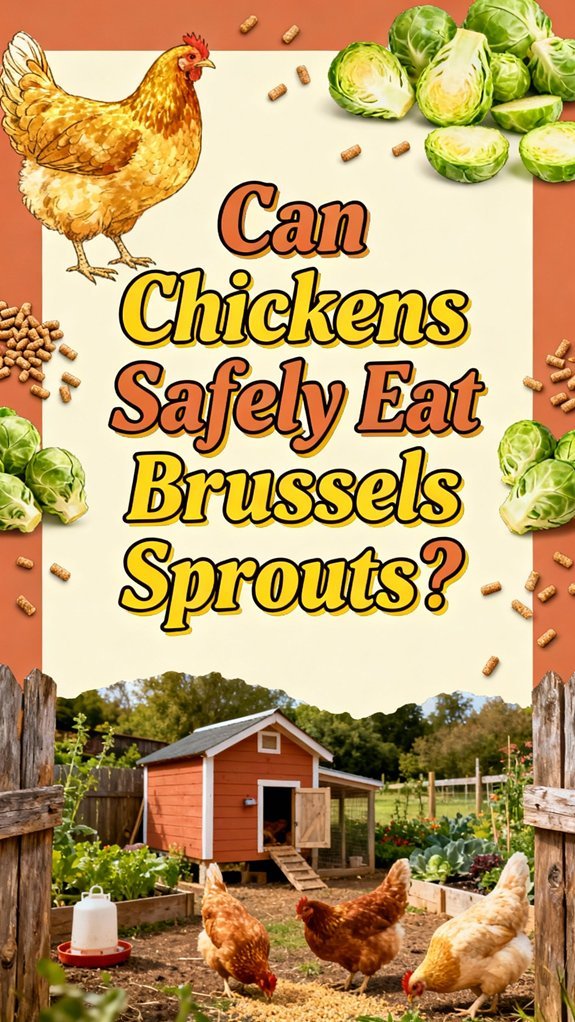
Yes, you can safely feed Brussels sprouts to your chickens when you’re strategic about preparation and portions. These nutrient-dense vegetables offer vitamin C, vitamin K, and manganese—supporting immunity, eggshell quality, and digestive health. Serve cooked sprouts in 15–30g portions, one to three times weekly, keeping treats under 10% of daily caloric intake. Cook them lightly to preserve nutrients while reducing digestive upset from raw fiber. Monitor your flock’s response, as there’s much more to optimize their nutritional benefits.
Nutritional Value of Brussels Sprouts for Chickens
Because brussels sprouts are nutrient-dense yet low in calories, they’re an excellent supplemental feed for your flock. At just 43 kcal per 100g, they won’t contribute to unwanted weight gain while delivering substantial nutritional benefits. Additionally, homemade chicken treats made with brussels sprouts can serve as a great way to enhance your chickens’ diet while keeping them entertained. Furthermore, brussels sprouts, like cilantro, are well-liked by chickens and can be offered fresh for optimal enjoyment.
Their nutrient profile supports laying hens and growing birds through essential B vitamins and folate, which aids cell division and healthy egg production. The vitamin benefits extend beyond basic nutrition—vitamin C boosts immunity, vitamin A strengthens the immune system, and vitamin K guarantees proper blood clotting and eggshell quality. Additionally, it is important to ensure that chickens do not consume any toxic parts of plants which can be harmful to their health. Furthermore, the inclusion of nutritional herbs like garlic alongside brussels sprouts can further enhance your chickens’ overall health.
Additionally, brussels sprouts provide 3.38g of protein per 100g, supporting growth in young chickens. The 3.8g of dietary fiber promotes digestive health through soluble inulin, while manganese and iron further support quality egg production. Sulfur compounds act as natural dewormers, making brussels sprouts a multifunctional dietary addition. You can offer leaves, stalks, and roots of brussels sprouts to maximize your chickens’ consumption of every nutritious part.
How to Prepare Brussels Sprouts for Your Flock
Several preparation methods allow you to optimize brussels sprouts for your flock’s consumption while maximizing nutritional retention and minimizing waste. Light steaming softens tissues and preserves vitamins better than prolonged boiling. Fermentation creates beneficial microbes and extends storage life—introduce small amounts gradually to monitor tolerance. Dehydrating concentrates nutrients and creates enrichment treats that store shelf-stable for months. Additionally, including nutritional formulations designed for specific life stages in their diet can enhance their overall health. Scrambled eggs, for example, are a nutritious treat that can complement brussels sprouts, especially during molting periods when protein needs increase. It’s also important to ensure your flock has access to species-appropriate diets that include high-protein layer feed to maintain overall health and egg production.
Your presentation techniques considerably impact consumption rates. Halve or quarter sprouts to increase access for smaller breeds and reduce waste. Skewer them on low branches to encourage foraging while minimizing ground contamination. Scatter-feeding halved sprouts across your run reduces dominance-related competition. Mixing chopped sprouts into mash or combining them with grains balances palatability and slows intake, decreasing digestive upset risk. Always ensure Brussels sprouts remain plain and unseasoned to avoid introducing harmful additives that could compromise your flock’s health.
Recommended Serving Sizes and Feeding Frequency
While brussels sprouts offer valuable micronutrients, you’ll need to keep portions modest to prevent them from displacing your flock’s balanced base diet. Portion control is essential: offer 1–2 whole small sprouts (approximately 15–30 g) per chicken as an occasional treat. This approach aligns with the recommended treat limits of no more than 10% of daily caloric intake. It’s important to ensure that any additional treats do not include toxic bedding material, such as cedar shavings, which can adversely affect chickens’ health.
Frequency-wise, restrict brussels sprouts to 1–3 times weekly for adult birds to maintain dietary balance. For younger birds and small breeds, reduce portions to 50% of adult amounts. Always introduce brussels sprouts gradually to your flock to avoid digestive upset and allow them to acclimate to this new food. Monitor your flock’s body condition and egg production closely; declining metrics indicate diet displacement requiring reduced treat frequency. Measure portions consistently using weight or count rather than free-feeding to prevent nutrient gaps and promote ideal health outcomes.
Potential Digestive Issues and Health Risks
Despite brussels sprouts’ nutritional benefits, they pose several digestive and metabolic concerns when your flock consumes excessive quantities. High fiber and sulfur content trigger substantial gas production and digestive discomfort in chickens, particularly when raw sprouts dominate their diet. The inulin fiber ferments in their digestive tract, causing bloating and reduced feeding interest. Early intervention involves monitoring your chickens for signs of digestive distress, as prompt attention can help mitigate potential health issues. Providing a variety of feeds, including layer feed that meets the nutritional needs of your chickens, is essential for their overall health. Additionally, it’s important to watch for pasty butt signs which may indicate other digestive issues. A well-balanced diet, including quality feed supplements, plays a vital role in maintaining optimal health. Furthermore, introducing a range of vegetables, such as cucumbers that are low in calories and hydrating, can offer your flock additional dietary benefits.
Goitrogens present in brussels sprouts interfere with iodine uptake at elevated intake levels, potentially disrupting thyroid function and enlarging the gland over time. However, moderation—keeping brussels sprouts below 10% of daily feed—minimizes these risks to negligible levels.
Raw feeding amplifies digestive upset, especially in chicks. Cooking reduces fermentation risk notably. Additionally, unwashed sprouts harbor harmful bacteria causing gastrointestinal infections. Always wash thoroughly and serve plain preparations, avoiding butter, salt, and seasonings that further compromise your chickens’ digestive health. Diverse diets that incorporate brussels sprouts alongside other vegetables provide balanced nutritional intake while reducing the risk of overconsumption-related issues.
Impact on Egg Quality and Production
Brussels sprouts’ nutrient density directly enhances your hens’ laying performance and egg characteristics through multiple physiological pathways. Manganese guarantees superior eggshell thickness while supporting protein metabolism, directly improving egg quality. Folate promotes cell growth essential for consistent production rates and reproductive health in breeding hens. Vitamin K maintains skeletal support and eggshell integrity, preventing bone density loss that compromises laying capacity. The antioxidants present strengthen shells, enhance yolk coloration, and boost overall consistency while protecting against oxidative stress that impairs production. Additionally, oyster shells provide a reliable calcium source necessary for eggshell quality and overall hen health, which further supports laying performance. Almonds provide immune support and aid digestion when included appropriately in a chicken’s diet. Vitamins A and C work synergistically—vitamin A stimulates mucus production in developing layers, while vitamin C maintains ideal laying health through pathways your hens cannot synthesize independently. Furthermore, feeding a complete layer feed rich in vitamins and minerals alongside Brussels sprouts will enhance overall nutrition and support consistent egg production. Together, these nutrients substantially elevate both egg quality and production rates when incorporated into your flock’s diet. Additionally, quality layer feed that contains essential vitamins and minerals should complement the nutritional benefits of Brussels sprouts to ensure balanced nutrient intake. High fiber content reduces ammonia levels in the coop environment, which supports respiratory health and reduces stress on laying hens during peak production periods. Ensuring a well-ventilated coop environment is crucial for maintaining chicken health during the winter season, which can indirectly influence egg production levels.
Assessing Your Flock’s Acceptance
Maximizing the nutritional benefits of Brussels sprouts requires understanding how your individual flock responds to this unfamiliar food. You’ll observe varied pecking behavior across breeds—some chickens immediately reject raw sprouts, while others readily consume cooked versions. Prepare pan-fried sprouts with olive oil to enhance visual appeal and encourage feeding responses. Your flock preferences will likely shift once they’ve adapted to the texture and taste of cooked sprouts chopped into manageable pieces. It’s important to note that offering a variety of treats, like fresh fruits, can also promote overall health in your chickens. In addition, providing automatic feeders can help streamline your feeding routine, allowing for more consistent nutrition distribution.
Corn, like Brussels sprouts, is another source of nutritional benefits that can energize your flock during colder months. Monitor initial acceptance patterns closely. If your birds ignore raw offerings but attack cooked alternatives, adjust preparation accordingly. Feeding junk food can lead to health issues if overconsumed, so document which presentation methods trigger the strongest pecking behavior. This individualized approach guarantees you’re providing appropriate nutrition while respecting breed-specific dietary tendencies. Brussels sprouts are rich in vitamins C and K, which boost immune support in your flock. Additionally, ensuring that treats are provided in moderation helps to maintain a balanced diet for optimal health. Success hinges on observing your flock’s unique preferences and adapting feeding strategies accordingly.
Storage and Food Safety Considerations
Once you’ve determined your flock’s preference for Brussels sprouts, proper storage and handling become critical to maintaining nutritional value and preventing foodborne pathogens. Store unwashed whole sprouts in ventilated plastic bags at 35–40°F; they’ll retain quality for 3–7 days. Don’t wash sprouts before storage—excess moisture accelerates microbial growth. Remove yellowed or damaged outer leaves to prevent decay spread. Keep raw produce separated from raw meat and poultry to avoid cross-contamination. For extended storage lifespan, blanch sprouts 3–5 minutes, cool in ice water, then freeze at 0°F; they’ll maintain quality 8–12 months. Storing sprouts in the vegetable crisper drawer with proper air circulation helps prevent moisture buildup and extends their freshness. Discard any sprouts showing sliminess, off-odors, or visible mold. These handling safety protocols protect your flock’s health and maximize nutritional benefits.
Incorporating Sprouts Into a Balanced Diet
With proper storage protocols in place, you’re ready to strategically incorporate Brussels sprouts into your flock’s nutritional regimen. Treat variations allow you to customize delivery methods based on your birds’ preferences and your management goals. Raw sprouts offer maximum nutrient density, while cooked preparations—pan-fried in olive oil without salt—enhance digestibility and reduce goitrogenic compounds. Additionally, during the pullet stage, young hens benefit from diverse nutrient sources to support their rapid growth and development. Create alternative zones for your chickens, such as scratching areas, to help keep them engaged and away from the garden. Chop whole sprouts into manageable pieces for younger birds, or offer intact sprouts as enrichment for mature hens. Interestingly, certain breeds of chickens, like the Silkie, exhibit unique feather types that can affect their overall health and need for specific nutrients.
Implement Brussels sprouts as supplemental nutrition comprising no more than 10% of daily caloric intake, preserving your core balanced feed’s nutritional foundation. Laying hens, breeders, and growing chicks derive particular benefit from the folate, vitamin K, and manganese content. Like the 360 calories found in balanced poultry meals, Brussels sprouts contribute essential macronutrients that support optimal health outcomes in your flock. Rotate cooking methods seasonally to maintain dietary variety while optimizing bioavailability of essential micronutrients.
Comparing Brussels Sprouts to Other Vegetable Treats
Brussels sprouts benefits become evident when you compare their nutrient density to common alternatives. You’ll find markedly higher vitamin K and folate than lettuce or cucumber, alongside robust antioxidant and phytonutrient profiles—particularly glucosinolates and sulforaphane precursors—that simpler vegetables lack. Their mineral content, including iron and phosphorus, outperforms watery vegetable treat alternatives. Additionally, including high calcium content in the hens’ diet can further support their overall health and egg production.
Moreover, it’s important to ensure that any vegetable treats are served safely to prevent stressful conditions for your flock, as keeping birds separate can help minimize potential health risks.
However, you should recognize trade-offs. Raw cruciferous vegetables may cause digestive upset in sensitive birds, whereas cooked pumpkin or steamed carrots offer easier digestion. Protein content (≈3g per cooked cup) falls below legume-based options but exceeds leafy treats. The kaempferol compound in Brussels sprouts provides anti-inflammatory benefits that many common vegetable alternatives cannot match.
Crucially, you shouldn’t rely exclusively on Brussels sprouts as your primary vegetable treat alternative. Their high fiber can dilute caloric intake when overfeeding occurs.
Common Mistakes to Avoid When Feeding Sprouts
Several critical errors can undermine the nutritional benefits you’re trying to provide your flock through sprouted feeds. You shouldn’t rely on sprouts as your primary diet—they lack complete vitamin and mineral profiles. Limit sprouted fodder to 30% of total intake and monitor egg production for nutritional gaps. Additionally, you must prevent mold and bacterial growth by rinsing sprouts twice daily and ensuring proper drainage. Discard any showing visible mold, foul odors, or sliminess. Follow sprout feeding guidelines by identifying bean varieties before sprouting; raw kidney and lima beans contain toxic lectins. It’s important to remember that raw beans, even when sprouted, should be handled with care due to their potential toxicity. Store sprouting seeds separately from other feed to prevent accidental contamination. Finally, you’ll want to present sprouts in shallow dishes to avoid choking hazards and trampling. Sprouts provide a 4:1 quality feedstuff return compared to the original seed quantity, making them an efficient supplement when managed properly.