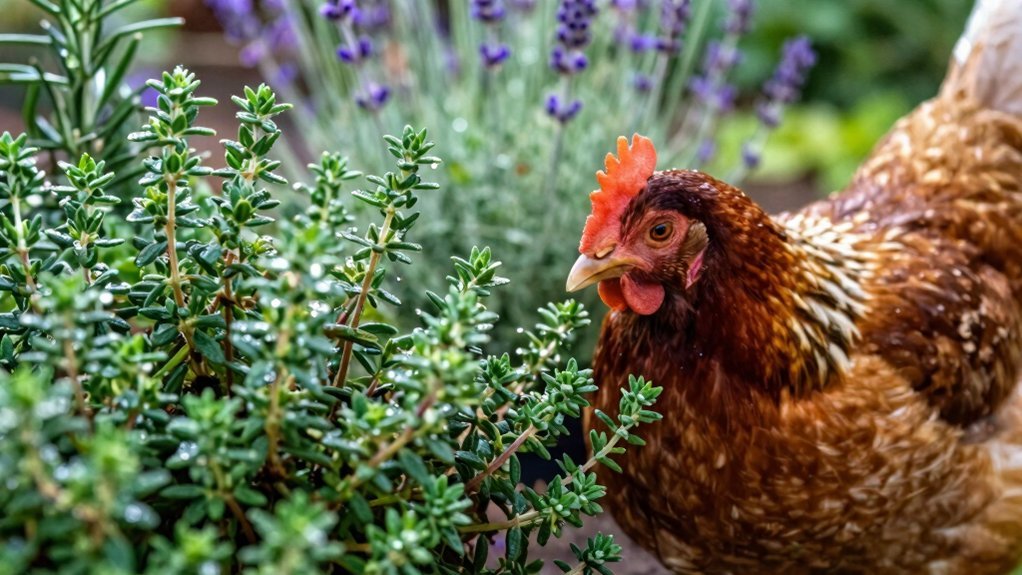
You’re right to wonder if thyme is safe for your flock—yes, fresh or dried leaves work as a tiny treat if you keep it under 10 % of their diet, about a pinch a day or 5 g /kg of powder. It adds vitamins, antioxidants, and a mild respiratory boost, and the scent helps deter mites and flies. Start with a few sprigs on the ground, watch for any upset, and if they like it, mix ½ tsp per 5 lb feed or steep a teaspoon per liter of water; next, you’ll see how to grow it near the coop.
Is Thyme Safe for Chickens? How Much to Give?
Is thyme safe for chickens? You’re wondering if that garden herb will harm your flock, and you’re right to ask. Fresh or dried leaves act like a normal snack—chickens self‑regulate, so a few sprigs a day won’t upset them. Mixing a pinch into feed or steeping a cup of water works fine, and you’ll see no toxicity signs in ordinary use.
Here’s the thing: essential oil dosing changes everything. The oil packs the plant’s power into a tiny drop, and research uses 0.1‑0.25 mg /kg body weight, while a high‑dose study pushed 1 g /kg. Those numbers are far above what a backyard bird would ever encounter, and medicinal use risks—like overdose or drug interactions—rise sharply. Like oregano, thyme offers natural antibacterial properties that support immune health without the need for antibiotics.
All right, keep thyme in its leaf form, offer it in small, free‑choice bundles, and stay clear of concentrated oils unless a vet advises. Your takeaway: normal herb feeding is safe; concentrate only with professional guidance. Next, consider how you’ll introduce thyme into your birds’ daily routine. Adding herb variety like thyme can also help deter insects in the coop. Beyond pest control, incorporating thyme into nesting boxes helps create a calming environment for your hens.
Health Benefits of Thyme for Chickens
Why does thyme help my chickens stay healthy? You’re wondering if that little herb really makes a difference, and you asked the right question.
How does thyme boost immunity?
Thyme packs vitamins A, C, K and minerals like calcium and iron, plus antioxidants that shield cells from oxidative stress. Those nutrients tighten the immune system, so you’ll see fewer sick birds and stronger disease resistance.
What about respiratory relief?
Volatile oils soothe coughing and wheezing, acting like a gentle inhaler for your flock. A warm thyme tea can calm irritated airways during cold snaps. Thyme supports respiratory health with antibacterial effects that help protect your birds from common illnesses.
Can thyme improve plumage and pest control?
The same oils help enhance plumage shine and act as a natural repellent, keeping mosquitoes and minor parasites at bay. Similar to how garlic functions as a natural antimicrobial agent, thyme’s properties create an environment hostile to harmful bacteria and pathogens within the coop. Like other herbal additives, thyme contributes to gut health by promoting beneficial bacteria and inhibiting harmful strains in the digestive tract.
Takeaway: Adding modest thyme doses supports immunity, breathing, feather quality, and pest deterrence. Next, think about how to introduce fresh thyme without stressing your chickens.
How to Introduce Fresh Thyme for Chickens Without Stress?
If you’re wondering how to give your flock fresh thyme without causing a panic, you’re on the right track. Start with a couple of sprigs on the ground near their usual pecking spot. Offer them as a treat during the active morning hour, and keep the amount tiny—just enough for a few birds to nibble.
Now, focus on gradual introduction for stress reduction. Scatter the herb rather than piling it, and mix it with familiar greens or cracked corn. Hang a small bunch near the coop so curious birds can peck without feeling forced. Just as you would gradually transition diets to maintain digestive health when changing main feeds, introducing new herbs slowly prevents unnecessary stress. Similar to how keepers use a visual barrier when integrating new birds to minimize aggression, offering thyme in a non-threatening way helps the flock accept it calmly. You can also blend the thyme into a batch of homemade scratch grain to provide a nutritious supplement that avoids unhealthy fillers while encouraging natural foraging behavior.
All right, watch the flock closely. If you see refusal, watery droppings, or any breathing issues, stop immediately and remove the thyme. Clean the sprigs before feeding and discard any leftovers to avoid mold.
Takeaway: tiny, low‑pressure offerings over several days let chickens accept fresh thyme naturally. Ready to try it tomorrow?
How to Add Dried Thyme for Chickens to Feed or Water?
You’re probably wondering how to add dried thyme to your chickens’ feed or water without overcomplicating things. First, crush the thyme into a fine powder and sprinkle ½ tsp per 5 lb of feed, mixing thoroughly so every bite gets a hint of herb. This tiny topper works like a seasoning, supporting respiratory health without replacing balanced feed.
Now, for water, use brewing methods: steep 1 tsp dried thyme in a liter of hot water for 10 minutes, then cool to room temperature before offering. The infusion releases essential oils, which can calm sick birds or aid digestion. Similar to how capsaicin acts as a natural circulatory stimulant in cayenne pepper, thyme’s active compounds help stimulate blood flow and support overall vitality in your flock.
All right, follow storage guidelines: keep the dried herb in an airtight jar, away from light and moisture, and use within six months for potency.
Like other aromatic herbs, thyme contributes to reducing bacteria and minimizing parasites such as mites while providing aromatherapy that can reduce stress. In addition to these benefits, incorporating thyme alongside herbs like oregano and sage can further support intestinal health and help ward off infections.
Takeaway: a pinch in feed or a cooled tea in water gives your flock safe, effective thyme benefits. Ready to try a daily dose?
Growing Thyme Near the Coop to Benefit Your Chickens
Around the coop, thyme thrives in full sun and well‑draining soil, so you’ll see the best growth when you plant it where the sun hits all day. You’re probably wondering why that matters; the answer is simple: a sunny, airy spot keeps the soil enhancement strong and the scent strong enough to aid pest management naturally.
What’s the best layout? Plant thyme along the run fence or in shallow containers beside the nest boxes. The strong aroma repels flies and mites, while the low‑maintenance herb adds a fragrant edge to the coop perimeter. For even stronger protection, you can combine this herbal approach with food-grade diatomaceous earth to effectively dry out and eliminate remaining parasites in the bedding and crevices. Like other edible flowers and herbs, thyme offers nutritional benefits that support your flock’s overall health while serving as a safe forage option.
How do you keep it productive? Trim the stems at the base once they hit six inches, water sparingly, and harvest fresh leaves for free‑choice forage. The takeaway: a sunny, well‑drained thyme border boosts coop health and eases pest pressure. Just as rosemary serves as a natural mite deterrent, incorporating aromatic herbs into your run creates a healthier environment for your flock. Ready to try a few pots?
What Safety Concerns and Common Mistakes Should You Avoid With Thyme for Chickens?
Most people wonder whether thyme could hurt their flock, and you’re right to ask. The biggest red flag is thyme allergies—if a chicken sneezes, fluffs its feathers, or shows skin irritation after a new batch, stop feeding it immediately.
How much is too much?
You should keep thyme under 10 % of the daily diet; a pinch a fresh leaves or 5 g/kg of powder works fine. Overfeeding leads to digestive upset, especially if you give undiluted essential oil, which can burn mucous membranes.
What about contamination?
Avoid thyme grown in soil with herbicides or pesticides, and never feed leftovers that contain salt, butter, or garlic. Soil contamination can introduce toxins that harm your birds. Just as excess salt causes dehydration and poisoning in chickens, seasoned kitchen scraps containing high sodium levels pose a similar threat to your flock’s health. Always ensure any treats are free from harmful additives like spices, which can be dangerous regardless of the base ingredient. While chickens often avoid toxic vegetation, accidental ingestion of toxic plants contaminating forage areas can be fatal, so always inspect your herb sources carefully.
Takeaway
Introduce thyme gradually, watch for allergies, and source clean, unseasoned herbs. Next, try a tiny daily sprinkle and monitor your flock’s response.