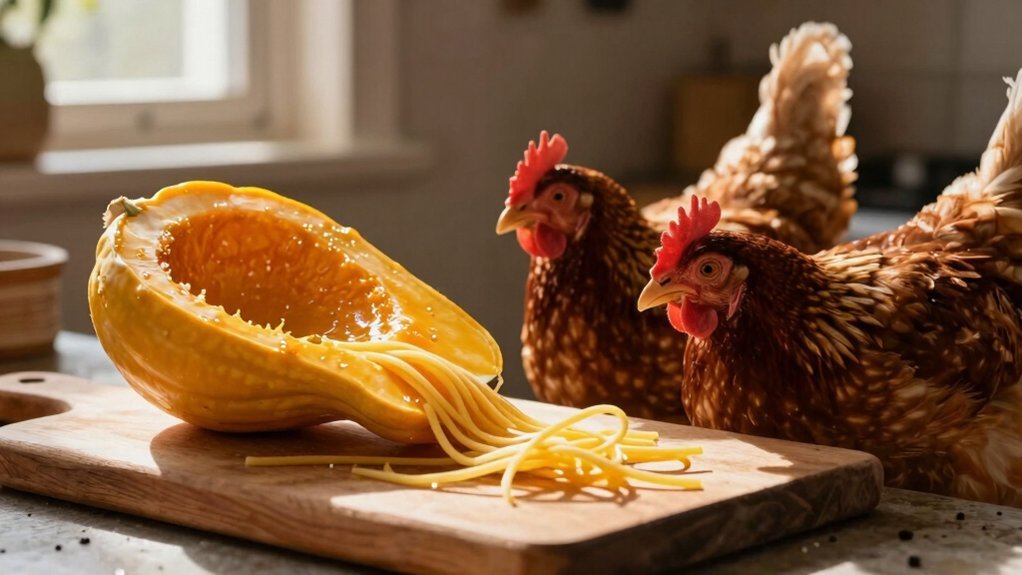
You’re probably wondering if spaghetti squash is safe for your flock, and the answer is yes—just chop or mash it into bite‑size pieces and you’ve got a low‑calorie, vitamin‑rich treat. Cook it 15–20 minutes until tender, skip salt or butter, and serve a few cubes a few times a week; a cup gives about 42 calories, 2 g fiber, and 120 IU vitamin A. Keep an eye on the crop and droppings, and you’ll see happy, healthy birds; next, you’ll learn how to rotate it with other fall veggies.
Can Chickens Safely Eat Spaghetti Squash?
If you’re wondering whether spaghetti squash is safe for your chickens, the short answer is yes—just like most garden veggies, it’s fine when you serve it right. You’ll find that spaghetti squash dangers are minimal; the main risk is choking on long, stringy strands, so you must chop or mash it. The spaghetti squash limitations revolve around preparation and portion size—raw pieces can be tough, and over‑feeding may crowd out balanced feed.
Now, wash the squash, discard any mold, and cut it into bite‑size chunks. Cooked squash softens the flesh, making digestion easier, while raw squash stays firmer but still edible if you break it up. Offer only a handful of pieces per bird, and watch for any digestive upset. Similar to other members of the gourd family, the seeds of this squash have historically been used as a natural dewormer for livestock, including chickens. While cooking is acceptable, be aware that this process may reduce some nutrients compared to serving the squash raw. Just as with acorn squash, you must ensure the treat is served plain without harmful additives like garlic, onions, salt, or butter to prevent serious health complications.
All right, remember that this treat should supplement, not replace, a complete diet. Keep servings small, introduce gradually, and monitor the flock. Your takeaway: spaghetti squash is safe when you respect its limitations and avoid choking hazards. Ready to try a small batch and see how your chickens react?
Nutritional Benefits of Spaghetti Squash for Chickens
You’ve just learned that spaghetti squash is safe for chickens, and now you’re probably wondering what it actually does for them.
What calories does it add?
A cup of cooked flesh packs about 42 calories, so you can give a tasty bite without overloading a layer’s diet. The low energy density keeps weight in check, just like a light snack for us.
How does it help digestion?
Around 2 g of fiber per cup nudges gut motility, leading to regular droppings. Think of it as a gentle brush for their intestines, complementing a balanced ration.
What vitamins and minerals boost health?
It delivers roughly 120 IU of vitamin A and 5 mg of vitamin C per cup, supporting eye health, immunity, and antioxidant defenses. Potassium (≈180 mg) and magnesium (≈19 mg) aid muscle function and hydration. Remember that these treats should only supplement a balanced complete layer feed rather than replace it to avoid nutritional imbalances. While squash provides valuable micronutrients, a quality diet must also include essential amino acids like lysine and methionine to support feather development and egg production. Maintaining fresh water access alongside these treats is fundamental for overall hydration and health.
Takeaway: Spaghetti squash offers solid nutritional benefits for poultry, especially vitamin support in chickens, while staying low‑calorie and fiber‑rich. Next, consider whether to serve it raw or cooked for ideal texture. The cramped pantry required that squashes be spread out for proper airflow.
How to Prepare Raw vs. Cooked Spaghetti Squash
How do I decide between raw and cooked spaghetti squash for my chickens? You’re right to wonder; raw offers a crunchy novelty, but cooked softens fibers for easier digestion.
What are the preparation variations?
Now, wash the squash, cut it in half, and inspect for any soft spots or mold. If you go raw, dice it into bite‑size cubes and remove the tough outer skin and seeds. This reduces choking risk but keeps the stringy texture. For cooked, steam, bake, or boil until the flesh yields easily—about 15–20 minutes. Cool completely, then pull the strands apart and toss out the rind and strings.
How does seasonal sourcing affect your choice?
Obviously, fresh fall harvests are firmer, making raw pieces harder to chew. When you source locally during peak season, you’ll find softer, more fragrant squash, which often needs less cooking time. Just as sweet potatoes are 100% safe for chickens whether raw or cooked, spaghetti squash can also be served in either state provided it is prepared correctly. Similar to how beneficial dietary fiber in carrot greens supports chicken digestion, the fiber in squash aids gut health when fed appropriately.
Takeaway
Choose raw for a brief, crunchy treat if you slice tiny pieces; choose cooked for a consistently digestible snack. Next, decide how often you’ll offer this seasonal treat to your flock. Always remember that offering vegetables chopped into small pieces helps avoid choking hazards and ensures safe consumption for your birds.
Serving Sizes and Frequency for a Balanced Treat
When you wonder how much spaghetti squash to give your flock, you’re right to ask—treats should stay tiny compared to the daily ration. Treat overindulgence can crowd out balanced feed, so aim for a few bites per bird. Bantams and young birds get the smallest portion; a larger hen might nibble a bit more, but never more than a side snack.
Now, how often should you offer it? Keep squash under 10 % of total intake, a few times a week at most. Think of it like a dessert—only after the main meal is finished. If you see leftovers, loose droppings, or reduced feed interest, you’ve crossed the line. To prevent this nutrient dilution, always ensure your birds consume their primary diet containing necessary calcium before offering any squash treats. Since layer feeds are specifically formulated with 3–4% calcium to support eggshell strength, relying on them as the main food source ensures hens meet their critical mineral needs before enjoying extras. Proper nutrition also involves transitioning pullets to higher-calcium feeds around 16 to 18 weeks to support continuous production and overall health.
All right, the takeaway: tiny portions, occasional service, and always after a full feed. Next, consider how to mix squash with other produce for enrichment.
Feeding Flesh, Skin, and Seeds Effectively
You’re probably wondering how to turn those tiny squash bites into a balanced snack that actually benefits your flock. You can start by cutting the flesh into bite‑size strands after cooking it until it’s soft. The fiber helps digestion, and the vitamin C boosts immunity, so a handful a day works well. Just like other safe vegetables, always ensure the treat is served without harmful additives like salt or spices to keep your flock healthy. While squash is a great option, remember that citrus fruits should be avoided as they can cause digestive issues in chickens.
Here’s the thing about skin: it’s edible, but rind thickness can cause pecking difficulty. Slice the rind into thin strips or steam it a bit to soften it, then let the birds peck away without frustration.
All right, seeds add protein and healthy fats. Toss a few raw or lightly roasted seeds into the mix; they’re easy for chickens to break open. Obviously, moderation is key—too many seeds can unbalance the diet. Chickens will readily consume the seeds, large squash seeds being especially appealing. Similar to feeding berries, treats should only be given in moderation to avoid digestive issues like diarrhea and nutritional imbalances since they are not a complete diet.
Takeaway: Serve tender flesh, softened skin, and a modest seed sprinkle together for a nutrient‑rich treat. Ready to try a small batch and watch how your flock reacts?
Safety Tips for Feeding Spaghetti Squash
You’re probably wondering if spaghetti squash could turn into a digestive disaster for your chickens. Here’s the thing: treat it as a supplement, not a staple. Keep servings to 10‑15 % of daily intake, cut into bite‑size pieces, and cook until tender. Avoid salt, butter, or spices, and always wash the skin to lower toxicity concerns from pesticide residue.
Now, check for soft spots, mold, or rot before you serve. Spoilage risks rise quickly once leftovers sit, so remove any excess right away. Supervise the first few feedings; watch for gagging, loose droppings, or a full‑looking crop. Just as frozen peas retain nutrients through flash freezing to support health, properly prepared squash offers a valuable seasonal boost when handled with care. While standard breeds are favored for high-volume production, true bantams have no large counterpart and often possess stronger brooding instincts that make them excellent mothers. Crucially, never feed your flock moldy food or items from the nightshade family, as these can contain dangerous toxins like solanine that cause severe illness or death.
All right, remember small pieces reduce choking and crop impaction. If a bird shows distress, stop the squash until it recovers. Takeaway: simple prep, modest portions, and vigilant monitoring keep spaghetti squash a safe, occasional treat for your flock. Chickens especially love the seedy goodness inside the squash.
Rotating Spaghetti Squash With Other Safe Fall Produce
Why rotate squash with other veggies?
Rotating squash with kale, broccoli, and cabbage balances the starchy texture with crisp, vitamin‑rich greens. You’ll see better egg production when you sprinkle a handful of kale leaves into a bowl of shredded squash. Since kale offers essential nutrients like vitamins A, C, and K without toxic substances, incorporating it ensures your flock receives essential nutrients alongside the squash.
What produce pairings combos work best?
Try a combo of diced pumpkin, sliced zucchini, and a few apple chunks. This mix gives orange‑hued squash, deep‑green veg, and sweet fruit, covering all nutrient groups.
How to keep it simple?
Pick three categories each week—squash, greens, fruit—and swap one item in each category. For example, replace pumpkin with butternut squash, kale with spinach, and apples with pears.
Takeaway: Rotate spaghetti squash with other squash, leafy greens, and fall fruit to keep your flock curious and healthy. Just as hanging a whole cauliflower plant provides pecking entertainment, offering varied textures in your squash mix encourages natural foraging behaviors. Ready to plan your first weekly mix?