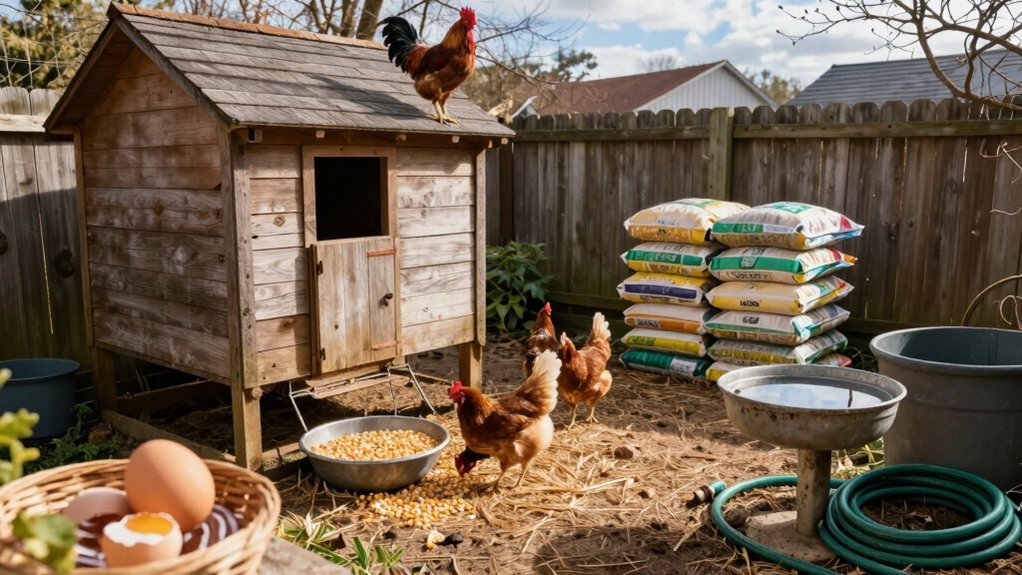
You’re probably wondering how much a backyard flock really costs, and you asked the right question. A solid starter setup for 5‑6 hens runs $750‑$1,200, covering a decent coop, gear, and chicks; then expect $30‑$50 per bird each month for feed, plus $5‑$10 for bedding and supplies. Add $120‑$150 yearly per bird for health care, coop upkeep, and occasional predator fixes. The total first‑year budget lands around $1,200‑$2,300, and you’ll see the numbers break down further as you plan.
How Much Do You Really Need to Spend on a Backyard Chicken Startup?
How much do you really need to spend to get a backyard chicken startup off the ground? You’re probably wondering why budgets swing from $500 to $2,000. Here’s the thing: the coop dominates costs, ranging $100‑$7,500, but a DIY build with reclaimed lumber can land you around $700‑$900 for a 4‑6‑hen flock. Add a $20‑$40 brooder, simple feeders, waterers, and basic predator‑proofing, and you stay under $1,000. Lighting systems cost $30‑$80 if you need supplemental heat for winter eggs. Marketing strategies—like sharing updates on social media—don’t affect the budget, but they can boost community support. Obviously, the biggest surprise is how much you save by reusing materials. Takeaway: a modest, DIY‑first approach keeps you under $1,000 while covering all essentials. Next, decide whether you’ll DIY or buy a pre‑built coop. For a larger flock of 15 hens, ensuring 4 square feet of indoor space per bird is critical for their health and comfort, which significantly impacts your material requirements and total cost. Remember that providing adequate outdoor run space is also essential to allow your birds to forage and move comfortably without overcrowding. To prevent health issues caused by overcrowding, you should consider allocating 3 to 5 square feet of indoor coop space per bird when calculating your final build dimensions.
Backyard Chicken Startup: Cost of Chicks, Coops, and Essential Gear
You’re probably wondering why the numbers jump from a few dollars for a chick to a few hundred for a coop. The chick price itself is tiny—$2–$10 for common breeds, $15–$35 for pullets, and $20+ for adult hens—so the bulk of your budget goes elsewhere. A sturdy coop, predator‑proofing, and weatherproofing easily reach $500–$1,000, especially if you need extra framing, roofing, and secure latches. For a flock of 50 birds, plans often suggest dimensions like 24 by 8 feet to ensure ample space and proper ventilation alongside durable construction.
How much do you need for a brooder?
A brooder setup includes a heat lamp, feeder, waterer, and bedding. Expect $50–$150 for quality brooder accessories; they’re a one‑time cost but essential for healthy chicks.
What about health basics?
Chick vaccinations add $5–$15 per bird and prevent common diseases. Pair them with proper brooder gear, and you’ll avoid costly setbacks later.
Takeaway: Your biggest expense is the coop; chicks and accessories are modest. Plan for a solid coop first, then add brooder accessories and vaccinations. Next, consider how much feed and bedding you’ll need each month. Purchasing from local hatcheries can provide breeds suited to your specific climate while supporting local businesses. Online ordering also grants access to rare breeds that may not be available through local suppliers.
Backyard Chicken Monthly Feed, Bedding, and Miscellaneous Costs
You’re probably wondering why the monthly bill feels like a mystery, and that’s a great question to ask. Here’s the thing: feed dominates your cost sheet. A laying hen eats 7‑10 lb a month, so a standard diet runs $3‑$5 per bird. A six‑chicken flock typically spends $25 on feed, while a larger flock can hit $200 for 50 hens. Choosing life stage feeds tailored to starter, grower, or layer requirements ensures nutritional efficiency and can prevent wasted spending on inappropriate formulations. While costs vary based on whether you supplement with scraps or allow free-ranging, a typical small flock spends roughly $15 to $30 per month on feed alone depending on quality. Providing supplemental calcium like oyster shells allows hens to self-regulate intake for stronger eggshells without requiring expensive high-calcium feeds for the entire flock.
How much does bedding add? Bedding usually costs $5‑$10 each month, depending on coop size and litter depth. Reusing material and managing waste can stretch each bag farther, keeping this line smaller than feed.
What else shows up on the bill? Miscellaneous items—egg cartons, cleaning supplies, grit, and occasional repairs—run $5‑$20 monthly. A small flock often sees about $10 in this category.
Takeaway: Feed is your biggest recurring expense, bedding is a modest add‑on, and misc costs round out the budget. Next, consider how these numbers scale with flock size and quality choices.
Backyard Chicken Hidden Costs: Health, Predators, and Replacements
You’re probably wondering why the bill jumps once you’ve covered feed and bedding.
What health expenses should I expect?
Routine dewormers, vitamins, grit, and mite treatments add up quickly, often $30‑$70 per year per bird. When a chicken gets sick, a vet visit can cost $50‑$150, similar to a small‑dog check‑up. Even a single illness can blow your budget, especially with a tiny flock. Live stream hosts often use this time to fill gaps before the main discussion.
How do predators affect my costs?
Raccoons, foxes, hawks, and neighborhood dogs demand sturdy hardware cloth, buried aprons, and heavy‑duty latches—upfront upgrades run $200‑$500. Since standard chicken wire is easily breached by raccoons and hawks, investing in ¼ inch hardware cloth is essential for creating a robust defense against these common threats. Foxes are particularly persistent diggers and jumpers, so installing protective fencing with an overhang or buried apron is critical to prevent them from breaching your coop. Raccoons are sneaky predators capable of killing an entire flock quickly and can transmit dangerous diseases like roundworm and rabies. If a predator strikes, you replace lost birds ($5‑$25 each) and may need emergency repairs. Some owners pay insurance premiums for predator insurance to offset those sudden losses.
When should I replace birds?
Hens peak in the first 2‑3 years; after that, egg output drops. Replacing older hens with pullets costs $5‑$25 per bird, plus any added health or predator safeguards.
Takeaway: Expect hidden costs from health care, predator proofing, and regular bird turnover; budgeting for them now saves surprise expenses later.
Next step: Calculate your annual hidden‑cost estimate and decide if predator insurance premiums fit your risk plan.
Backyard Chicken Coop Lifespan and Real Per‑Year Cost
Backyard chicken coops feel like a big investment, and you’re probably wondering how long they really last and what that means for your budget. You’re confused about breed longevity versus coop durability—good thing you asked. Obviously, a sturdy coop built from pressure wood or metal lasts longer than a flimsy kit, and that directly cuts your per‑year cost.
How long will my coop survive?
Now, a well‑constructed coop can serve 10 years, turning a $1,200 build into about $120 a year. If you choose cheaper lumber, you may need a replacement in five years, raising the annual cost to $160. Seasonal maintenance—roof patches, hardware swaps, repainting—adds a few dollars each year but prevents premature failure.
What does my bird’s lifespan mean for housing?
Here’s the thing: heritage breeds like Rhode Island Reds live 8‑10 years, while bantams can hit 16‑18 years. Hybrid layers may only last 2‑3 years. If your birds outlive a cheap coop, you’ll face costly upgrades or a full rebuild. Matching coop lifespan to breed longevity saves money and stress. While some well-cared-for domestics can reach 15 years or more, planning your housing around the typical 6 to 8-year range ensures your infrastructure remains viable for most of your flock’s life. Unlike other ornamental breeds, Silkies typically enjoy a lifespan of 7 to 9 years when provided with proper care and protection from the elements. It is worth noting that high-production hybrids like ISA Browns often have a shorter 2 to 4 years lifespan due to the significant stress their reproductive systems endure from laying up to 300 eggs annually.
Takeaway
Plan for a 10‑year service life with quality construction materials; budget roughly $120‑$150 per year, plus modest maintenance. This aligns housing costs with your flock’s expected longevity. Next, consider how to calculate your first‑year expenses for 5‑6 birds.
Backyard Chicken First‑Year Budget Calculator for 5‑6 Birds
What will my first‑year costs actually look like? You wonder if $500 or $1,200 is realistic for five to six birds. Here’s the thing: startup expenses dominate at first, then feed sourcing and breed selection shape the ongoing budget.
How much do I need to start?
A basic coop for six birds runs $800‑$2,000, but a modest DIY setup can drop to $300‑$600. Add a brooder ($20‑$40) and day‑old chicks ($3‑$5 each). Expect $750‑$1,200 total before you even think about feed. Ensuring your enclosure is a predator-proof coop from the outset prevents costly losses and repairs later on. To maintain comfort and health within this space, you must ensure adequate coop ventilation to regulate temperature and air quality regardless of the season.
What about yearly running costs?
Feed is the biggest recurring item. At $30‑$50 per month you spend $360‑$600 a year. Add bedding, winter supplies, and occasional vet visits, and you land around $800‑$1,100.
Takeaway
Plan $1,200‑$2,300 for the first year, split between $600‑$800 startup and $600‑$900 ongoing. Next, choose a breed that matches your egg goals and decide whether you’ll buy feed in bulk or locally. Selecting the right chicken breed for your specific climate and production goals is essential to minimize long-term health costs and ensure your flock thrives.