You’re right to wonder which gourds are safe for chickens, because not all look alike. Pumpkins, butternut, acorn, delicata, kabocha, young luffa, and tender bottle gourds are the go‑to varieties—just rinse, dip in a 1:3 vinegar‑water mix, dry, and cure for two weeks before cutting them into bite‑size pieces; keep seeds, flesh, and even rind, but discard anything bitter, moldy, or painted. Offer these treats plain, no more than 10 % of the daily diet, and you’ll boost vitamins, protein, and foraging fun while avoiding toxicity. If you keep these steps in mind, the next section will show you easy enrichment ideas.
Safe Edible Gourds for Chickens
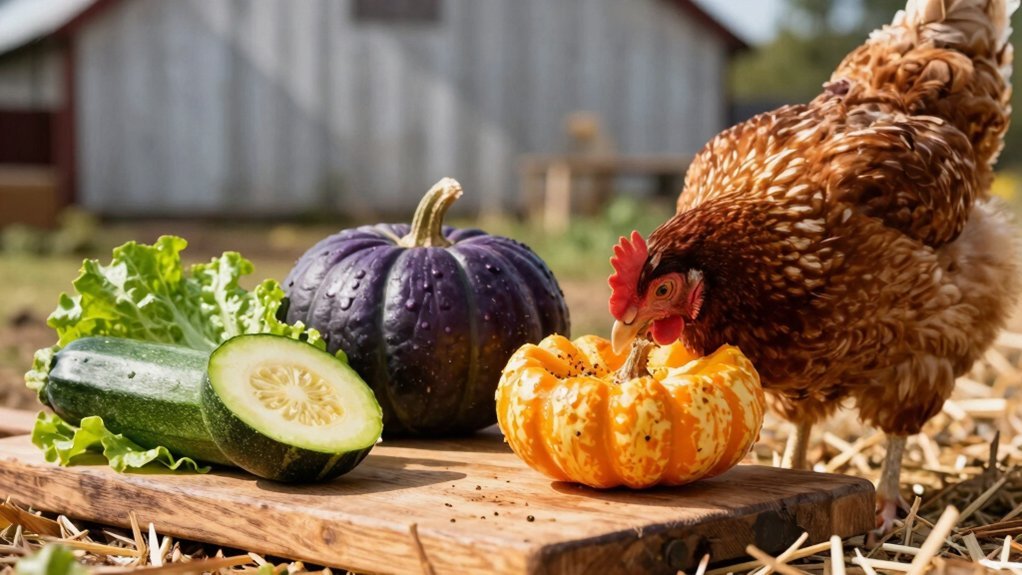
What makes a gourd safe for your chickens? You’re right to wonder—only edible varieties, free of mold, paint, or chemicals, work. The flesh packs vitamins A and C, potassium, magnesium, and raw gourd keeps those nutrients at peak levels, giving you solid nutritional benefits for fall feeding. Split the gourd open, cut it into halves or chunks, and serve plain; chickens love the soft interior and can peck the seeds for extra enrichment.
Here’s the thing: raw, plain gourd is safest, but a quick steam can soften tougher skins without adding salt, oil, or sugar. Keep portions small, let the flock choose freely, and pull any uneaten pieces to avoid spoilage. Remember that treats should only supplement a balanced diet and never exceed 10% of their daily intake to prevent nutritional imbalances. Just as you must avoid pumpkin pie due to harmful additives like sugar and spices, ensure your gourd treats remain free of added sugars and spices. Like other safe options such as ripe tomatoes, gourds should be offered in moderation to maintain digestive health. Obviously, you’ll see healthier, more active birds when you add this occasional treat. Try offering a half‑gourd tomorrow and watch them enjoy the boost.
Top Gourd Varieties Chickens Are Safe
You’re probably wondering which gourds you can safely toss to your flock without a second guess.
Which pumpkins are safest?
Cucurbita pepo, maxima, and related pumpkins rank top. Small‑to‑medium pumpkins crack open easily, and both flesh and seeds are tasty. Fresh seeds give you seed benefits—protein, healthy fats, and anthelmintic compounds—while the flesh adds enrichment. Split them open and let chickens peck; it’s a low‑effort feeding strategy that keeps waste down.
What squash works best?
Butternut, acorn, delicata, and kabocha are all flock‑friendly. Their softer flesh needs little prep, and the seeds boost nutrition and foraging interest. Offer whole or halved squash as a treat, not a staple, and you’ll see natural pecking behavior. While these varieties are nutritious, cutting the tough skin is often helpful so chickens can access the valuable B vitamins, magnesium, and potassium inside. Although butternut squash is packed with vitamins A and C, it is unlikely to change the color of your chickens’ egg yolks.
How about luffa and bottle gourds?
Young luffa fruits and tender bottle gourds provide high seed content and a fun, forage‑style treat. Use them early, before they harden, and you’ll add variety to your feeding strategies.
Takeaway: Stick to fresh, plain pumpkins, squash, young luffa, and bottle gourds; split or chop them for easy access, and enjoy the seed benefits while keeping treats balanced. Remember that avoiding moldy squash is essential to prevent illness, so always inspect your produce before serving it to your birds.
Now, which of these varieties will you try first?
Ornamental and Toxic Gourds to Avoid
If you’re wondering why some pretty gourds belong in the garden and not on the feed tray, you’ve asked the right question. Ornamental gourds look nice, but “decorative” doesn’t mean safe. They belong to the Cucurbitaceae family, where harmless and harmful members can look alike, and a bitter taste often signals high cucurbitacin levels that cause gastrointestinal irritation and cucurbitacin poisoning.
Here’s the thing: any gourd that tastes intensely bitter should be tossed. Wild or improperly bred cucurbits can pack bitter bitterness, a compounds, and red flag. mold. Moldy, rotting, or pesticide‑coated gourds also pose a risk, especially when you can’t verify their origin. Just as moldy food can be fatal to chickens, consuming spoiled or toxic plant matter introduces severe health risks that must be avoided. Feeding moldy bread to chickens is similarly dangerous because it exposes them to toxic molds that can lead to serious illness or death. Similar to how garlic bread contains ingredients toxic to poultry, certain ornamental gourds harbor natural compounds that can cause anemia or other severe health problems if ingested.
All right, the takeaway: only feed fresh, non‑bitter, untreated gourds you know are safe. If you’re unsure, discard it and keep your flock healthy. The recent harvest produced over 120 gourds, but many showed rot and cracking.
Which Parts of a Gourd Can Chickens Eat?
You’ve probably wondered which parts of a gourd are actually safe for your flock after hearing about the bitter, ornamental varieties to avoid.
What can they eat?
The soft flesh is the easiest bite. It’s packed with vitamins A, C, E, B‑complex and minerals like potassium and phosphorus. You can give it raw or cooked, and chickens will peck it out of split gourds right away.
What about seeds?
Seeds are a protein powerhouse, loaded with healthy fats, fiber, zinc, iron, magnesium and carotenoids. Even the seed coating can help with worm control. Just watch mature cucurbitacin levels—older seeds may taste bitter, but they’re still edible in moderation.
Is rind, skin, leaves, or vines okay?
Absolutely. The rind adds roughage for fiber digestion and keeps chickens busy. Leaves, vines, and even blossoms are safe forage, encouraging natural scratching and pecking.
Takeaway: Offer flesh, seeds, rind, leaves, and vines, but avoid any bitter, ornamental pieces. Next, think about how you’ll break these parts into bite‑size pieces for easy foraging. Since chickens are omnivores that benefit from diverse protein sources, adding gourds to their diet complements other organic feed ingredients like peas and barley to ensure balanced nutrition. As with all treats, remember that foods should be offered without harmful additives like salt or spices to keep your flock healthy. While treats provide variety, care must be taken to avoid excessive amounts that could dilute essential nutrients found in their primary diet.
How to Prepare and Store Gourds for Chickens
You’re probably wondering how to keep gourds fresh enough for your chickens without turning them into a moldy mess.
How do I clean them before storage?
First, rinse each gourd right after harvest, then dip it quickly in a vinegar solution—about one part distilled vinegar to three parts water—to kill surface spores. Pat them dry on clean towels, then place them on drying racks in a well‑ventilated spot.
What’s the best curing method?
Cure gourds for two to four weeks, rotating them daily on the racks so air circulates around every curve. Keep them out of direct rain or sun, and watch for soft spots that signal rot.
How should I store the cured gourds?
Store in a cool, dry pantry on shelves or crates that allow airflow; avoid sealed bins that trap humidity. Check weekly for mold or bad odors, and discard any gourd that smells sour or feels mushy. *Takeaway:* Clean, vinegar‑dip, dry on racks, cure, then store with airflow. Next, decide how to cut and serve the safe pieces to your flock. Use a mask when sanding the gourd interior to prevent inhalation of fine dust.
Fun Enrichment Ideas Using Gourds
You’re probably wondering how to turn a plain gourd into a lively enrichment tool for your flock.
How do hanging gourd feeders become treat puzzles?
Hang a hollowed gourd from a roost with strong twine. Fill it with mealworms or chopped veggies. The birds must peck and tug to get the food, turning a simple snack into a treat puzzle that sparks jumping and reaching. Allowing chickens to work for their food satisfies their highly motivated evolutionary needs and prevents the frustration that arises when instinctual behaviors are blocked.
What about buried gourd treasure hunts?
Bury a small gourd or its contents in a shallow pit of damp bedding. Chickens instinctively scratch, creating digging games that satisfy their foraging drive and cut boredom. This type of activity mimics the benefits of free-range environments by encouraging natural exploration and exercise within a contained space.
How can you make a stuffed gourd station?
Stuff a gourd with mixed textures—corn, leafy greens, and a few grubs. Hang it or place it on the ground for a quick, eco‑friendly snack station. These interactive feeding methods help prevent bullying and promote natural behaviors such as scratching and natural foraging.
*Takeaway:* Use hanging, buried, and stuffed gourds to add variety and mental stimulation. Next, try a simple hanging puzzle and watch the pecking excitement. The fabric pieces are cut into triangles before being adhered with Mod Podge, ensuring a secure, glossy finish.