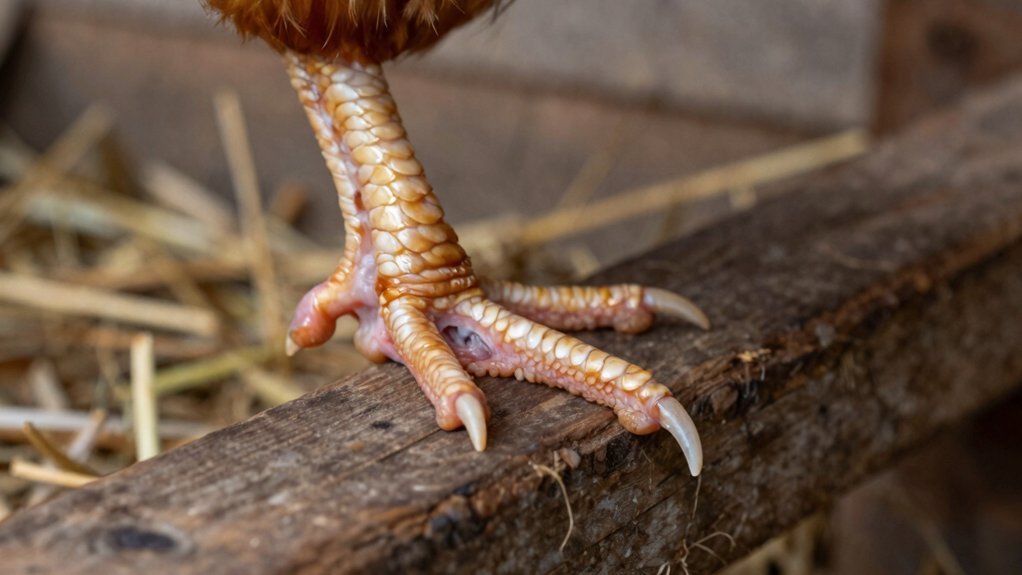
You’re probably wondering if those curled toes are just a quirky bend or a warning sign. The main culprits are a riboflavin (vitamin B2) shortage, which weakens nerves, or incubation trauma that bruises leg nerves; Marek’s disease can look similar but usually shows weakness and paralysis. Boost riboflavin with 1–2 mg/kg daily or a 1–3 mg/kg IM injection, switch to a starter feed with ≥4.4 mg/kg riboflavin, and consider a 24‑48‑hour splint using VetWrap or a thin straw. If the bird can’t stand, loses appetite, or shows rapid weakness, call a vet right away. Fixable? Yes—most nutritional cases improve within two days of treatment, and splinting helps realign the toe. Keep reading to uncover how to prevent future outbreaks.
Identify the Main Causes of Curled‑Toe Paralysis
What’s actually causing those curled toes? You’re probably wondering why your chicks look like they’re tip‑toeing. Here’s the thing: the main culprits fall into three buckets—nutritional gaps, disease, and physical damage.
Is it a vitamin shortage?
Folates and riboflavin keep nerves firing correctly; a folate deficiency can mimic the classic inward curl by weakening the sciatic nerve. If your starter feed lacks fortified B‑vitamins, you’ll see sluggish growth and hock‑walking. Riboflavin deficiency can also cause the same paralysis pattern. While specific vitamin gaps directly impact nerve function, overall quality protein supplements are equally vital for proper tissue development and immune support during these critical growth stages. Selecting a feed with balanced protein levels ensures adequate muscle and bone development to prevent such structural weaknesses. It is also crucial to provide starter feeds containing 20–22% protein and moderate calcium to support the rapid development that prevents early neurological issues.
Could an infection be at work?
Marek’s disease damages peripheral nerves just like a vitamin shortfall, but it spreads through the flock and adds progressive weakness.
Might there be trauma?
Traumatic injury during incubation or early handling bruises the leg’s nerves or bones, locking the toes in a curl.
Takeaway: Identify whether the problem stems from diet, disease, or injury before you treat. Next, check your feed formulation and hatch conditions.
Quick‑Start Riboflavin Boost for Curled‑Toe Paralysis: Dosage & Timing
You’re probably wondering why the toe curl isn’t fixing itself yet.
How fast should I give riboflavin?
Now, give each chick 100 µg oral riboflavin daily, or 1–2 mg/kg every 24 h if you prefer a weight‑based dose. For a rapid boost, use an intramuscular injection of 1–3 mg/kg once a week. You’ll see improvement within 24–48 hours if you start early.
What else supports recovery?
All right, switch the flock to a starter feed containing at least 4.4 mg/kg riboflavin. Provide vitamin‑rich water and soft feed so weak birds can eat. If any chick can’t reach food, give supportive care—warm bedding, gentle handling, and electrolytes. While addressing the deficiency, remember that maintaining clean water access is critical to support overall hydration and recovery efforts. Just as with wry neck treatment, you should separate affected birds to reduce stress and prevent injury from flock mates while they recover. Similar to how stress contributes to pasty butt, minimizing temperature extremes is also vital for chicks recovering from riboflavin deficiency.
Takeaway
Start oral or injectable riboflavin today, keep supportive care flowing, and expect neuromuscular signs to improve in two days. Next, ask how to tell whether the toe curl is still reversible.
Distinguish Nutritional From Incubation‑Related Curled‑Toe Cases
How can you tell if the toe curl is a nutrient issue or an incubation mishap?
You’ll notice nutritional curled‑toe paralysis after hatch, when chicks grow weak, stumble on their hocks, and toes curl progressively. Look for stale starter feed, low‑quality corn, or sunlight exposure that bleached riboflavin. A quick riboflavin boost often reverses the problem.
Here’s the thing: incubation‑related crooked toes appear at hatch or within a day, stay fixed, and show no weakness. If several chicks from the same hatch share the same shape, blame temperature, humidity, or egg positioning errors.
Obviously, the timing and presence of weakness are your biggest clues. Ensuring your chicks receive balanced nutrition with the correct 20-22% protein and 0.9% calcium levels specified for their life stage is critical to preventing these developmental weaknesses. When selecting a diet, prioritize high-quality starter feeds containing essential amino acids and verified ingredients like corn and soy to support proper growth. Adequate levels of essential vitamins such as A, D, E, and K are also critical for overall health and preventing deficiency-related issues.
Takeaway: Spot the onset and check feed quality versus hatch records to pinpoint the cause. Next, consider adjusting your starter ration or reviewing incubation settings.
Gentle Splinting for Curled‑Toe Recovery
If you’re wondering whether splinting can really straighten a chick’s curled toe, you’ve asked the right question.
How long should I keep the splint on?
You’ll usually leave the splint in place for 24‑48 hours, then check for color, swelling, and alignment. If the toe stays straight, a short second cycle may finish the correction.
What can I use to make a splint?
Common splint materials include VetWrap bandage, thin cardboard “sandals,” coffee straws, or commercial poultry toe splints. Choose something rigid enough to hold the toe but soft enough to avoid constriction.
How do I apply it safely?
Flatten the foot, gently extend the toe, then wrap the material snugly yet loosely. Keep the chick warm, calm, and able to stand between wraps, ensuring the environment maintains proper heat levels to support recovery without causing stress. Since young birds cannot regulate their body temperature well, maintaining supplemental heat is vital during the healing process to prevent chilling. Providing clean bedding daily helps maintain a hygienic environment that supports overall health while the toe heals.
Early detection is critical, so monitor the chick within the first 24‑48 hours of life.
Takeaway: Early, gentle splinting with simple materials and a 24‑48 hour splinting duration can often correct mild toe curls. Next, monitor the chick’s progress and adjust as needed.
When Should You Call the Vet? Spot Red‑Flag Signs First
When should you call the vet? You’re right to wonder—curled toes can hide serious trouble. If a bird can’t stand, rests on its hocks, or shows rapid weakness, that’s a red flag. Same goes for sudden loss of appetite, diarrhea, or weight loss; these signs often signal systemic issues like parasitic infections or traumatic injuries.
What else triggers urgent care? Birds that flop, can’t reach feed or water, or get trampled by flockmates need immediate attention. Neurologic signs—hock‑sitting, paralysis beyond the feet, or suspected Marek’s disease—also demand a professional exam. Delay can lead to starvation or death. Since Marek’s disease causes nerve tumors and paralysis that mimic toe curling, distinguishing it from simple injury is critical for flock safety. Because this condition is prevented by a live virus vaccine typically administered at hatch, knowing a bird’s vaccination history helps determine if neurological symptoms are infectious or environmental. While environmental factors like pine shavings are generally safe bedding options, ensuring the coop remains dry and dust-free is essential to prevent respiratory stress that could worsen a bird’s condition.
Takeaway: Call the vet at the first sign of abnormal posture, inability to eat, or rapid decline. Your quick action can save the bird and protect the flock.
Prevent Future Curled‑Toe Outbreaks: Feed, Incubation & Breeding
One common worry you have is why some flocks keep getting curled toes despite good care. You’re right to ask—nutrition, incubation, and breeding all play roles.
How does breeder nutrition protect chicks?
You must give breeder hens 10‑16 mg riboflavin per kg feed. That vitamin fuels embryo nerve and muscle development, so weak hatchlings don’t start life with a deficit. If the breeder diet lacks riboflavin, even perfect post‑hatch feed won’t fix the problem. *Takeaway:* Keep breeder rations balanced; it’s the first line of defense.
What incubation management tricks prevent foot issues?
Maintain stable temperature and humidity throughout the 21‑day cycle. Avoid rough handling at hatching; gentle transfers keep legs intact. Early checks let you spot true nutritional problems versus temporary stress. While most chickens have four toes, certain breeds carry a genetic mutation that results in five toes, though this trait is distinct from the deformities caused by poor incubation. *Takeaway:* Consistent incubation reduces stress‑related toe deformities.
Which feed practices keep your flock healthy?
Store starter feed airtight, away from sunlight, and rotate older bags first. Use fresh, age‑appropriate feed; limit scratches, oats, or treats that dilute nutrients. A complete commercial starter supplies riboflavin and other vitamins. It is also critical to gradually transition diets to maintain digestive health when switching between starter and layer feeds. For chicks that have not been vaccinated against coccidiosis, using feed with amprolium can help prevent intestinal disease during their vulnerable early weeks. *Takeaway:* Proper feed storage and balanced rations stop vitamin loss and imbalance.
Now you know the three pillars—breeder nutrition, incubation management, and feed handling. Next step: audit your breeder diet and storage routine, then fine‑tune incubation settings.