You’re probably wondering why your birds are scratching and looking pale—mites hitch a ride on wild birds, rodents, humans, or even a single used cage, then multiply fast enough to overwhelm a flock in a week. A female can lay 4‑8 eggs daily; in warm, humid conditions those hatch in 24 hours and become adults in 7‑10 days, so an infestation can explode quickly. To stop it, quarantine new birds, seal every gap, keep feed sealed, and treat the coop with diatomaceous earth or a poultry‑safe insecticide while giving your chickens dust‑baths. Now you know the sources, the spread, and the first steps to control—keep going for deeper details.
How Chicken Mites Enter a Flock
You’re probably wondering why a few mites can suddenly overrun a whole coop. The answer starts with how they slip in. Direct contact spreads mites fast—one infested bird can seed the entire flock in days. New birds that arrive without a health check act like tiny Trojan horses, bringing live mites and eggs.
Now, consider human vectors. You carry mites on your hands, shoes, and especially shared clothing. If you wear a work shirt from a neighbor’s barn, you may unknowingly deposit mites onto your coop door or nest box.
All right, what about equipment? Used cages, feeders, and transport boxes hide eggs in cracks. A quick, thorough cleaning before reuse blocks that route. Wild birds and rodents can also introduce pests, so excluding wild birds is a critical step in preventing initial contamination. While these pests primarily target poultry, they can temporarily bite humans causing skin irritation if you have close contact with infected birds.
Takeaway: limit contact, quarantine newcomers, and clean gear. Next, ask yourself how you can set up a simple quarantine space for any new bird. Infestations can also be identified by observing stress-related behaviors such as increased preening and feather pecking in your flock.
Hidden Sources of Chicken Mites: Wild Birds, Rodents, and Objects
Where are those sneaky mites hiding before they find your chickens? You’re probably wondering how wildlife interactions turn your coop into an environmental reservoir.
Do wild birds drop mites in my coop?
Sparrows, starlings, pigeons and other birds build nests in eaves, chimneys, attics and wall cavities. When a nest is disturbed or abandoned, the mites leave the birds and crawl into nearby cracks, roosts, or even your feed containers. Spring and early summer spike this activity because nesting birds are most abundant. Just as crow decoys can signal occupied territory to deter corvids, managing all wild bird access is critical to preventing pest introduction.
Can rodents spread the problem?
Rodents scurry through the same spaces, dragging mite‑laden debris into your coop. Their burrows and debris piles become secondary reservoirs, letting mites survive weeks without a host. Since rats are drawn to unsecured feed and cozy habitats around coops, failing to store food properly can invite these rodents and the pests they carry.
What about objects I bring in?
Second‑hand cages, crates, or cardboard can hide eggs and nymphs. A single contaminated box can seed an infestation that lasts months.
Takeaway: Eliminate bird nests, control rodents, and inspect every reused item before it touches your flock. Next, ask yourself how to keep those hidden sources out of your coop.
Northern Fowl Mite vs. Poultry Red Mite: Key Differences
Takeaway: Locate the mite’s habitat first, then choose the right control method. Next, check your coop’s cracks and vents to confirm the species. Inspect the birds closely for mites or their eggs at the base of feathers to distinguish between species that live on the host versus those that hide in the environment. Since these pests multiply rapidly once established, early detection is vital to preventing severe infestations that can lead to anemia or death. You can effectively eliminate these parasites by applying food-grade diatomaceous earth to bedding, perches, and directly onto the chickens to shred and dry out the pests without harmful chemicals.
Chicken Mite Life‑Cycle Speed: Why Populations Explode
Why does a tiny mite turn into a huge problem so fast? You’re right to wonder—its life‑cycle speed fuels the explosion. A female lays 4‑8 eggs a day, and eggs hatch in about 24 hours when it’s warm and humid. Within 7‑10 days the larva, protonymph, deutonymph, and adult appear, each stage molting quickly. These developmental strategies compress the whole cycle, so overlapping generations pile up in a single season.
Now, genetic adaptations let the mite thrive on blood meals every 2‑4 days, giving it the energy to reproduce repeatedly for weeks. Warm temperatures shave days off development, while high humidity boosts survival, turning a mild infestation into a dense swarm.
All right, the takeaway: rapid turnover, frequent feeding, and environment‑driven adaptations make populations explode. Next, check how you can spot the signs before they spread.
Signs of Chicken Mite Infestation in Birds and Humans?
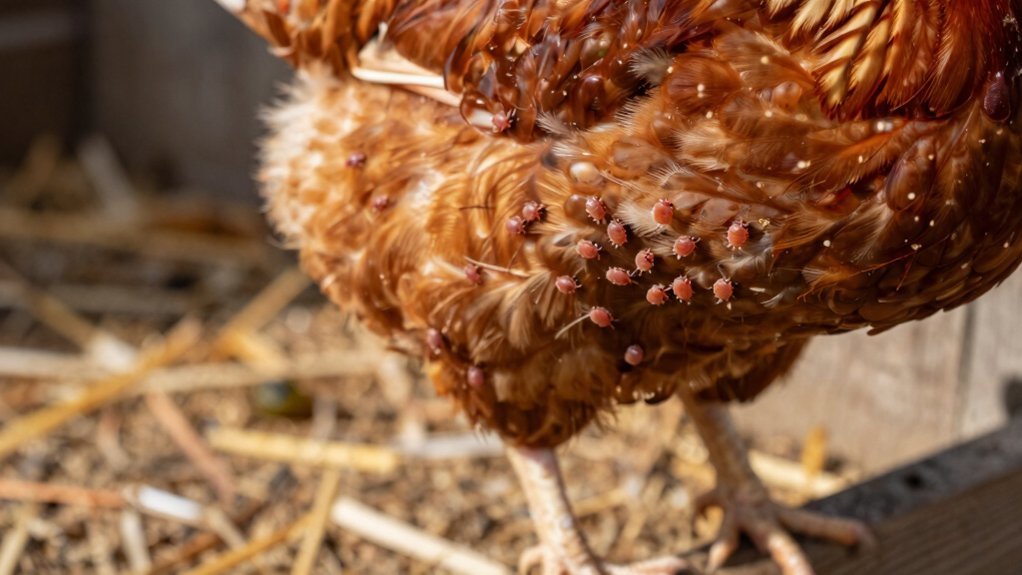
Takeaway: Watch for scratching, pale combs, and nighttime activity on birds, and for itching or specks on yourself. If you see these signs, the infestation is likely present. What’s your next step? Assess the coop for hidden mites and plan a thorough clean‑up. Early detection is critical because mites feeding on blood at night can cause severe weight loss and anemia in your flock. You may also notice feather damage such as broken or missing plumage around the vent, wings, and back. Consistency in treatment is key, as repeat applications are often necessary to break the mites’ life cycle.
Treat Chicken Mites Early: Quarantine, Clean, and Manage Habitat
Next, clean every crack and crevice. Remove old bedding, scrub nest boxes, and disinfect roosts. Mites hide off‑host for weeks, so a thorough wipe‑down eliminates their harborages. Think of it like clearing clutter from a garage; less hiding space means fewer surprises. Apply a permethrin spray to the dried interior surfaces to kill any remaining adult mites before adding fresh bedding. You can also suffocate lingering pests by spraying walls and roosting bars with a mixture of water, cooking oil, and dishwashing liquid. For severe cases, veterinary-prescribed options like Ivermectin treatment may be necessary, though they require caution regarding egg withdrawal times and safety risks.
Finally, manage litter and habitat. Replace soiled bedding, keep the coop dry, and seal gaps where wild birds might drop in. Regularly sweep around the perimeter and discard debris that could shelter mites.
Takeaway: Quarantine, deep cleaning, and habitat control together halt the mite life cycle. Ready to set up your isolation area?
Prevent Chicken Mites: Secure Feed, Block Wild Animals, and Choose Effective Treatments
If you’re wondering why your chickens keep getting itchy, the answer usually starts with what they eat and who they share it with. Store your grains in sealed metal cans or heavy‑duty bins; spilled feed attracts rodents and wild birds that carry mites. Clean up any spills right away, keep feeders off the ground, and empty them at night.
How do you stop wild birds and rodents from becoming hitchhikers? Install bird netting, screen openings, and use hardware cloth on vents. Seal gaps and remove clutter near the coop. A tidy perimeter discourages rodents and reduces the chance of mite introduction. While rats primarily seek feed, they may attack young or roosting birds if food becomes scarce, so eliminating their access is vital for overall flock safety. Although chickens might occasionally eat a mouse, they do not actively hunt rodents, making rodent-proof environments essential for true protection rather than relying on the flock for pest control. Snakes are also drawn to coops by these same rodent populations and accessible water sources, so controlling pests helps prevent multiple types of predators.
Which treatments actually work? Choose labeled poultry‑safe insecticides for active infestations and follow label directions. Combine with dust baths using dry soil, sand, or ash to let chickens self‑clean.
Takeaway: Secure stored grains, block wildlife, and apply proven treatments. Next step: audit your feed storage and coop seals today.