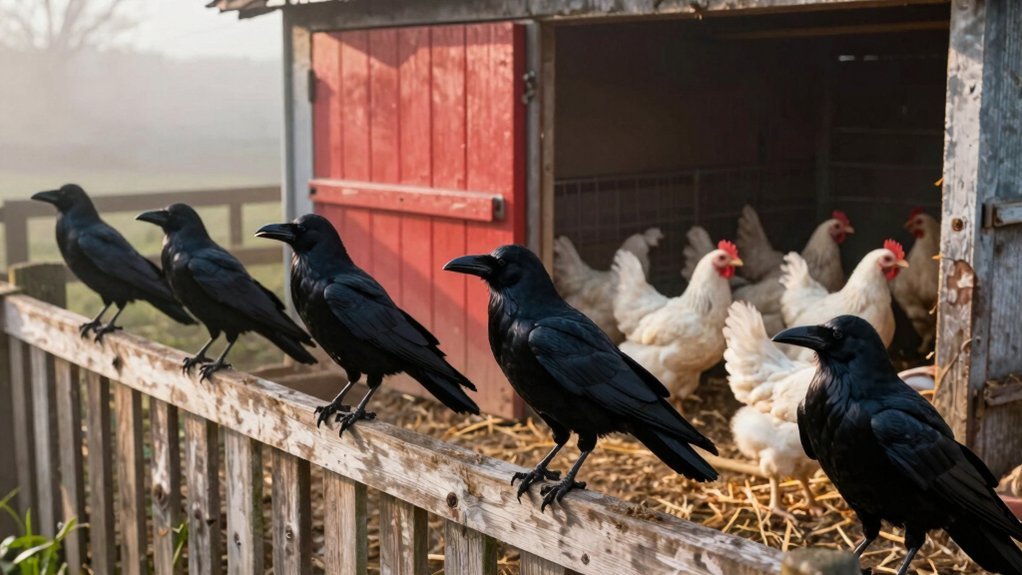
You’re probably wondering if crows actually eat chickens or just steal eggs and chicks, and you’re right to ask. Crows are opportunistic omnivores; they’ll snatch hatchlings in seconds and take eggs—up to 10 % of a crow’s diet can be a single egg—while healthy adult hens are only taken when they’re weak, sick, or very small. To keep your flock safe, seal every coop gap with ¼‑inch hardware cloth, roof the run, collect eggs twice daily, and lock the coop at night; these steps cut off the easy meals crows crave. The next step is to check your coop for any tiny openings and start fixing them.
Do Crows Actually Eat Chickens or Just Steal Eggs?
Do crows really eat chickens, or just steal their eggs? You’re right to wonder—crow intelligence makes them clever opportunists, not outright poultry killers. Here’s the thing: crows target eggs and hatchlings because those are easy, high‑value meals; adult chickens are usually too big and defended for a single crow to handle.
Why do crows focus on eggs?
Because a single egg can be up to 10 % of a crow’s diet, they raid coops when feed spills or nests are exposed. You’ll see broken shells or missing eggs as the most common sign of their presence. Similar to how possums exploit small openings to access vulnerable chicks and eggs, crows will squeeze through gaps to reach unprotected nests.
Are adult chickens safe?
Obviously, healthy adults rarely end up on a crow’s menu. Only when a bird is weak, sick, or a chick will a crow attempt a kill. Multiple crows can mob a vulnerable bird, but that’s the exception, not the rule. Unlike raccoons or weasels that often kill chickens but leave the body largely uneaten, crows typically consume their small prey entirely or carry it off. While other predators like owls may remove only the heads of their victims, crows generally do not leave partial carcasses behind when targeting young birds.
Takeaway
Crows steal eggs, not mature chickens. Secure eggs and feed, and you’ll keep the problem at bay. Next, ask yourself: which parts of your coop need the strongest protection?
Which Chickens Are Most at Risk From Crows?
You’re probably wondering which birds in your flock attract the most crow attention. You’ll find that newly hatched chicks are the top target because they’re tiny, can’t move fast, and often sit in open brooders. Small breed types like Silkies and Bantams also suffer during crow vulnerability periods; their light bodies and docile nature make them easy to snatch.
Now, sick or injured chickens join the list—crows spot a limp bird and go for it. Chickens that free‑range without roof netting or that forage on bare ground become visible prey, especially at dawn or dusk when supervision drops. All right, the takeaway: protect your smallest, weakest birds during those high‑risk hours, and keep them in secure, covered enclosures. Next, ask yourself how you’ll shield eggs and chicks from the same predators. Even healthy adults face danger if they roam outside a securely latched coop at night, as intelligent predators and opportunistic crows can exploit weak closures or gaps larger than 1/4 inch to reach vulnerable birds. Unlike raccoons that often consume chicken heads, crows typically target live chicks or eggs rather than decapitating adult birds. Implementing ¼ inch hardware cloth throughout your enclosure provides a critical barrier that prevents even determined predators from breaching your defenses.
How Do I Prevent Crows From Stealing Eggs and Chicks?
You’re wondering why crows target your eggs and chicks after you’ve already protected the vulnerable birds. The answer is simple: they spot easy, visible loot.
What can you do right now?
Collect eggs twice daily, use roll‑away boxes, and keep shells off the ground. Switch to nesting location alternatives like raised platforms or enclosed pens to hide them from aerial thieves. Crows remember egg locations and will return if they know where to find them. Implementing proper nesting box sizing ensures hens are comfortable while making it harder for predators to access or spot the eggs from outside the coop. Providing one nesting box for every 4-5 hens prevents overcrowding that can force hens to lay in exposed, vulnerable areas. Constructing boxes with front rails helps keep bedding and eggs secure inside the enclosure, further reducing visibility to scavengers.
How do you block their access?
Cover runs with hardware cloth or tightly spaced twine, and install overhead netting. Secure coop doors and seal any gaps; crows can’t squeeze through a solid barrier.
What about attractants?
Clean up spilled feed, store grain in sealed containers, and eliminate clutter that hides dropped eggs.
Can you deter them with senses?
Hang reflective tape, rotate shiny objects, and play distress calls where legal. Use predator scent masking—spray a mild predator odor near nests to confuse crows.
Takeaway: Combine frequent egg collection, physical barriers, clean surroundings, and sensory deterrents. Next, test one change for a week and watch if crow activity drops.
What Dangers Do Crows Pose to Chickens?
What exactly can crows do to your chickens? You might think they only steal eggs, but they also harass adults, mob flocks, and spread disease. Here’s the thing: adult hens usually fend off crows, yet a weak or injured bird can become an easy target for a quick bite or a stressful mob that leaves it vulnerable to infection.
What about your chicks? Young birds are prime prey; a single crow can snatch a chick in seconds, especially if you let them roam unsupervised. You’ll see more attacks on bantams and small breeds because they’re easier to handle. The loss isn’t always fatal, but the stress can reduce growth rates and immunity.
And the eggs? Crows love easy meals, so they’ll raid any unattended nest, stealing or damaging eggs. If you collect eggs twice a day, you cut their opportunity dramatically.
Disease transmission is a real concern. Wild crows carry parasites and viruses that can jump to your flock, especially when they feed on spilled grain or droppings. Those same droppings create sanitation concerns, attracting flies and other pests that further spread illness. Unlike chickens which serve as disease sentinels to help authorities monitor viruses like West Nile, crows act as uncontrolled vectors that introduce pathogens directly to your coop.
Takeaway: protect young birds, secure eggs, and keep the coop clean to limit disease transmission and sanitation concerns. Next, consider how to crow‑proof your coop. Like skunks that target eggs and young chicks, crows focus their predation on the most defenseless members of your flock while occasionally threatening small adult birds. Just as hawks are deterred by visual deterrents like reflective objects and predator decoys, similar strategies can be employed to discourage crows from approaching your flock.
How to Crow‑Proof a Chicken Coop?
If you’re wondering why crows keep slipping into your coop, it’s because even a tiny gap can become a highway for them. You’ll need to seal every entry point; inspect walls, rooflines, corners, and floor edges for holes, then patch them with fine‑mesh hardware cloth. Overlap seams and fasten the mesh tightly so crows can’t pull it apart.
How do I block the run?
Add a solid roof or a corrugated polycarbonate cover to keep the space airy yet protected. If a full roof isn’t possible, drape bird netting overhead and break up flight paths with string lines.
What about coop insulation and humidity?
Install insulation panels on walls and roof, then add ventilation that’s still meshed. Proper insulation keeps temperature steady, while controlled humidity prevents mold that could attract crows.
What’s the final step?
Fit a chicken‑sized door, keep feeders and waterers under cover, and use reflective tape on the roof edges. Ensure doors have secure two-step locks to prevent intelligent predators from manipulating latches. Maintaining good ventilation within the structure is also essential to prevent respiratory infections and ensure overall flock health. Building a predator-proof structure with these durable materials ensures your hens remain safely contained and healthy against various threats.
Takeaway: Seal gaps, cover the run, and balance insulation with ventilation. Next, ask yourself which daily habits will keep crows away. A cardboard cutout was used to make the entrance small enough to keep crows out while allowing chickens and ducks to pass.
Which Daily Habits Keep Crows Away From Chickens?
You’ve probably wondered why sealing every gap didn’t stop the crows from showing up. Here’s the thing: crows thrive on predictability, so you need routine disruption and tight feeding windows. Feed twice a day—once early, once late—so leftovers disappear fast and the coop stays uninviting.
Now, clean up any spilled grain right after each feeding; a tidy yard removes easy snacks. Secure trash, compost, and pet food in sealed containers, and pick up fallen fruit or garden scraps.
All right, collect eggs promptly and keep hens inside the coop; this cuts the reward loop that draws crows. Vary the exact feeding times by a few minutes each day to keep them guessing.
Cover and lock all trash cans; secure handles to ground. Just as securing a coop with heavy-duty wire mesh prevents fox entry, eliminating accessible food sources is critical to stopping crows. Much like rats are drawn to unsecured feed and eggs left overnight, crows exploit these same easy meals if they remain available. Eliminating accessible water sources is another vital step, as removing these attractants significantly reduces the likelihood of pests targeting your poultry area. Takeaway: consistent, short feeding windows plus daily cleanup create a hostile environment for crows. Next, ask yourself how you’ll monitor early warning signs of a crow problem.
How Do I Spot Early Warning Signs of a Crow Problem?
A sudden, odd crowing from your hens is probably the first clue that something’s off. You’re hearing vocal irregularities that don’t belong in a normal coop. Those broken, choking crow attempts signal stress or a predator nearby, especially crows.
What does strange behavior look like?
Now, notice chickens freezing, crouching, or sprinting toward shelter when a shadow passes. Elevated vigilance, neck craning, and frantic runs to coop entrances are behavioral changes that precede a crow raid. While crows may trigger these reactions, hens also use distinct alarm calls to warn the flock of specific ground or aerial threats.
How do nest and feed signs warn you?
Here’s the thing: missing eggs, hidden caches, and a sudden drop in laying consistency mean crows are rummaging. Repeated crow activity around feeders or the roof shows they’ve found a food source.
Takeaway
If you spot vocal irregularities and those behavioral changes, act fast—secure feed, block perching spots, and reinforce nesting areas. What’s your next step to protect the flock? Since chickens are capable of contented vocalizations, a sudden shift to distressed sounds is a critical indicator that their sense of safety has been compromised by an external threat.