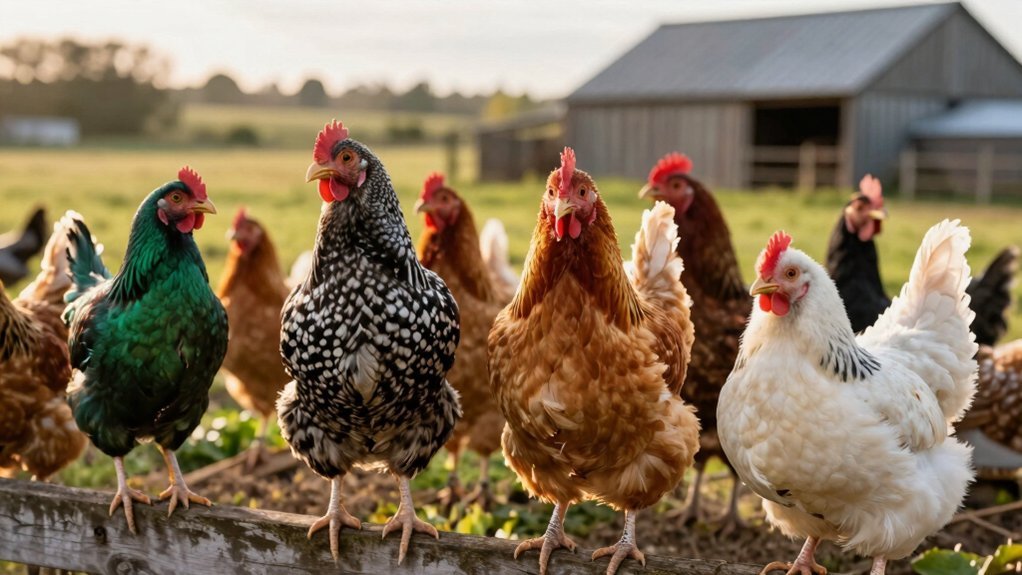
You’re right to wonder how to blend breeds without chaos; start by keeping at least three of each type so no bird feels isolated and a natural pecking order can form. Match temperaments—pair docile birds like Buff Orpingtons with other calm breeds, and keep aggressive types such as Aseels away from milder flocks—to prevent bullying. Give each bird 4 sq ft inside and 8 sq ft outside, add a 10 % space buffer, and use separate feeders and waterers to cut competition. If you set up a safe pen for a week, quarantine new arrivals for 14 days, and watch for bald patches or avoidance behavior, you’ll spot early stress signs. Once you’ve checked health, you’ll be ready to mix year‑round egg layers like Rhode Island Reds and Barred Rocks, and the next step is planning your introduction protocol.
What Is the Primary Goal of Mixing Chicken Breeds?
What’s the real reason you’d mix chicken breeds? You’re probably wondering why breeders spend hours at breeding exhibitions showing off novelty colors. The primary goal is to combine the best traits of each line—egg output, meat yield, disease resistance—so the offspring outperforms its parents.
Here’s the thing: hybrid vigor, or heterosis, boosts growth rates by up to 15 % and can raise egg production by 10 % while cutting feed costs. You’ll see birds that handle heat or cold better, matching local climate without extra shelter. Unlike meat birds bred for rapid short-term slaughter, laying hens are selected for longevity and sustained egg production over several years.
All right, think of it like mixing two sports teams: you keep the strongest players from each, creating a squad that’s tougher, faster, and more versatile.
Takeaway: mixing breeds builds a resilient, high‑performing flock that meets your production goals and dazzles at shows. Next, ask yourself which specific traits you need most.
For instance, crossing White Leghorns with Araucanas creates the Prairie Bluebell Eggers, a hybrid known for laying up to 280 blue eggs annually while maintaining hardiness in diverse climates. Additionally, purposeful selection of distinct breeds like American Game with Aseel can further enhance growth rate and overall profitability through improved functional traits.
Why Do You Need at Least Three Birds of Each Breed?
Why three birds per breed? You’re probably wondering why a trio matters. Here’s the thing: three same‑breed birds give you social buffering, so if one dies the other two still have a partner and avoid loneliness. This stabilizes breed compatibility and smooths group dynamics, preventing a single bird from becoming a perpetual target.
Now, think about pecking order. With three, a natural hierarchy forms, reducing pair‑based competition and spreading flock pressure evenly. A small cluster also hides distinctive traits, so novelty harassment drops.
All right, you’ll see stress levels dip during mixing because familiar companions stay together, making integration gentler. Since chickens are highly motivated to perform instinctual behaviors and may show frustration if deprived, maintaining a stable sub-flock ensures these natural goals are met without disruption. Keeping a chicken alone can lead to stress and depression, so ensuring they have same-breed companions is vital for their mental well-being. Without this social interaction, chickens can suffer from a weakened immune system which negatively affects their health and lifespan.
Takeaway: three birds per breed create a resilient, low‑stress sub‑flock that supports overall harmony. Next, ask yourself how temperament differences will shape that harmony.
How Do Temperament Differences Affect Flock Harmony?
How do temperament differences shape your flock’s peace? You’re wondering why some mixes click while others erupt, and you’re right to ask. Temperament classification groups breeds into docile, aggressive, or flighty categories, and personality compatibility determines whether those groups can coexist without constant pecking.
Which breeds play nice together?
Docile breeds like Buff Orpingtons, Sussex, and Wyandottes usually keep the hierarchy stable, so they’re safe bets when you add other calm birds. Large gentle breeds such as Jersey Giants can also integrate well due to their calm nature. Breeds like Australorps are also valued for their calm temperament and reliable egg production, making them excellent additions to a peaceful mixed flock.
What happens when you mix assertive types?
Aggressive or flighty birds—Aseels, Malay, or Mediterranean types—often bully milder flock, sparking feather loss and stress. Even a single dominant hen can destabilize the order. For instance, the assertive nature of Rhode Island Reds can make them challenging in mixed environments, especially around very gentle breeds or small children.
How do you protect vulnerable birds?
Crested or tiny birds, such as Polish or Silkies, sit low in the pecking order and become easy targets if dominant personalities dominate. Unlike more flighty varieties, Silkies rarely fly and tolerate handling well, making distinctive fluffy plumage a trait that requires extra protection from aggressive flock mates.
Takeaway: Match temperament classification with personality compatibility; keep aggressive types away from docile ones to preserve harmony. Next, consider how you’ll introduce new birds to avoid hierarchy collapse.
How to Size Gaps Between Bantams and Large Fowl?
You’re probably wondering why a single extra square foot feels like a big deal when you mix bantams with larger fowl. The key is poultry genetics: larger breeds naturally claim more territory, so a cramped coop turns a simple perch into a battlefield. You’ll need at least 2 sq ft per bantam and 4 sq ft per big bird, plus 8–10 sq ft of outdoor run per chicken.
Now, how do you size the gaps? First, calculate total floor space: multiply each bird’s requirement, then add a 10 % buffer for movement. Second, allocate roosts at 1.5 ft per bird, placing higher bars for the big birds and lower ones for bantams. While specific needs vary by breed size, providing sufficient space for movement is a fundamental best practice that ensures overall health and reduces conflict in any flock. If chickens lack outdoor access, you must increase the indoor area accordingly to maintain their well-being.
All right, remember agricultural zoning rules often dictate minimum space per animal; check local codes before you build. Adequate space is crucial to prevent stress, disease, and pecking behaviors in mixed flocks.
Takeaway: give each bird its own square footage and roost level, and you’ll keep peace. Next, think about how to set up a safe introduction pen.
How to Set Up a Safe Introduction Pen Step‑by‑Step?
What’s the takeaway? A well‑placed, enriched pen lets you monitor curiosity versus aggression. After a week or so, you’ll know if the birds are ready for direct mixing. Quarantine is essential before this step. Just as secure carriers minimize stress during travel, using sturdy crates for your introduction pen ensures the birds have a safe, well-ventilated space to interact without injury. Providing separate feeding areas within the setup helps prevent existing flock members from excluding the newcomers during these initial visual introductions. Maintaining adequate ventilation is also critical to prevent respiratory issues that can arise from poor air quality in shared enclosures.
How to Design Coop and Run Space for Mixed‑Breed Flocks?
If you’re wondering how much room each bird really needs, you’re on the right track. You’ll need 3‑4 sq ft per adult inside the coop, but give 4‑6 sq ft for comfort, especially when you mix heavy breeds with bantams. For six hens, aim for 18‑24 sq ft; larger birds may need a bit more. Now, the run should be at least 8‑10 sq ft per bird, preferably 10 sq ft if space lets.. Six hens, about 48‑60 sq ft, four birds, roughly 40 sq ft. Here’s the thing: design breed specific zones—roosts, nests, open floor—so timid hens can slip away from aggressive ones. Use visual barriers and staggered perches. Seasonal space adjustments matter too. In summer, expand the run with a temporary pen; in winter, add indoor perches and nesting boxes. If your flock lacks outdoor access, you must increase the indoor coop space by about 50% to reduce stress and health issues. Standard guidelines also suggest providing one nesting box for every 4 to 5 hens to ensure adequate laying capacity without competition. To further support flock health and natural behaviors, ensure your design includes proper ventilation alongside predator-proof features. Takeaway: give each breed its own zone, keep total area on the generous side, and adjust seasonally. Next, think about arranging feeders and waterers to prevent competition.
How to Arrange Feeders and Waterers to Prevent Competition?
You’ve figured out the space each breed needs, but now you’re wondering how to keep everyone fed without fights.
How many stations do you need?
You should place at least two feeders and two waterers in a mixed flock. Spread them out using station spacing strategies—think of a line of snack stalls at a fair, not a single corner booth. This reduces bottlenecks and lets lower‑ranking birds slip in unnoticed.
What height works for all birds?
Apply feed height adjustments so the trough sits 2–3 inches off the ground, reachable for chicks and larger breeds alike. Hang bell‑shaped units a foot high if you have aggressive roosters; they won’t tip over.
How to keep the setup clean and fair?
Check daily for spills, blockages, or empty dishes. If a dominant bird guards a spot, add another station nearby and shift the old one. Utilizing hanging designs can further prevent water spillage and contamination while making refilling easier without entering the run. Choosing feeders with rodent deterrence features helps maintain a hygienic environment by keeping pests away from the food source.
*Takeaway:* Multiple, well‑spaced feeders at the right height keep competition low and nutrition high. Ready to test a new layout?
Proper spacing ensures birds have equal access to feed and water.
Which Egg‑Producing Breeds Work Together Year‑Round?
Which egg‑producing breeds work together year‑round? You’re probably wondering which birds can share a coop without killing your egg count. The answer is a mix of calm, hardy layers that match each other’s temperament and climate resilience, while you focus on space optimization.
Here’s the thing: Pair a Rhode Island Red with a Barred Rock and you get 250‑300 brown eggs each, plus cold‑hardiness that keeps laying through winter. Add a White Leghorn to an Australorp for 280‑320 white eggs and efficient feed use, both tolerating hot and cold when you keep them healthy.
All right, you can also blend an ISA Brown with a Rhode Island Red for 300+ brown eggs and a friendly, low‑stress flock. The key takeaway: choose breeds with similar needs, guarantee enough nesting and roosting space, and you’ll enjoy steady, year‑round production. Next, ask yourself how many eggs you really need and size your coop accordingly. Heavy bone structure gives an elite table bird post‑laying cycle.
How to Spot Early Signs of Bullying or Feather Pecking?
Ever wonder why a usually lively hen suddenly hides by the feeder? You’re right to ask—early bullying shows up in feather condition and aggression timing. Look for bald patches on the back, tail or head; they’re the first visual cue that a flockmate is targeting her. If she avoids the waterer, hangs back at meals, or makes loud alarm calls, that’s behavioral evidence.
Here’s the thing: aggressive birds often stand tall, puff up, and chase the same victim repeatedly. Notice when the attacks start—right after you add a new bird or rearrange the coop. That timing tells you the hierarchy is unsettled.
All right, the takeaway: spot missing feathers, sudden isolation, and the timing of attacks. Then separate the bully and treat any wounds before the problem spreads. What will you check first?
What Health Checks, Quarantine, and Turnover Plans Keep Mixed Flocks Thriving?
Why do health checks, quarantine, and turnover matter for mixed flocks? You’re right to wonder—mixing breeds raises disease risk, stress, and nutrition gaps. Monthly checks catch illness early: inspect combs, eyes, feathers, legs, crop, breathing, stools, eggs, and behavior. Red, warm combs signal health; pale or dark spots warn of trouble. Normal breathing stays quiet; coughing or labored breaths flag respiratory issues or poor ventilation.
Now, quarantine protects you. Isolate new birds for at least 14 days, watch appetite, droppings, breathing, feather condition, and energy. Use footdisinfected footwear and equipment; limit wild‑bird contact. Stagger introductions to reduce stress monitoring allow stress‑monitoring.
All right, turnover planning keeps the flock thriving. Record arrival dates, sources, symptoms, treatments, and post‑intro issues. Balance nutrition across breeds, monitor stress levels, and clean housing regularly.
Takeaway: Consistent checks, strict quarantine, and careful turnover, you and stress health and nutritional balancing. Next, set up a simple log sheet to track each bird’s health milestones.