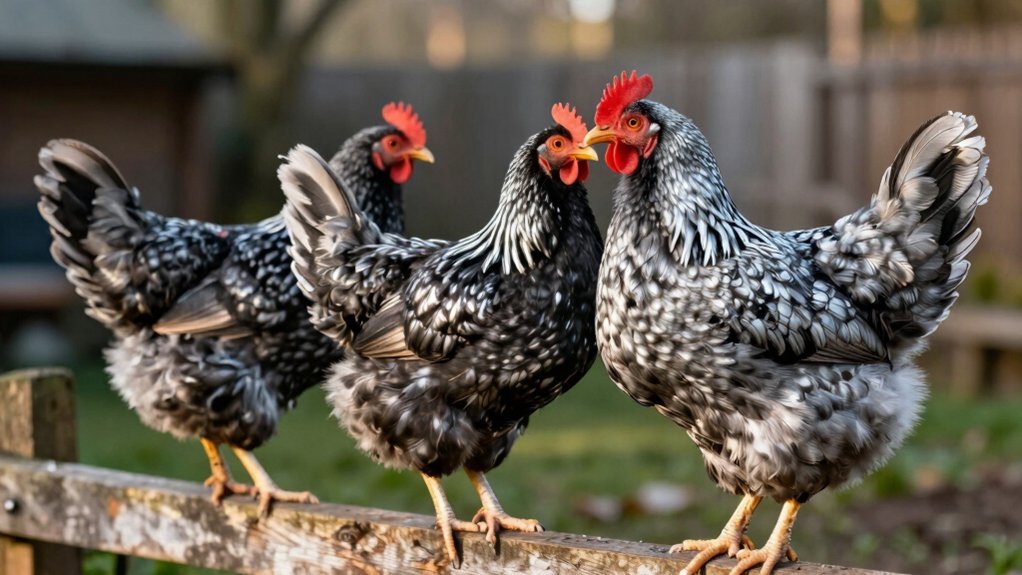
You’re probably wondering why the Silver Laced Orpington stands out, and you’re right to ask. It’s a calm, heavy‑set bird (8‑12 lb hens, 10‑15 lb roosters) that lays 175‑200 medium brown eggs a year, with a crisp black‑and‑silver feather pattern that’s pure eye‑candy. Originating from 1880s Black Orpingtons, the lacing was added later for exhibition, not utility. If you keep them in a fenced yard with shelter, you’ll get a friendly, low‑maintenance flock that still produces a reliable egg supply—more details await if you explore further.
Silver Laced Orpington Overview: Purpose and Key Benefits
What makes the Silver Laced Orpington a true dual‑purpose bird? You’re probably wondering why this feathered friend can handle both eggs and meat without compromising either. The Breed Originators designed it for a Utility Balance: hens lay 90‑200 large, light‑brown eggs yearly, while their 8‑12 lb bodies give generous meat yield.
Now, think of it like a hybrid car—efficient on the road and powerful when you need it. You’ll get a steady egg supply for breakfast and a sturdy bird for a Sunday roast, all from one calm, docile flock member. Like the related Lavender variety, these birds are heritage breed chickens originally developed in England during the 1800s for their dual utility. Similar to other dual-purpose breeds, they thrive in various climates while delivering flavorful, sizable carcasses with excellent meat yield.
All right, the key takeaway: you get reliable egg production and respectable meat in one easy‑to‑manage package. Ready to explore how its temperament fits your backyard? Like their Buff cousins, Silver Laced Orpingtons benefit from proper environmental management to maintain consistent laying through seasonal changes.
Silver Laced Orpington History and Development
Why did the silver‑laced look appear in Orpingtons? You’re probably wondering how a decorative pattern slipped into a utility breed. Here’s the thing: William Cook built the original Black Orpington in 1886 by mixing Minorcas, Langshans, and Plymouth Rocks, aiming for hardiness and size. Those foundation genetics gave a solid black plumage that hid urban grime, and the birds won a show class by 1888.
Now, as breeders like Joseph Partington added Croad Langshans and Black Cochins in the 1890s, they feathered the stock even more. That extra feathering sparked plumage evolution, allowing a silver‑black lacing to emerge as a purely ornamental trait. This focus on abundant plumage aligns with traits seen in other fluffy cheeked breeds that are valued for their soft, rounded appearances.
All right, the silver laced variety isn’t a historic foundation color; it’s a later, exhibition‑focused development. Your takeaway: the pattern grew from selective breeding and feather‑type refinement, not from the original utility goals. While Orpingtons are widely known for their fluffy feathers and winter resilience, the silver-laced variety specifically highlights how aesthetic goals eventually shaped this utility breed. Like their Buff cousins, these birds are cold-tolerant and require spacious housing to accommodate their dense feathering. Next, you’ll want to explore the physical characteristics that set the silver laced bird apart.
Physical Characteristics and Size of the Silver Laced Orpington
If you’re wondering why the Silver Laced Orpington looks so plush and massive, it’s because the breed’s heavy, broad‑bodied frame is deliberately built for exhibition. You’ll see a short back, low stance, and rounded silhouette that gives a “full” appearance—think of a fluffy pillow that’s also a heavyweight champion.
What makes the body so striking? The feather care is profuse and soft, often covering the legs, so the bird appears larger than its actual size. Silver lacing adds a crisp black‑and‑silver pattern, a product of color genetics that you can trace back to the original Orpington lines. Developed in Orpington, England, this breed was specifically created to combine hardiness with a dual-purpose utility for both meat and eggs. Their soft, thick feathering helps them withstand cold weather while maintaining their distinctive broad and deep body shape.
How big does it get? Hens weigh 8–12 lb (2.7–3.6 kg) and roosters 10–15 lb (3.6–4.55 kg); the low stance and thick plumage can make the legs look shorter.
Takeaway: Expect a massive, velvety bird with striking silver lacing, and be ready for diligent feather care to keep that plush look pristine. Next, you might wonder how its temperament fits your backyard. Like their Buff relatives known for steady egg production, Silver Laced Orpingtons also offer reliable laying capabilities alongside their exhibition qualities.
Temperament, Handling, and Backyard Suitability
How will a Silver Laced Orpington behave in my backyard? You’ll notice calm, docile movements and a friendly cluck that signals breed distinctiveness. These birds love gentle handling, so regular petting from a young age makes them lap‑sitters and keen followers, which boosts family compatibility.
Now, what does handling feel like? You can pick them up without flapping, and they’ll stay relaxed during coop checks, making health inspections a breeze. Their sociable nature means they’ll greet you at the door and even mingle with other gentle flock mates, avoiding the bossy drama of harsher breeds.
All right, are they backyard‑ready? Absolutely—large yet low‑activity, they thrive in a fenced yard with shelter and shade, and they’ll forage safely if you protect them from bullies. The takeaway: their temperament, easy handling, and adaptable space needs make them a perfect fit for families seeking a friendly, low‑maintenance flock. Like the assertive roosters of other breeds, caution is advised when keeping male birds around small children to ensure safety. Much like Silkies, Orpingtons are noted for their docile nature and suitability around children. While Orpingtons are gentle, other dual-purpose breeds like the Wyandotte are valued for maintaining better laying rates in winter compared to some varieties. Next, consider how their egg‑laying patterns will match your kitchen needs.
Egg Production, Shell Color, and Laying Frequency
You’re probably wondering whether these gentle birds will keep your kitchen stocked. You’ll get roughly 175‑200 eggs a year, sometimes as low as 90‑120 if the line leans toward show traits. The shells sit in a light brown‑to‑cream range, with occasional pink‑tinges, so they stay in the brown‑egg category rather than white.
Now, what about laying rhythm? Expect about 4‑5 eggs per week, with a steady flow from spring through winter. Hens start at 18‑22 weeks, and you’ll notice a dip when they go broody for egg incubation. Molting frequency can pause production, but it’s usually once a year. While production breeds may start earlier, heritage breeds like the Orpington often take longer to reach maturity, sometimes up to 28 weeks. Even healthy hens typically lay one egg every 24 to 26 hours, meaning they do not produce eggs daily without fail. Environmental factors such as daylight hours also play a critical role, as shorter days in colder months often cause hens to pause laying entirely.
All right, the takeaway: Silver Laced Orpingtons give you a reliable, medium‑sized brown egg supply, but plan for occasional pauses due to broodiness or molting. Next, consider how you’ll manage those natural breaks.