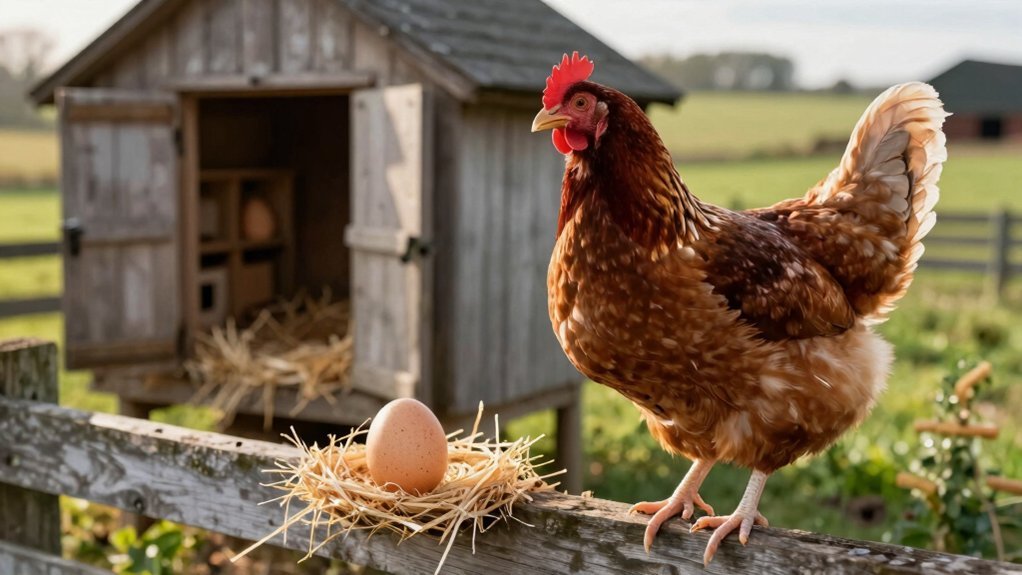
You’re probably wondering when your Rhode Island Reds will start laying and how long they’ll keep up. Usually they hit their first egg around 20 weeks, give or take a couple of weeks if you feed them well and keep stress low. Expect about 5–6 eggs a week for the first two to three years, then a gradual drop to 4–5 as they age, with a total productive span of 5–8 years. Now, if you add a little extra light in winter and keep calcium handy, you can stretch that laying period even further.
Rhode Island Red First‑Egg Timing
When will my Rhode Island Red hen lay her first egg? You’re probably wondering why the timing feels fuzzy. The answer: most birds start at 18‑24 weeks, with a sweet spot at 18‑22 weeks. Strong early nutrition and good pullet maturity can push some individuals to 16 weeks, especially high‑production strains. You’ll notice squatting, brighter combs, and nest‑box probing as the clock ticks. Light exposure and stress levels also sway the date; well‑fed, low‑stress flocks hit the benchmark of 20 weeks. Obviously, early maturity doesn’t mean daily eggs right away—production ramps up gradually. While industrial strains may produce up to 300 eggs annually, heritage strains typically lay slightly fewer but remain consistent layers.
What signs tell you lay is near?
Watch for louder clucking, frequent nest visits, and a fuller wattles. Those behaviors signal the hen’s reproductive system is ready.
Takeaway: Provide balanced feed, consistent light, and a calm environment to help your pullet reach early nutrition milestones and hit that first‑egg window. Ready to set up a proper lighting schedule?
Ensuring your young birds transition from high-protein starter feed to grower feed supports the pullet maturity required to reach these laying milestones on time. Note that seasonal changes during colder months can cause hens to pause laying even after they have reached sexual maturity.
Rhode Island Red Laying Lifespan Overview
You’re probably wondering how long your Rhode Island Red will keep laying after that first‑egg buzz. The breed’s lifespan varies: production strains usually hit 5–8 years, while heritage lines stretch to 9–10 years and some well‑cared birds even reach 15. Your choice of strain—breed selection—directly shapes how many of those years stay productive.
Here’s the thing: peak laying hits during the first 2–3 years, then output eases. Egg size may grow, but frequency drops, especially after year 2. Good nutrition, safe housing, and health care can keep the hen laying longer, but expect a gradual slowdown. While their robust, hardy nature helps them maintain strong egg production through varied climates and marginal diets, the natural decline in frequency remains inevitable after the peak years. Production hens are capable of producing up to 300 eggs annually, though this high output often correlates with a shorter overall lifespan compared to heritage birds. Heritage strains offer superior genetics that support longer lifespans and better meat qualities, making them ideal for sustainable, dual-purpose use.
All right, remember that total lifespan and productive lifespan differ. Plan replacements after the peak years, and pick a strain that matches your goals for egg quality and longevity.
Takeaway: Pick the right strain, give solid care, and you’ll enjoy steady eggs for several early years before the natural decline sets in.
Rhode Island Red Weekly & Annual Egg Output
How many eggs can I expect from a Rhode Island Red each week and year? You’re probably wondering why the numbers seem to shift, and you asked the right question.
What’s the weekly count?
During strong laying periods you’ll see 5‑6 eggs per hen, sometimes dipping to 4‑5 when heat stress or winter light shortages hit. Molting periods—lasting 4‑8 weeks—can shave that back dramatically, but overall the breed stays steadier than many specialty chickens. Maintaining 14 to 16 hours of daily light exposure is crucial because egg production significantly declines when daylight drops below 12 hours.
How does that add up yearly?
A typical backyard flock produces about 250 eggs per hen each year, with a range of 200‑300 depending on genetics, diet, and daylight. Most of those eggs are medium‑to‑large brown, a big plus for backyard chefs. Notably, these resilient hens are recognized for their ability to maintain such high production levels even under varying conditions. It is important to remember that industrial strains often offer higher yields compared to heritage varieties within the same breed.
Takeaway: Expect 4‑6 eggs weekly, roughly 250 annually, and plan for a short dip during molt. Next, you might ask how to keep the laying window open longer.
How to Extend the Laying Period?
You’ve noticed the egg count dips a few weeks each year and wonder why you can’t keep that 4‑6‑egg rhythm going longer. The key is consistent nutrition. Feed innovation like a balanced layer mix with 16‑18 % protein and free‑choice oyster shells keeps calcium steady after point‑of‑lay. Fresh water every hour prevents dehydration, which slashes laying fast. Transitioning pullets to complete layer feeds around 16 to 20 weeks of age ensures they receive the specific nutrient balance required for optimal production.
All right, manage light gently. Add a low‑intensity lamp to mimic 14‑hour days during short‑day months, but increase brightness gradually—hens hate sudden changes.
Here’s the thing: reduce stress. Quiet, predator‑proof coop enrichment—perches, dust‑baths, and nesting boxes—keeps hens calm. Avoid crowding and limit flock turnover. Since these birds are known for their hardy nature, they adapt well to various climates when provided with a stable environment. Their ability to thrive in various climates further supports consistent egg production throughout the year when their environment remains stable.
Takeaway: stable feed, gentle lighting, and a stress‑free, enriched coop extend the lay. Ready to tweak your feeding routine? Production Red hens are a hybrid breed.
Seasonal Management for Steady Production
If you’re puzzled why your Rhode Island Reds dip in egg numbers each winter, you’ve hit the right spot.
How can I keep egg numbers steady when days shorten?
You can add feed supplementation rich in protein and calcium during the colder months; it fuels the hens when natural forage drops. Pair that with climate control—maintain a coop temperature around 50‑55 °F and reduce drafts. A stable environment mimics summer comfort, so hens keep laying closer to their 5‑6‑egg weekly peak. Since hens typically produce one egg every 24 to 26 hours, their laying time shifts slightly later each day, which is something to monitor when managing winter schedules.
What should I do as daylight returns?
Now, gradually increase supplemental lighting to 14‑16 hours a day. This signals spring to the birds, prompting the natural ramp‑up. Keep the feed mix consistent, but watch for higher intake as they start foraging again.
Takeaway:
Feed supplementation and climate control smooth out winter lows, while lighting adjustments kick‑start spring production. Next, ask yourself how to extend the laying period year‑round.
To prevent production from stopping entirely, you must ensure hens receive supplemental light to reach 14 to 16 hours of daylight, as reduced natural light is the primary cause for decreased egg laying in colder months. This reduction occurs because shorter days fail to stimulate the light-sensitive gland located in the hen’s head that regulates her reproductive system.
Practical Care Tips for Maximum Longevity
What daily habits keep your Rhode Island Reds laying for years? You need steady feed, clean water, and a calm coop. Offer a complete layer feed with 16‑18% protein, add oyster shell for calcium, and keep treats modest so hens stay trim. Refresh water daily; in heat, use a shaded trough or heater to avoid dehydration. Establishing a routine of twice-daily feeding helps reduce waste and deters pests while ensuring your flock receives consistent nutrition.
How do you protect them from disease? Clean bedding, remove manure, and seal gaps to keep rodents out. Run regular parasite prevention—dust or oral meds every few months—because hidden worms sap energy and shorten lay cycles.
What lighting and space tricks boost longevity? Provide 14‑hour lighting schedules in winter to mimic spring, and give each bird 4 sq ft indoors plus 10 sq ft outdoors. Less crowding means less stress and more eggs.
Takeaway: Consistent nutrition, hydration, clean housing, parasite control, and proper lighting keep your hens productive. Ready to set up a weekly health‑check routine? While managing your flock, remember that safe treats like certain vegetables and fruits can supplement their diet, but you must avoid toxic plants to ensure their well-being. Additionally, offering grit and oyster shell separately allows your hens to self-regulate their intake for optimal digestion and strong eggshells.